Some games you enjoy. Some you finish with pleasure, recommend to a friend, forget six months later. And then there are others, rare ones, that stay. Not because they were perfect. Not because they invented something entirely new. But because they captured something you can't quite put into words, and that has been missing ever since you put them down.
Assassin's Creed IV: Black Flag, released in 2013, is one of those.
So seeing Black Flag return today, in the form of Resync, produces a strange effect. A mixture of satisfaction, nostalgia, and a mild irritation that's hard to fully justify. Because if the return is welcome, the question that comes right after the announcement is the same for everyone: why a remaster? Why not a successor?
What Black Flag did that nobody has managed since
Context matters. In 2013, Assassin's Creed is a powerful franchise but one beginning to show its limits. Revelations wrapped up the Ezio cycle well, but AC III disappointed. Connor lacked charisma, the American Revolution was too rigid a frame, the promised freedom felt like it was shrinking. The franchise was searching for something.
Black Flag answered that question with a simple idea: what if we made a pirate game?
What looks obvious on paper actually changed everything. Not in the mechanical structure, not in the underlying systems, but in the tone. In the intention. For the first time in a long while in the franchise, you could sense the developers having fun. The setting wasn't a narrative constraint imposed by Assassin/Templar mythology, it was a pretext for pure adventure. And that showed in every design decision.
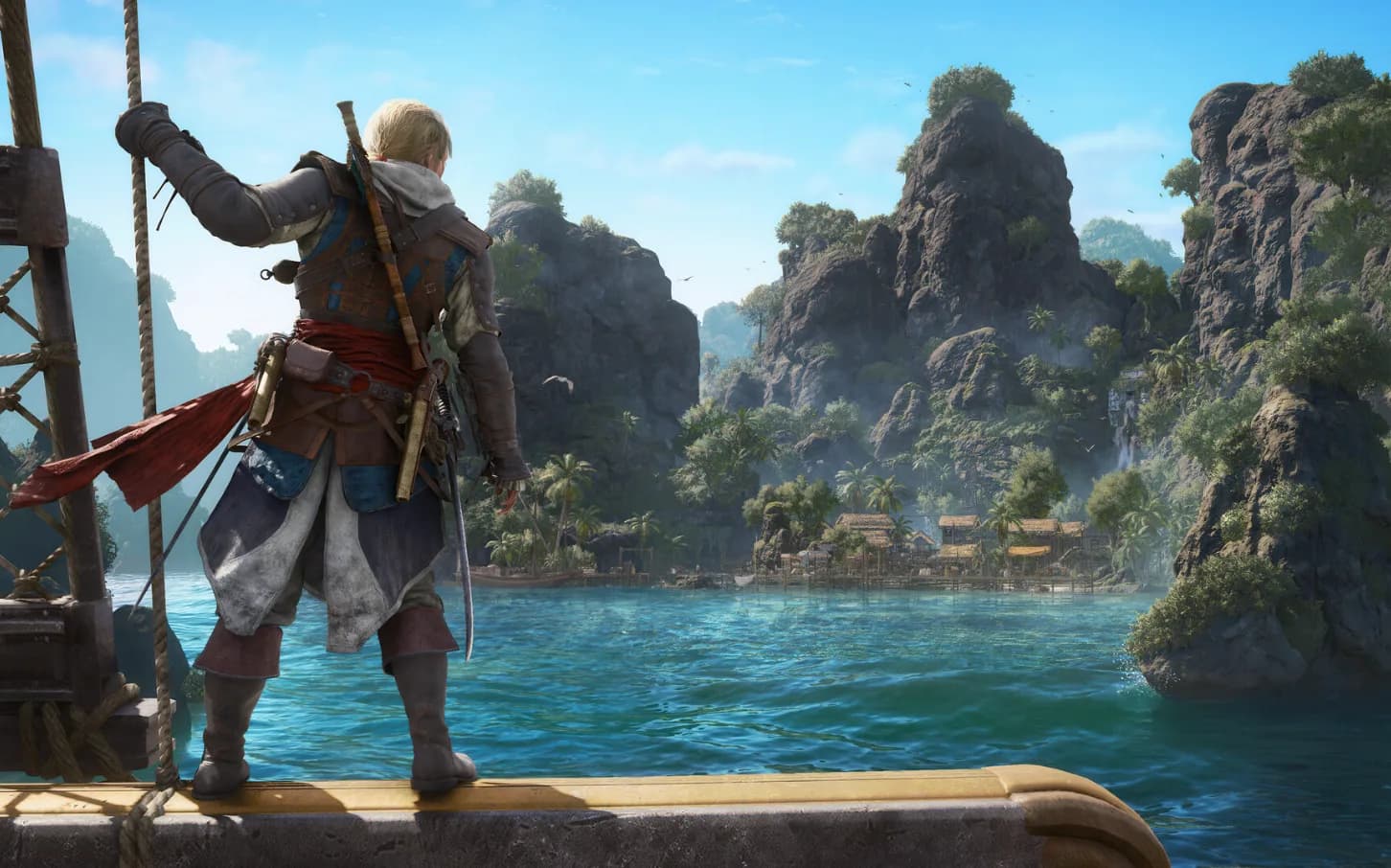
Free navigation aboard the Jackdaw, Edward Kenway's ship, is the clearest example. It wasn't a transport system between missions. It was a game inside the game. The Caribbean Sea actually existed: its storms, the ships to hunt, the islands to explore, the cargo ships to board, the sharks circling when you fell overboard. You could spend three hours sailing without touching the main story and feel like you'd spent three hours genuinely playing something. That's not a detail, that's everything.
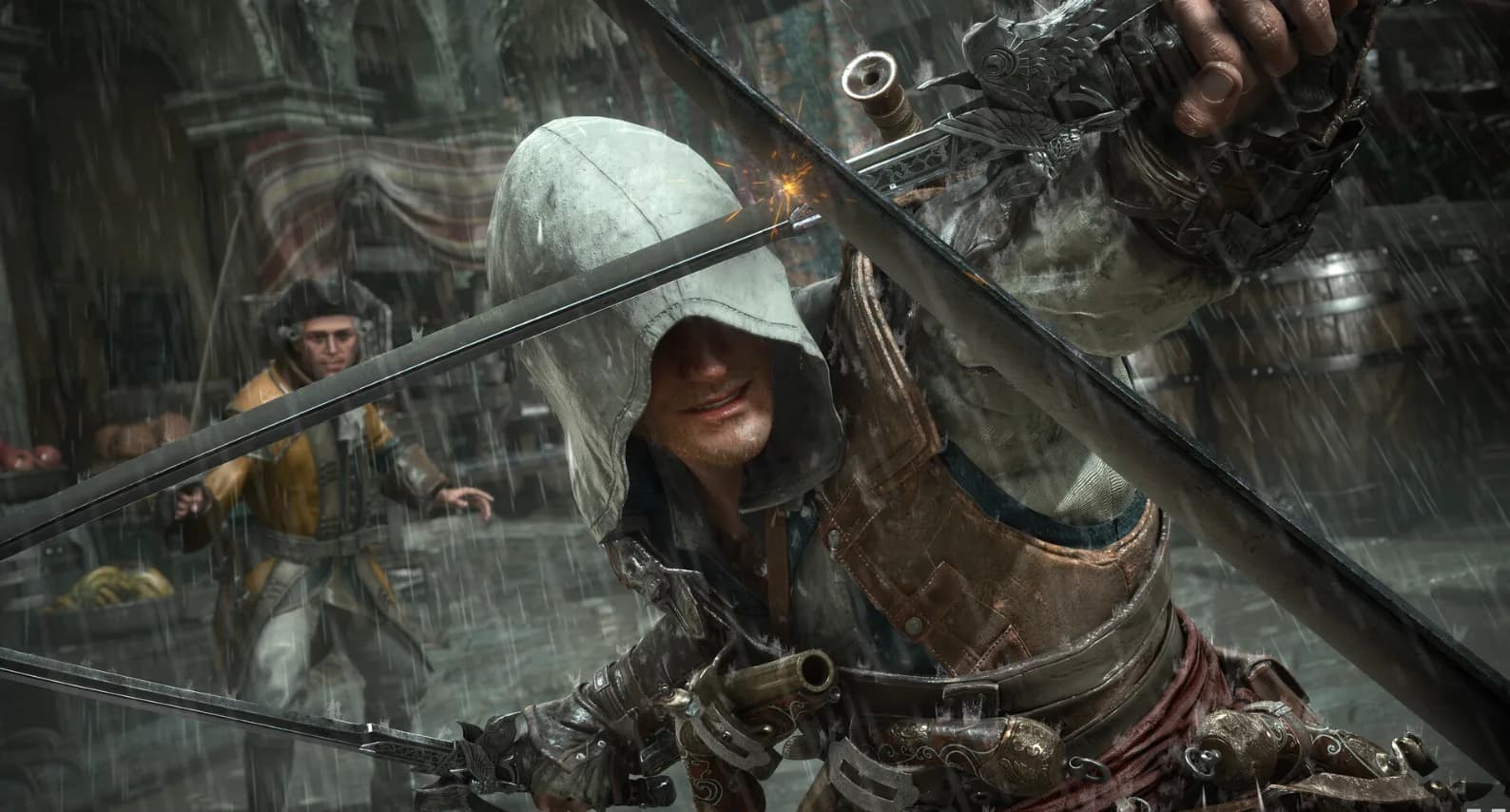
Edward Kenway himself wasn't a virtuous Assassin seeking redemption. He was an opportunistic, ambitious, sometimes cowardly, often funny pirate. A character the franchise has rarely seen since: someone who wanted something concrete, human, understandable. Money. Freedom. A reputation. Not to save the world. And that humility of intention gave the game a lightness that subsequent entries spent years failing to recapture.
What's striking is looking at the Assassin's Creed trajectory after Black Flag. Not to call out bad games: Unity had ideas, Syndicate too, Origins genuinely relaunched the franchise. But the feeling didn't carry over.
The franchise evolved toward more RPG, more systems, more content. Maps got bigger. Skill trees thicker. Playtime longer. And yet something was lost in the accumulation. The real freedom you felt on the Jackdaw wasn't replaced by something more sophisticated. It was replaced by occupation. Side quests by volume, points of interest on an overflowing map, a density that gives the impression of content without ever giving back the impression of play.
Odyssey and Valhalla are the clearest examples of this paradox. They are technically impressive, ambitious, vast. But they have no Jackdaw. They have no moment where you cut the engine on the objectives and let yourself drift. They're too well constructed for that, too structured, too self-aware of their own size. Every zone is a content hub to clear. The open world feels less like a place you inhabit and more like an organised list.
That's not regression. It's a different ambition that produced a different result. But the result, objectively, doesn't grip memory the same way.
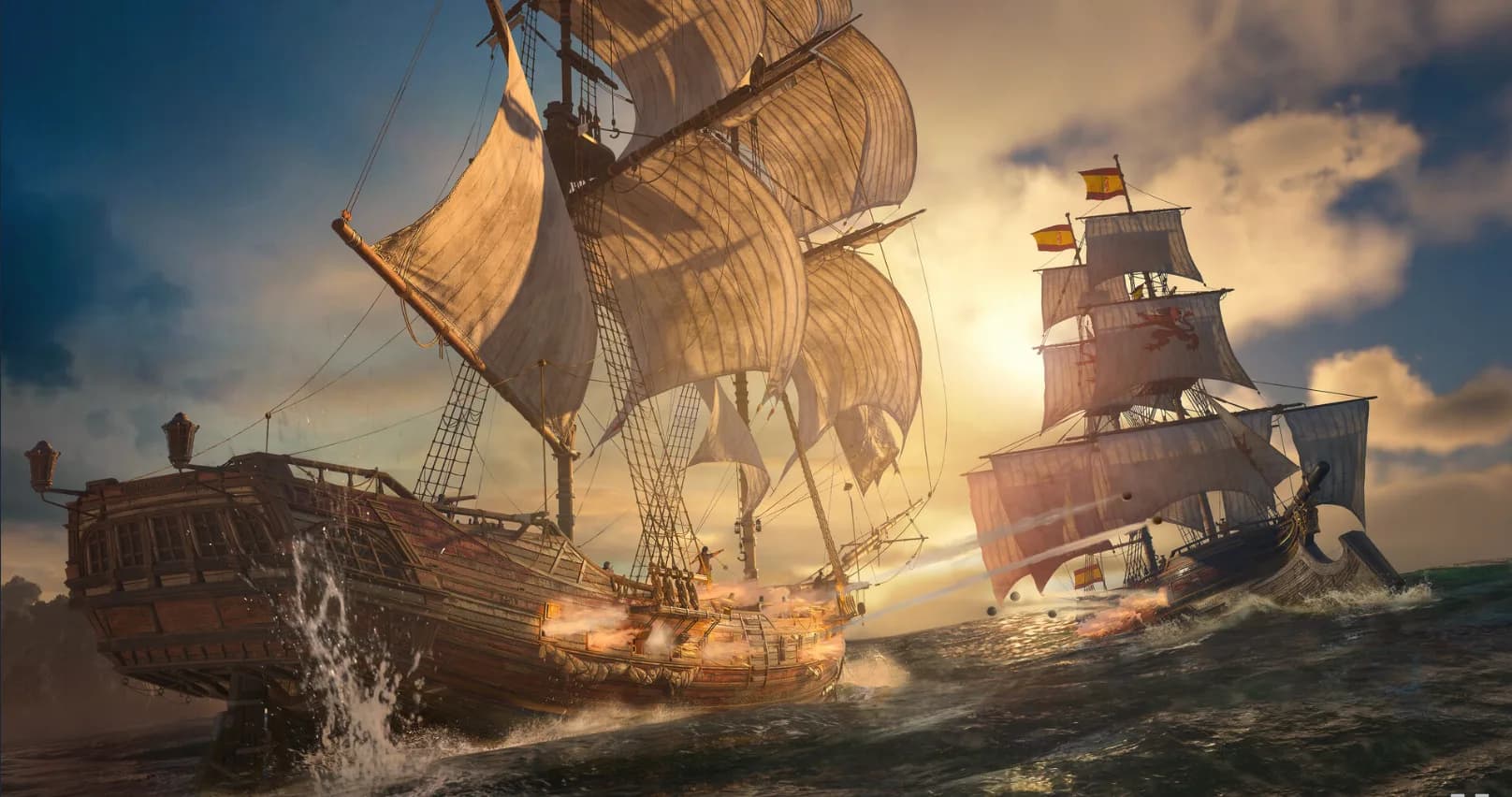
Skull and Bones has to be discussed. There's no way around it.
When Ubisoft Singapore announced the project, the hope was real. Not because the premise was revolutionary. Precisely because it was simple: take the piracy of Black Flag, develop it, make it a standalone game. Naval combat at the heart of the system, an open maritime world, a progression built around management and reputation. On paper, it was exactly what Black Flag players had been asking for since 2013.
The development that followed became one of the most-discussed case studies of the decade. Nearly ten years between announcement and release. Multiple directions abandoned. Deep restructures. A shift to live service that reconfigured the project's priorities from the ground up. And a 2024 release that, despite Ubisoft Singapore's evident effort, failed to land.
Not because Skull and Bones was fundamentally bad. But because it was hollow where it mattered most: it was a pirate game without the spirit of piracy. The navigation was there. The naval combat too. But the soul was missing. Edward Kenway was missing. The island discovered by accident was missing. The sea shanty heard from the deck was missing. Skull and Bones was a piracy game that had lost the feeling of being a pirate, and no patch can fix that.
That's the real tragedy. Ubisoft had the tools, the studio, the budget, and the demand. And couldn't, or didn't know how to, recreate something as simple as Black Flag's lightness.
This isn't a talent problem. The teams exist. The technical skills are there, probably at a level well above what existed in 2013. So why this inability to reproduce what worked?
The answer is structural, not artistic.
The industry Ubisoft operates in today is not the same as 2013. Seventy-euro games have to justify their price over time. Battle passes and in-game shops demand a live service structure that fundamentally transforms what you're building. A game like Black Flag, with its focused narrative campaign, its open sea, its adventure-film soul, doesn't fit neatly into that mould. It's not designed to retain a player for six months. It's designed to give them twenty unforgettable hours.
That kind of game has become rare in big productions. Not because nobody knows how to make them. But because the current economic model rewards retention over impact. And impact is exactly what Black Flag had.
There's also a question of appetite for risk. In 2012, Ubisoft Montreal made the bold creative decision to push the Assassins and their mythology to the background to tell the story of a pirate. In a franchise with a well-defined identity, that took courage. Today, making that kind of call in a context of restructuring, of releases that need to perform quickly, is much harder to defend internally.
The spontaneity Black Flag projected wasn't accidental. It was the product of a team given real freedom. And that freedom has a cost too.
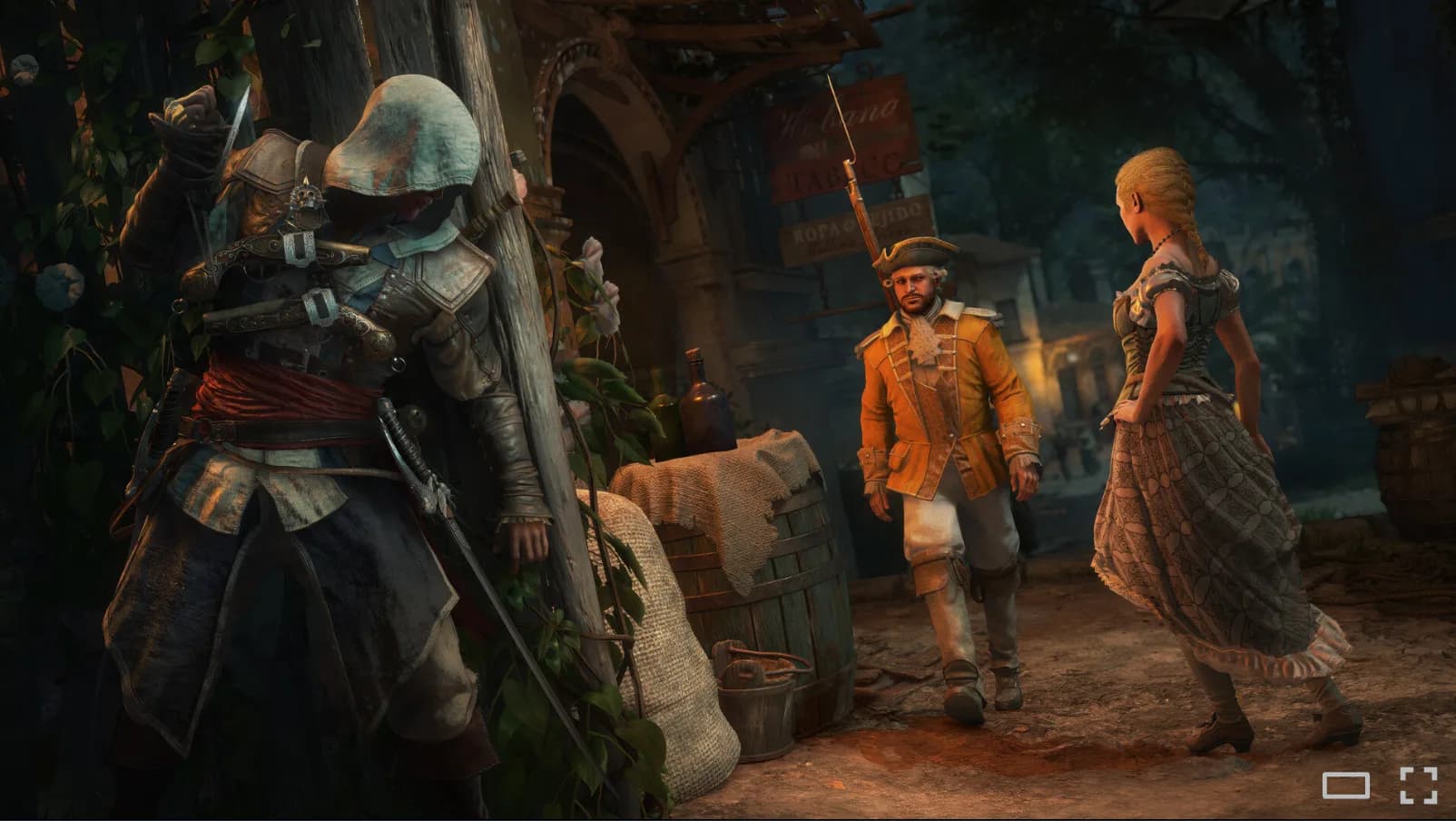
Black Flag Resync is therefore good news. Genuinely. The game deserves it, and a new generation of players will discover it under better technical conditions. The chance to board the Jackdaw again, to hear the shanties, to watch Edward Kenway cheerfully ignore his obligations to the Brotherhood in favour of hunting Portuguese frigates off the coast of Havana: that's a prospect nobody on the team is refusing.
But Resync reveals something in the negative that Ubisoft probably doesn't want to hear: it's an admission. An admission that since 2013, nothing has reached this level in this register. That instead of building an heir, the easier move is to repackage the original and present it clean. Commercially understandable. In a certain sense, a creative retreat.
Remasters are never just remasters. They're also a way of measuring the distance between what you were capable of making and what you produce now. And that distance, in Black Flag's case, is uncomfortable.
To be direct: we wanted a successor. Not necessarily with Edward Kenway. Not necessarily in the Caribbean. But with the same intention. A pirate game that commits to being a pirate game. That doesn't justify itself through Assassin mythology, doesn't dilute its premise in an encyclopaedic open world, doesn't turn the sea into a quest hub sorted by category.
A game that gives back that specific feeling: standing at the bow, not knowing exactly what's on the horizon, and deciding to sail toward it anyway.
Black Flag Resync isn't that. It's the same game, better rendered, and that's already something. But the real question, the one this return raises without resolving, remains open.
Is anyone going to take the helm?
Black Flag Resync. Ubisoft. Expected release on PS5, Xbox Series and PC.
We want to hear your take: the InsertCoins Discord is waiting.