Let's be direct: we looked for what made Gambonanza essential. We didn't find it. And we're not sure that's our fault.
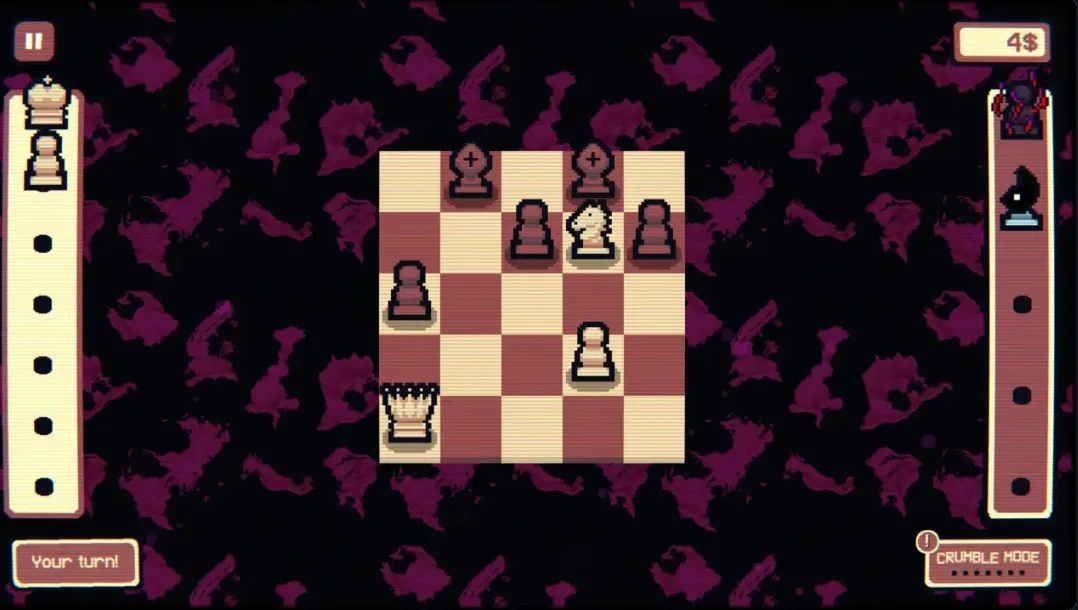
Gambonanza is a chess roguelite developed by Blukulélé, an indie studio, released May 1, 2026 on Steam, iOS, and Android. The pitch is compelling: chess pieces on a tiny board, over 150 gambits that break classical rules, synergies between piece combinations, upgradeable tiles, a reserve system for keeping pieces off the board. Plus a layer of minigames inspired by pachinko and slot machines.
On paper, it's exactly the kind of improbable blend that should work. Chess as the skeleton. Roguelite as the engine. Balatro as the obvious inspiration.
The problem is that Balatro wasn't just an idea.
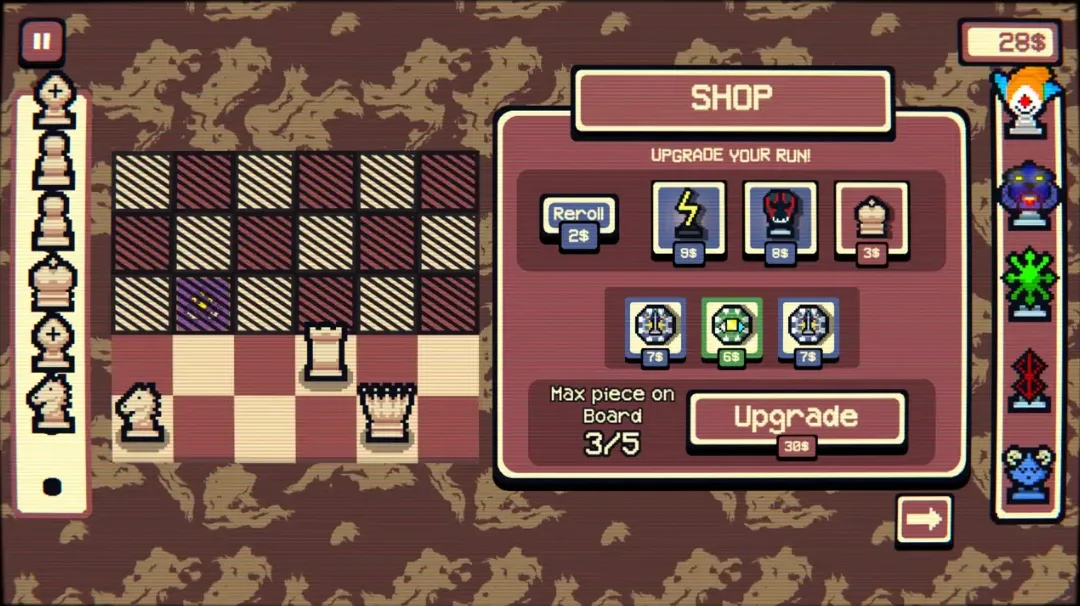
Balatro worked because it took something everyone already knew, poker, and used it as an emotional foundation. You didn't have to learn the rules: you already knew them. All the learning happened in the roguelite layer on top. The curve wasn't steep because the foundation was familiar.
Gambonanza takes chess as its starting point and immediately starts breaking its rules. The 150+ gambits exist precisely to deviate from what you know about chess. It's a coherent design decision. The problem is that in doing so, the game loses its anchor. It's not really chess anymore. But it's not quite enough of something else to stand on its own.
What remains is a roguelite synergy system. Which isn't bad. Which doesn't justify the journey.
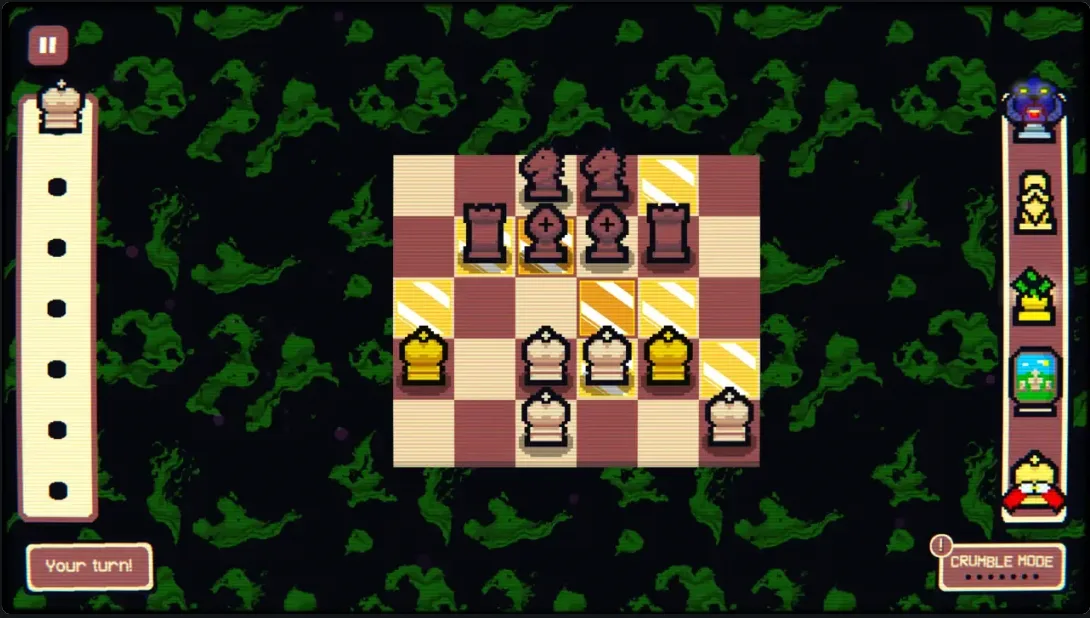
150 gambits is an impressive number to put on a Steam page. In practice, the density doesn't compensate for the lack of clarity around what makes each run feel distinct. Combinations exist, synergies can be found, but the satisfaction of building something never quite settles in.
Balatro made you feel like a genius when your deck started to snowball. Gambonanza makes you feel like you're solving a puzzle whose rules you haven't quite understood. That's not the same thing. The difference between the two is the feeling of mastery. One gives it to you. The other promises it without really delivering.
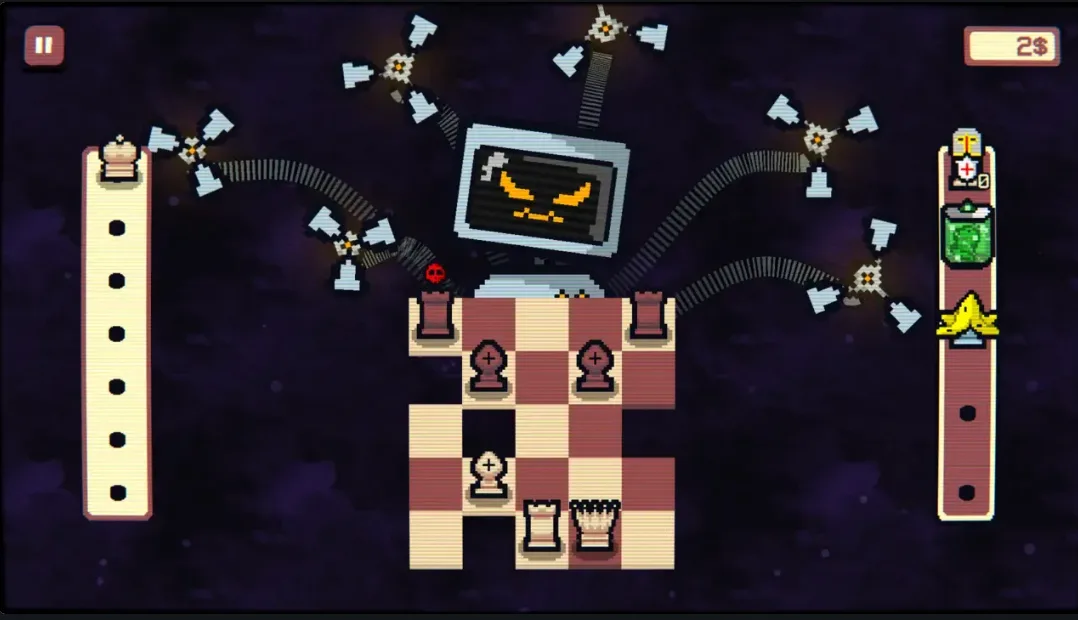
The pachinko and slot machine-inspired minigames are presented as an extra layer of fun. In reality, they illustrate the game's central problem: Gambonanza doesn't quite know what it is.
A chess roguelite with synergies is already an ambitious project. Adding pachinko and slots risks diluting every pillar instead of reinforcing them together. In Balatro, everything served the same purpose. Here, you get the impression that each system was designed separately and bundled into the same client.
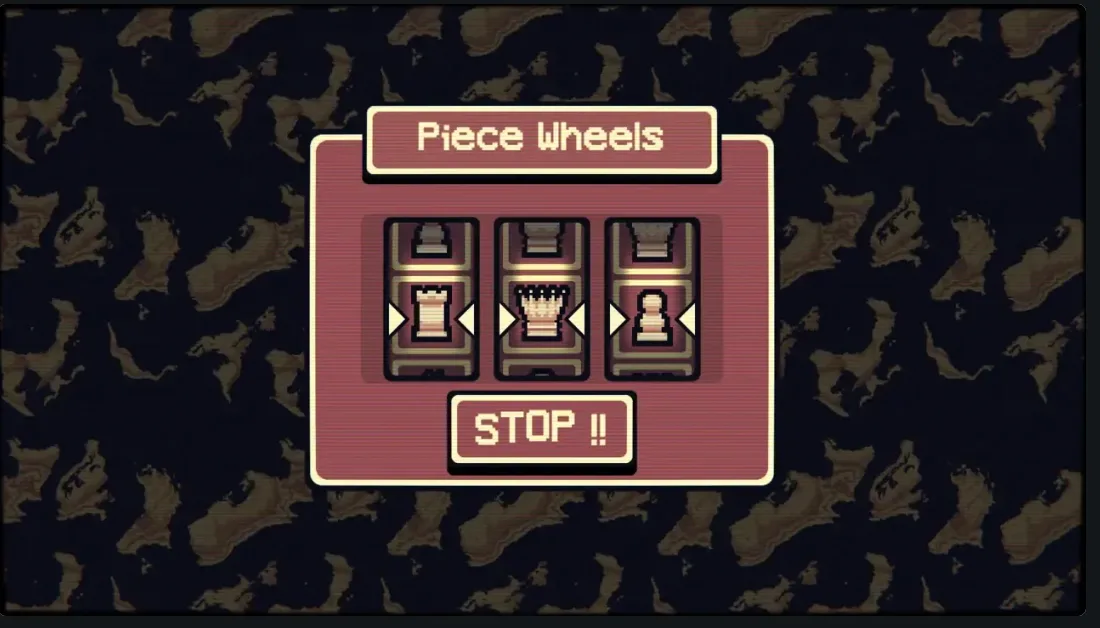
We'll put this card on the table: Steam reviews are overwhelmingly positive. A community has clearly found something in Gambonanza that we couldn't reach. It's possible the synergy depth only reveals itself after a number of runs we haven't yet accumulated. It's possible the pachinko makes sense in late-game configurations we haven't unlocked.
But that's also the problem: a good game of this kind hooks you before you need to go looking for reasons you should love it. Gambonanza asked for patience without giving us enough reasons to have any.
Gambonanza has a good idea, clean execution, and something missing at the centre. Not a bad game. A game that hasn't found its own identity, that looks too much into Balatro's rear-view mirror without understanding what made that mirror so well-aimed. For genre obsessives who want to play everything, there's depth to dig into. For everyone else, Balatro is still right there.
Review based on the final version.
Disagree with the score? Come and tell us on the InsertCoins Discord, where we defend our verdicts live.