7
Test
Archipeo: thousands of islands, ships running a shuttle service, and me not sleeping
A procedural Anno where haulage is the real game. Every badly assigned freighter takes its revenge forty minutes later.
Alexandrosse
8 min
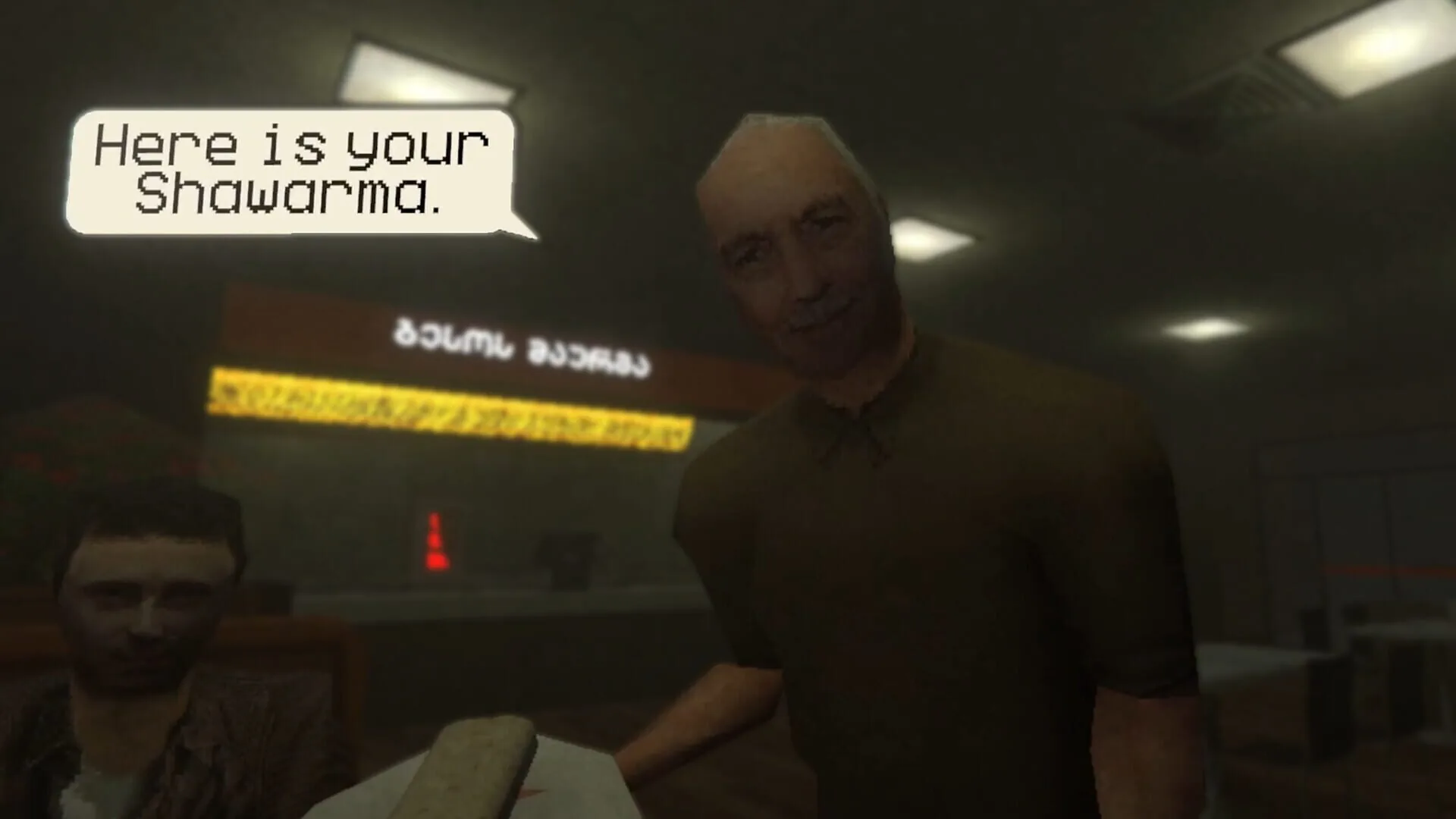
We clicked for the name. We stayed for the dread. Beso's Shawarma is a 25-minute PSX nightmare in the empty streets of Tbilisi, and it leaves a mark.
Alexandrosse
InsertCoins.press Score
6/10
Verdict
Mixed
Let's admit it right away: we opened this game's page for its name. Beso's Shawarma is the kind of title that makes you smile and click without thinking, the impression of a harmless little culinary gag. Except you're not holding a döner simulator. You're holding a horror game, and the grill at the back of the shop lights up things we'd rather not have seen.
Beso's Shawarma is a short narrative horror game developed by the Georgian studio Mtatsminda, the first commercial release from creator PatnosD, available on PC from 30 June 2026. A run lasts about twenty-five minutes, several endings exist, and the whole thing takes place in a feverish retelling of Tbilisi, the Georgian capital. That's already a rare argument: how many horror games are set in the Soviet streets of a city you never see anywhere? The dissonance starts there, before the first shiver.
The gameplay is minimalist and owned. It's a first-person game, no combat, where you move through the night talking with a gallery of strange characters. A late-night call lures you out of your home, you cross deserted streets toward a sketchy shawarma shop, and you'll have to make a terrifying choice to try to pull free of a nightmare that loops on itself. We're talking walking, dialogue and decision here, not survival mechanics or puzzles. It's a horror walking sim, in the purest sense of the genre.
What saves this simplicity is that the conversations aren't decorative. Your exchanges with the strangers met along the way subtly bend the tone, the soundscape and your perception of the world. You don't trigger flashy narrative branches, you slowly contaminate the atmosphere. The unease doesn't come from a monster leaping out, it comes from the sense that each line tips reality a little further, and that the loop closes a little tighter with every turn. For a first commercial game, that's a fine grasp of what makes us afraid.
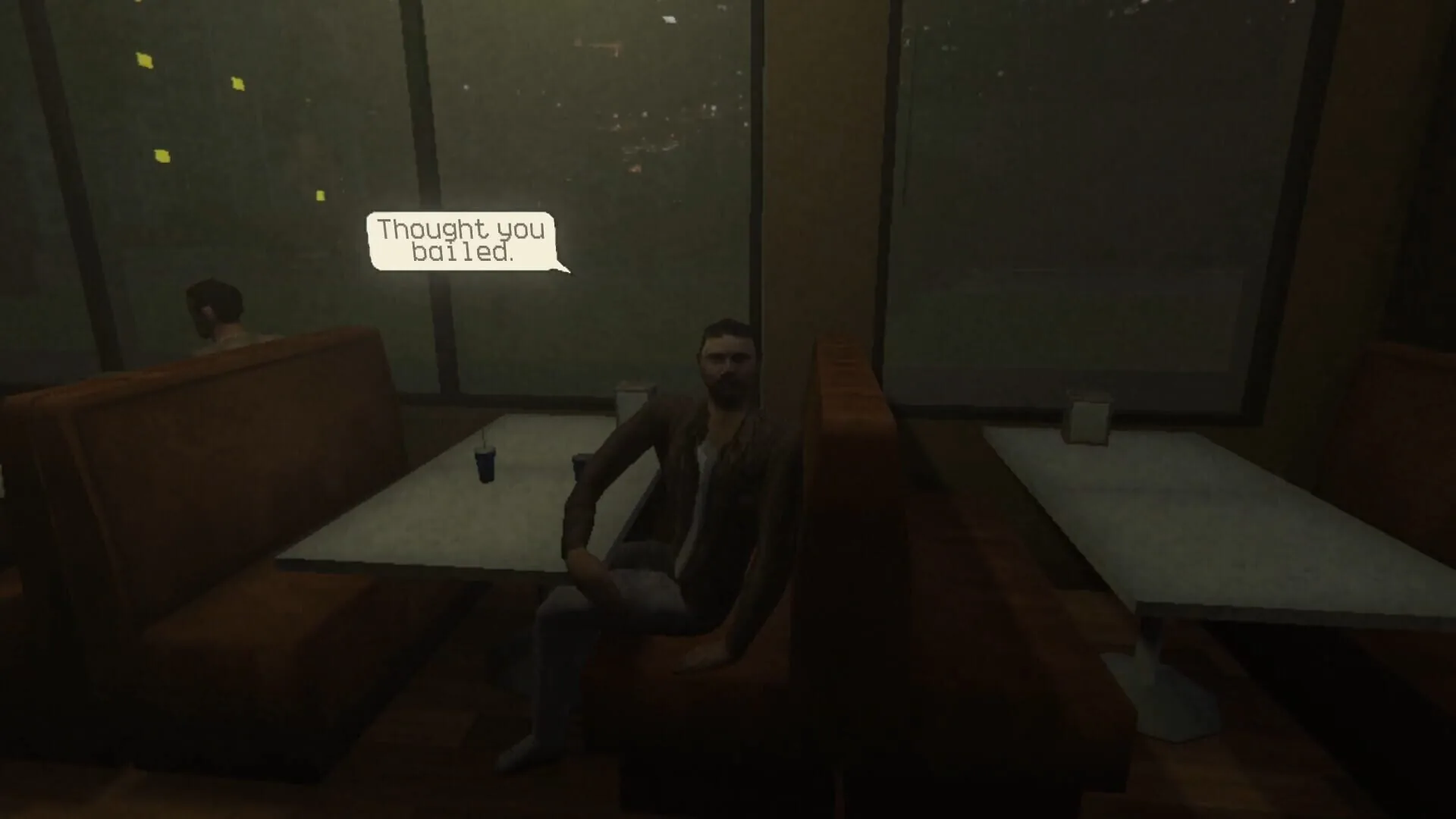
The game adopts the low-fidelity render of the first PlayStation, with its smeary textures, trembling polygons and 3D text floating in space. It's become an indie-horror cliche, and we happily attack it when it serves as an alibi for a lack of means. Here, the choice is justified: the grain, the imprecision and the gloom work the imagination as much as the fear demands. What you can't make out clearly, you dread, and this ghost city rendered in smeary pixels becomes a character in its own right.
The sound does the rest, and the studio knows it: it recommends playing lights off, headset on, and it's right. The experience rests entirely on atmosphere, and in good conditions, these twenty-five minutes install real tension. The localization exists in English and Georgian, which anchors the game even deeper in its soil and gives it an authenticity that generic horror productions never have. You're somewhere, and that somewhere really exists.
Let's be honest about the scale. Beso's Shawarma is a half-hour experience, with no mechanics to speak of, betting everything on its atmosphere and its writing. The alternative endings invite one or two more runs, but we're talking a handful of minutes, not real replayability. Anyone looking for a horror game with substance, systems, progression, will be frustrated before they've even been scared. It's a short story, not a novel, and you have to approach it as such.
We forgive its brevity because it doesn't cheat: it doesn't artificially inflate its length, it says what it has to say and stops. But we'd have loved its strongest idea, that nightmarish loop warping with the choices, to be pushed one notch further. There's the germ of a real great little horror game here, and it stops right when it becomes gripping.
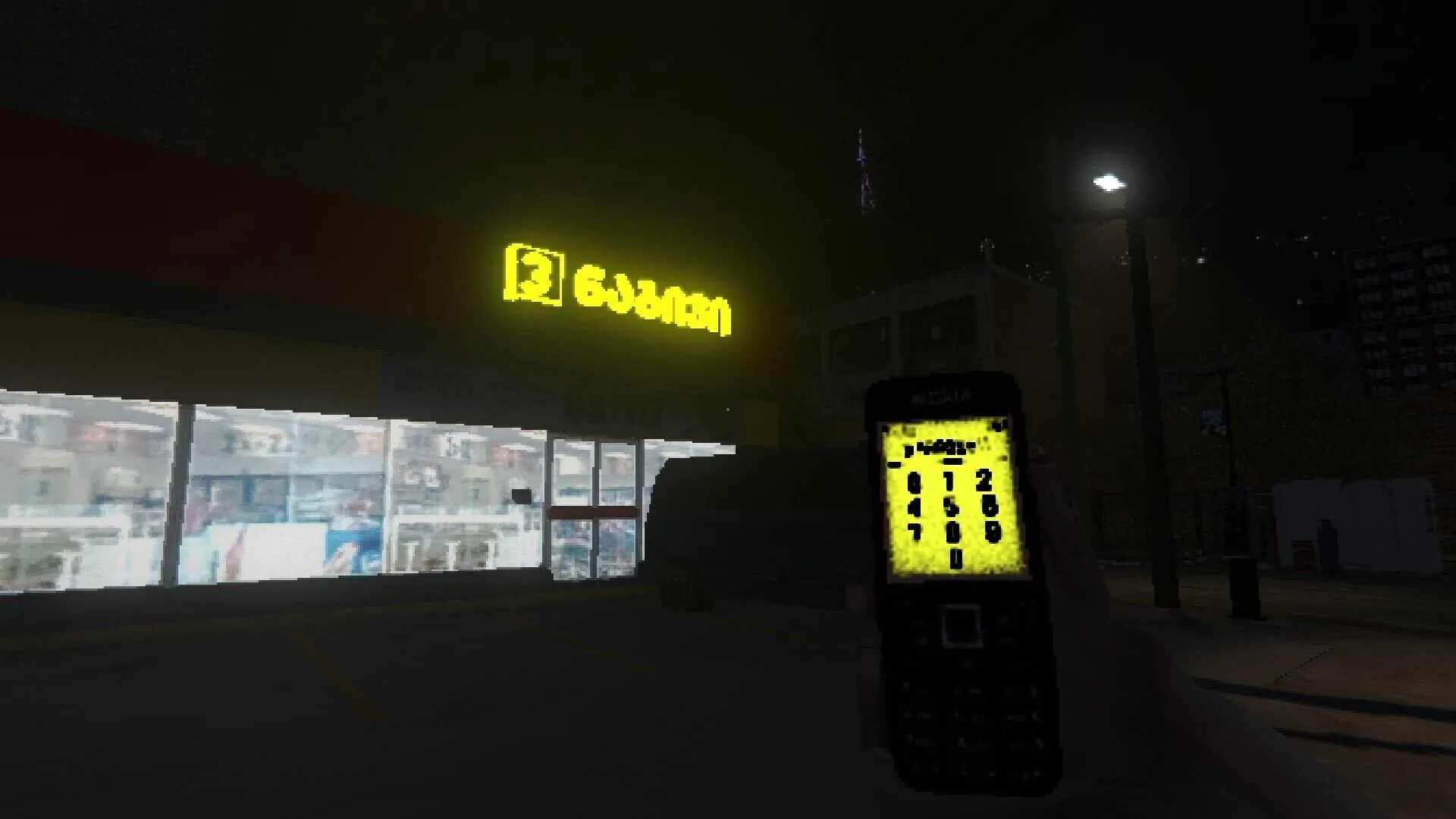
Beso's Shawarma does a lot with very little. Its name draws you in for the wrong reasons and the game keeps you for the right ones: a clammy atmosphere, an unheard-of setting, writing that contaminates the atmosphere rather than scripting it, and a mastery of unease rare for a first release. Tbilisi at night, rendered in smeary PSX, is a setting you remember, and the nightmare loop has real presence. For the length of a break, it's an atmospheric success.
Still, you have to accept the format. Twenty-five minutes, no mechanics, replayability of a few endings: it's a miniature, and it's judged as one. You come away thinking you're holding a creator to watch very closely rather than a landmark game. But when a first project lays down an atmosphere like this with so few means, you can't wait to see what comes next. And honestly, for the name alone, we'd have forgiven it far worse.
A twenty-five-minute PSX nightmare in the streets of a feverish Tbilisi: short, mechanic-free, but with a mastery of atmosphere that reveals a creator to follow.
Strengths:
Weaknesses:
Tested on PC.
We debrief every release on our Discord. The door is open, and so is the argument.
Community
Your rating
Advertisement
Loading comments...
You might also like
A procedural Anno where haulage is the real game. Every badly assigned freighter takes its revenge forty minutes later.
Towers, troops, a single pool for both. Every coin spent on defence is a coin you will not be sending the other way.
Crossing finally matters and defending responds. Then the screen goes black. 57 per cent positive on Steam, at 69.99 euros.