7
Test
Archipeo: thousands of islands, ships running a shuttle service, and me not sleeping
A procedural Anno where haulage is the real game. Every badly assigned freighter takes its revenge forty minutes later.
Alexandrosse
8 min
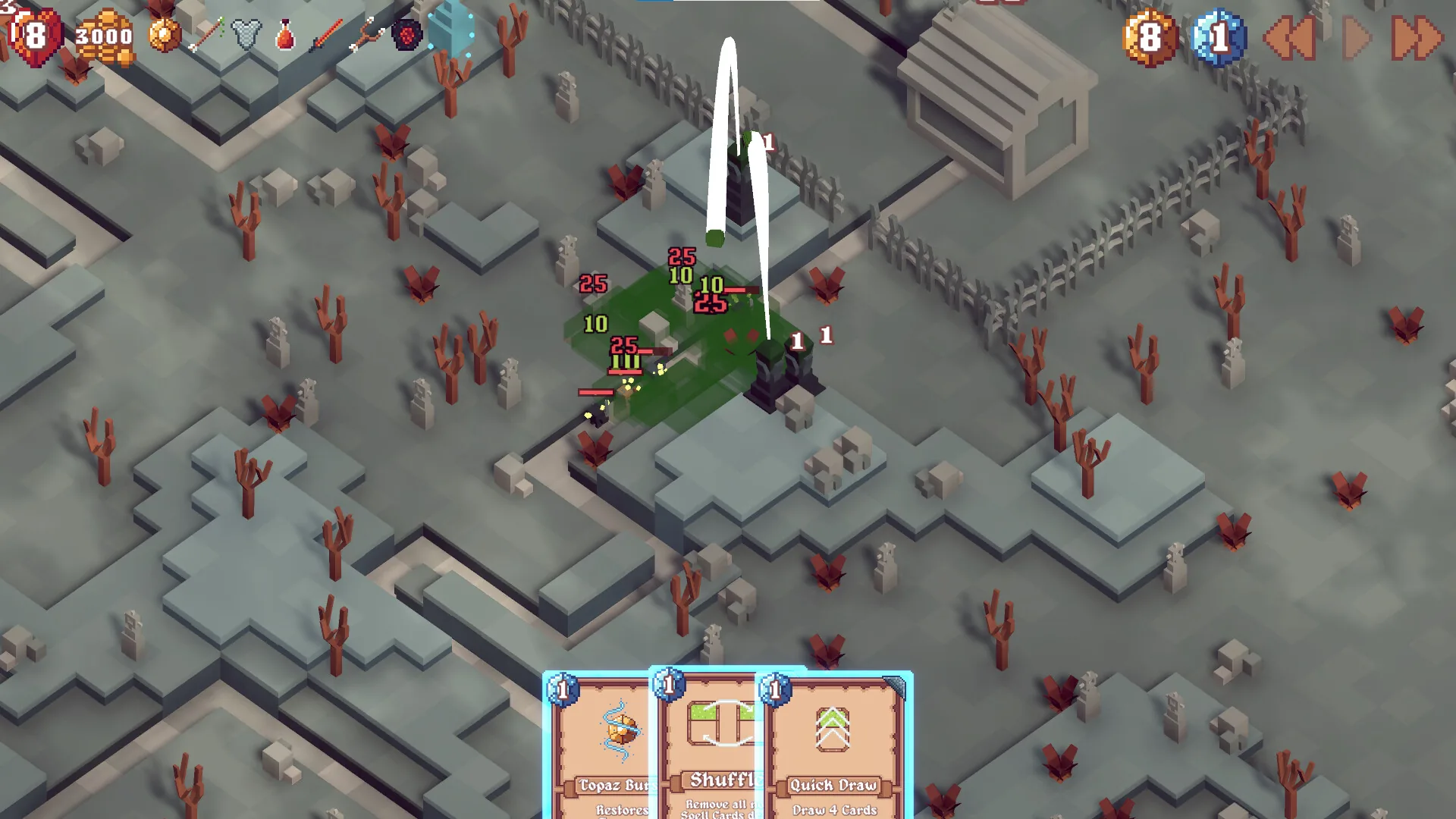
Towers, troops, a single pool for both. Every coin spent on defence is a coin you will not be sending the other way.
Alexandrosse
InsertCoins.press Score
7/10
Verdict
Recommended
There is one rule in Card Conquest, one, and it holds everything else up.
Your towers and your troops draw from the same pool.
That is it. But try playing a round with that constraint in mind and watch what happens to your brain.
In a standard tower defence game, the question is: do I have enough defence. In a standard assault game, the question is: do I have enough attack. Here the two questions fight over the same wallet, and there is no right answer, only choices you pay for.
You play Tower Cards to build a defence against waves that get stronger every time. You play Unit Cards to recruit troops and send your own waves at your opponent, who defends with everything they have. You have to breach their line without opening your own.
What that produces, very quickly, is a game of swings. You feel a window, you empty your pool into units to take it, the assault is absorbed by a hair, and the next wave lands on you with your towers still at level one. Three minutes later you are dead, and you know exactly which decision did it.
That is my favourite kind of death.
Two systems breathe inside all that.
Spells are the ace up the sleeve. They restore resource, draw cards, shuffle your hand. In other words they do not add raw power, they unlock situations: you are dry with an unplayable hand, and a spell digs you out. Smart, because in a single-resource game the worst case is not having too few towers, it is being paralysed.
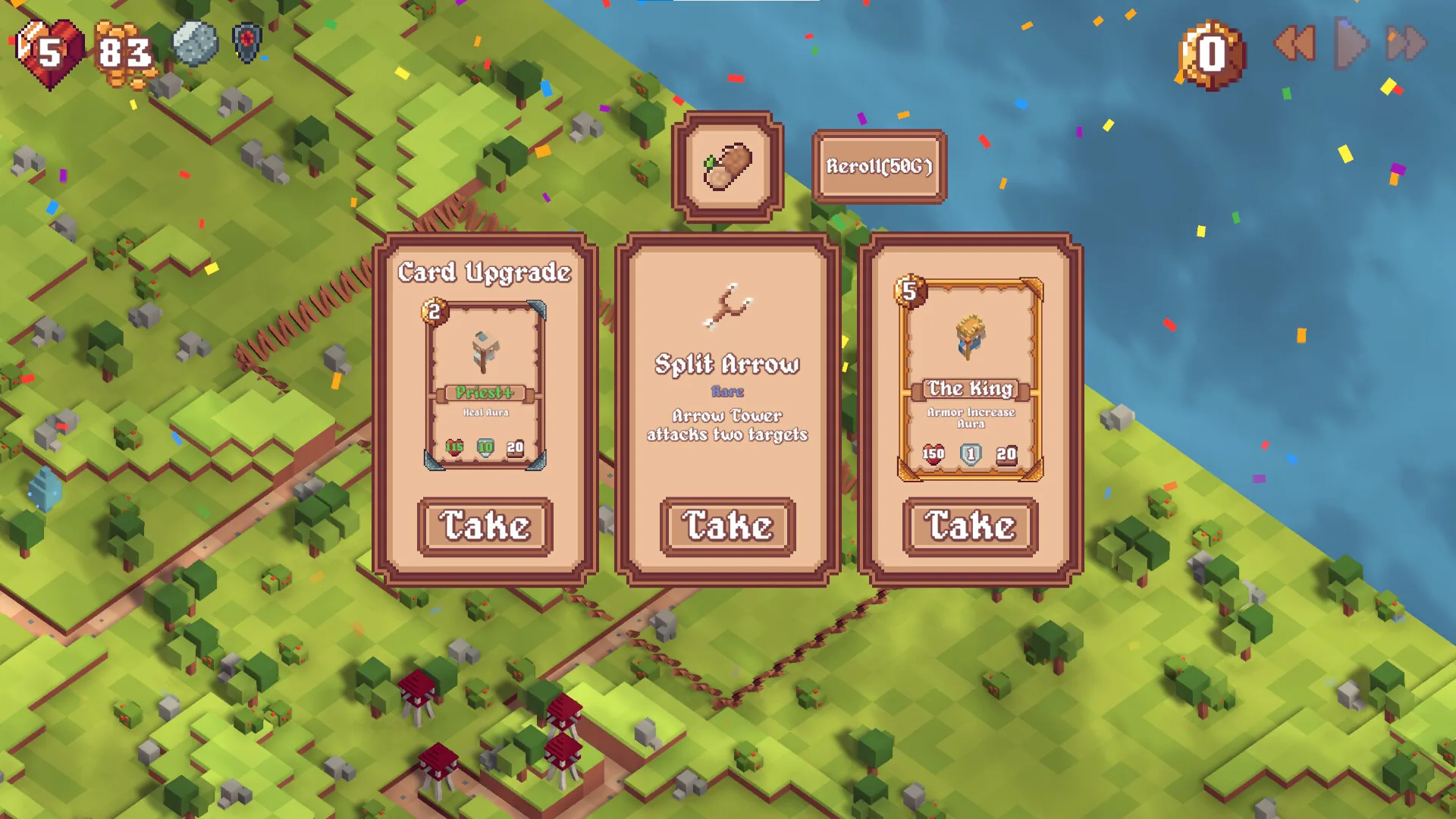
Relics come from destroyed enemy camps, and they strengthen your towers, your units, or weaken the opposition. They come in rarities, and the game puts altars on the map where you sacrifice relics to receive rarer ones.
That altar is the game's second interesting idea. You have three decent relics and the chance to burn them for a shot at a good one. The game is not asking whether you want power, it is asking whether you accept losing what you already have.
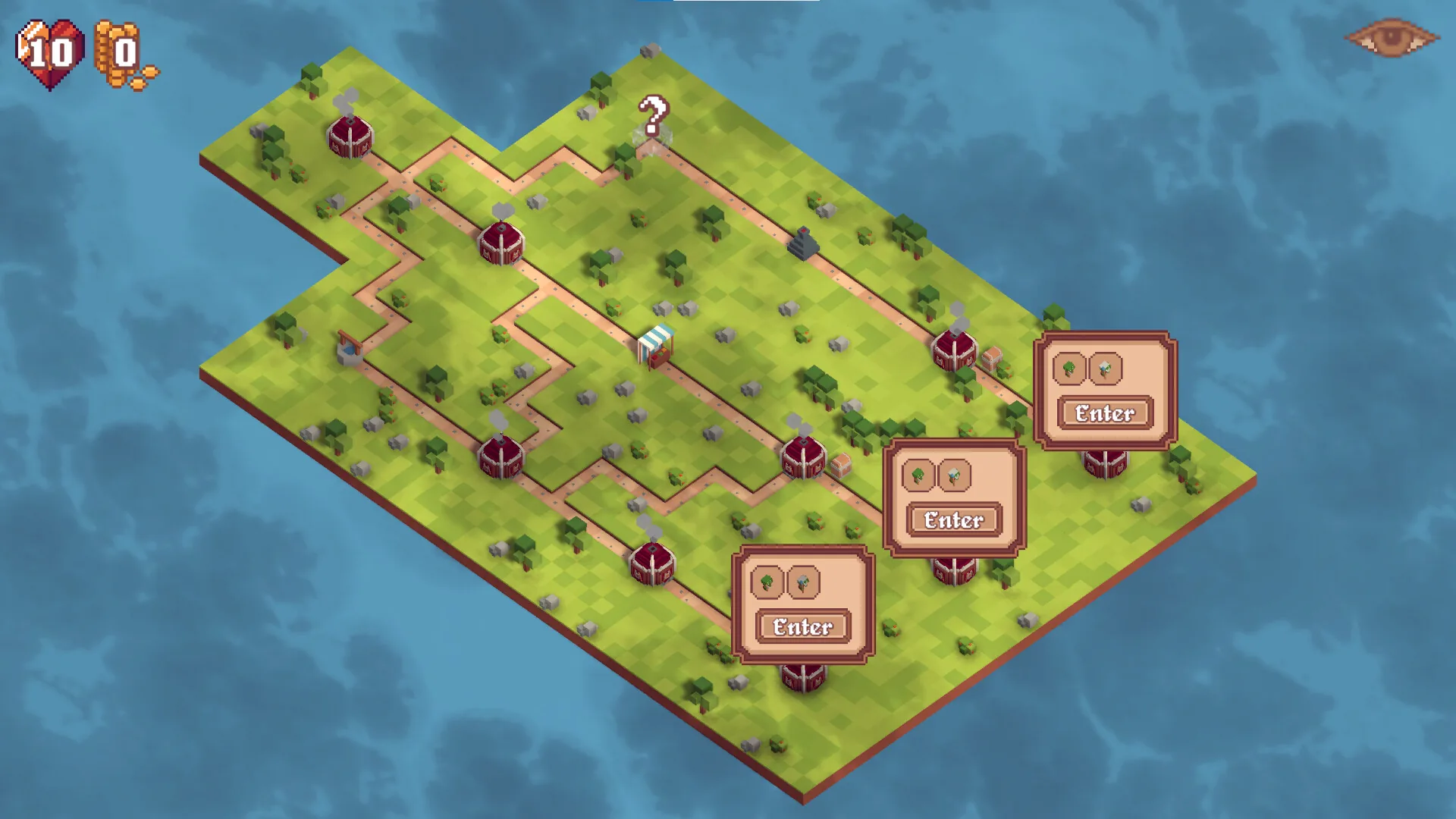
You plan your conquest route ahead of time, deciding which objectives you want to explore along the way. Defeated enemies pay gold, the further you get the more there is, and that gold unlocks new cards to build decks that will open places previously out of reach.
This is the familiar roguelite meta-progression, applied without surprises and without mistakes. What matters is that the new cards are not there to hit harder, they are there to let you run a different economy, and that is what makes you start again.
The presentation is conservative. It is clean, it is legible, and it will not stay in your visual memory. For a card game, where a card's identity comes as much from its art as from its text, that is a real gap.
Enemy waves lack variety in the first half of a run. The archetypes start repeating fast, and the escalation runs more through numbers than through new behaviour to work out.
And the duel balance needs another pass: there are openings where racing to units pays so much better than building towers that the game's central tension disappears for a few minutes.
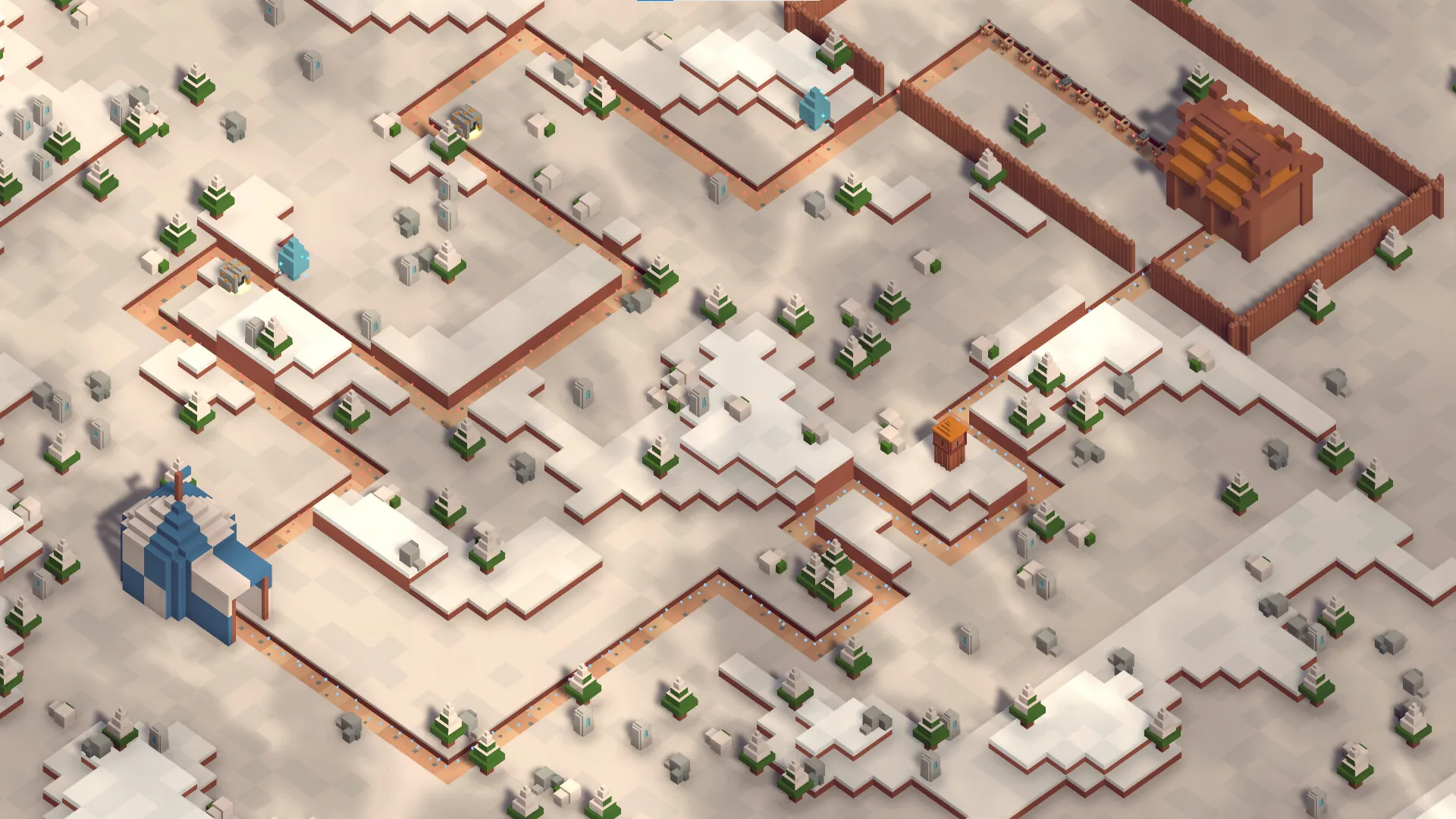
But the foundation is excellent, and it is rare. There are dozens of games mixing cards and tower defence. Very few dare make you choose between surviving and winning out of the same banknote.
Are you towers or troops? There is a debate running on the InsertCoins Discord and it is tenser than expected.
Community
Your rating
Advertisement
Loading comments...
You might also like
A procedural Anno where haulage is the real game. Every badly assigned freighter takes its revenge forty minutes later.

Crossing finally matters and defending responds. Then the screen goes black. 57 per cent positive on Steam, at 69.99 euros.
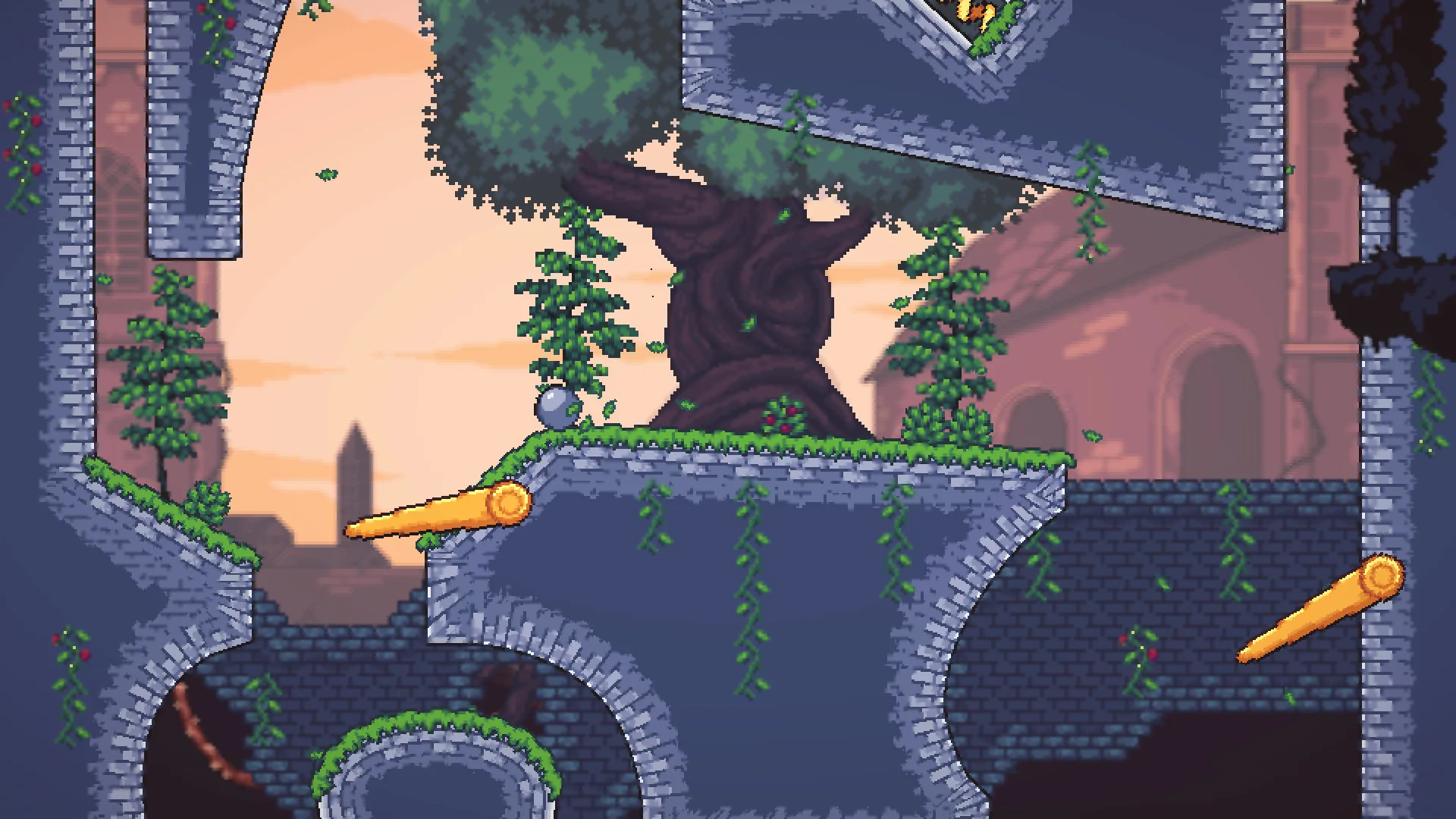
Two buttons, no score, no tilt. You climb from Plato's cave to the shattered spires of modernity, falling a great deal.