7
Test
Archipeo: thousands of islands, ships running a shuttle service, and me not sleeping
A procedural Anno where haulage is the real game. Every badly assigned freighter takes its revenge forty minutes later.
Alexandrosse
8 min
Islands floating on a sea of clouds, a prison escapee, a sky pirate and 40 hours of pure old-school JRPG. Cloudsea Frontier is gorgeous, but only in Japanese.
Alexandrosse
InsertCoins.press Score
6/10
Verdict
Mixed
We spend half our lives begging for the return of JRPGs like they don't make anymore, the ones where you climbed combat menus without fearing a microtransaction every ten minutes. Cloudsea Frontier grants that wish to the letter, with a sincerity that disarms, and then hands us the cruelest bill in the genre: to enjoy it fully, you need to read Japanese.
Cloudsea Frontier is a long-form JRPG developed and published by New RPG Project, released this 28 June 2026 on PC. Built with RPG Maker MZ, sold for around nine euros in a launch offer, it openly claims kinship with the 16-bit masterpieces of the 1990s. It's a labor of love, made by people who know their classics inside out. It's also, as we write, a game available only in Japanese, with the studio mentioning a future AI-assisted translation. Let's lay out the problem right away: it conditions everything else.
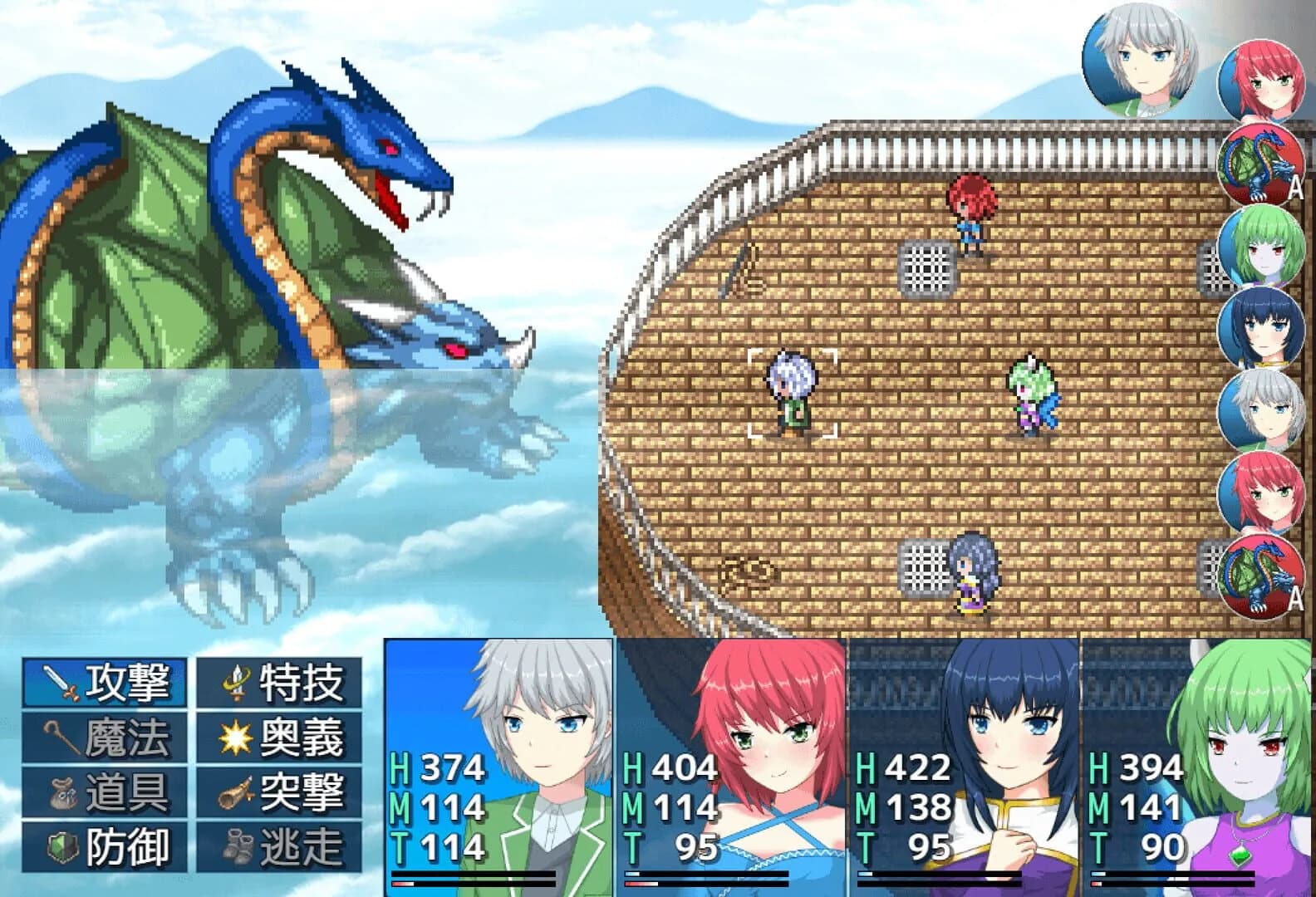
The combat system is side-view, turn-based with command input, and each character's speed determines how often they act. Classic, but well-held classic. Where Cloudsea Frontier breaks from the pack is with its class system. Each character freely juggles two types of classes, main and sub, opening real tactical flexibility: you reshape a fighter on the fly depending on the enemy, you stack roles, you adapt your team composition before a boss without starting from scratch.
To that add two families of abilities that add spice to the fights: blue arts, specific to each character, and red arts, tied to classes. Used well, they overturn a battle that's going badly, and the game clearly encourages experimenting with their combinations rather than hammering the same attack. It's a system that respects the player's intelligence, that rewards planning and dodges the pitfall of sleepwalking turn-based. You feel the hand of people who played the same games we did and drew the right lessons from them.
The story starts strong. In a world where islands float above a sea of clouds, a boy named Levin is sent to Prison Island after being falsely accused. There he befriends Xanad, a sky pirate met behind bars, and decides to escape. It's a pure-juice JRPG pitch, and the game owns it with real generosity of writing. Count thirty to forty hours to see it through on normal difficulty, side quests and exploration included, and those side quests aren't filler: several offer plots that stand on their own two feet.
The game also has the decency to respect your time with modern comfort options you'd be wrong to snub: message acceleration, auto-recovery, fast travel. It's the balance we've been chasing for years, the soul of the 90s without its chores. On paper, and for anyone who reads Japanese, Cloudsea Frontier ticks nearly every box of the successful nostalgic JRPG.
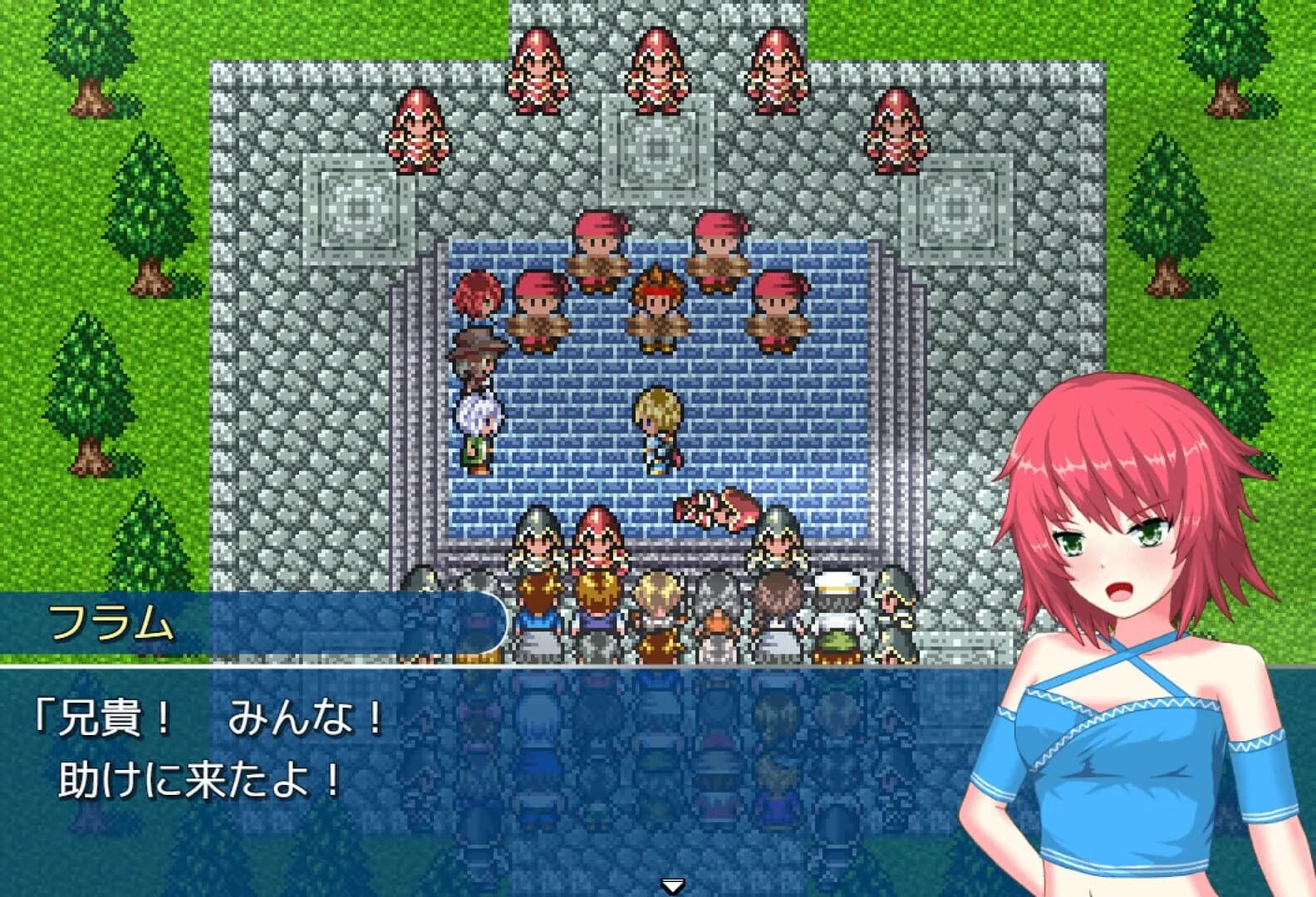
And then there's the language, and there's no getting around it. A forty-hour JRPG carried by its story and its dozens of chatty side quests is, by definition, unusable for anyone who doesn't understand a word of what's being said. You can follow a combat system by intuition, but you can't follow a whole narrative or resolve scripted quests without reading the text. As it stands, for a non-Japanese-speaking audience, Cloudsea Frontier is less a game than a promise awaiting translation.
The announced solution isn't reassuring. An AI translation, on a game that bets everything on the writing of its characters and the humor of its quests, means risking flattening precisely what gives it value. We've seen too many machine localizations turn dialogue full of life into polite gibberish to applaud before reading the result. It's all the more infuriating because the rest of the game deserves better: we may be holding an excellent JRPG, but we can't certify it yet without understanding half of it.
On presentation, Cloudsea Frontier lies about nothing. It's RPG Maker MZ, with all that implies: a polished but recognizable pixel art, sets that pull from a familiar asset bank, and modest staging. Even so, the studio draws real charm from these constraints. The islands suspended in their sea of clouds have a genuine visual identity, the palette is coherent, and the whole thing exudes that 16-bit warmth no cutting-edge engine can reproduce on command. This isn't a tech demo, it's a tribute held.
Comfort of play is there, with no notable bug during our sessions, and the twenty-eight achievements give a reason to comb every corner. It's a clean production, honest about its means, that never tries to look bigger than it is. In a landscape saturated with quickly-made indie JRPGs, that rigor counts, and it makes the language barrier all the more frustrating.
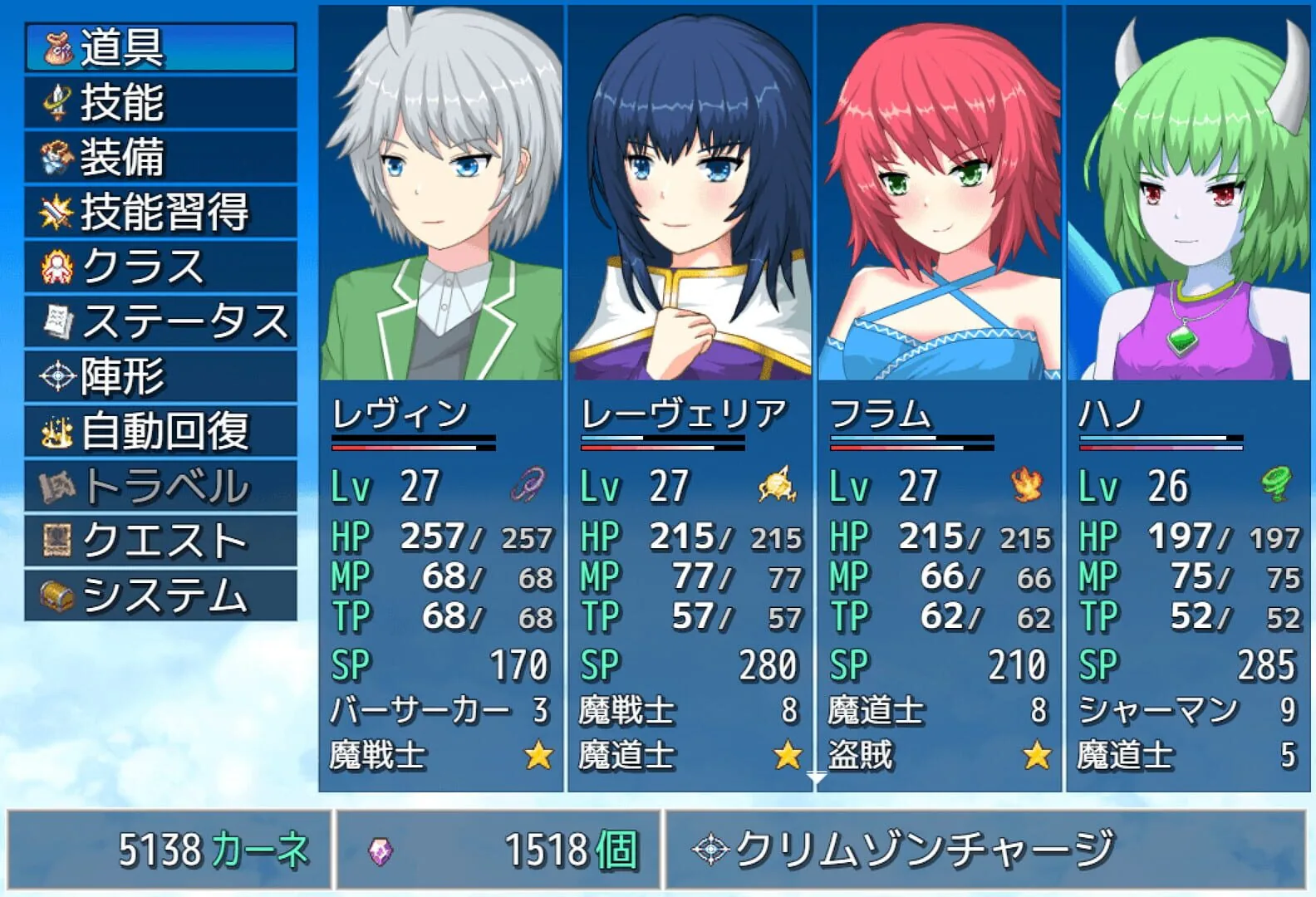
Cloudsea Frontier is a heartbreaking case. Everything that's about the game is there: a supple, clever class system, turn-based fights that ask you to think, a forty-hour adventure generous with quests, comfort options that modernize the experience without betraying it. It is, under the hood, exactly the old-school JRPG some of us have been begging for, made with love by people who know what they're talking about.
But you don't rate an intention, you rate a game as it reaches your hands, and this one arrives in Japanese only. For a non-Japanese-speaking audience, that means missing the essence of a work that rests on its writing, with only the prospect of an AI translation we already fear will damage what it's meant to open. If you read Japanese, add two points to the score and go for it. For everyone else, it's an excellent game we can't yet recommend, and you'll have to come back and judge it when it finally speaks our language.
The 16-bit JRPG we dreamed of, generous and clever, but locked behind a language barrier that makes it inaccessible here for now: one to watch very closely, to buy later.
Strengths:
Weaknesses:
Tested on PC.
Your verdict differs from ours? The Discord is the place to make your case.
Community
Your rating
Advertisement
Loading comments...
You might also like
A procedural Anno where haulage is the real game. Every badly assigned freighter takes its revenge forty minutes later.
Towers, troops, a single pool for both. Every coin spent on defence is a coin you will not be sending the other way.

Crossing finally matters and defending responds. Then the screen goes black. 57 per cent positive on Steam, at 69.99 euros.