"Congratulations on your appointment. Management is pleased to confirm your placement within the facility. Continued employment is subject to satisfactory performance."
Dead Copies' Steam page reads like an internal memo, and it ends with three words that sum up the whole game: same job, new you.
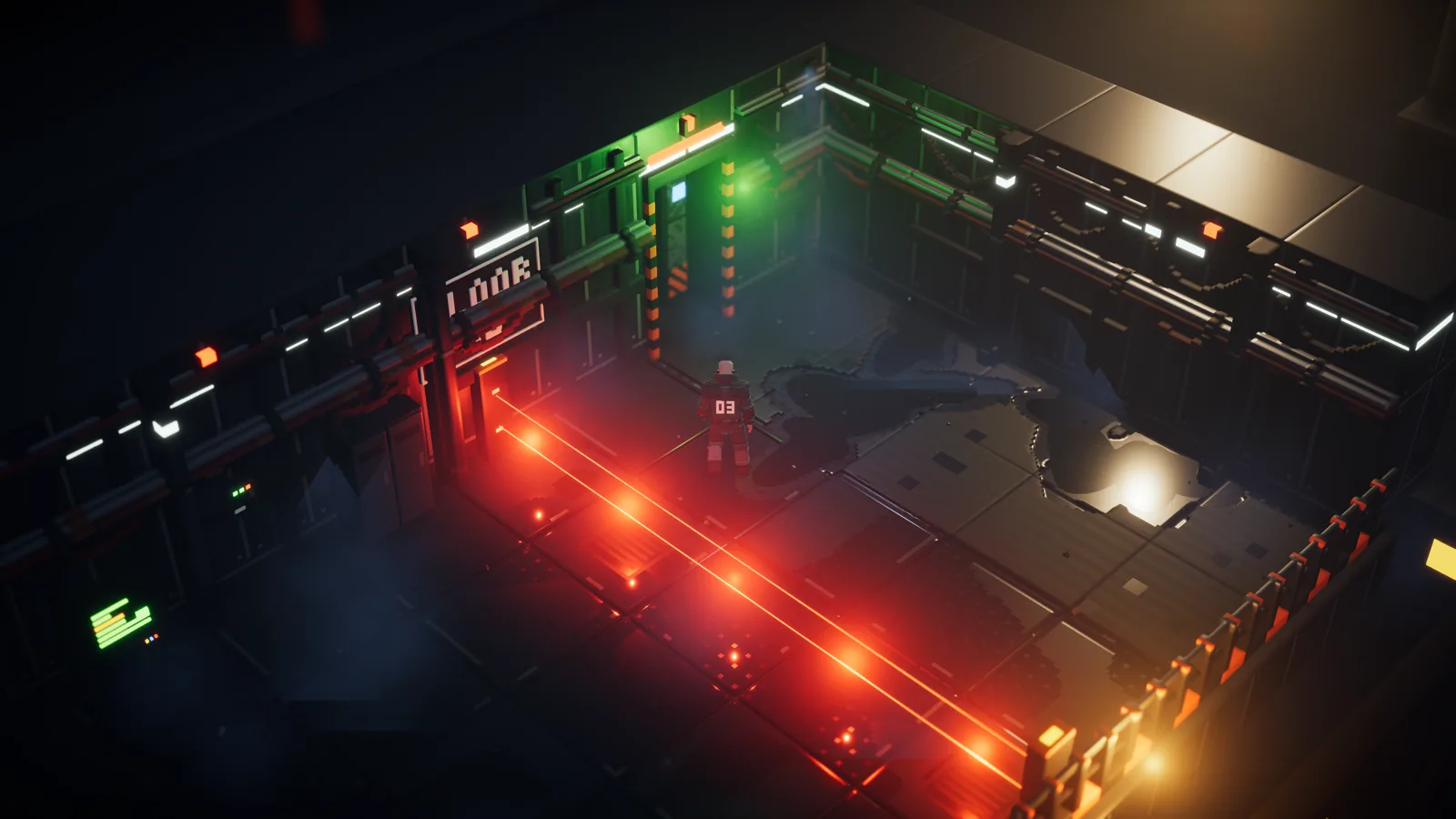
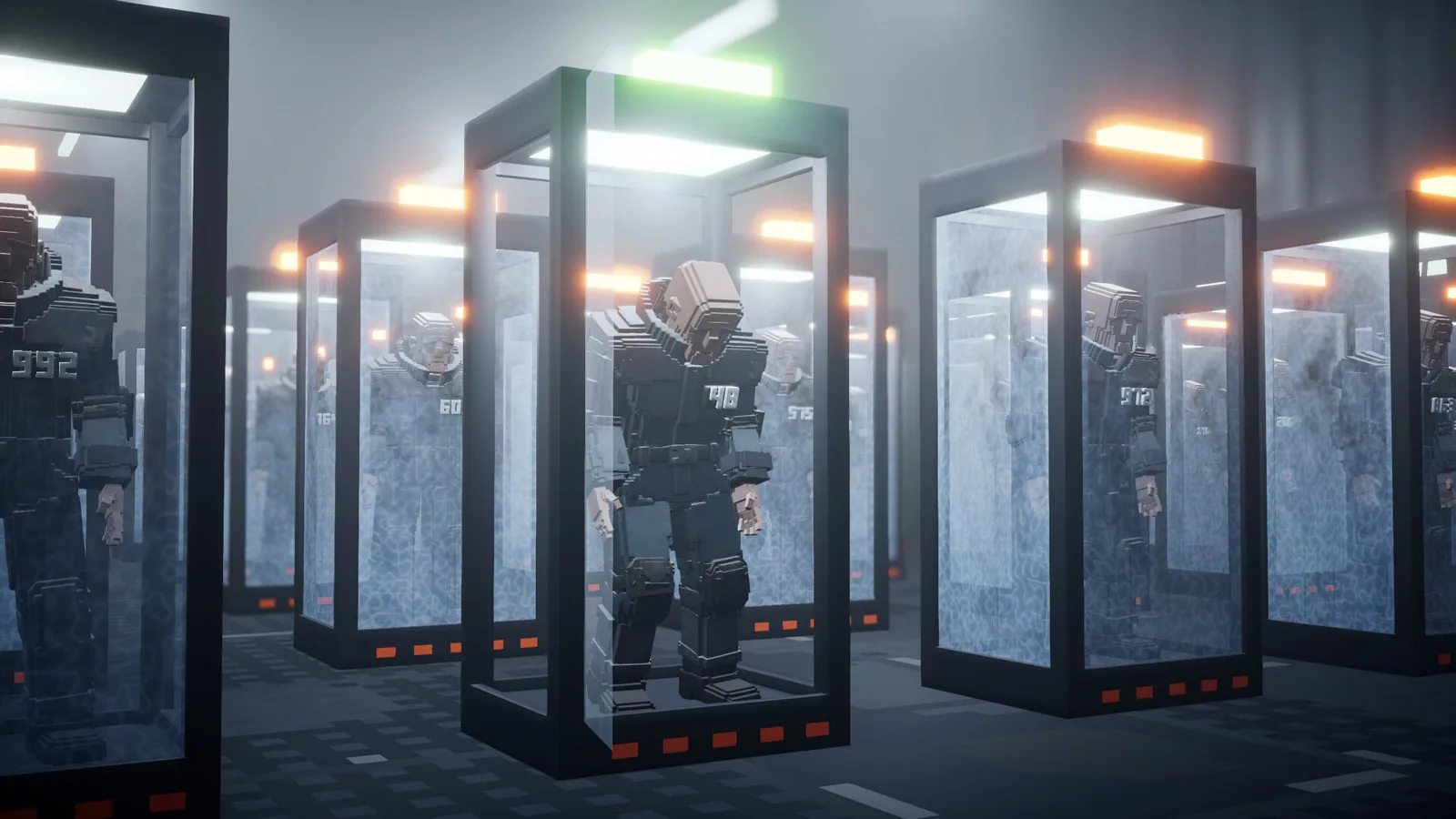
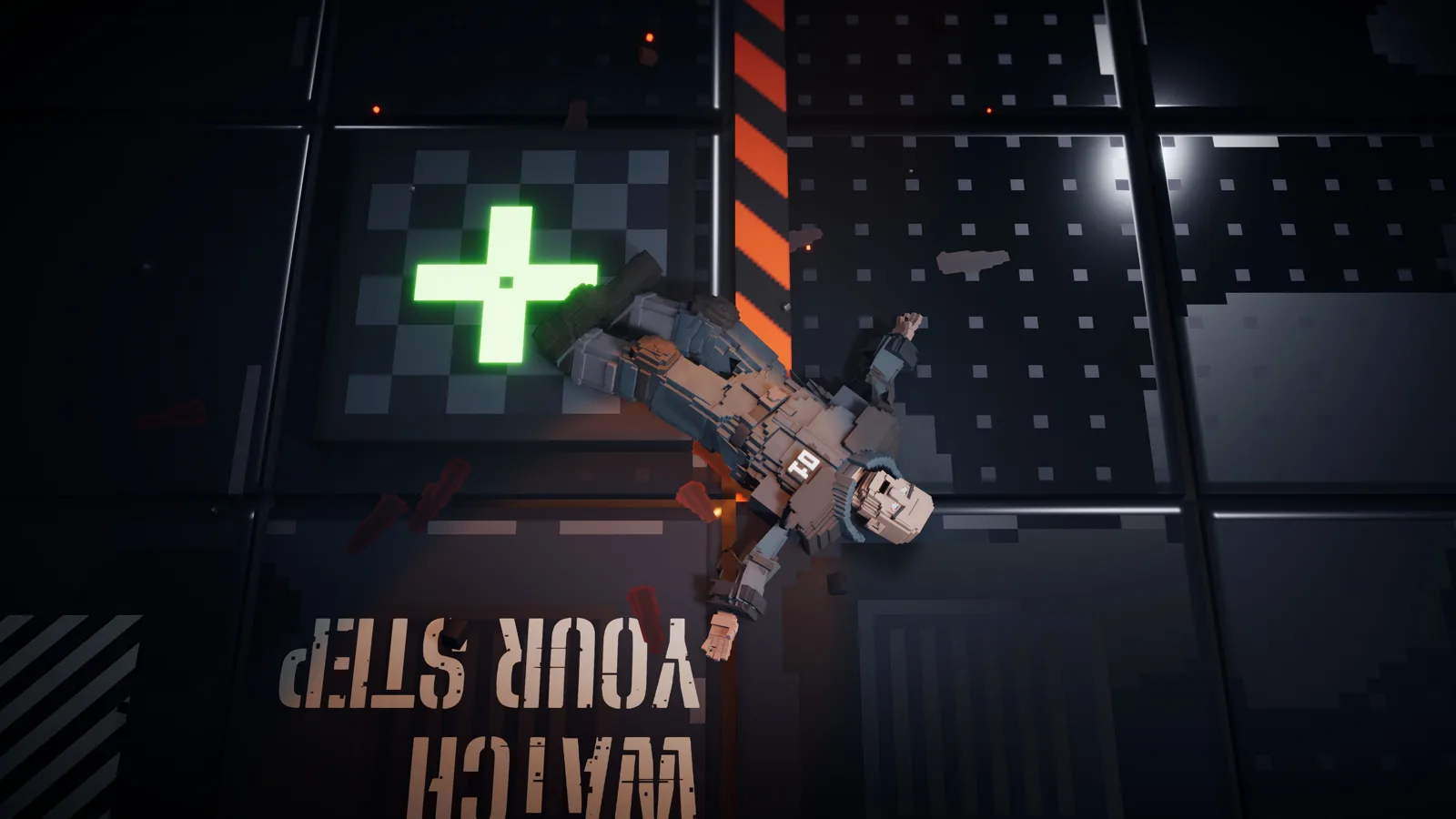
Dead Copies is a darkly comic puzzle game, isometric and voxel-based, about disposable employees. You play an associate sent into a facility riddled with traps. When they die (and they will, often), a successor is thawed to ensure continuity of operations. The predecessor's body stays on site, and that is where it all begins: the corpse can jam a mechanism, weigh down a plate, serve as a bridge. Every operation is handcrafted with a headcount target, and Management records everything in your file.
The game is developed solo by Jeremiah Costello, as DustyEffsky, and published by Unikkorn.xyz. The free demo arrives on 17 December, ahead of February's Steam Next Fest and a release planned for 9 March 2027. We asked its creator eighteen questions, and every one got an answer.
A warning before going further: the game shows every death in detail. Lasers, floor saw, guillotine, acid, electrocution, mincing. The voxels do not soften much.
Introduce yourself and explain the DustyEffsky name.
"I'm Jeremiah Costello, the developer behind DustyEffsky. My background spans game design, voice production and interactive audio, with more than 25 years of professional experience. I was Lead Designer at Gamma Minus, working on projects including Rough Justice: '84 and Cold Comfort, and more recently Senior Game Designer at tonies, working on Tonieplay games for the Toniebox, including Monopoly and The Game of Life.
DEAD COPIES is my solo project, published by Unikkorn.xyz."
What is your relationship with Unikkorn?
"Unikkorn.xyz publishes DEAD COPIES, which I'm developing as DustyEffsky. It's a new organisation, but the people involved are industry veterans I've worked with on AA and AAA projects over the years. There's an existing relationship there, rather than a connection that began with this game."
Why develop solo, and what is hardest?
"My experience has included leading teams of up to 25 developers. Working alone on DEAD COPIES is a completely new experience, and quite frankly a terrifying one. It's invigorating too; those feelings coexist rather than cancelling each other out.
The biggest challenge has been creating a large number of rooms that each have their own identity. It's relatively easy to change a layout or add another hazard; it's much harder to make a room feel like a distinct idea, with its own rhythm and satisfying moment of discovery.
My work on Rough Justice: '84 taught me a lot about developing small, focused challenges and then being willing to discard them. That willingness to let go matters just as much here: I want each room to earn its place, rather than keep an idea simply because I've already spent time on it."

Did the mechanic or the commentary come first?
"The workplace satire and the puzzle mechanic grew into the same idea. Part of the inspiration comes from the absurdity of modern working life: the pressure to keep producing, keep moving and somehow maintain a healthy work-life balance. There's something quietly dystopian about the rat race, especially when people start to feel interchangeable.
DEAD COPIES takes that feeling to a ridiculous extreme. An employee dies, a replacement is thawed, and the operation carries on. Each attempt contributes something, whether it's a body that helps solve a puzzle or a lesson about what went wrong."
How much comes from personal experience?
"There's a wider frustration behind it: the inequalities of modern society, and how easily corporate greed can be made to sound respectable. I'm interested in the words used to soften it. Job insecurity becomes 'flexibility', harm becomes 'optimisation', and people become 'resources'. The language tidies away the human consequences.
Management speaks in that reassuring register while the facility shows you what it means in practice. Someone has died, their replacement is already at work, and the company is pleased that the remains are still useful. For me, the humour is in that appalling distance between the polite explanation and what you can plainly see."
Where is the line between dark humour and unpleasantness?
"The humour comes from the gap between what happens to an employee and the calm, reassuring language Management uses to describe it. There are procedures, targets and encouraging announcements, even when something has gone horribly wrong. I'm performing Management's voice myself, so that contrast also runs through the delivery.
The company's cheerful indifference is the heart of the joke. I'd rather let that absurdity speak for itself than stop the game to deliver a lecture."
What are your main inspirations?
"The obvious touchstones are George Orwell's 1984 and Aldous Huxley's Brave New World. They're part of the background to how I think about dystopia. DEAD COPIES approaches it through the workplace: the pressure to keep producing, the procedures for everything and the way people become interchangeable in the company's eyes."
How do headcount targets change play?
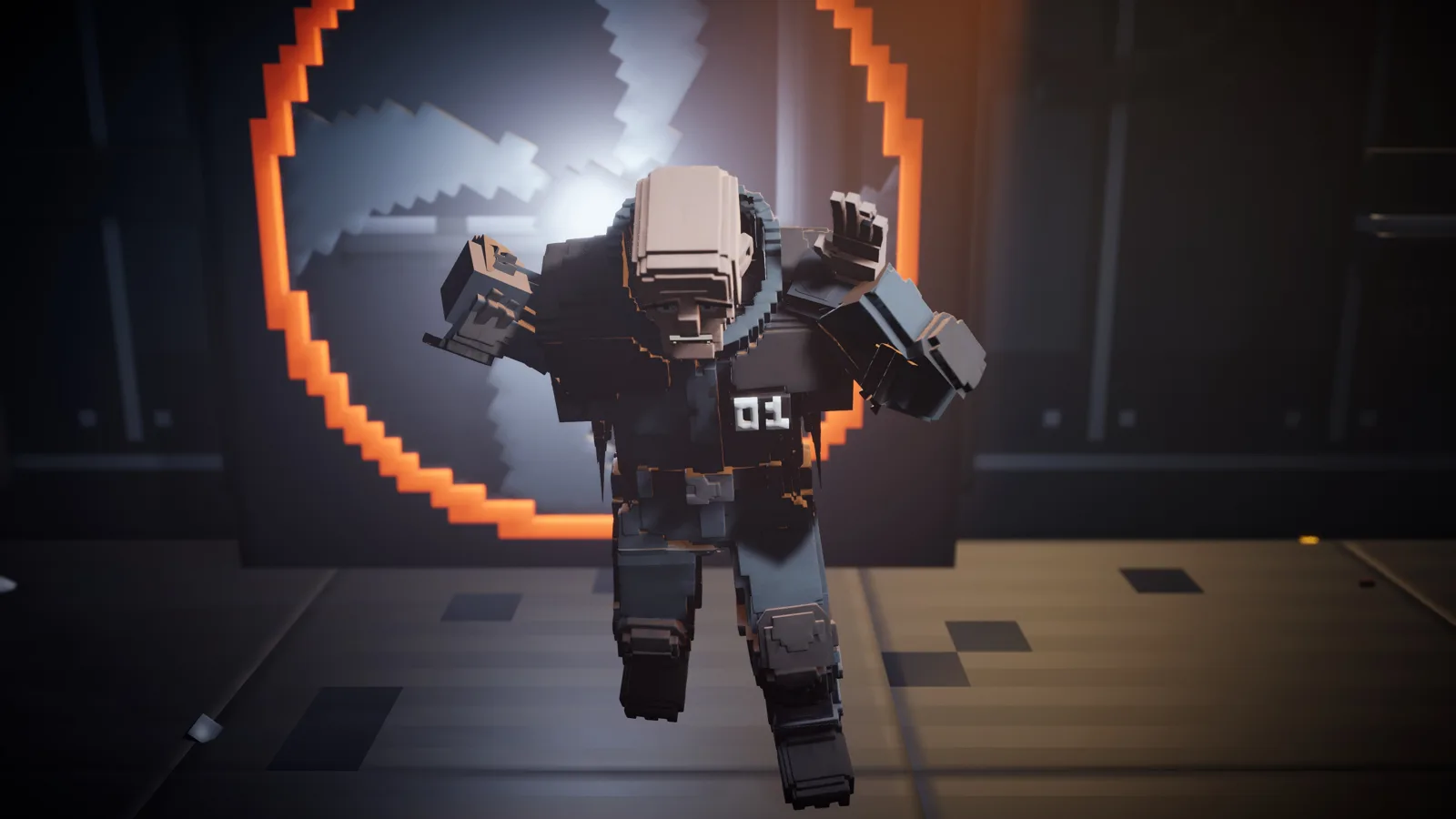
"The headcount target gives players an efficiency goal. You can concentrate on understanding a room first, then return and ask whether you could solve it with fewer employees. The game records your best headcount, so there's a reason to improve a solution.
In most rooms, exceeding the target means a less favourable performance assessment and a comment from Management rather than an immediate failure. That leaves room to experiment. Some operations have a strict quota, where the number of available employees becomes part of the puzzle itself."
What does self-termination mean mechanically and thematically?
"The position of a body can matter as much as the fact that it exists. Being able to end an associate's contract where they stand lets players deliberately place that consequence in the room, rather than having to find a hazard first.
It also makes the company's view of its employees very literal. The body becomes a resource in the next attempt. The successor inherits no abilities or traits; what carries forward is what the previous employee left behind, and what the player learned."
How do you create a handcrafted puzzle?
"I like to cast the net wide before narrowing things down. I try to come up with as many ideas as I can, including approaches that initially seem unlikely, then prototype and cut until I'm left with the ones that really work. For Rough Justice: '84, that meant 100 mini-game designs, 60 prototypes and 22 that ultimately made it into the game.
For DEAD COPIES, I reckon I'll produce rough designs for about 150 operations and discard the weakest. I'm not aiming to ship every idea I have. I want each surviving room to offer its own discovery, rather than feel like another arrangement of familiar hazards.
I also get a lot of practice at that kind of design as a Dungeons & Dragons dungeon master. D&D has three main pillars: exploration, combat and roleplaying. Exploration is probably the one I enjoy most, and I often turn those challenges into bespoke mini-games for my players. Sometimes I prepare them; sometimes they emerge in the moment as the players try something I hadn't anticipated.
That's a particularly satisfying part of design for me: finding a few rules that make an unusual situation engaging to play. In DEAD COPIES, that might involve bodies and weight, but it can also be movement, timing or understanding a machine. The room needs an interesting idea, not simply another casualty."
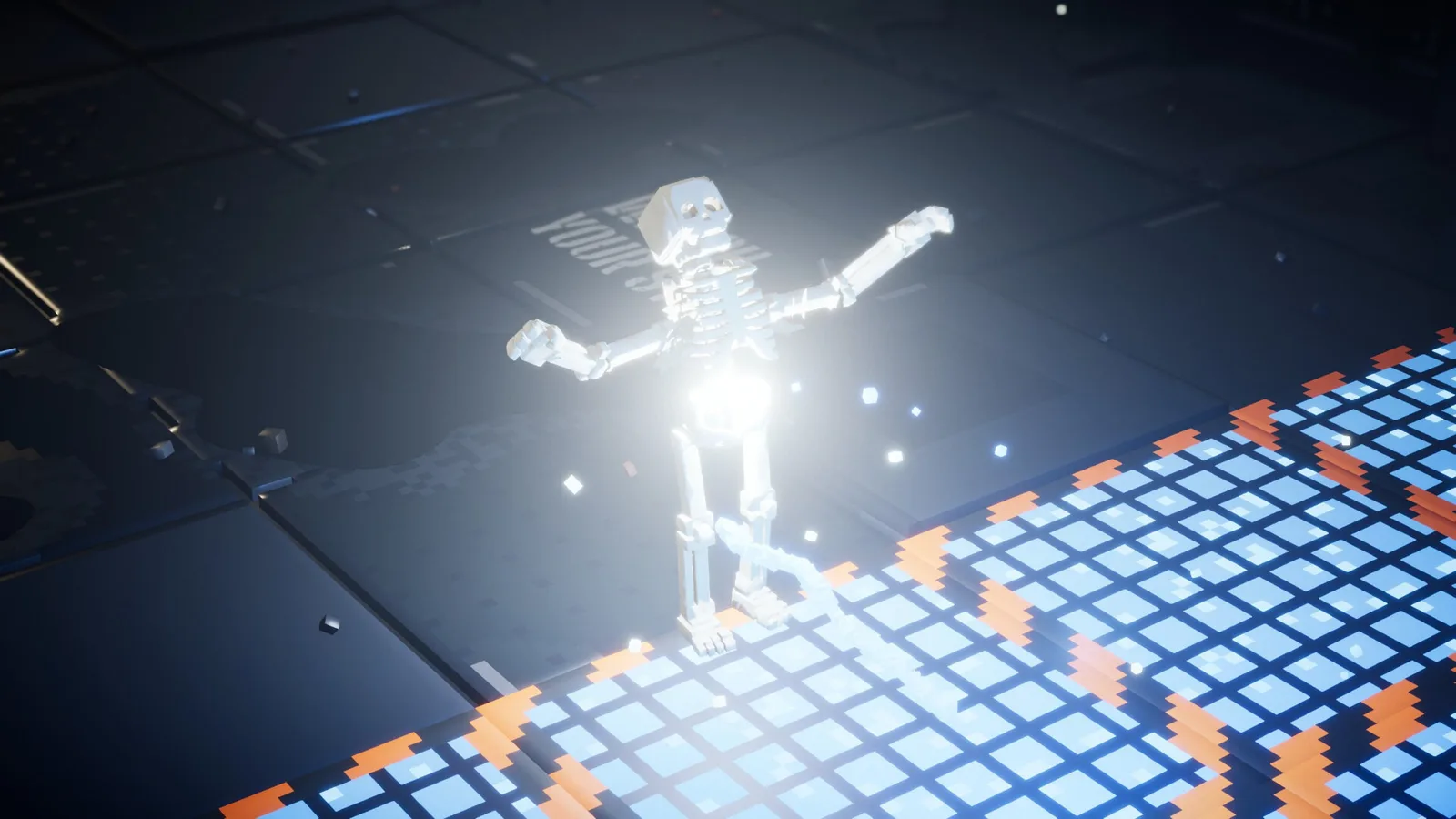
Do you keep unexpected physics solutions?
"I think of Bob Ross and his 'happy accidents'. If a player finds a way to solve a room that I hadn't thought of, that can be a lovely discovery. I don't want to shut it down simply because it wasn't my intended solution. That's part of the appeal of working with physics: players get to bring their own ingenuity to the puzzle."
Why an isometric voxel style, and which engine?
"DEAD COPIES is built in Unity using C#. The in-game visual assets are created procedurally through code.
The block-based characters and isometric view give the facility a clear visual structure. The position of a body, machine or hazard matters to the puzzle. The industrial visual language also supports the company's orderly presentation of a deeply absurd situation."
How long has development taken, and what was the hardest moment?
"Like many people in the games industry, I was laid off, which left me in a particularly vulnerable position. After so many years in the industry, I'd built up a lot of experience, and I felt that if I was ever going to make a game on my own, this was the moment to try.
That doesn't make it any less frightening. I've led teams of up to 25 developers, but working solo is unfamiliar territory. It's daunting to take that responsibility on yourself, but there's also something invigorating about putting everything you've learned into your own project."
How were AI tools used, and why disclose them?
"On previous, well-funded projects, I led teams of up to 25 people. Working alone would have seemed a very different proposition then. AI coding agents have changed what I can realistically build and test myself. There are caveats, of course, but being able to follow an idea through to a playable experiment myself is enormously liberating.
Take the mini-games in Rough Justice: '84. I might spend a day or two designing one, then prepare the handover for the programmers and briefs for the 2D or 3D artists. By the time we had something playable, the process typically took one or two weeks. Sometimes we'd reach that point only to discover that the idea simply wasn't fun.
Now I can move from an idea to a playable experiment in a fraction of that time. I can try an unusual approach, see where it falls apart, change it and test it again myself. That shorter feedback loop gives me much more room to experiment, and makes it easier to discard a weak idea before investing too much in it.
The tools don't tell me whether a puzzle is worth keeping, that still comes down to design judgement and what happens when someone plays it; but they let me ask that question much sooner."
The Steam page adds that all design and direction are human, and that no content is generated during play.
Why nineteen languages, and how did you approach them?
"The current plan is nineteen interface languages, including French, with English voice acting and subtitles. I'm also toying with the idea of cloning my own voice for French-speaking players. Since I perform Management myself, that could let them hear the same voice and character in their own language. It's something I'm exploring, rather than a confirmed launch feature.
Understanding the rules matters in a puzzle game, and DEAD COPIES also uses the company's language as part of its identity. Giving more players access to the interface helps them engage with those systems."
What do you expect from the demo and Steam Next Fest?
"The free public demo is planned for 17 December 2026. It introduces the central mechanics through a selection of rooms and gives players a first experience of the facility and Management. A separate preview version is expected to be ready for editorial familiarisation on 10 December, ahead of the full release planned for 9 March 2027.
A wider audience will help show where the rooms communicate clearly and where players struggle to understand what happened or what they might try next. Earlier testing has already prompted changes to movement speed, layouts and hazard selection."
What is the price, and are consoles planned?
"The final price hasn't been announced yet. My focus is on completing the PC release; I don't have any console plans to announce at this stage."
One sentence: why wishlist DEAD COPIES?
"Wishlist DEAD COPIES for handcrafted physics puzzles where your predecessors' mistakes can become the tools for your next solution, all under Management's cheerfully indifferent supervision."
What stands out in these answers is how closely the message and the mechanic fit together. The corpse as a resource is not a gimmick glued onto a satire: it is the satire. And Jeremiah Costello's method, 150 rough designs to keep only the best, recalls a dungeon master preparing rooms knowing the players will do something else. Bob Ross's "happy accidents" as a philosophy for physics puzzles: we have rarely read better.
The demo arrives on 17 December. We will be back.
Exclusive images: DustyEffsky / DEAD COPIES, © 2026 Unikkorn UG (haftungsbeschränkt).
How many employees will the first room cost you? Place your headcount bet on the InsertCoins Discord. Management will take note.