6
Test
Fleets of Valor: the dive on the carrier is superb, everything else waits its turn
Command a fleet on the map, then dive on the Shokaku yourself. A great idea, five campaign missions, and a tiny studio.
Alexandrosse
4 min
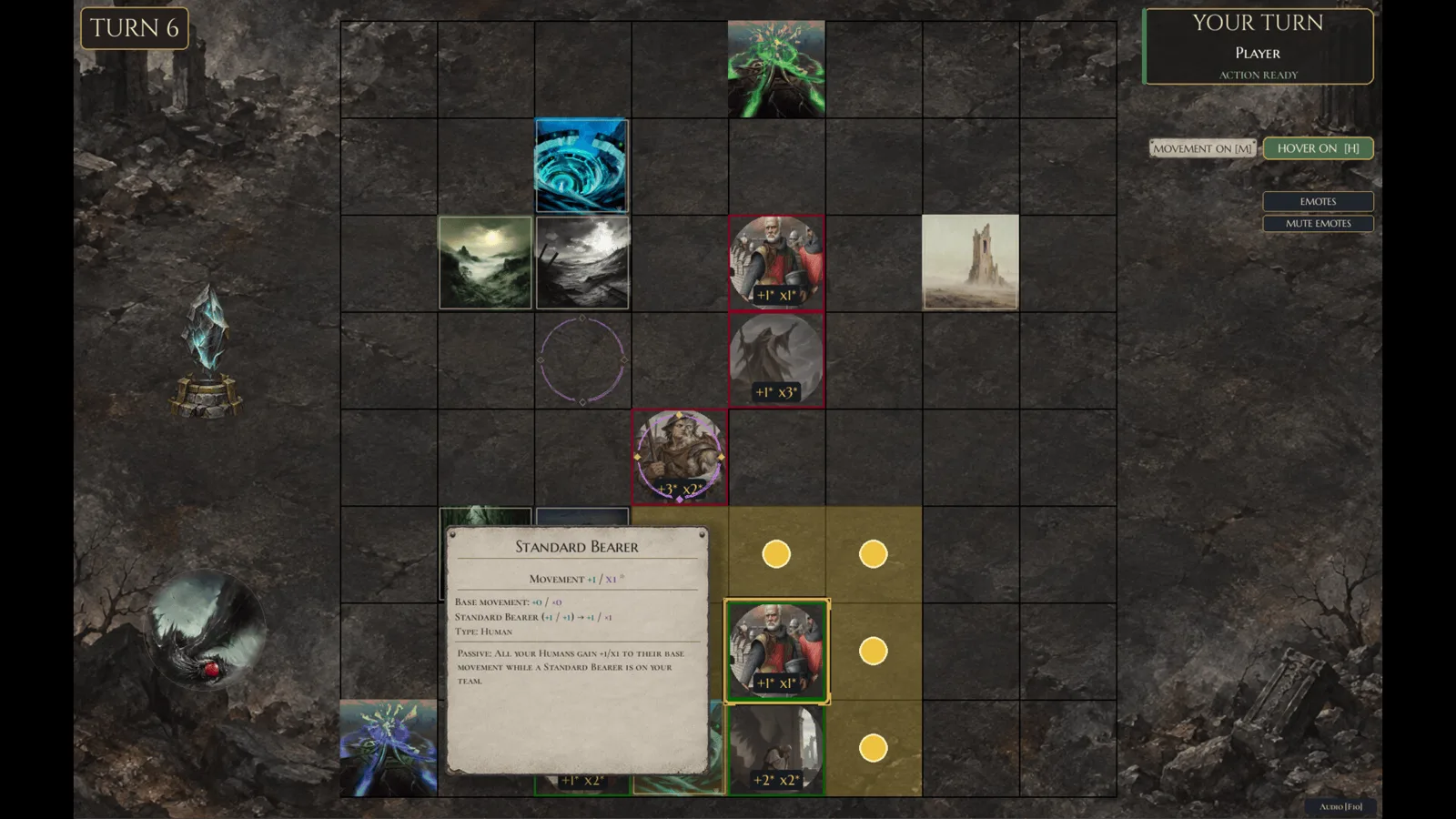
Five units, five terrains, an 8 by 8 board and zero luck. A free game, with no real-money purchases, made by a single developer.
Alexandrosse
InsertCoins.press Score
7/10
Verdict
Recommended
No draws. No mana. No dice rolls, no hit chance, no health bars.
When you start Echoes of Calir coming from collectible card games, that list of absences is scary at first. Then you realise it is the game. A piece that gets captured is gone in one move, like in chess. Everything that happens on the board follows from what you decided, and from nothing else.
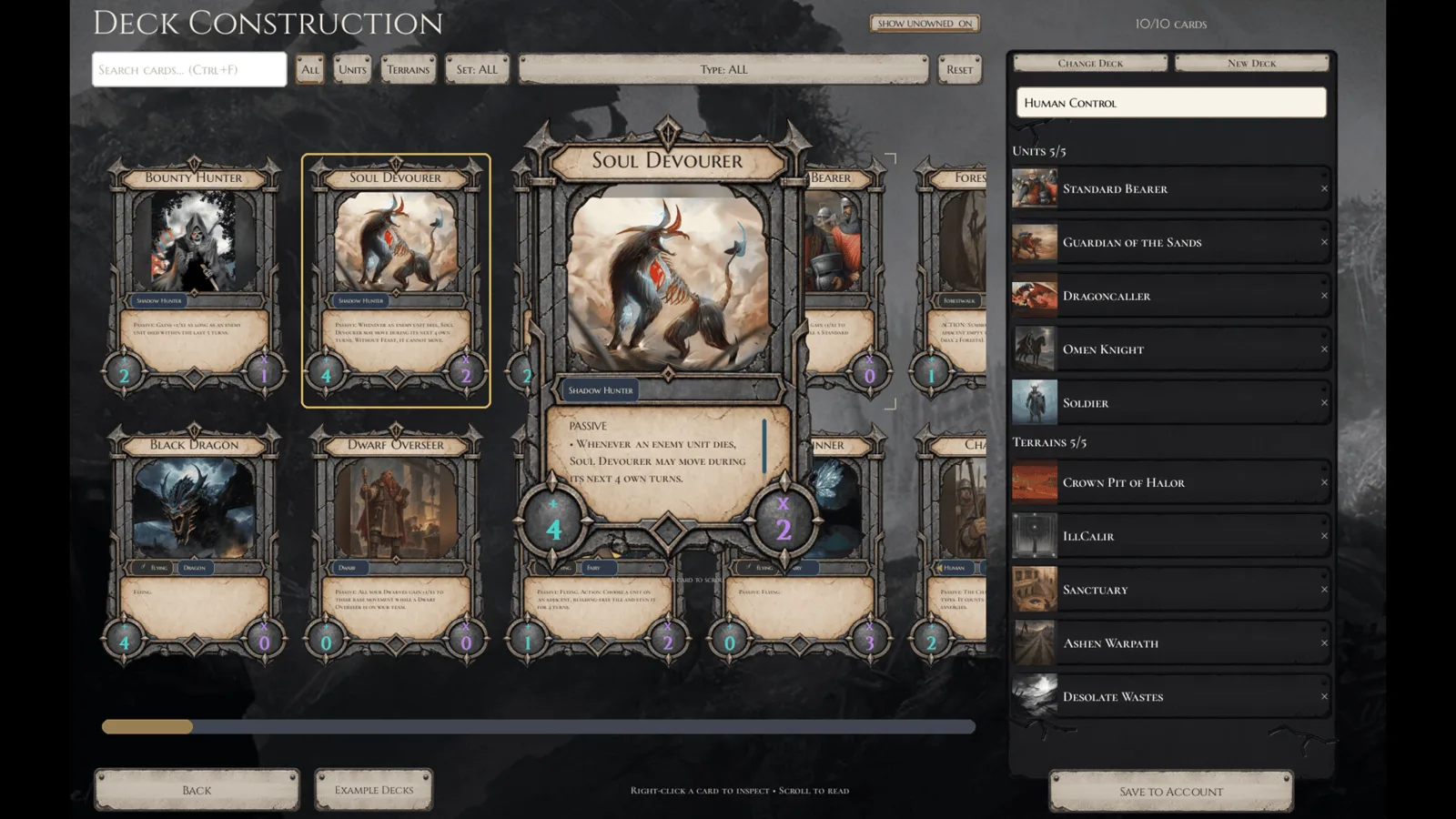
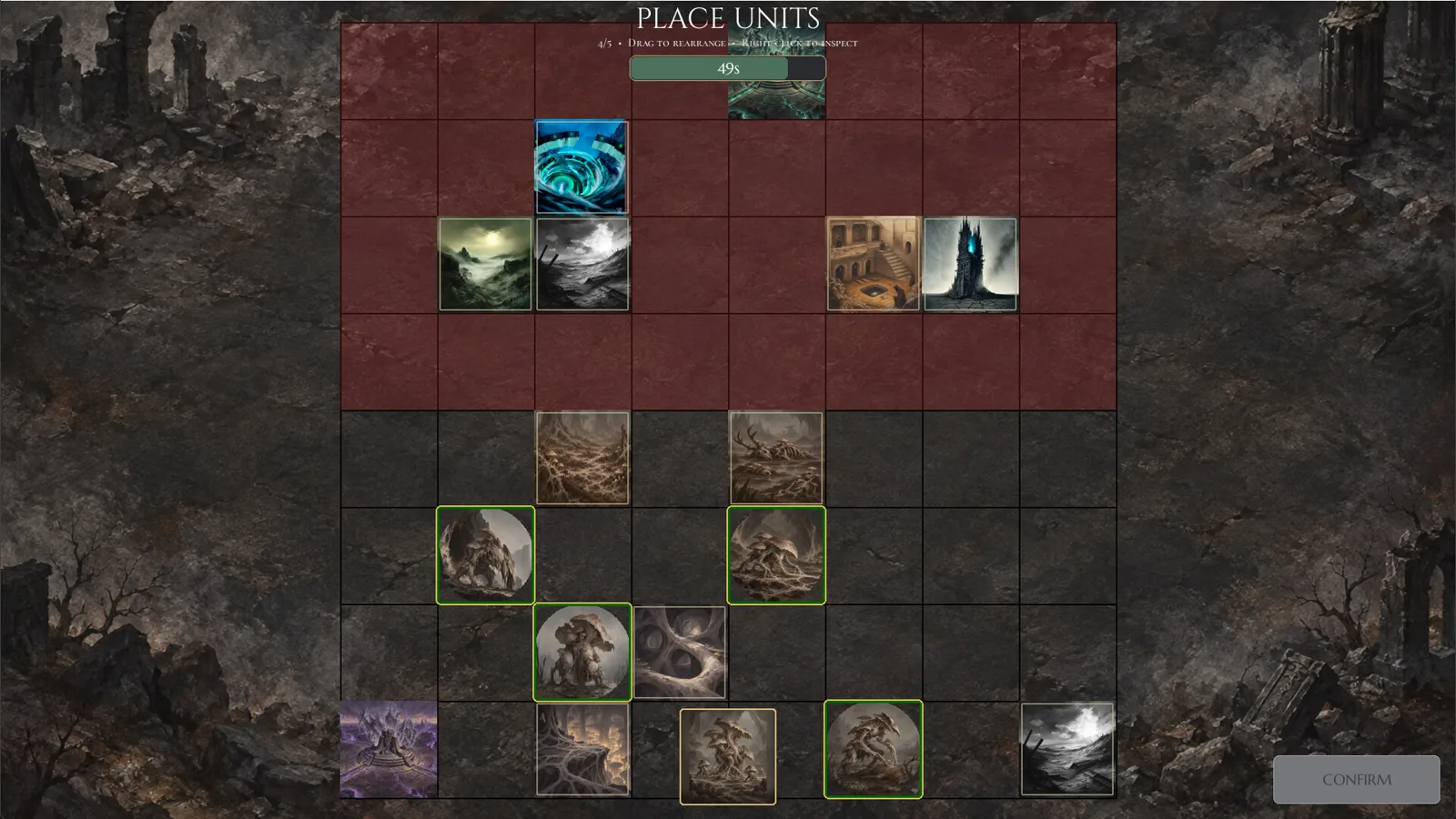
The principle fits in one sentence. Before the match, you pick five units and five terrains out of more than eighty pieces, then you place your base, your terrains and your units on your half of the board. Then you play turn by turn, like chess, each unit with its own movement and abilities.
Terrain is the real find. Water makes a Tidewalker dangerous when it would be harmless elsewhere. Mines give the Baskan Dwarfs control over trapped squares. Forests, mountains and a fungus that spreads over the course of the match draw the lanes of the game. In other words, your deck is not drawn, it becomes the battlefield, and two matches with the same units play out differently if the terrain changes.
Total readability. When you lose, you know why, and you know exactly on which move. That is rare in a game that borrows from collectible card games, where frustration almost always comes from a dead hand or a bad draw.
The six families, then: elusive fairies, aggressive shadowhunters, disciplined humans, terrain-minded dwarfs, growing mycelian swarms, creatures of the deep. You can mix them, and crossing two families is how you find the combinations your opponent has to solve on the board.
And the economy. The game is free, and there are no real-money purchases at all. The shards used to unlock cards from the first expansion, Hours of Calamity, are earned by playing. In a genre that usually lives on paid boosters, that is almost provocative.
The presentation. The developer says it themselves on Steam, with a frankness I appreciate: thirty of the eighty artworks are made by hand, the rest still comes from generative AI while waiting to be replaced, for lack of budget. It shows, and for a game whose cards are its shop window, it is a handicap. The developer works alone, on a hobby budget, and says so.
The other limit is numbers. An online duel game lives on its players, and Echoes of Calir comes out today with no established community yet. The practice AI and the five-part tutorial let you learn without waiting for an opponent, but the online ranking will only mean something if people show up.
Free, with no commercial trap, and a terrain idea I had not seen anywhere else: there is no reason not to try it.
If you are looking for an opponent for your first ranked games, put out a call on the InsertCoins Discord, we will surely find someone to walk into a mine.
Community
Your rating
Advertisement
Loading comments...
You might also like
Command a fleet on the map, then dive on the Shokaku yourself. A great idea, five campaign missions, and a tiny studio.
A time machine, historical figures to gear up, and fights that play out without you. The best part is playing with two friends.
A ship, waves of enemies, a shop between days at sea and a rubber duck among the items. Pretty, effective, and familiar.