7
Test
Archipeo: thousands of islands, ships running a shuttle service, and me not sleeping
A procedural Anno where haulage is the real game. Every badly assigned freighter takes its revenge forty minutes later.
Alexandrosse
8 min
Two buttons, no score, no tilt. You climb from Plato's cave to the shattered spires of modernity, falling a great deal.
Alexandrosse
InsertCoins.press Score
7/10
Verdict
Recommended
The studio is called Reliable Plumbing Services. They have made a pinball game about the history of western thought.
I could have stopped the article there and you would have had the essentials.
But it needs explaining, because I have not found anything equivalent and the official description, honest as it is, does not convey the gesture.
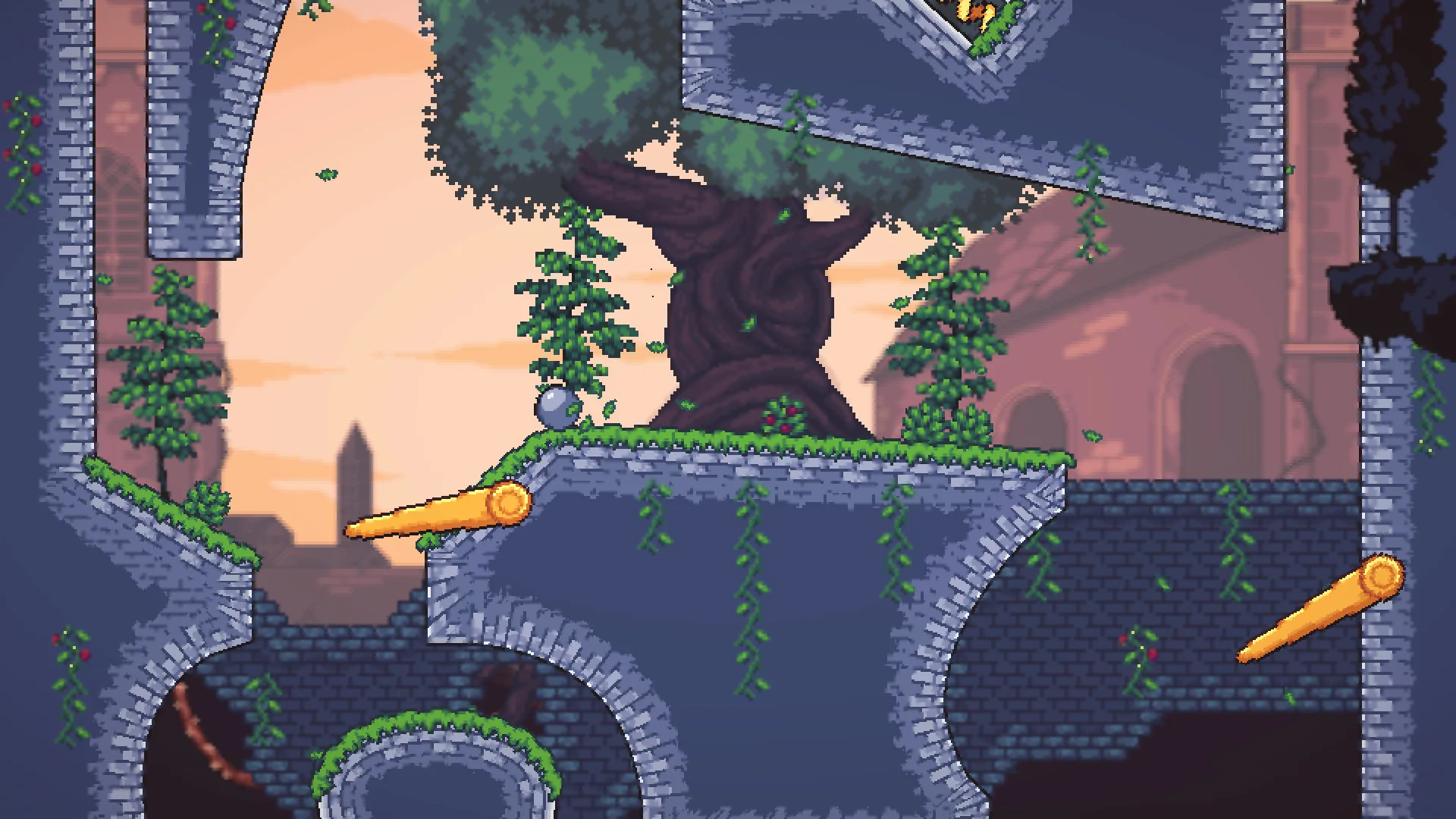
Fallosophy is a vertical precision platformer played with the vocabulary of a pinball table. You do not have a character who runs and jumps. You have flippers, plungers and momentum. Two buttons. You climb.
And crucially: there is no score. No tilt. No ball savers. The three things that define a pinball machine have been removed, and what remains is the physics. The game keeps pinball's tools and throws out its economy, because what interests it is not racking up points, it is making an ascent.
You play Baetyl, a lone spark of thought, setting out from the dark cave of ignorance towards the light of understanding. A voice calls from the depths, calm, commanding, impossibly old. The game calls it the Philosopher King and it urges you upward.
The levels pass through the great eras: ancient, medieval, modern, and beyond. Platforms crumble like forgotten doctrines, ideas linger in the soundscape, and the architecture changes its logic along with the thought it illustrates.
I expected all of that to be wallpaper. It is not quite.
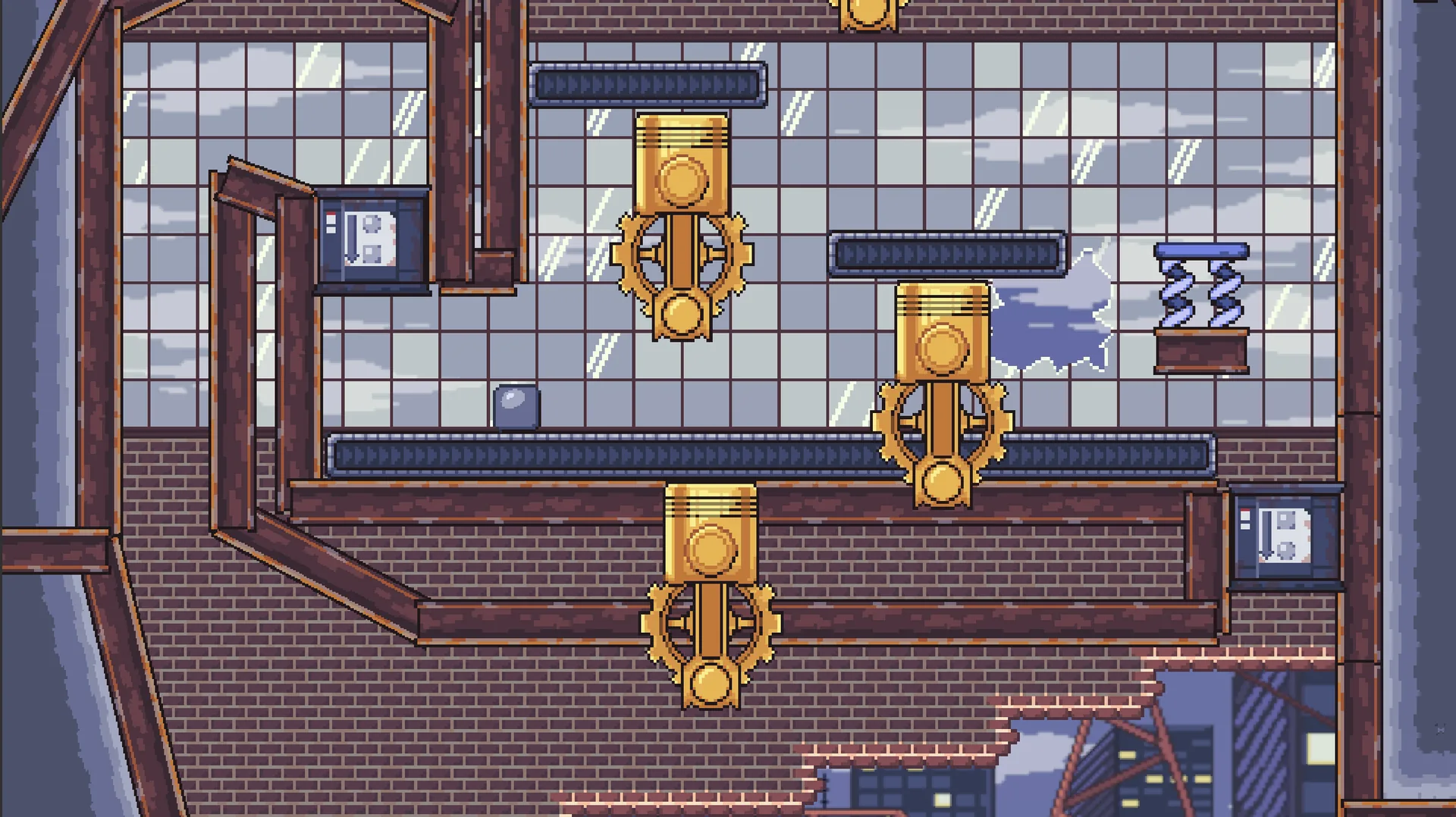
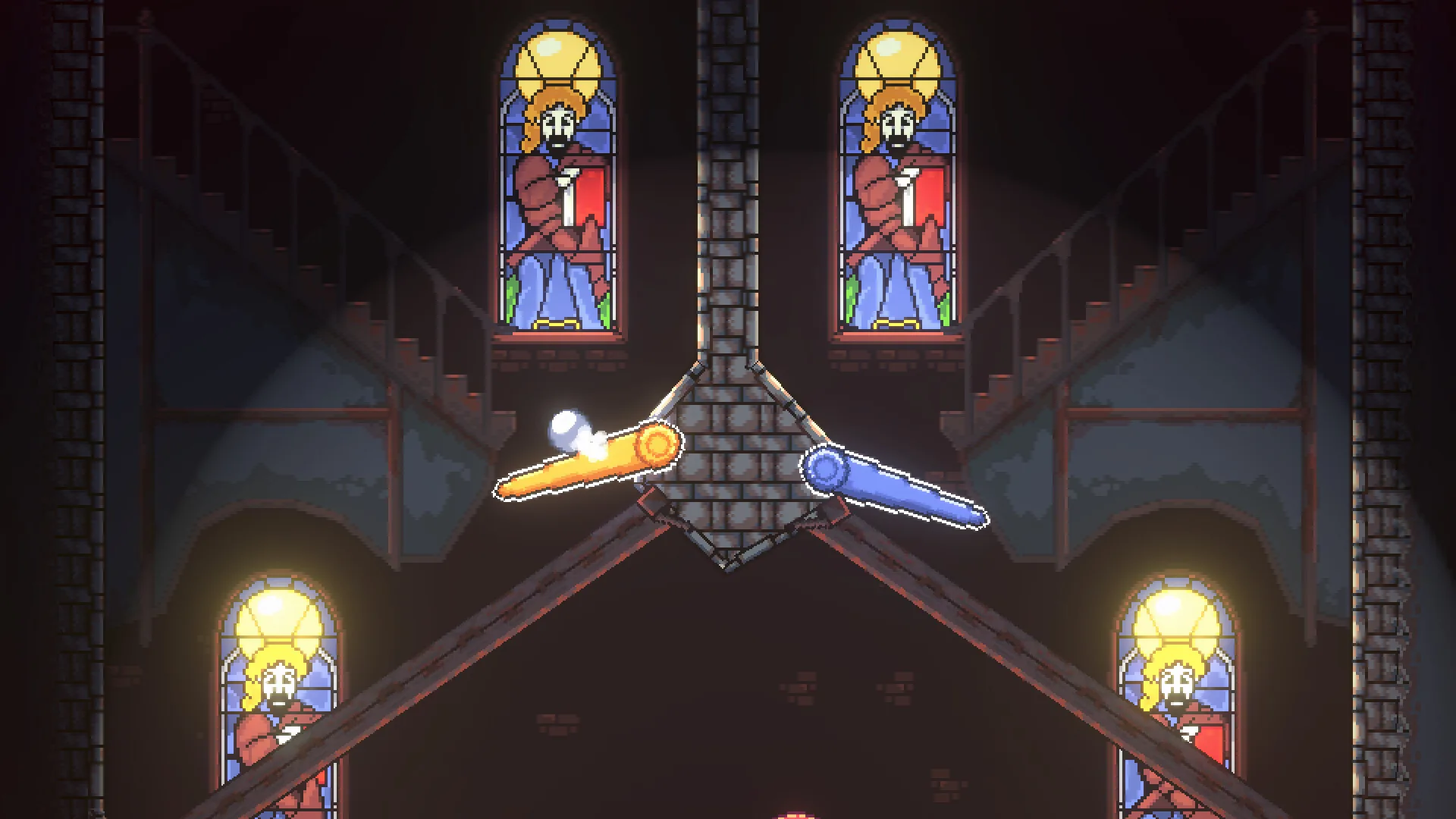
The ancient floors are geometric and regular, you can sense an order to the world and you can anticipate a bounce. The medieval floors are vertical and narrow, all cathedral, and you have to accept being funnelled by a corridor. Modernity is broken: chunks of architecture that no longer agree with each other, trajectories you can no longer read, sequences of jumps you have to invent yourself.
Is this great philosophy? No. Does the shape of a level make you feel something about the period it stands for? Yes, and frankly that is more than I expected from a game called Fallosophy.
It is written on the box: you will fall, you will rise, and you will learn to ask why.
And you will fall. A lot. A vertical pinball table is a game where you lose altitude for free, and the punishment is not death, it is dropping three screens. Anyone who has played this kind of structure knows that is worse.
The game is hard. Not unfair, hard. The physics are coherent, the flippers respond, momentum carries exactly as you hope, and just about every fall I took came from my own misreading. But it demands a tolerance for repetition that not everyone has, and the game does nothing to cushion you.
My favourite moment is also the one that annoyed me most: a section where you have to deliberately let yourself drop into a plunger to regain speed. It took me twenty minutes to accept that going down was the only way up. The game never told me. It simply built it that way and waited.
The Philosopher King talks a lot, and he talks solemnly. A voice telling you to keep climbing is fine for five minutes; two hours in, I wanted the option to answer back. The game takes its theme very seriously while its title is a pun, and that gap occasionally produces a slightly borrowed gravity.
Readability wobbles on the upper floors. When the level's idea is disorder, the disorder also applies to whatever you are trying to aim at.
And the conceptual promise outruns what the game delivers. You do not really travel through the history of thought, you travel through four moods that evoke it well. The difference matters if you turn up with academic expectations.
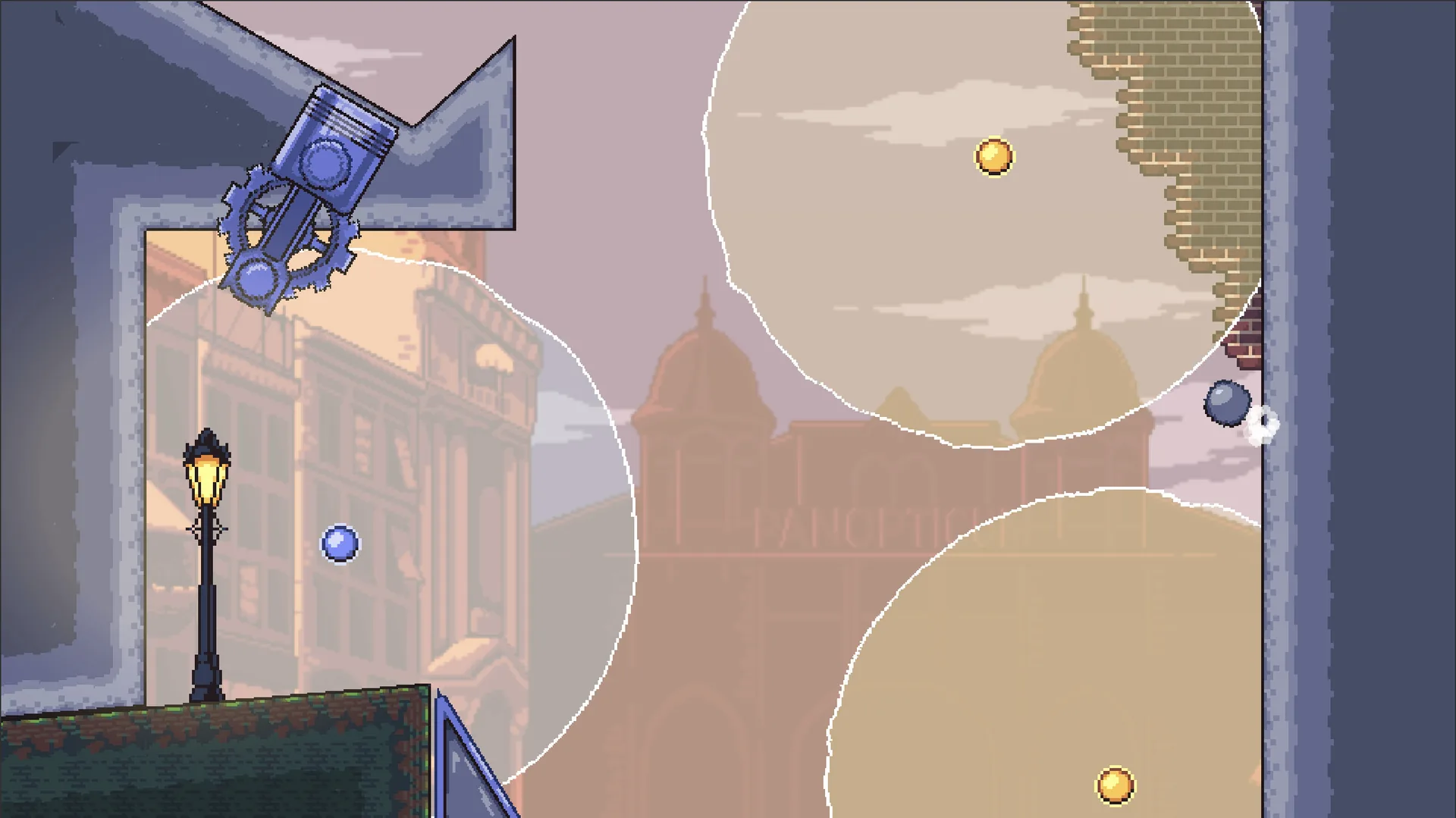
What is left is a two-button game, very precise, very demanding, with an idea about form that nobody else had, made by a studio named after a plumber. The sort of thing that only exists because somebody wanted it to, and that is why we go through the day's releases one by one.
Come and tell me if you found the plunger section before I did, we talk about it on the InsertCoins Discord.
Community
Your rating
Advertisement
Loading comments...
You might also like
A procedural Anno where haulage is the real game. Every badly assigned freighter takes its revenge forty minutes later.
Towers, troops, a single pool for both. Every coin spent on defence is a coin you will not be sending the other way.

Crossing finally matters and defending responds. Then the screen goes black. 57 per cent positive on Steam, at 69.99 euros.