7
Test
Barfender: my idiotic friend drank all the beers
A co-op bar that collapses while you serve. 98 per cent positive, and one of the rare times chaos is the actual subject.
Alexandrosse
7 min
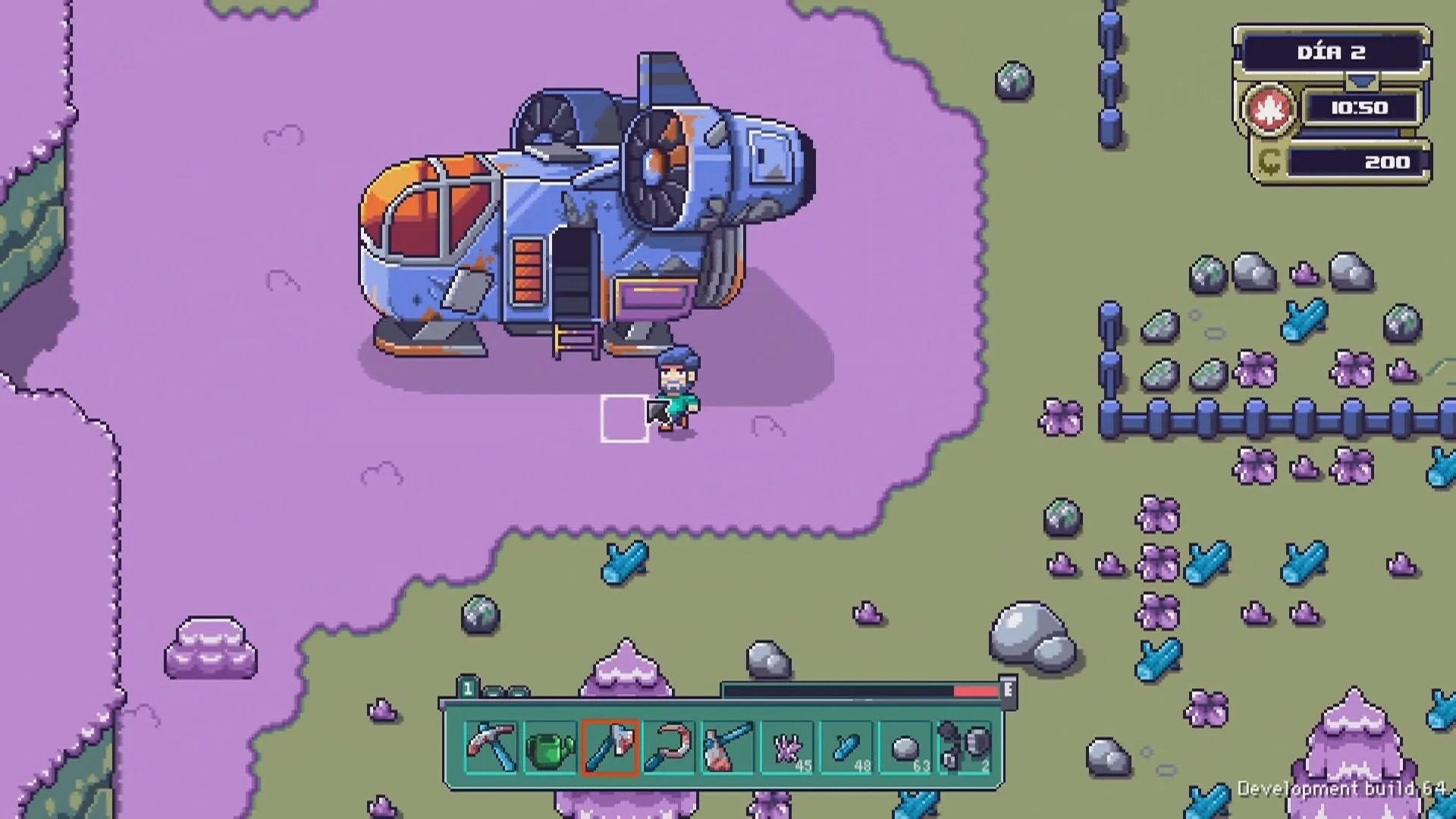
Yes, it's a Stardew clone, we won't lie. But traveling from planet to planet and mining under threat shift things enough that Farlands isn't just one more copy.
Alexandrosse
InsertCoins.press Score
7/10
Verdict
Recommended
From seeing Stardew Valley clones land every month, we've developed a reflex of mistrust. Another farm, more seeds to plant, more villagers to marry, and this time with a coat of space paint on top to look different. So we launched Farlands grumbling, ready to draw the easy verdict of the umpteenth tracing. And then we took our ship, set course for another planet, and started to understand that the space paint wasn't just a veneer.
Farlands is a space farming simulator developed and published by JanduSoft, under the lead of Eric Rodríguez, leaving early access for a full 1.0 version this 16 July 2026 on PC, for around eighteen euros. The pitch has immediate charm: you've just bought your own planet, an old agrarian rock at the edge of the galaxy, handed over almost for free for a reason you're left to guess. You have to leave the overcrowded, stressful metropolis for a gentler rural life, clear the brush, replant, fix what time has destroyed. After two years in early access and a solid 92% positive reviews, the game finally arrives complete.
Let's get it out of the way right away, since that's your question. Yes, Farlands draws enormously from Stardew Valley, and it doesn't hide it for a second. The base loop is an owned tracing: you cultivate your fields, you chop trees for wood, you go down into the mines, you weave friendships with characters up to romance and marriage, and you gradually piece together a hidden story you can also choose to ignore. Every brick of this gameplay will immediately evoke the genre's master to anyone who's played it. On that level, Farlands reinvents strictly nothing, and you have to accept that up front.
It's not necessarily a flaw, by the way. Stardew's formula works because it's excellent, and Farlands executes it with seriousness and generosity. The progression is gentle, the gratification well dosed, the comfort present, and you immediately find that hypnotic pleasure of organizing your farm and planning your days. If you were just looking for a new dose of that comforting loop, it's there, clean and functional. But the real question is what the game adds on top, and that's where it gets interesting.
The big difference, the one that keeps Farlands from being a simple copy, lies in its interplanetary exploration. You aren't confined to your farm: you take a ship and travel between the planets of your solar system, each with its own biomes, unique materials and characters. That dimension completely changes the rhythm of a classic farming game. Where Stardew roots you in a single valley, Farlands pushes you to go out, to explore, to bring back exotic resources from elsewhere to develop your own world. It's the influence of No Man's Sky grafted onto the cozy sim, and that graft takes surprisingly well.
Mining is part of the same effort to go beyond the model. Here, going down into the mines isn't just a matter of pickaxe swings: it's an activity tinged with combat, with hostile creatures to face across several galleries. You're closer to a small action component than to the purely contemplative mining of its inspiration, and it brings a welcome tension that breaks the routine. Between the planet-hopping and these beefier descents, Farlands gives itself the means to have an identity of its own, that of a Stardew that traded its rural stillness for a thirst for elsewhere.
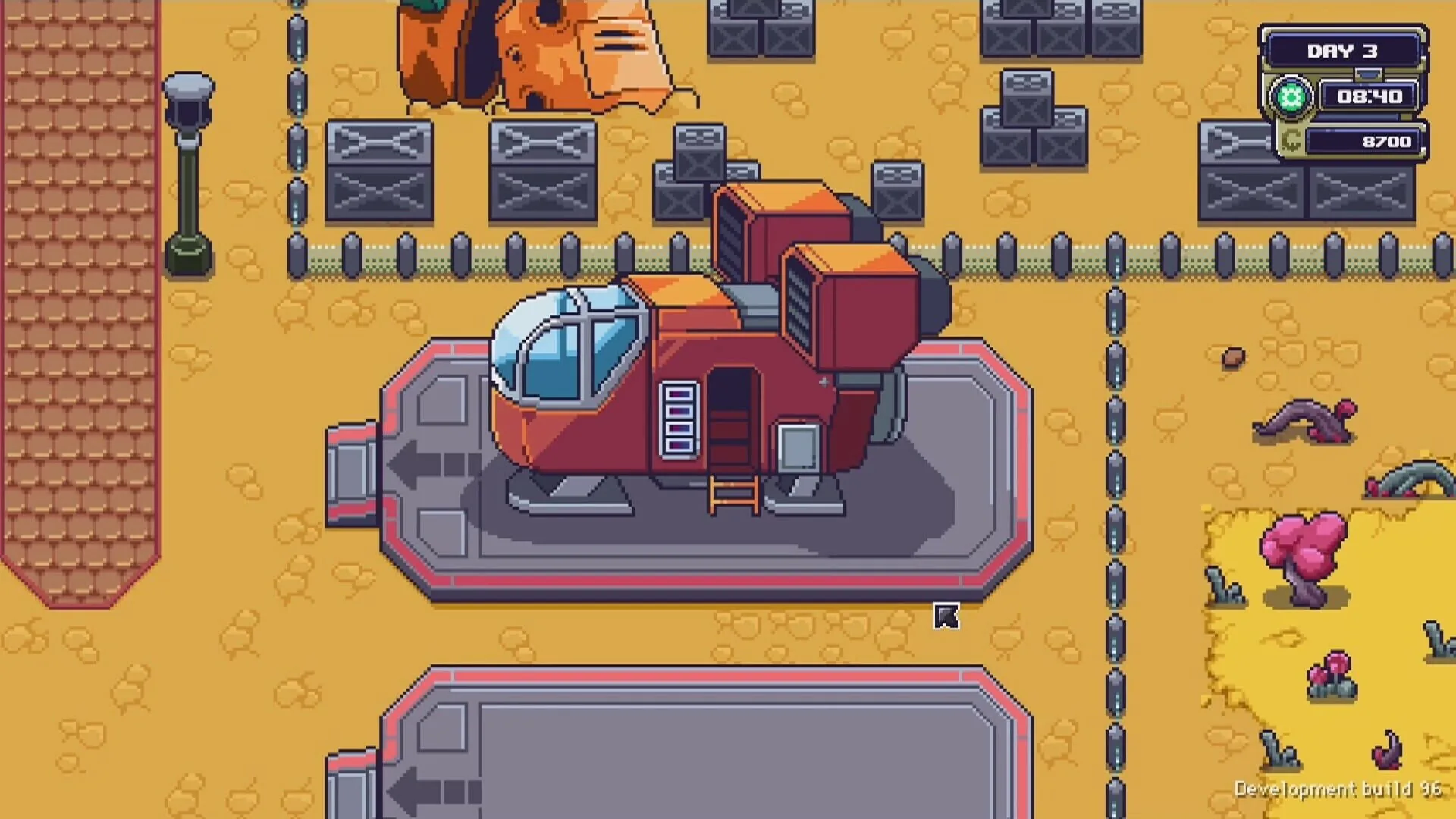
You should keep perspective, though, because this space ambition also has its downsides. By spreading across several planets, Farlands sometimes dilutes the feeling of attachment to a single place that made Stardew's emotional strength. You root yourself less, you flit about more, and that dispersion, while it brings variety, costs a bit of that warmth of home the genre cultivates so well. It's a game-design trade-off, neither good nor bad in the absolute, but one that will give some the impression of a game wider than it is deep.
You also feel, in places, that this is an independent production of modest size. Not everything has the maniacal polish of a Stardew refined over years, and the studio's roadmap, which still promises animal husbandry, additional planets and expanded romance, reminds you the game will keep growing after launch. As it stands, the skeleton is solid and the experience complete, but you sense it will gain further density over time. It's not a reproach, more an invitation to come back and see.
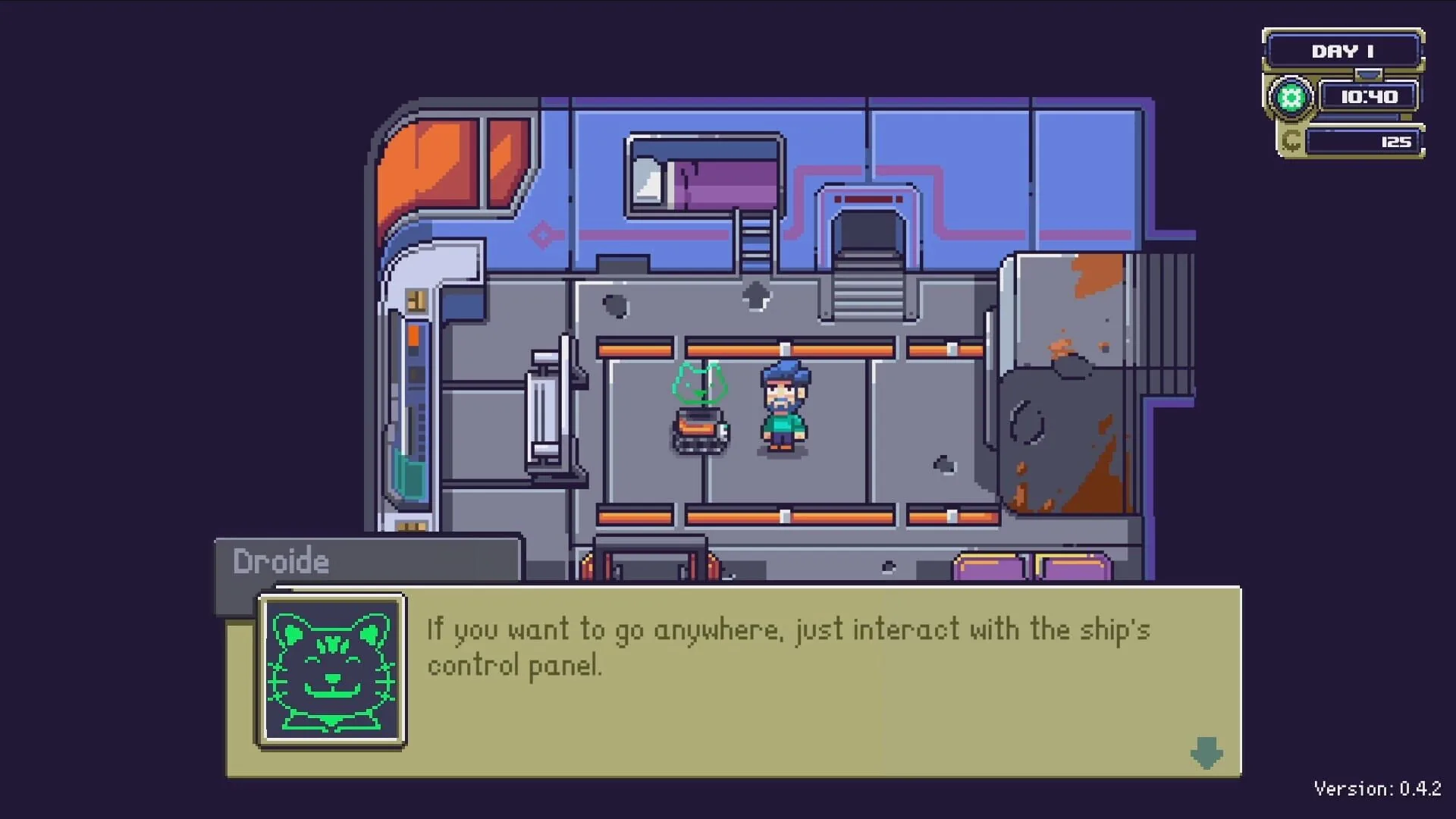
So, umpteenth Stardew Valley copy or a real proposition? The answer is in between, and it leans the right way. Yes, Farlands massively borrows the master's formula, down to its smallest cogs, and don't expect to find a cozy-sim revolution here. But no, it's not just a lazy space reskin: its interplanetary exploration and combat-tinged mining are real additional mechanics that give it a rhythm and an identity most clones don't have. It's a Stardew with itchy feet, and that thirst for elsewhere is enough to set it apart.
For eighteen euros, with its deserved 92% positive reviews and content set to grow, it's a safe bet for anyone who loves the genre and seeks a variation that genuinely brings something. It won't dethrone its model, and it isn't trying to, but it offers a space getaway clever enough to justify its ticket. If you've done the rounds of the sunny valleys and the idea of tilling fields under an alien sky speaks to you, Farlands is an excellent one-way trip.
An owned Stardew Valley clone, but one that interplanetary travel and combat-mining save from mere copying: wider than deep, but genuinely endearing.
Strengths:
Weaknesses:
Tested on PC.
Played it too? Tell us how it went on the InsertCoins Discord.
Community
Your rating
Advertisement
Loading comments...
You might also like
A co-op bar that collapses while you serve. 98 per cent positive, and one of the rare times chaos is the actual subject.
You draw a plan on the map and officers execute it alone. Except the game crashes every other planning phase.
The Knights of Pen & Paper team return with a dungeon where you come back to camp, cook, and unlock recipes that change your stats.