7
Test
Cricket Management 26: one person built the Football Manager of cricket
Thirty-nine patches in two months, 64 international sides, facilities to maintain and a match engine that understands swing.
Alexandrosse
12 min
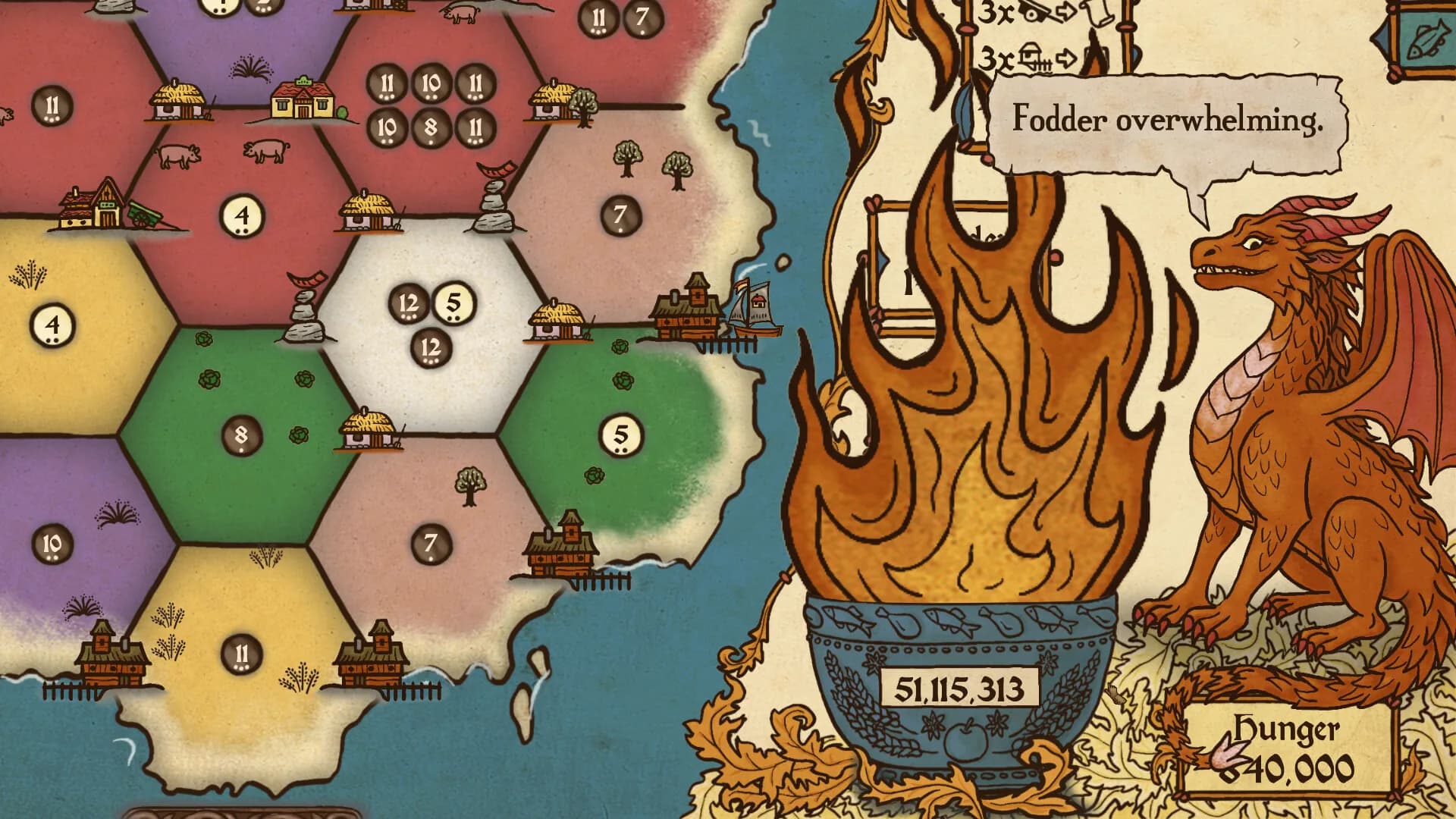
Roll the dice, harvest, cook, feed the beast. Fifty buildings, eighty recipes and twenty types of dice to assemble.
Alexandrosse
InsertCoins.press Score
7.5/10
Verdict
Recommended
The contract is simple: twenty years of protection for twenty years of dinner service. The island thrives under the dragon's watchful eye, as long as the meals keep coming.
Except every year the beast wakes hungrier. And the pot you cook in carries a name that says it all: the Scorchpot, the pot you keep full or end up in.
You roll dice to work your island, harvest ingredients, fuse them into recipes, and cook the lot down.
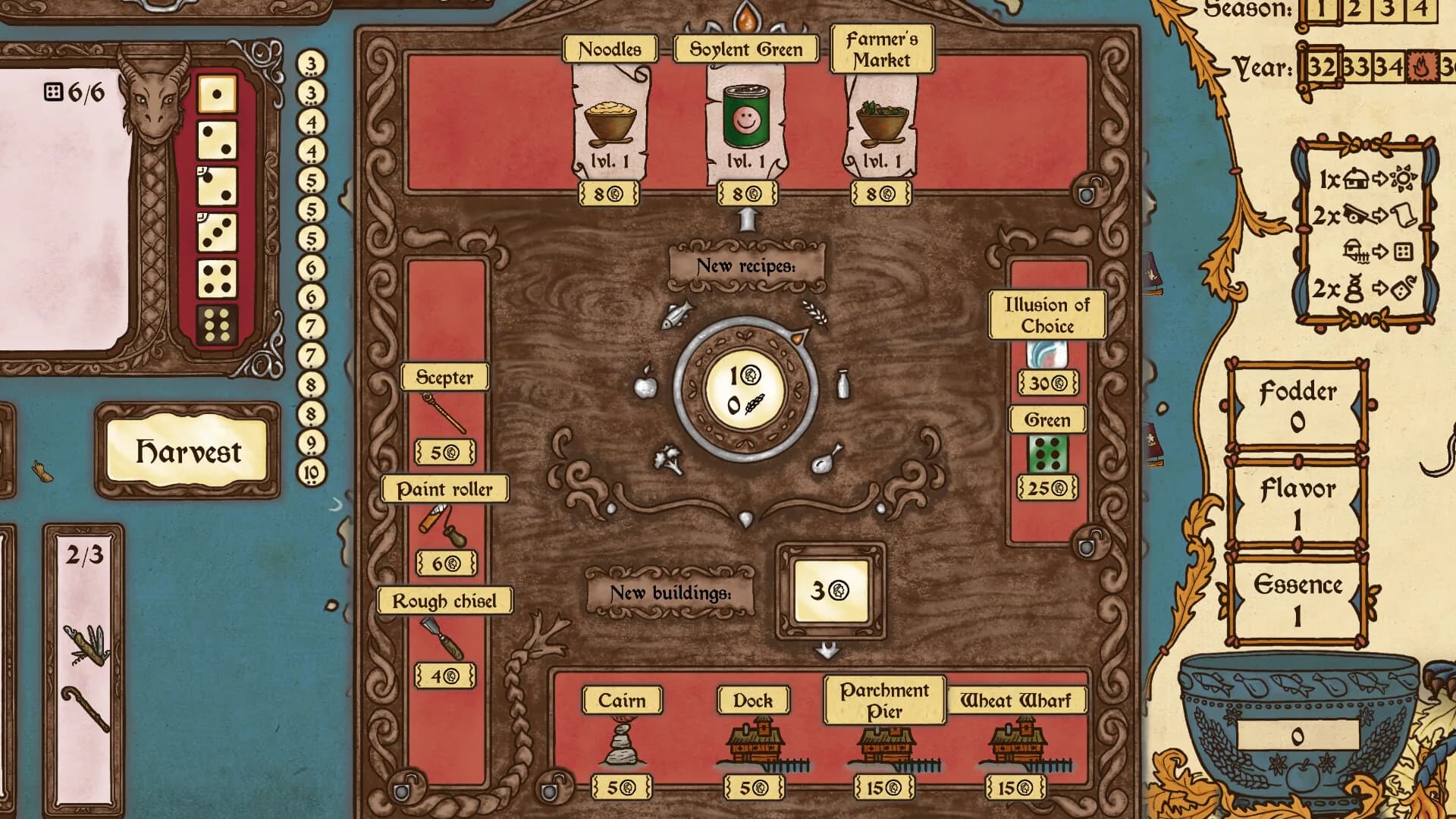
Around it, a hex-grid island where you place farmsteads, shrines and harbors. Each building changes how the board pays out, and that is where it gets interesting: you do not build to produce, you build so the buildings feed each other.
The studio describes a good run's arc very well: it starts with a handful of tiles and ends with a machine that buries the dragon in food. Then the odds tighten, the beast turns picky, and you tear the whole thing down and rebuild while it is on fire.
Every meal is an arithmetic problem. You combine ingredients into recipes that raise Flavor and Essence, which multiply a Fodder score into absurd numbers.
Three things, and the first is the best.
You build your dice. Over twenty types available: odd, even, coloured, and even dice carved into six sixes. Tuning your tray is a construction system in its own right, and it is what most games in the genre lack, where randomness stays something you endure.
Press-your-luck is structural. Winning in fewer seasons pays more, but each year on the island hardens conditions: harsher odds, hungrier dragons, and the occasional tantrum that torches your board. So you are permanently choosing between banking now and betting on one more year.
The combination volume is real. Over fifty buildings and over eighty recipes to mix and upgrade. The studio addresses itself explicitly to people who broke Balatro or Slay the Spire with one overpowered synergy, and that is the right reference.
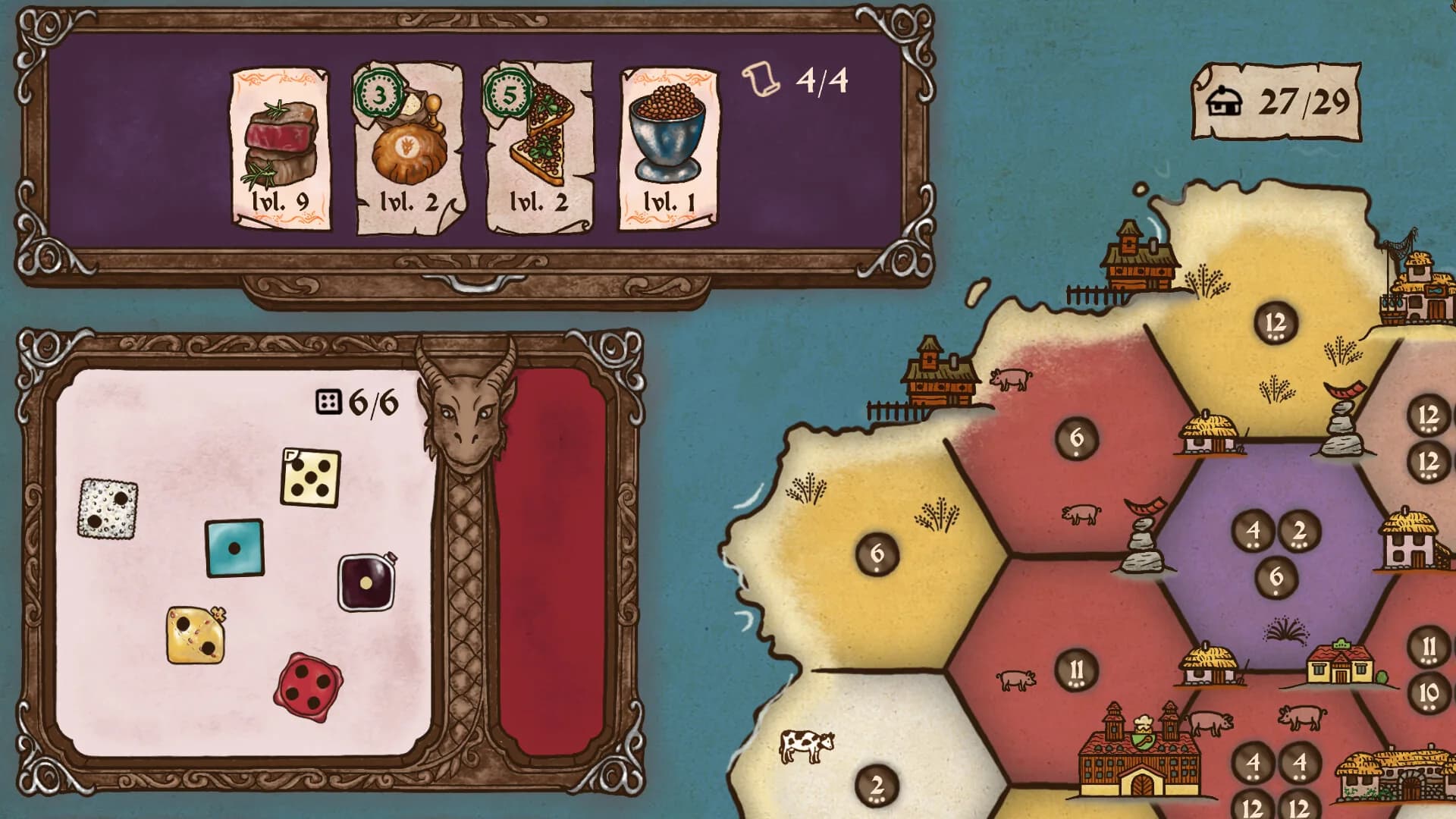
Everything is hand-drawn by Daniela, the artist half of the married duo who made the game. Every dragon, every building, every meal.
It is an art direction you take or leave, with no middle ground. What cannot be denied is its coherence: it holds together, warm and menacing coexist, and the game plays on that contrast. Cosy on top, ruthless underneath, as it puts it itself.
A detail that matters for the mood: you can pet the dragon.
Studio Moravian launched a first crowdfunding campaign, which started well, then cancelled it themselves.
The reason is honest: physical rewards had been badly costed, and their price would have swallowed every penny raised. Rather than promise the impossible and let backers down, the team stopped everything, redid its numbers, and relaunched with reasonable tiers and a shorter run. It hit its target in under a day.
In a sector where campaigns routinely deliver three years late or not at all, cancelling out of caution deserves flagging.
The game is out today, developed by Moravian and published by Indieformer and WhisperGames. A demo exists, and it is the right way to check whether the art direction speaks to you.
Two reservations.
The first applies to every scoring-engine game: the pleasure depends entirely on your taste for numerical optimisation. If watching a counter explode does nothing for you, no quantity of recipes will change that.
The second concerns randomness. Building your dice takes a lot of the frustration out, but this remains a game where a bad streak can cost a well-built run. That is the genre's contract, and it has to be accepted.
It rewards a strong central idea, the twenty-year contract that turns every year into a wager, a dice-crafting system that makes randomness negotiable, and a volume of combinations that gives you plenty to hunt. The tension between the warm surface and the brutal rules is perfectly held.
It accounts for a divisive aesthetic, total dependence on the pleasure of optimisation, and a share of randomness still capable of ruining a good run despite every mitigation.
For anyone who loves dice, and I know people who play Warhammer for good reasons, this is a very solid proposition.
Do you bank early or push for one more year? The debate is open on the InsertCoins Discord.
Community
Your rating
Advertisement
Loading comments...
You might also like
Thirty-nine patches in two months, 64 international sides, facilities to maintain and a match engine that understands swing.
A hundred and fifty talent nodes, a smart ban system, and rocks that stayed white spheres.
Your railcars are your health and your skills at the same time. Assuming the game gets past the loading screen.