7
Test
Archipeo: thousands of islands, ships running a shuttle service, and me not sleeping
A procedural Anno where haulage is the real game. Every badly assigned freighter takes its revenge forty minutes later.
Alexandrosse
8 min
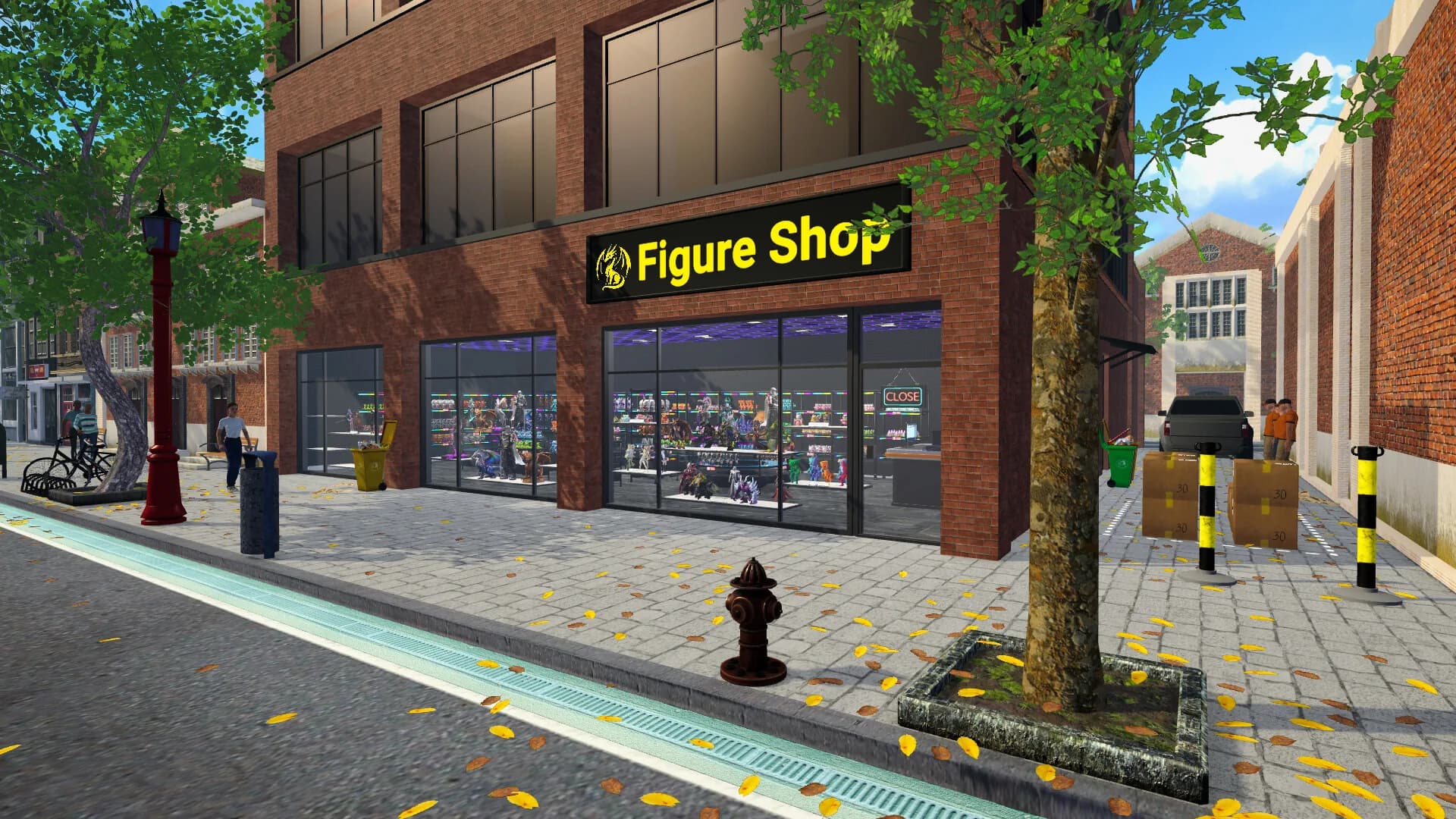
It adds a real production layer to the shop simulator formula. But the studio admits using AI for part of its assets.
Alexandrosse
InsertCoins.press Score
7/10
Verdict
Recommended
I have a very specific kind of fatigue, and I know it is widely shared: the one caused by shop simulators that all look the same. The same bland neon lighting, the same shelving, the same customers with interchangeable faces, the same sense of having already tidied these shelves in four different games. The genre has been industrialised, and it shows.
So the only question worth asking about Figure Shop Simulator is this: what does it bring that the others do not? There is a real answer, and there is also an unexpected explanation for my fatigue.
Here is the difference, and it is not cosmetic. In the vast majority of shop simulators your role stops at ordering boxes, opening them, putting items on a shelf and taking the money. You are a middleman.
Here, you produce. The game puts 3D printers in your hands, and the figures you sell come out of your own machines. That production layer changes the balance of the loop: it is no longer only about restocking, but about deciding what to make, in what quantity, and when. You follow market trends to identify what sells, you produce rare pieces aimed at collectors, you assemble complete collection sets.
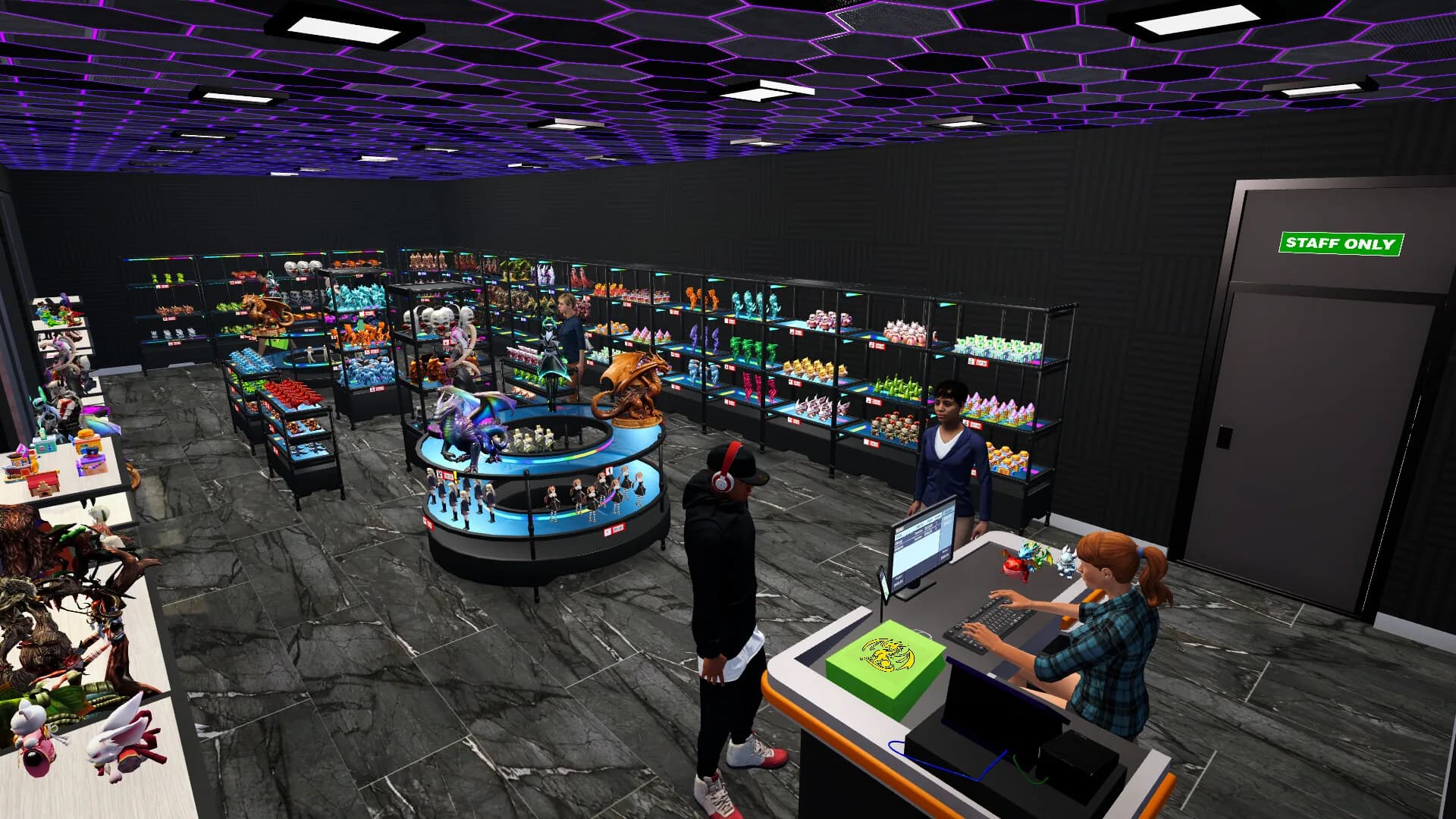
The rest of the systems are conventional but properly handled: shelf management, pricing, customer satisfaction, warehouse organisation, store expansion and decoration. What comes up most in player feedback is precisely the progression, that trajectory from a tiny shop to a large collectibles business, and the pleasure of laying out your space. The loop is described as surprisingly addictive, and at twelve and a half euros the content-to-price ratio is not in doubt.
The numbers back it up: Steam reviews are Very Positive, with 86 percent favourable across more than 320 reviews, and 93 percent among French-speaking players. For a niche game in Early Access, that is a good reception.
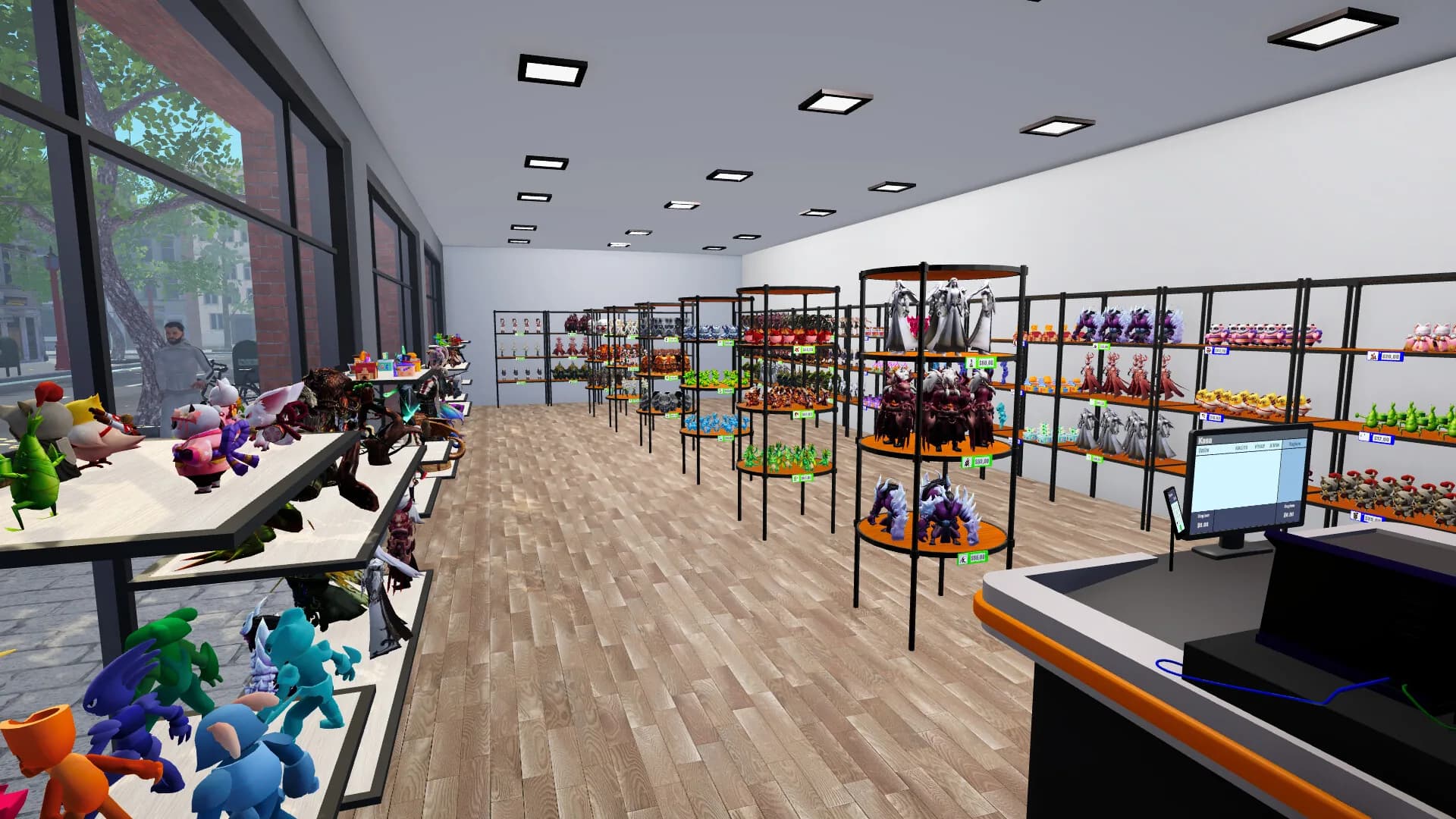
Then there is this detail, written plainly on the game's Steam page, in the section the platform provides for declaring the use of artificial intelligence. The studio Gnome Games states there that it used AI for some of the game's assets.
That is an honest declaration, and the studio deserves credit for it: Steam requires this transparency, many fill it in as minimally as possible, and this one has the merit of being explicit. Nor is it illegal, forbidden, or even rare.
But it made me understand something about my own weariness. If so many shop simulators feel like they came out of the same mould, it is because the genre has become a fast-production space, where the visual dressing is the first thing optimised, through asset libraries yesterday and automatic generation today. My fatigue was not a whim, it was noticing a manufacturing method.
That said, let us keep a sense of proportion. A small studio with a good game design idea cannot always afford to put an artist on the payroll, and that is an economic reality before it is an aesthetic choice. Between shipping the game with generated assets and not shipping it at all, the maths is quickly done, and nobody here is going to blame a small team for finding a way to deliver its ideas. A frank declaration beats the silence of plenty of far better funded productions.
So let us be precise about the criticism, which targets the result rather than the studio. The game does not lie about what it is, its systems are well designed and its production layer is a genuine idea. But when someone asks me what sets this one apart from the others, the honest answer is: its mechanics, yes, absolutely. Its look, no. And now I know why.
The game has been in Early Access since 4 August 2025, which is starting to be a long stretch. Content has grown and the reception is good, but this is still an unfinished version, with all the uncertainty that implies about the rest of development and what the final version will contain.
The other limit belongs to the genre itself. However clever the production layer is, you remain inside a repetitive management loop whose pleasure comes from optimisation and layout, not from surprise. If shop simulators make your eyes glaze over, this is not the one that will reconcile you with the genre, even though it is among the best conceived of them.
If the premise appeals to you, though, and the idea of manufacturing your own products rather than unpacking boxes amuses you, this is probably the smartest of its category right now. And on the visual side, you will know exactly where you stand before paying, which is already better than average.
We debrief every release on our Discord. The door is open, and so is the argument.
Community
Your rating
Advertisement
Loading comments...
You might also like
A procedural Anno where haulage is the real game. Every badly assigned freighter takes its revenge forty minutes later.
Towers, troops, a single pool for both. Every coin spent on defence is a coin you will not be sending the other way.

Crossing finally matters and defending responds. Then the screen goes black. 57 per cent positive on Steam, at 69.99 euros.