8
Test
Car Park Capital: MicroProse is publishing a game about bulldozing neighbourhoods for tarmac
Hired by Big Auto to spread the Freedom of Car Dependency. It is funny, it is mean, and it sits at 96 per cent positive.
Alexandrosse
9 min
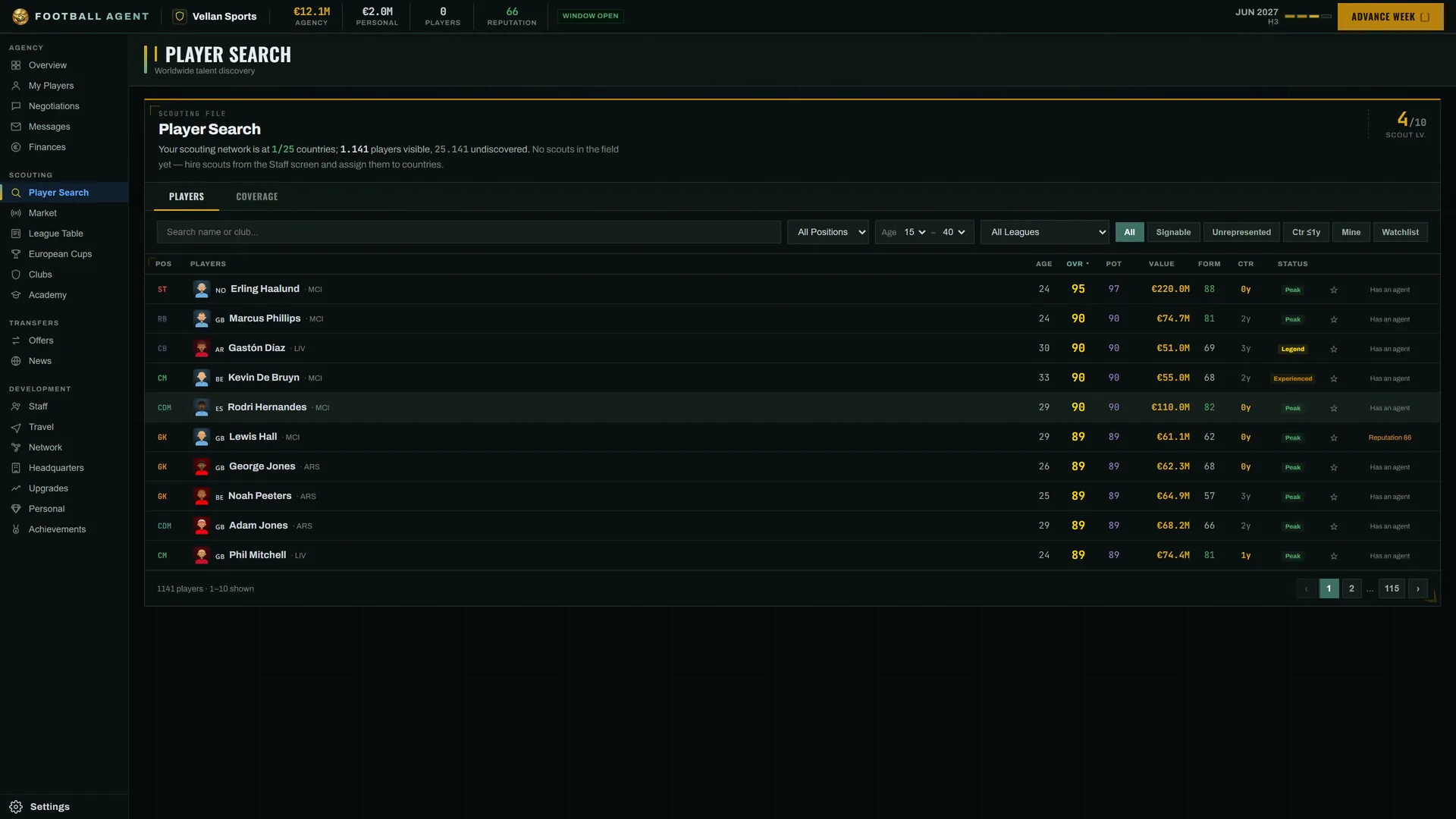
26,000 generated players, 76 leagues, 25 countries. You start with 50,000 euros and a phone, and you can end in bankruptcy or disgrace.
Alexandrosse
InsertCoins.press Score
7/10
Verdict
Recommended
Everyone wanted to be Guardiola. Nobody wanted to be Mendes.
Yet that is where modern football is decided, in the corridors, the phone calls and the commissions. Football Agent is the first game in a long while to notice, and its pitch line is perfect: you saw the real game, the deals behind the deals.
Fifty thousand euros and a phone. That is all.
From there you have to build the most powerful agency in the world, and the game cuts that into four verbs that structure the whole run.
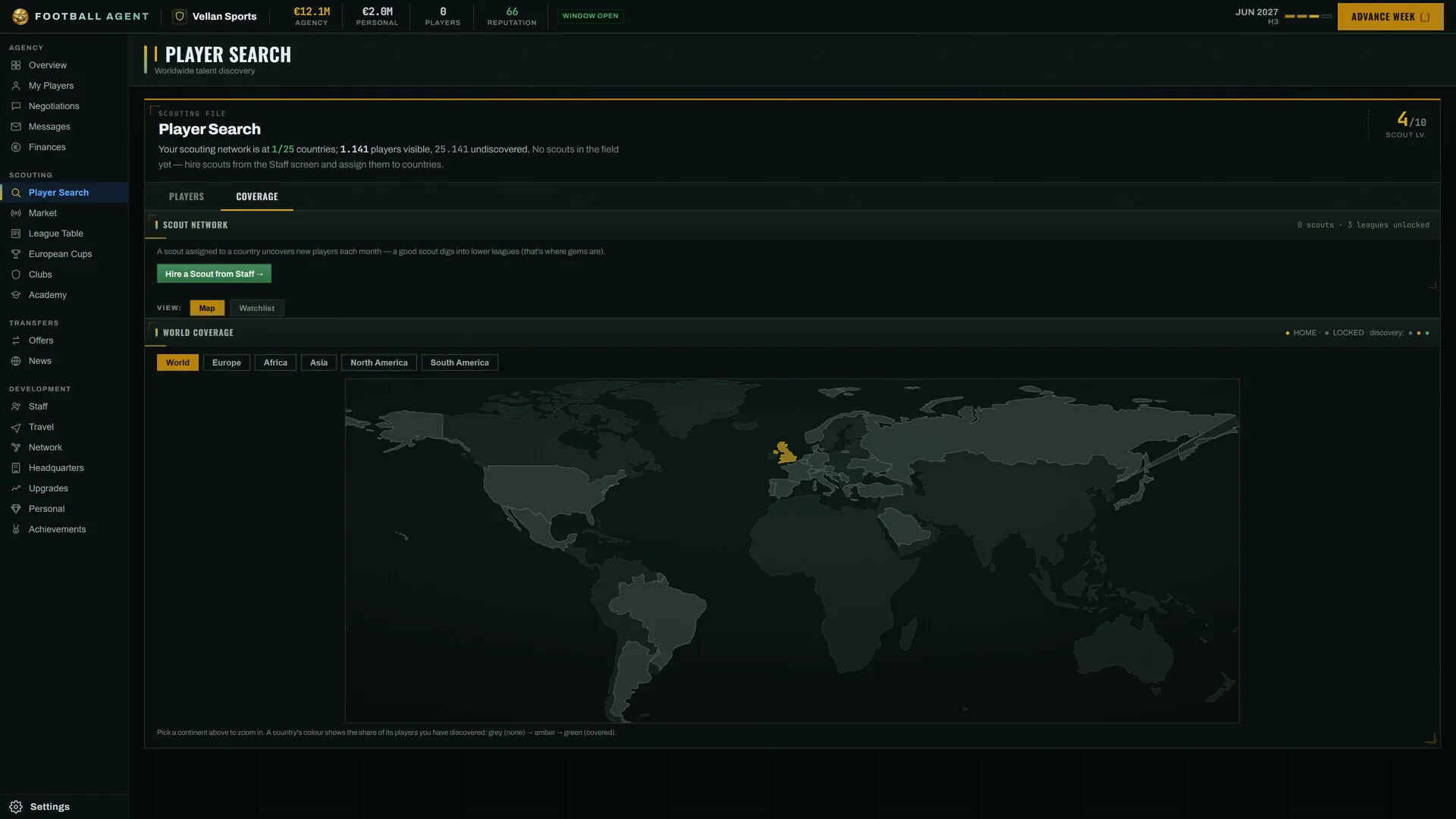
Scout. Twenty-six thousand procedurally generated players across seventy-six leagues in twenty-five countries, down to the third divisions. You send scouts abroad, you travel to meet a wonderkid in person, and you look for the gem nobody has noticed.
Sign. This is where the game gets interesting, because it refuses the instant signing. You win a player over across weeks: meet the family, survive rival agents, manage press leaks, negotiate your commission. You can promise a move to a big club, and you will have to live with it if you cannot deliver.
Develop. Your players play real weekly matches with live text commentary. Form, morale, injuries, contracts: you manage all of it. The goal is to turn a 59-rated kid into a star the giants fight over.
Sell. Multi-round negotiations, auctions, sell-on clauses, deadline-day drama. Clubs have living budgets that boom and collapse, so you have to read the market.
The shift in viewpoint changes everything, and not just the trim.
In a manager game, a player is a stat sheet you field. Here he is a human asset with a family, a career, trust to be earned and promises to be kept. You do not tick a box to recruit, you court.
And the game adds the one thing almost every management sim lacks: you can lose permanently. Go bankrupt or get disgraced and the career is over. In a genre where you can usually chain failed seasons with no consequence, putting a possible ending on the table changes the weight of every decision.
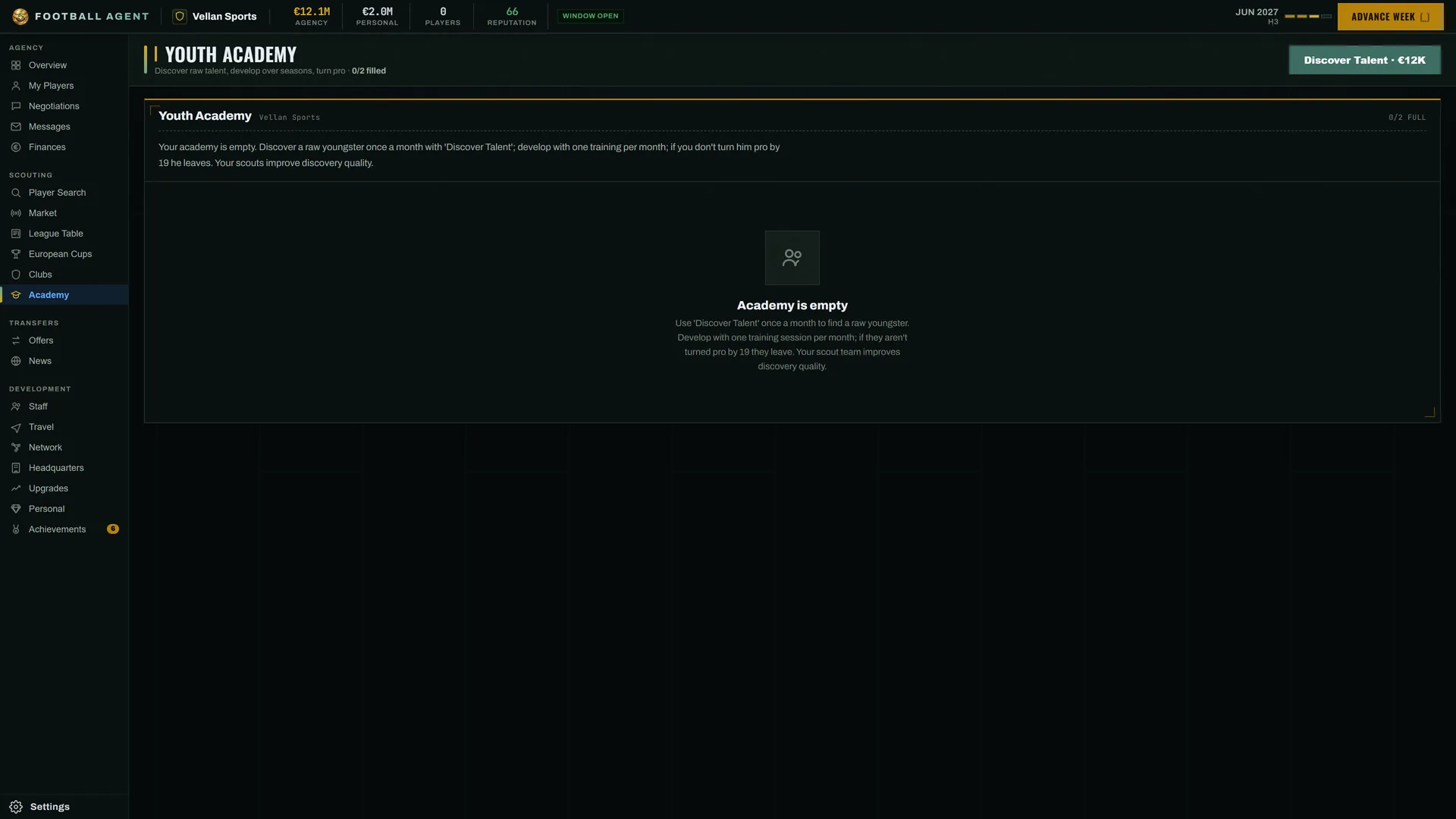
Around that there is an agency to grow. You hire scouts, lawyers, analysts, PR managers and physios, and the studio specifies that each one changes a real mechanic rather than adding an abstract percentage. You move from a home office to a global headquarters. Three hundred rival agents work the same ground, with promotion and relegation, European cups and national teams.
Add random events with real choices, personal wealth to manage, and burnout to watch. That last one is a nice detail: agency is a job of phone calls at all hours, and the game makes it a resource.
Two reservations, and they matter.
This is a game of text and menus. There is no 3D match, no pitch to watch, only written commentary. That does not bother me, it is the tradition of the genre since Championship Manager, but it should be known before buying: the spectacle is entirely in your head.
And it is early access on a systems game. Twenty-six thousand players and seventy-six leagues is a promise of scale, not a guarantee of depth. The real question is whether the economy holds across five seasons or whether, three years in, you discover a method that breaks the market. This sort of game is judged over time, and nobody can do that yet.
The game launches today, developed by ATERO GAMES.
Seven.
What lifts it: an angle the genre had left aside despite it being central to real football, a signature worked over weeks instead of a click, an agency where every employee changes a mechanic, and the possibility of failing permanently, which gives weight to everything else.
What holds it back: economic depth still to be proven over the long run, and a text format that will put off part of the audience.
If you have ever spent an evening reading a Transfermarkt page for no particular reason, you already know this game is for you.
Are you a manager or an agent? The argument is open on the InsertCoins Discord.
Community
Your rating
Advertisement
Loading comments...
You might also like
Hired by Big Auto to spread the Freedom of Car Dependency. It is funny, it is mean, and it sits at 96 per cent positive.

You get a form and a description. Go find the item. In a warehouse you organised yourself.

A frozen world that refuses survival cliches. But in co-op, one player can do the whole questline while the others sleep.