7
Test
Barfender: my idiotic friend drank all the beers
A co-op bar that collapses while you serve. 98 per cent positive, and one of the rare times chaos is the actual subject.
Alexandrosse
7 min
Forza Horizon 6 arrives in Japan with the best map in the series, slightly improved progression, and an AI that's still as maddening as ever. It's FH5, better, in a place that finally deserves it.
Alexandrosse
InsertCoins.press Score
8/10
Verdict
Recommended
Forza Horizon 6 released on May 19, 2026 on Xbox Series X/S, PC and Steam. The PS5 version is planned for later in the year. The game is included in Game Pass; the Premium Edition sells for around 130 euros and includes four-day early access and a car pack that immediately breaks the progression the studio touts in every press release.
The map is Japan. That was the right call.
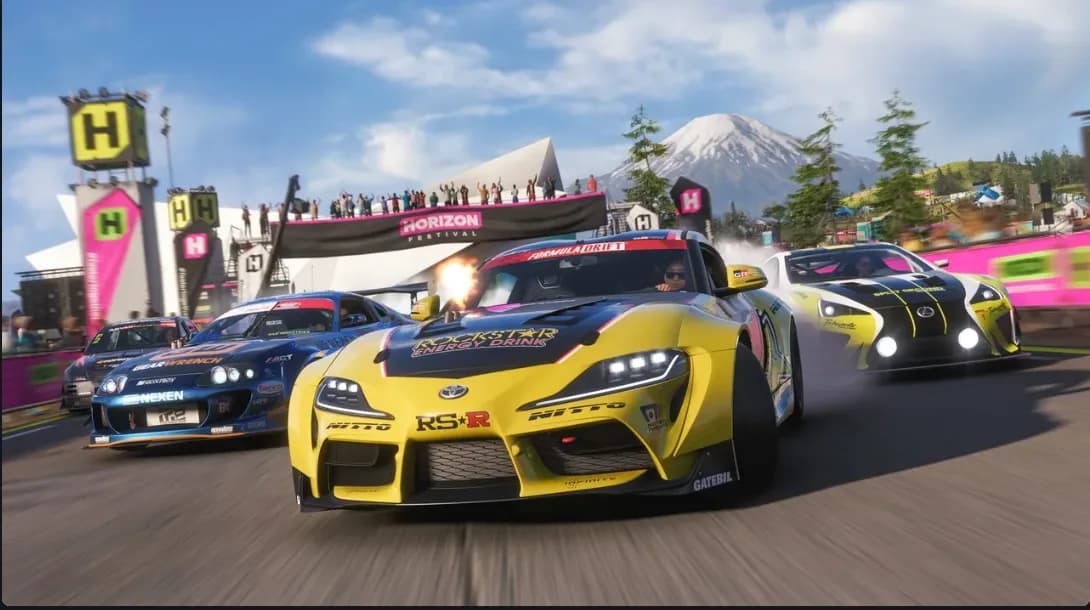
Playground Games had announced a progression overhaul, and they partially delivered. The car acquisition rate is slower than in FH5, in-game currency rewards are less generous, and the wristband structure (the progression levels symbolized by festival bracelets) requires real effort to advance. About 1.5 million credits after six hours of play, with cars costing several hundred thousand each. That's significantly better calibrated than FH5's chaos where you were stacking hypercars before completing a single real race.
The immediate caveat: the Premium Edition delivers about twenty cars from the start, with an in-game value estimated at 20 million credits. That's Forza Horizon's structural contradiction summarized in one loading screen: the studio says they're working on progression, then offers to buy the end of that progression at point of purchase.
For those playing via Game Pass or standard edition, the progression is honest. For everyone else, it's optional from launch.
Fast travel has also changed: you can now teleport for free to any road section discovered on the map. No more buying fast travel signs or saving up to move around. It's a quality of life improvement that should have been there since FH4.
The interface deserves separate mention. It's clearly better: faster navigation, better readability, and visual coherence that FH5 lacked. That sounds trivial but in a game where you spend a lot of time in menus between races, it's noticeable.
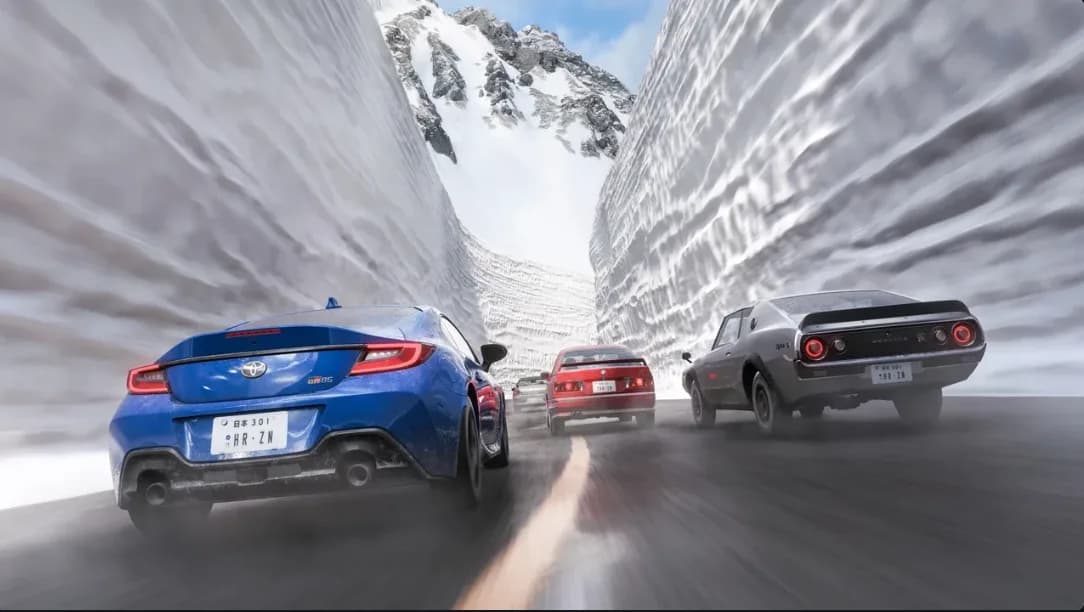
Japan is the best map the series has produced, alongside FH3 (Australia) and FH4 (Scotland). After FH5's Mexican map, which offered decent panoramas but a poorly exploited cultural identity and quickly apparent terrain monotony, the change is radical.
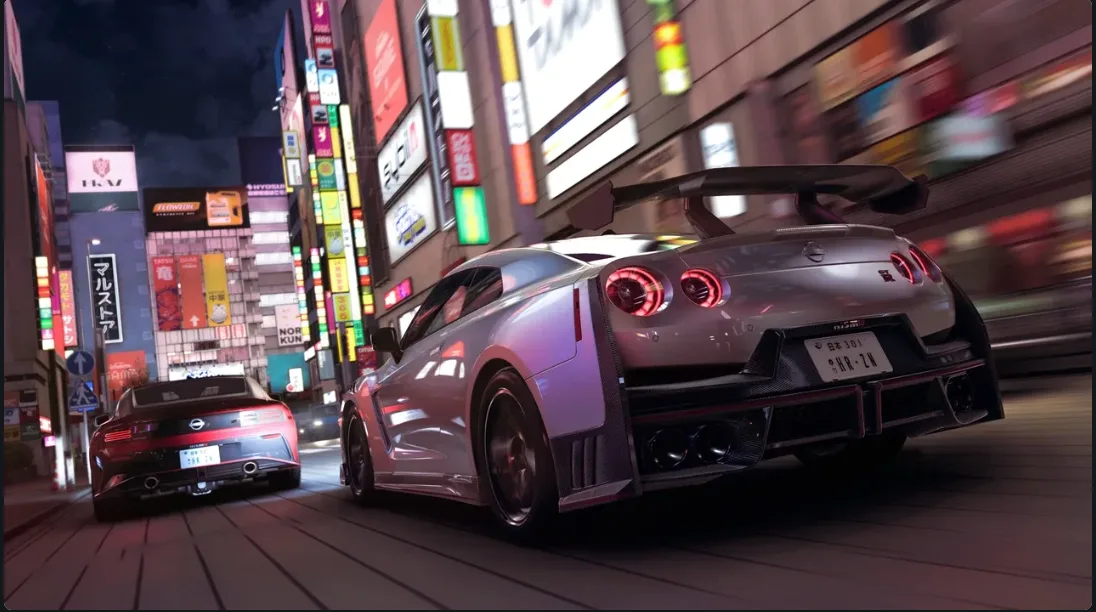
The diversity is immediate: dense urban zones with slow traffic and tight corners, coastal highways, mountain passes, rice paddies, forested zones with a canopy that filters light differently depending on the hour. Rain transforms the game's visual experience. At night in urban zones with rain and neon, FH6 produces images FH5 couldn't rival.
This isn't an open world trying to be large for the sake of it. It's a map built so every zone has a distinct driving identity. Mountain roads don't drive like city boulevards, which don't drive like coastlines. That's exactly what FH5 failed to achieve with its too-wide, too-flat biomes.
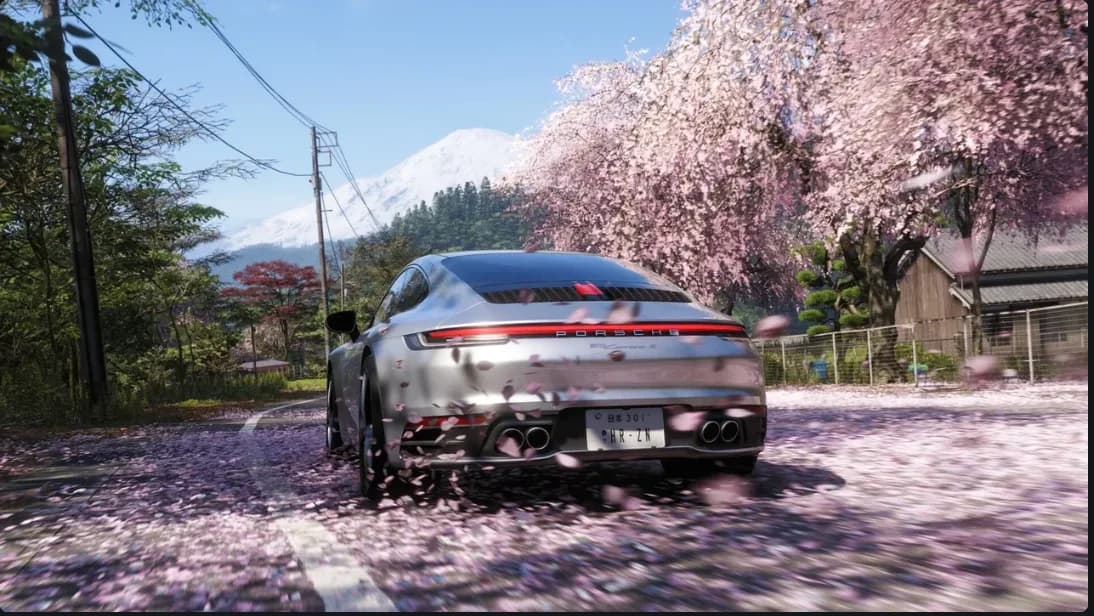
Changes are there, subtle but real. Several players note that tires react differently, with more mechanical grip management. The car behaves more like a mass with inertia than an object sliding on rails. It's not a complete engine physics overhaul, but it's perceptible, particularly in rapid direction changes and the way the front of the car loads under braking.
It's still an accessibility-oriented simcade. Not a simulation. But the gap separating FH5 from Gran Turismo or Assetto Corsa on tire feel is slightly reduced. Not closed. Slightly reduced.
What hasn't changed: behavior at the grip limit remains uninformative. The game tends to handle everything for you, which prevents learning to read the car and makes loss of control moments surprising rather than anticipatable.
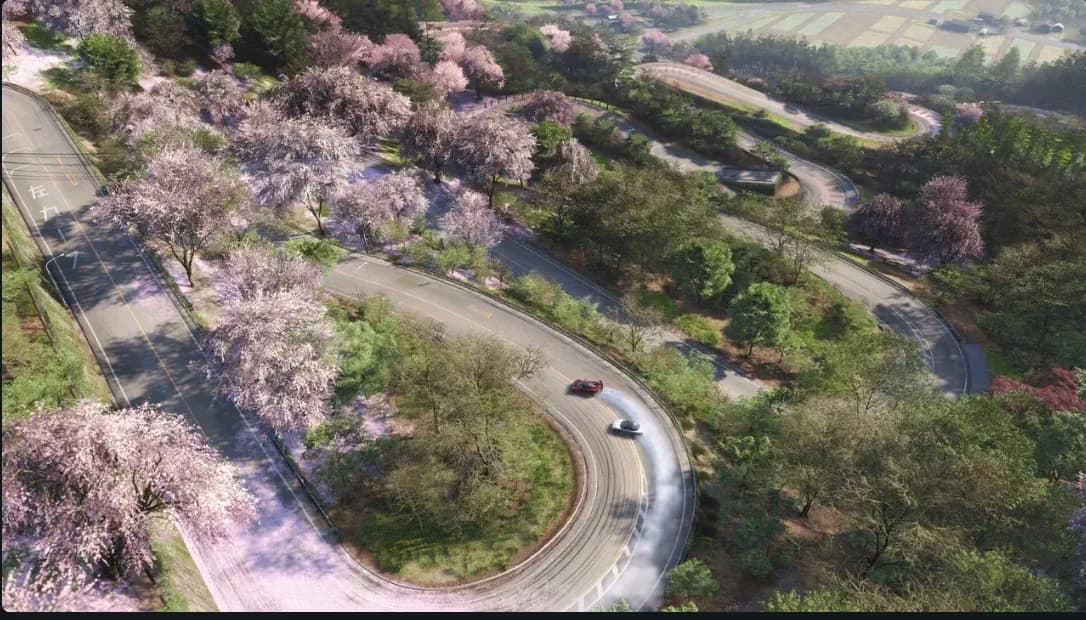
This is where FH6 fails repeatedly and visibly, and where specialist press does the least work. The drivatar AI is still in 2026 one of the most frustrating in the genre.
The pattern is identical to FH5: on normal difficulty, opponents are too easy. One notch higher, they become impossible by means that have nothing to do with skill. Supernatural grip in corners, impossible acceleration out of curves, partial immunity to obstacles and terrain that slows your car.
The concrete case that comes up systematically in launch feedback: a stock Bronco overtaking a tuned WRX at 100 km/h in mud, executing a 90-degree corner at full speed, and disappearing into the distance. That's not difficulty. That's cheating codified as difficulty.
Cross-country races are the worst terrain: where you lose time on obstacles and variable terrain, the AI maintains constant speed independent of the physical reality of the course. FH6 doesn't solve this problem. It reproduces it.
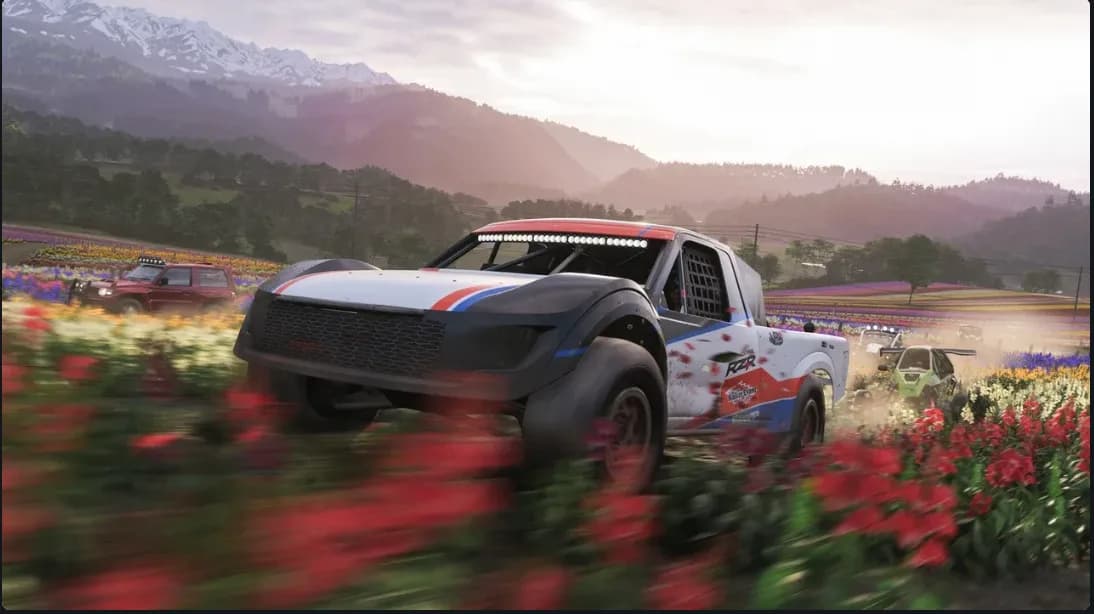
The voices and secondary characters continue the series tradition: overplayed enthusiasm, dialogue that treats the player like a child, approximate lip sync, character models that appear generated by a different process than the one that produced the cars. Good news: they're easier to skip than in FH5.
The car list approaches 550 at launch, with Toyota as a world premiere (GR GT Prototype, 2025 Land Cruiser). Engine sounds have been mentioned positively by players accustomed to being disappointed in this department.
The overall audio remains a delicate balance: Japan's ambient sounds, the music, the city noises are all well calibrated. The engine sounds themselves sometimes lack presence, particularly in cabin view. That's a mixing issue more than a recording quality problem.
Forza Horizon is a series on autopilot. Not because it does badly what it does: it does well what it does, and FH6 does it better than FH5 on the map, user comfort, and partially on progression. But the series has no serious direct competitor in the simcade open world segment. Gran Turismo plays a different game. Need for Speed abandoned competition years ago. In this vacuum, Playground Games has no pressure to take risks.
The result is a game that avoids all deal-breaking flaws and resolves none of its known structural flaws. The AI has been bad since FH3: it's still bad in FH6. Progression has been incoherent since wheelspins were introduced: it still is in FH6 if you buy the Premium Edition. Writing and characters have been weak since FH4: they still are in FH6.
These are known, documented, discussed problems in every release cycle. They survive each iteration because they don't hurt sales, not because the studio doesn't see them.
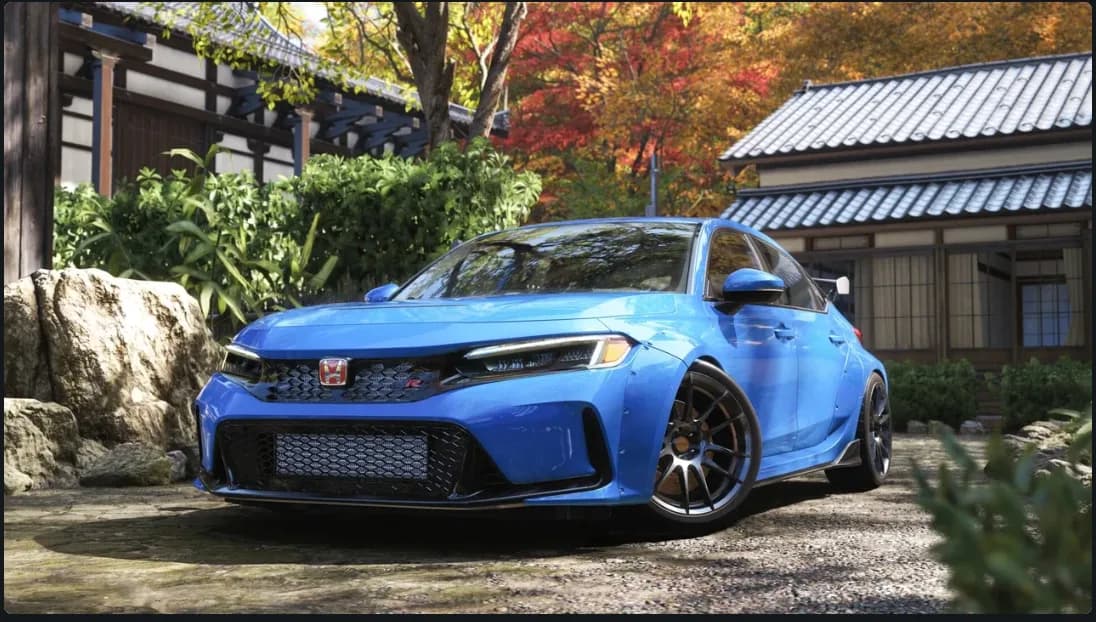
Forza Horizon 6 is probably the best episode in the series since FH4. The Japanese map is excellent, progression is finally calibrated for those who don't pay to bypass it, and the driving model has gained consistency. That's enough to recommend the game, especially with Game Pass making it one of the best value-for-access propositions on the market.
It's not a game that takes risks. It's not a game that solves its oldest problems. It's Forza Horizon 5 in the best map the series has seen in a long time, with enough improvements to justify the visit.
If you were waiting for a revolution: it's not here. If you wanted the same car festival in a place finally worthy of the series' ambition: welcome to Japan.
Your verdict differs from ours? The Discord is the place to make your case.
Community
Your rating
Advertisement
Loading comments...
You might also like
A co-op bar that collapses while you serve. 98 per cent positive, and one of the rare times chaos is the actual subject.
You draw a plan on the map and officers execute it alone. Except the game crashes every other planning phase.
The Knights of Pen & Paper team return with a dungeon where you come back to camp, cook, and unlock recipes that change your stats.