7
Test
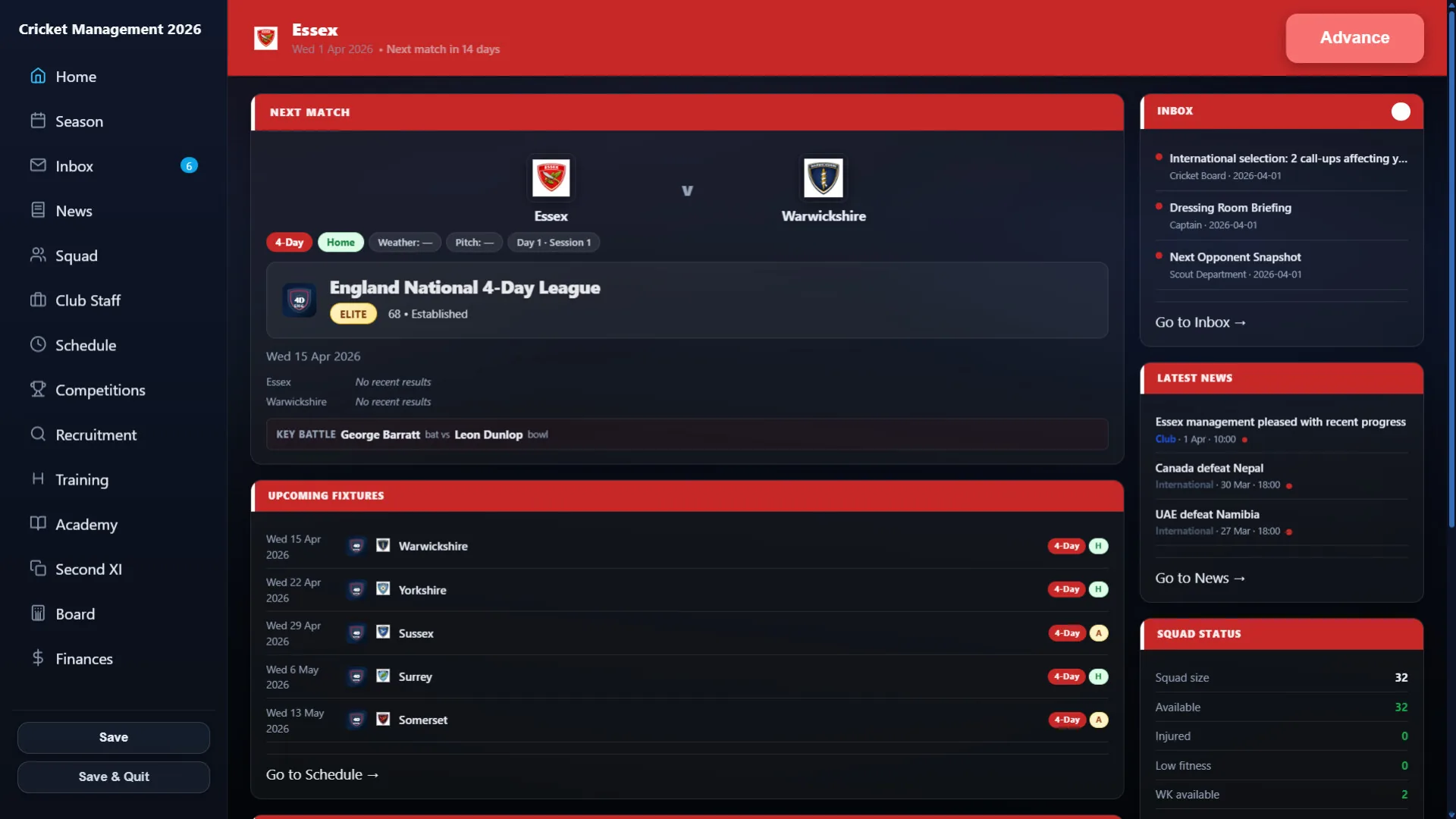
Cricket Management 26: one person built the Football Manager of cricket
Thirty-nine patches in two months, 64 international sides, facilities to maintain and a match engine that understands swing.
Alexandrosse
12 min
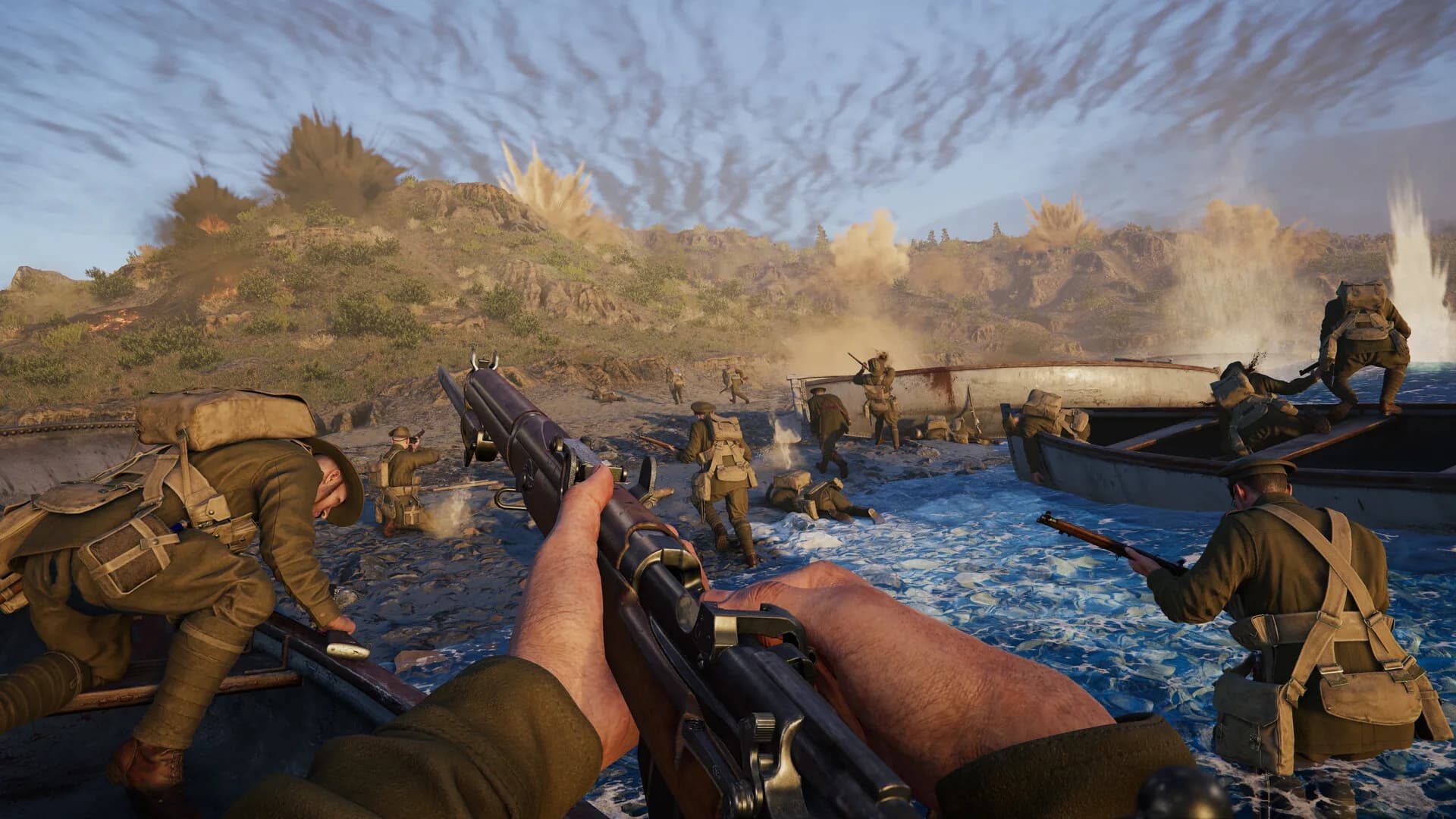
25 versus 25 on the beaches of Anzac Cove, ten classes, fifty weapons. The fourth entry fixes the problem that has undermined the series for a decade.
Alexandrosse
InsertCoins.press Score
8/10
Verdict
Recommended
There is a very narrow space between Hell Let Loose and Call of Duty, and almost nobody occupies it. Too slow and too punishing for the Call of Duty player, too permissive for the ARMA crowd: that is the slot BlackMill's WW1 series has lived in for a decade, and Gallipoli installs its fourth entry there.
After the mud of Verdun, the snowy plains of Tannenberg and the Alps of Isonzo, we land on the Ottoman Fronts.
The formula is a balance, and that is what makes it hard to replace.
On one side, simulation: everything is bolt-action, everything uses iron sights, there is no red dot and no semi-automatic rifle. A bullet that connects kills in the vast majority of cases, or leaves you dying. The studio calls it a one-shot-one-kill PVP environment, and that is not a slogan.
On the other, accessibility: matches start quickly, you do not spend forty minutes walking, and you can play an hour without preparation. That is where Hell Let Loose demands a commitment not everyone can give.
Gallipoli adds a design detail I find remarkable: weapon handling depends on your mental state and your familiarity with the weapon. The weight of the handling and the deliberate reloads are therefore not constants, they move with the situation and with your experience of that weapon. That is simulation applied in the right place, to the soldier rather than the hardware.
25 versus 25, ten specialised historical classes, and over fifty documented weapons and pieces of equipment.
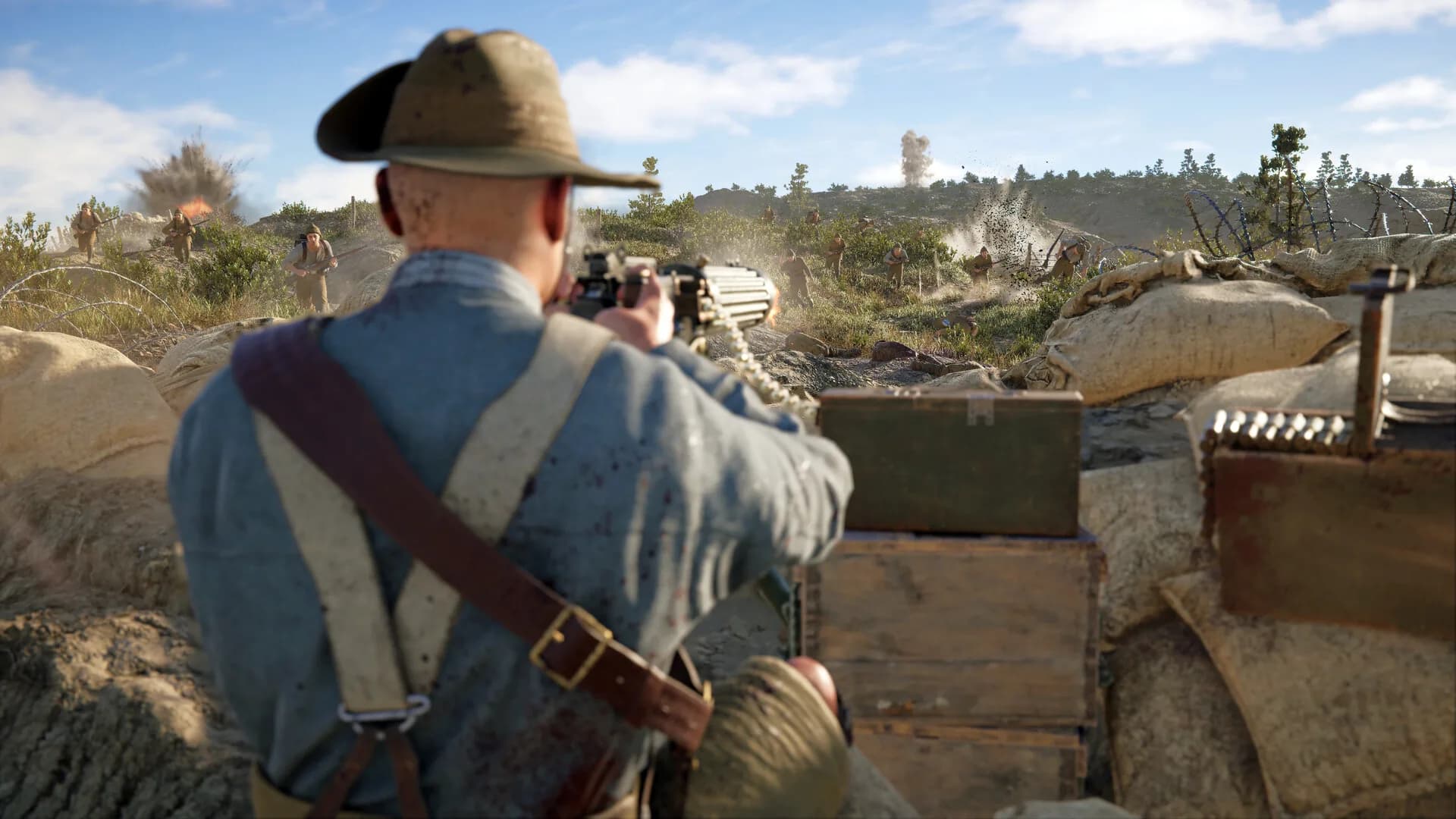
The classes cover the real roles of the battlefield: Officer to lead, Heavy Machine Gunner to pin, Sniper, and above all Stretcher Bearer to keep the squad alive. That last one says everything about what the series values: in a game where one bullet kills, the role that matters most is not the one that kills.
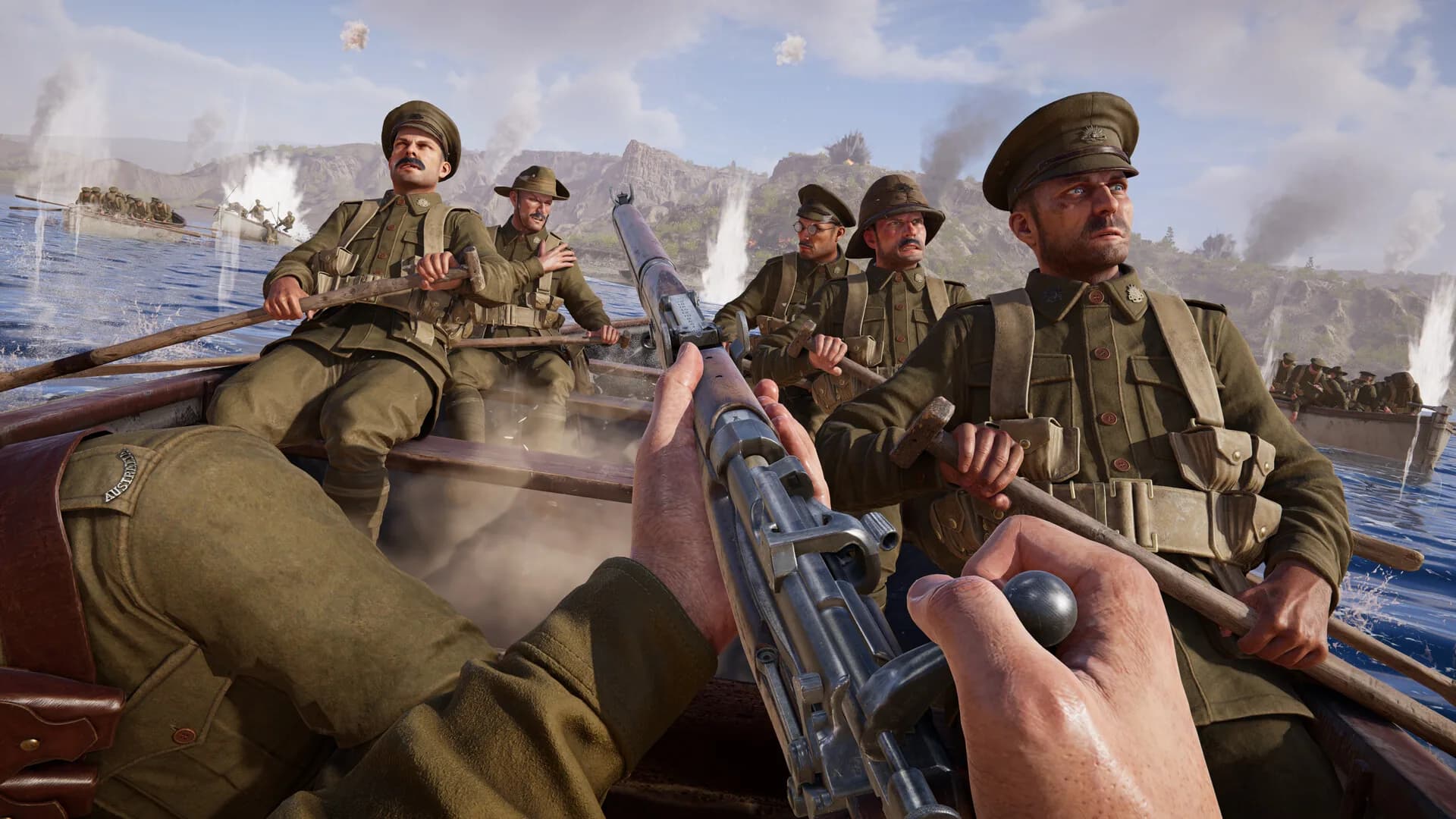
On terrain, the Ottoman Fronts campaign is covered across four years. You land at dawn on the beaches of Anzac Cove to seize the Dardanelles, you attack the fort at Cape Helles from the SS River Clyde, you advance through the streets of Kut Al Amara in Lower Mesopotamia. Coastal ravines, arid deserts, urban areas: the widest variety of settings the series has offered.
You play an ordinary soldier of the British and Ottoman Empires, and the game does not pick a side.
This is the most important point of this review, and it has nothing to do with content.
The series' historic problem has never been its quality, it is its demographics. The community is small, it swells during sales and drops back between them, and a player base split across platforms and regions makes entire time slots unplayable. Veterans say it plainly: seeing a single full server is how it has been since Verdun.
Gallipoli arrives with crossplay between PC and consoles, and it is the first time the series has genuinely had it. That is the structural fix it has needed for ten years.
There is also an honest safety net: bots join public matches, and optionally custom ones. You can argue about the value of a bot in a team game, but in a series whose real risk is launching at 11pm and finding nobody, it is life insurance.
The most legitimate grievance is commercial: this is another standalone. Verdun, Tannenberg, Isonzo and now Gallipoli, four separate boxes for one series, four communities dividing instead of adding up.
There is editorial logic behind it, each entry having its own front, armies and identity. But the mechanical effect is fragmentation, in a series whose number one problem is precisely the number of players per server. Crossplay repairs one fracture while the model opens another.
In mitigation, one point deserves credit and it is rare: the DLC policy does not lock playable content. Maps and roles stay available to everyone, which avoids the worst scenario, a small player pool re-divided by add-ons.
A second, softer complaint: there is no single-player campaign. Some regret it, pointing out that a period this obscure deserves stories rather than a stack of multiplayer maps. That is not what this series does and never has been, but the argument lands harder on the Ottoman Fronts than anywhere else.
A detail only regulars will notice, and it counts.
Isonzo carried a weapons problem: a couple of sidearms clearly above the rest at close range, with no equivalent on the other side, and whose historical presence was questionable. The Artillery Luger might have seen the front, though it is unlikely; the Beretta Revelli has no evidence of use in the First World War at all.
Those weapons are not in Gallipoli. For a series that puts authenticity forward, correcting an imbalance by removing the poorly documented pieces rather than tuning them is the right call.
It rewards a balance nobody else holds: demanding enough that every bullet counts, direct enough that you can start a match without giving it your evening. The variety of settings is the best in the series, weapon handling tied to the soldier's state is a fine idea, and the Stretcher Bearer role says everything about what the game values.
It rewards above all the crossplay, which is not a ticked box but the answer to the only problem genuinely threatening this series.
It marks down a fourth standalone that re-divides an already fragile community, and the absence of a single-player campaign on a theatre the general public does not know.
This is probably the best entry point in the series for a newcomer, and the most comfortable for a veteran.
Were you a Verdun, Tannenberg or Isonzo player? Come and defend your front on the InsertCoins Discord.
Community
Your rating
Advertisement
Loading comments...
You might also like
Thirty-nine patches in two months, 64 international sides, facilities to maintain and a match engine that understands swing.
A hundred and fifty talent nodes, a smart ban system, and rocks that stayed white spheres.
Your railcars are your health and your skills at the same time. Assuming the game gets past the loading screen.