
7
Test
Barfender: my idiotic friend drank all the beers
A co-op bar that collapses while you serve. 98 per cent positive, and one of the rare times chaos is the actual subject.
Alexandrosse
7 min
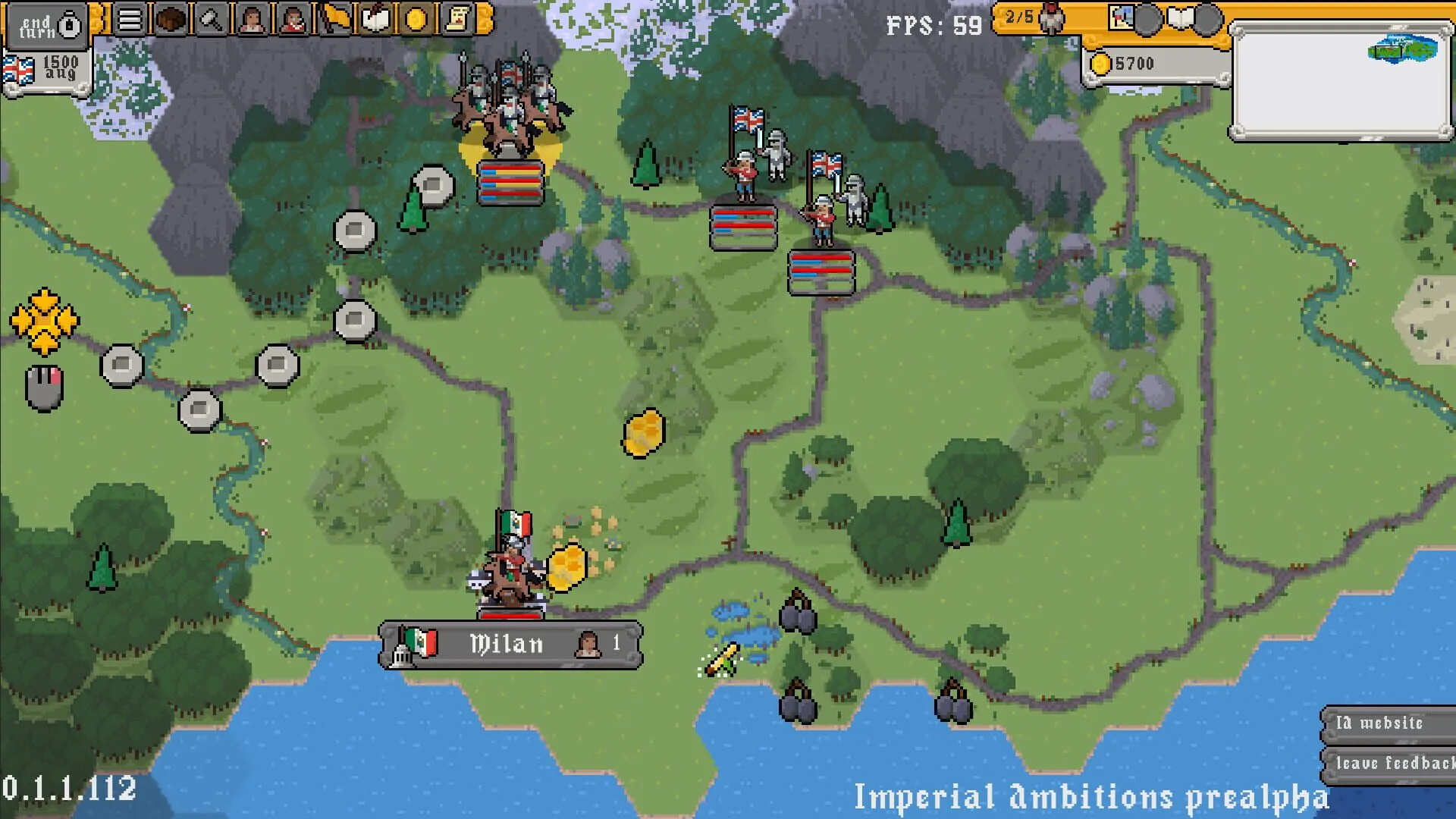
40 resources, five social classes, marching columns and empires that rot from within. Imperial Ambitions revives old-school 4X, and it doesn't hold your hand.
Alexandrosse
InsertCoins.press Score
7/10
Verdict
Recommended
There's a particular smell that floats around old strategy games, the smell of two-hundred-page manuals, spreadsheets to decode and evenings spent working out why your empire is collapsing. We thought that era was over, swallowed by modern 4X games that hold your hand into boredom. Imperial Ambitions revives that old-school wargame scent, with its owned complexity and its polite refusal to make your life easier. You come out of your first games exhausted, a little lost, and furiously hooked.
Imperial Ambitions is a turn-based 4X developed by aoiti and published with Electronic Sheep Games, available since 13 July 2026 on PC. It puts you at the head of a European superpower in the age of discovery and the Renaissance, in an alternate-history frame, and invites you to survive the rise of imperialism as the world turns into a battlefield. Dressed in discreet pixel art, translated into eighteen languages including French, it owns a niche identity: that of the deep strategy game that doesn't seek to seduce crowds, but to reward those who accept to dig.
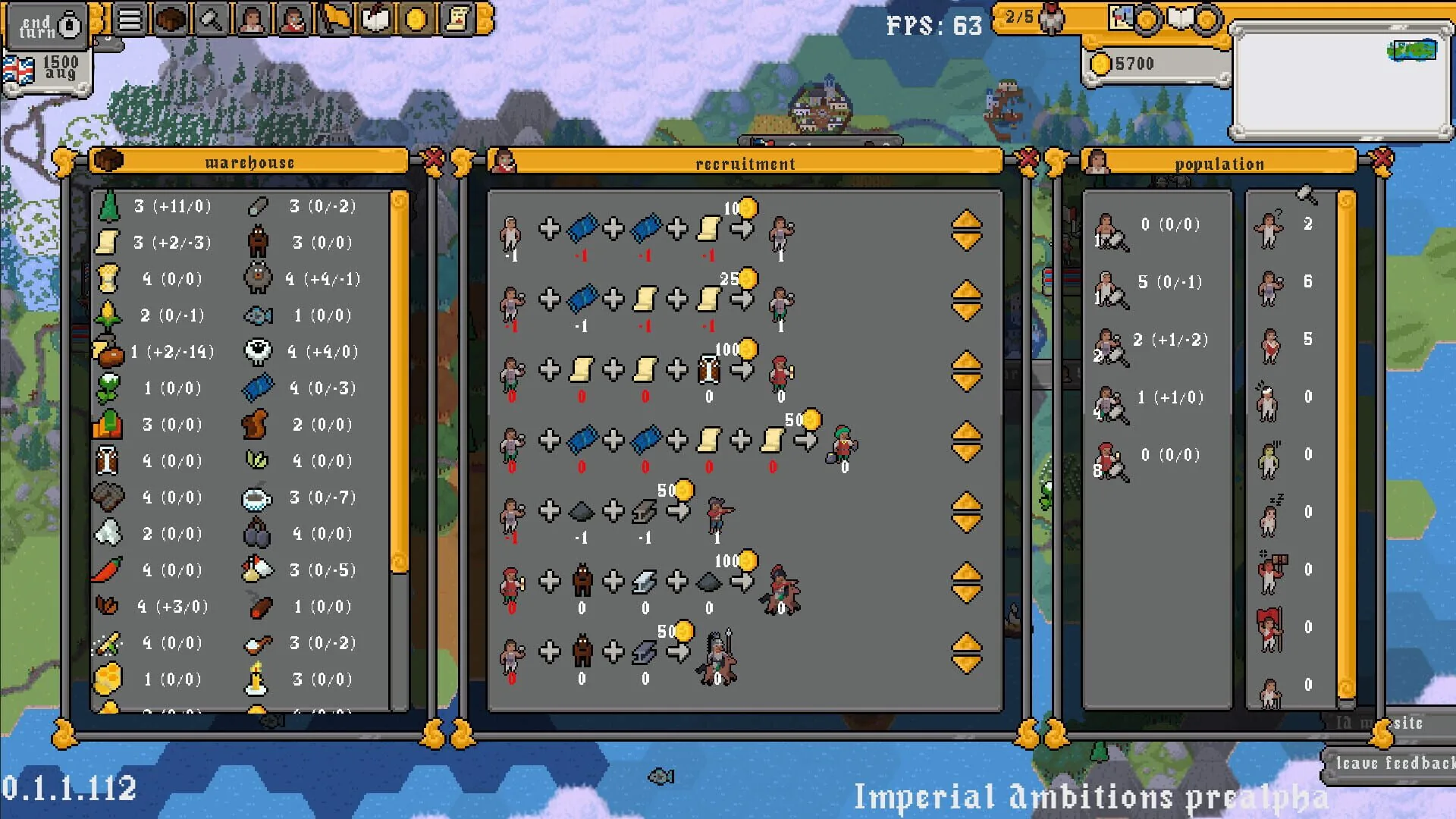
What strikes immediately is the density of the systems. Imperial Ambitions doesn't settle for the genre's four X's, it inflates them to excess. You discover and colonize the world, you manage more than forty distinct resources linked by complex production chains, you seek to monopolize markets, you weave trade routes your merchants must physically travel, you even organize smuggling on a black market. Every economic decision fits into a tangle of dependencies that makes your head spin, and it's precisely that vertigo you come here for.
The game delegates its action to a cast of specialized agents, merchant, builder, explorer, general, priest, shadowmaster, gentleman, each extending your influence in its own way. You don't pilot an abstract empire, you manipulate human cogs with precise roles, and that granularity reinforces the feeling of running a living machine rather than a dashboard. It's demanding, sometimes arid, but of a richness few modern 4X games still dare offer. Where the genre has become sanitized, Imperial Ambitions stays rough, and that's a compliment.
The game's real singularity, the one that sets it apart from the pack, is its trait system applied to populations. Your subjects are split into five social classes, from slaves to masters by way of peasants, apprentices and artisans, and this hierarchy isn't decorative: it lives, it progresses, it revolts. Hunger, disease, wealth inequality, discrimination and religious fractures dynamically shape your people's behavior, their loyalty and even the performance of your soldiers in combat. Your empire is never a clean abstraction, it's an unstable, human, morally complicated body.
It's that dimension that gives the game its soul and its darkness. Building an imperial power also means managing the misery it generates, the tensions it feeds, the injustices it thrives on. Diplomacy, incidentally, works on a grudge system: aggressive acts accumulate tension, and peace is negotiated in contact with enemy units, in a logic of permanent balance of force. Imperial Ambitions doesn't tell the glory of imperialism, it shows its dirty cogs, and that's far more interesting.
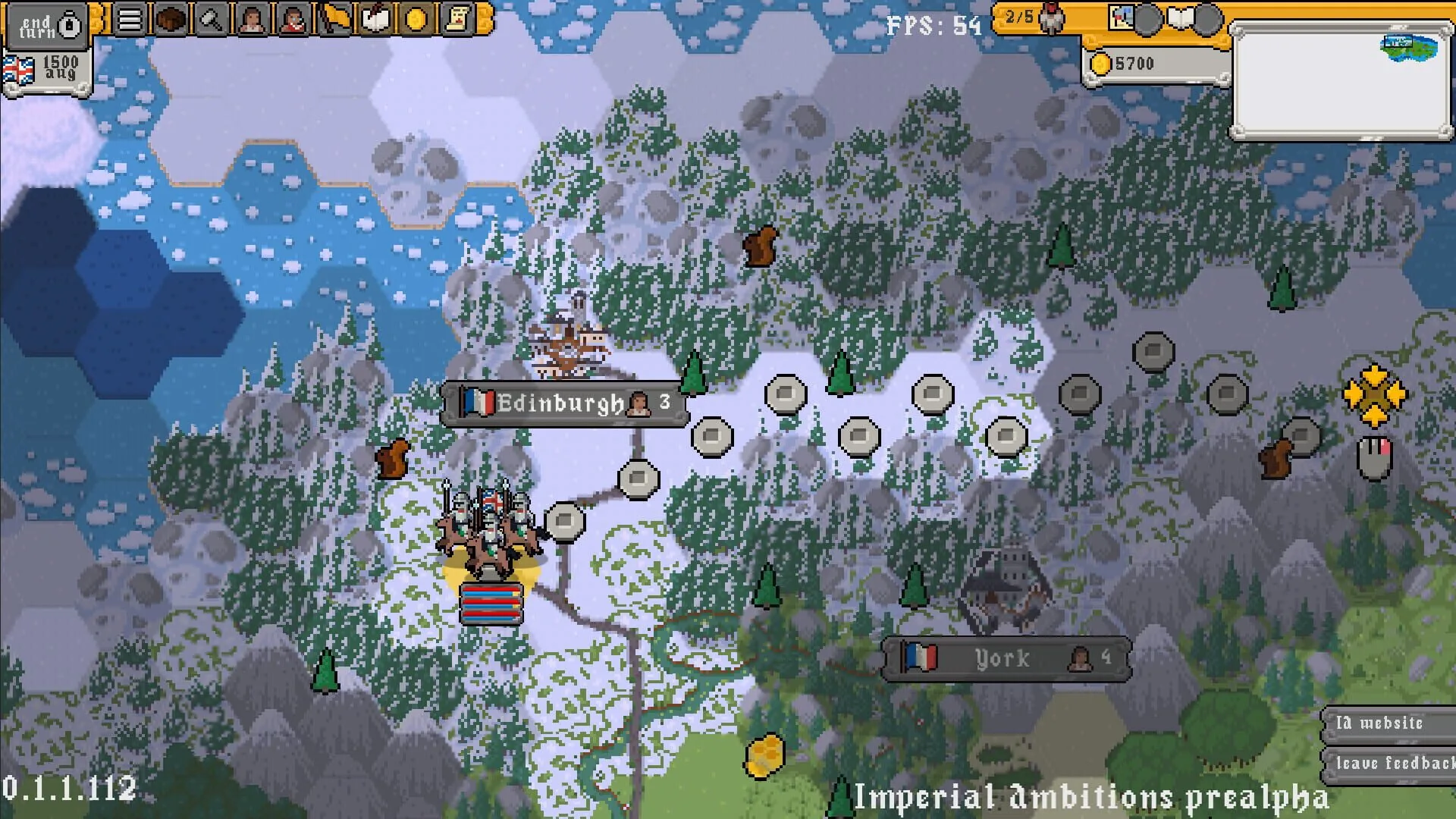
On the military side, you find that same taste for detail that reeks of the wargame. Battles play out turn by turn, shaped by terrain, formations and logistics. Armies move on the campaign map like real units, large forces advancing in column, and you have to contend with sieges, splitting your troops and naval operations. It's not a spectacular combat system, but a demanding one, where preparation and position count more than the nervous click. Veterans of classic wargames will feel immediately at home.
This approach has an obvious downside: aridity. Imperial Ambitions makes no effort to make its clashes sexy, and its pixelated staging, coherent but austere, doesn't try to impress. Everything goes through reading, understanding, anticipation, and anyone coming for spectacle will be left wanting. It's a game of the head, not the nerves, and it owns that dryness as a virtue. Still, that demand, combined with a dense interface, raises an entry wall not everyone will have the patience to climb.
Because that's the main reproach: Imperial Ambitions is hard to tame, and it does little to help you. The learning curve is steep, the interface overflows with information you have to learn to read alone, and the first hours often amount to frustrating groping before the mechanics clear up. It's the owned price of its depth, but it's a real price, and it will close the door on a good part of the curious. Where a modern 4X takes you by the hand, this one throws you in the deep end.
You also feel, in places, the limits of an independent production. Some parts of the game lack polish, the ergonomics could be smoother, and you sense the richness of the systems sometimes came at the expense of their legibility. Nothing dealbreaking for the genre lover, but you need to know what you're getting into: Imperial Ambitions must be earned, and it never apologizes for demanding it.
Imperial Ambitions is a love letter to players who were never afraid of complexity. Its economic, social and military depth is astonishing for a production of this size, its trait system that rots empires from within gives it a rare soul, and its old-school wargame scent will delight everyone who thought the genre definitively softened. It's a dense, demanding, morally murky game that treats imperialism not as an epic but as a cruel machine. For the lover of deep strategy, it's a little goldmine.
You just have to accept its intransigence. The barrier to entry is high, the interface arid, and the game never seeks to seduce beyond its natural audience. That's not a flaw as such, it's a nature, and it defines exactly who the title is for. If the idea of a 4X that drowns you in systems and leaves you to fend for yourself repels you, flee. If it makes your eyes shine, you may be holding your new obsession.
A 4X of dizzying depth with a nostalgic wargame scent, as rich as it is arid: a gem for patient strategists, a wall for everyone else.
Strengths:
Weaknesses:
Tested on PC.
Disagree with the score? Come and tell us on the InsertCoins Discord, where we defend our verdicts live.
Community
Your rating
Advertisement
Loading comments...
You might also like
A co-op bar that collapses while you serve. 98 per cent positive, and one of the rare times chaos is the actual subject.
You draw a plan on the map and officers execute it alone. Except the game crashes every other planning phase.
The Knights of Pen & Paper team return with a dungeon where you come back to camp, cook, and unlock recipes that change your stats.