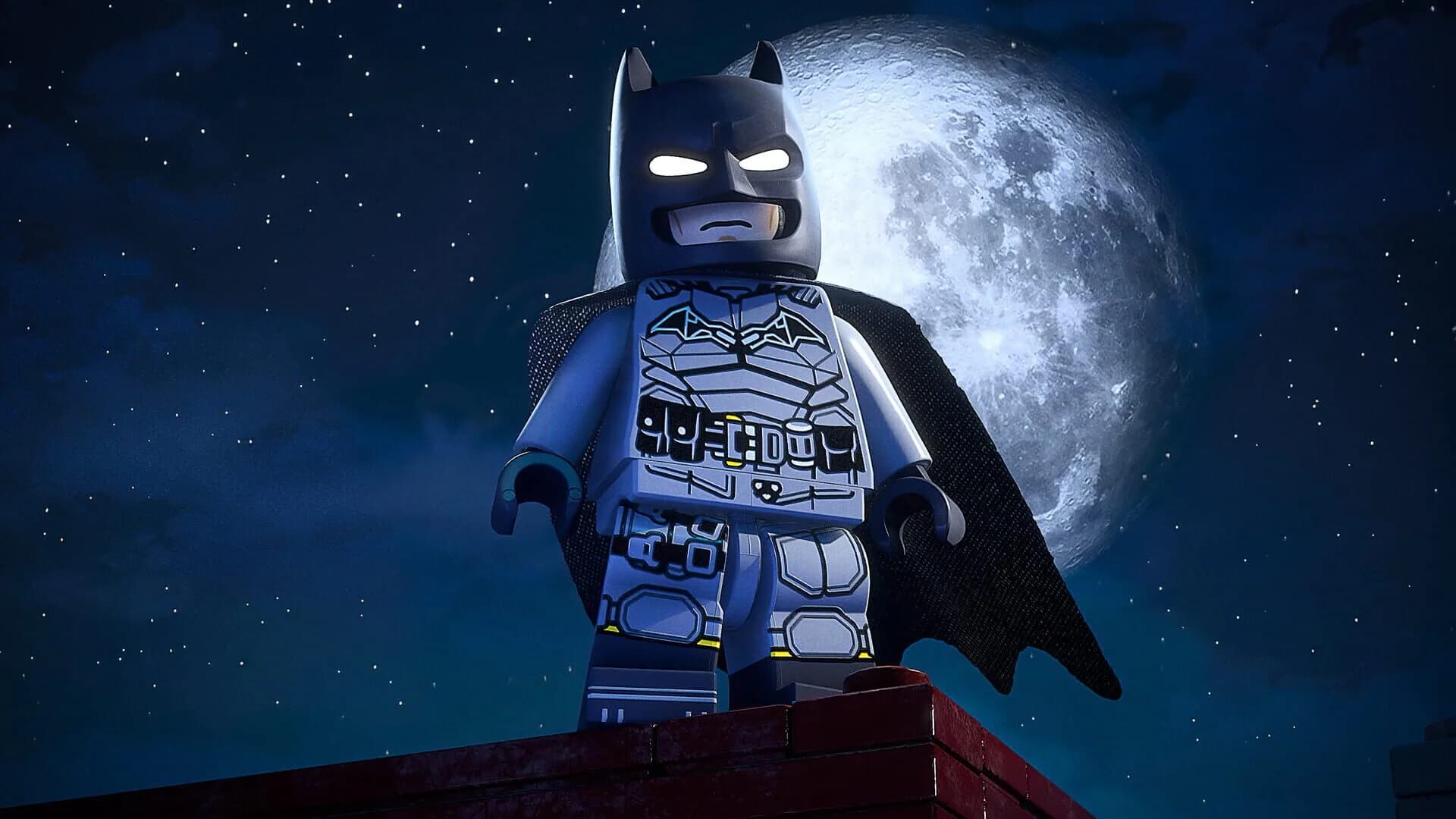
LEGO Batman: Legacy of the Dark Knight had no reason to be the best Batman game in years. It's a LEGO game. Developed by TT Games. In a market where the Batman video game license hadn't produced anything memorable since the Arkham series. And yet.
It's the best Batman game since Arkham Knight. And it's a game with plastic figurines.
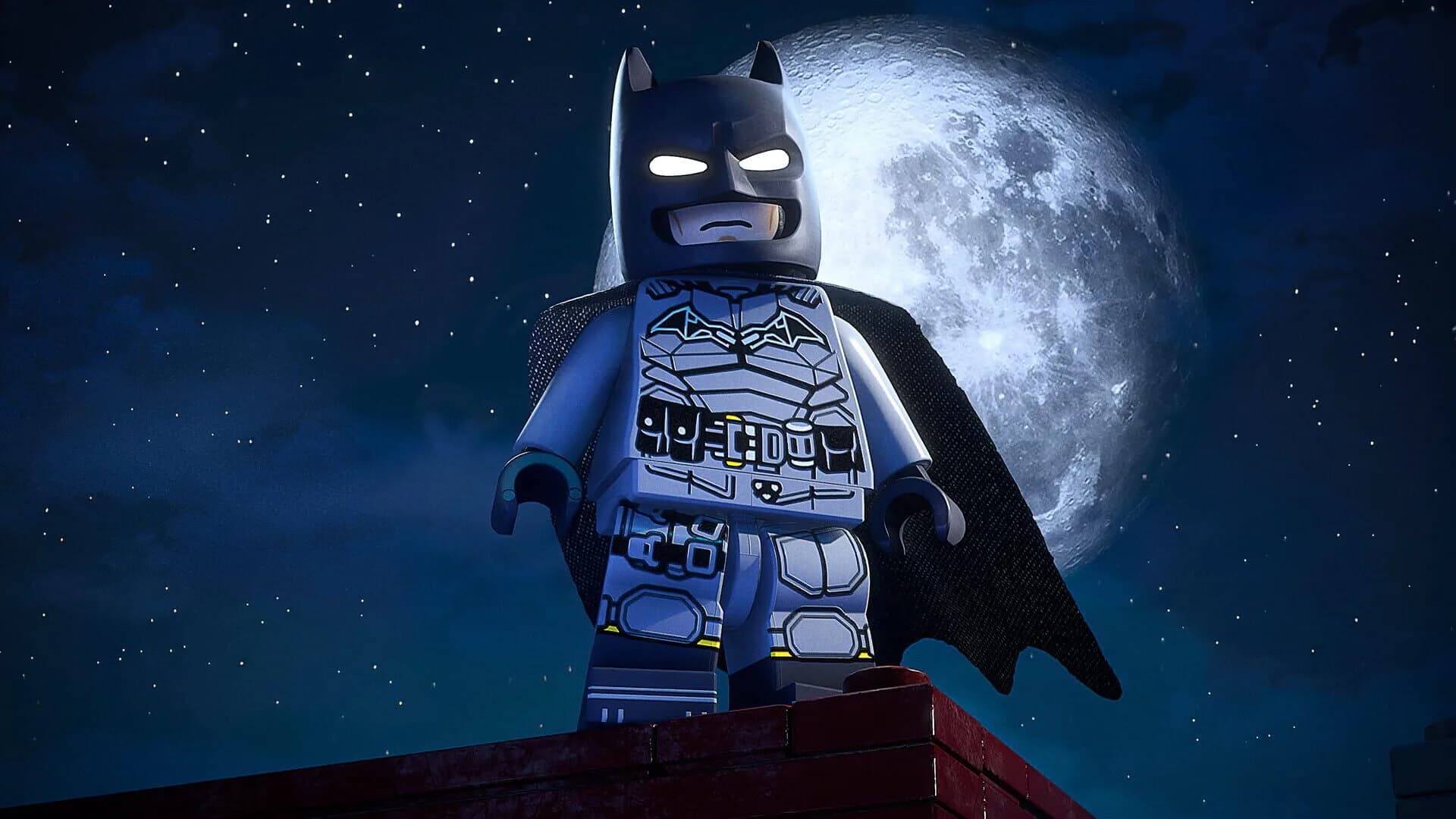
Legacy of the Dark Knight doesn't choose one version of Batman. It takes all of them. The opening quotes Batman Begins directly with the "Why do we fall" scene, revisits Crime Alley in Tim Burton's aesthetic, leads into Nolan's League of Shadows training, then continues weaving together elements from The Dark Knight, Reeves' The Batman, and The LEGO Batman Movie. Decades of mythology condensed into a single coherent narrative.
That's risky. Contradictory universes in the same story can produce fan service soup without structure. Here it works, because the writing understands what each Batman era contributed and uses it with intention rather than checking boxes. When it's good, it's at the level of The LEGO Batman Movie, which remains one of the best things ever produced with the license. When it's less good, a few villain appearances that seem to be there because the checklist required them, it's forgettable without being annoying.
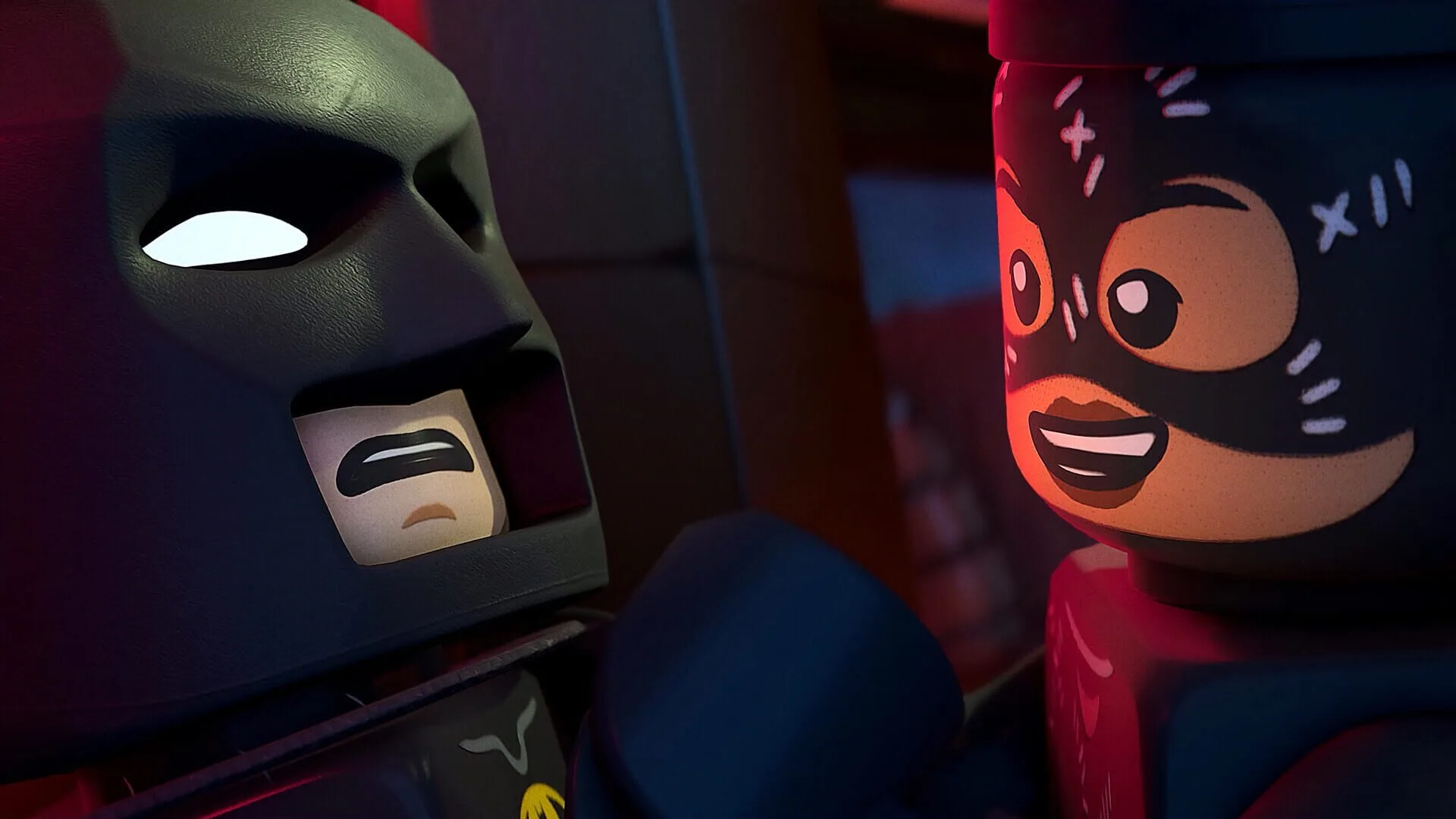
The humor is more restrained than in previous LEGO games, less verbose, more precise. The recurring gag around Catwoman and the difficulty of making her seductive with a plastic figurine works every single time.
That's where the game surprises the most. TT Games took the free-flow system from the Batman Arkham games, understood it, and integrated it into the LEGO logic without betraying it. Combos, counters, dodges, parries: the foundation is Rocksteady's, but the rhythm is different, more accessible in the early levels and more satisfying over time.
Each playable character has their own tools. Batman's batarang and grappling hook, Catwoman's whip, Batgirl's drone. These gadgets aren't decorative: they integrate into the combat phases and environmental puzzles. The detective phases, where Batman analyzes the scene with UV and X-ray vision, break the rhythm of combat in a welcome way.
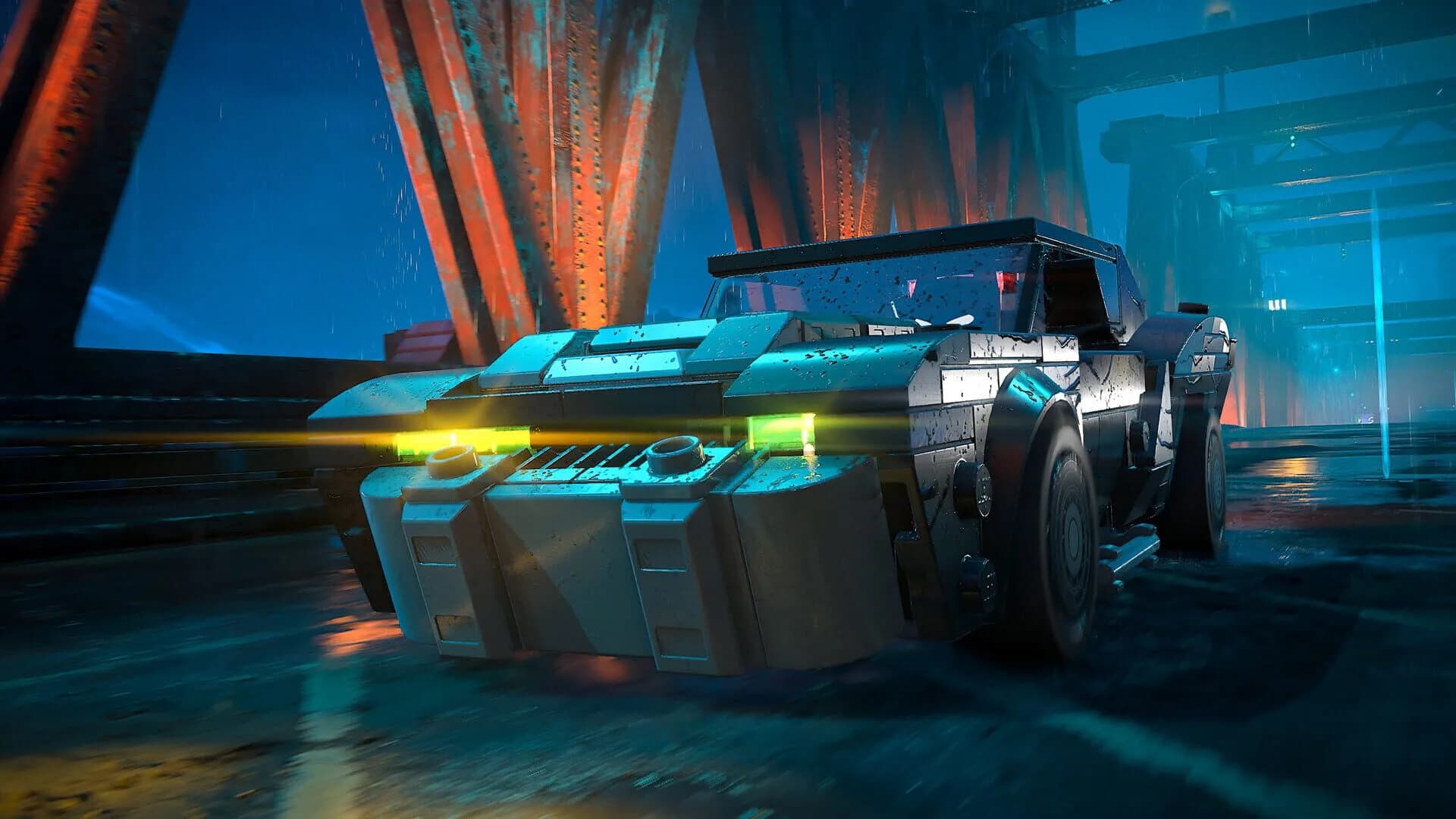
The Batmobile is an additional surprise. More enjoyable to drive than in Arkham Knight, which wasn't predictable. The gliding sequences over Gotham's rooftops are what the series should have been from the start.
The only real problem in this department: stealth. When enemies are lined up neatly, it works. When they're grouped, it becomes approximate. It's not the game's priority and you can feel that.
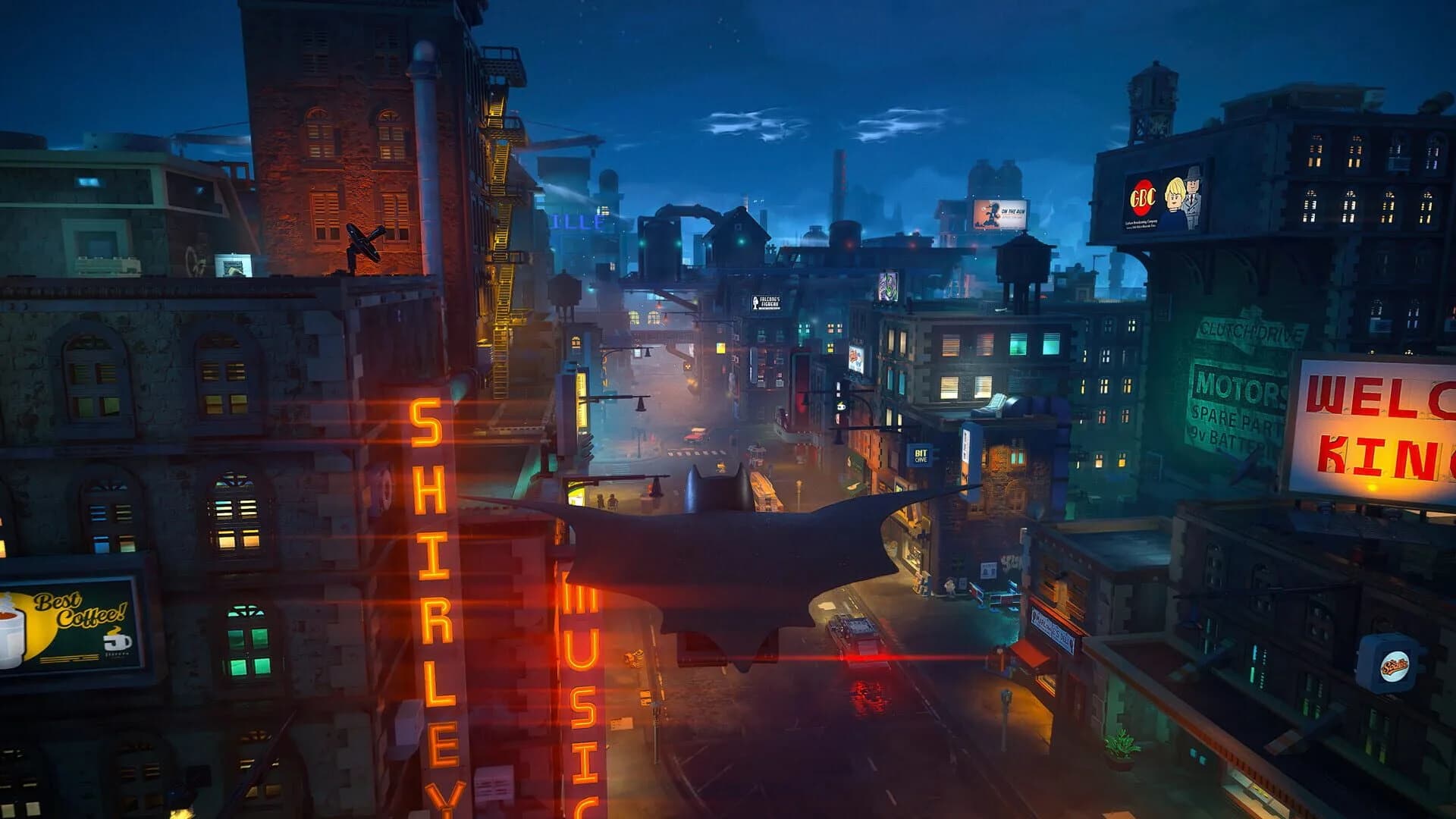
Four islands, neighborhoods each with a distinct identity, a dense and lively city without being oppressive. Legacy of the Dark Knight's Gotham is dark without being grim, populated without feeling empty, and its streets are lined with references to every corner of Batman mythology from the most famous to the most obscure.
It's one of the best video game cities of the year. That's not a compliment to be qualified because it's LEGO: it's a direct compliment. The city has its own personality and makes you want to spend time there even between main missions.
The reservation: the open world secondary activities don't match the main campaign missions. The collectibles and secondary crime missions lack creativity compared to what the campaign offers. It's the classic gap between main content and filler content, and it's more pronounced here than one would have liked.
If you come from traditional LEGO games, certain absences will sting. The stud counter is gone. The classic minikits from missions have disappeared. The game has taken a turn toward structured action-adventure rather than the collectathon formula that defined the series for fifteen years.
It's a deliberate choice. The result is a more coherent, more narrative, less choppy game. But for those who love the original formula, it's a real break.
The co-op is local only, with no online option. The vertical split screen limits visibility and some framerate drops occur in co-op. For a game positioning itself as family-friendly and shareable, it's a gap.
Length and content
The main campaign takes 12 to 15 hours. Full completion climbs to 25-50 hours depending on your approach. Over 30 alternate costumes covering comics, TV series and films. Vehicles to unlock, gadgets to upgrade for each character.
The 70 euro price gives some players pause for a campaign of this length. That's a legitimate question. The answer depends on whether you plan to spend time in Gotham beyond the campaign, and the city is well enough built to validate the overall playtime.
LEGO Batman: Legacy of the Dark Knight is a love letter to all versions of Batman simultaneously, carried by a combat system that understands what made the Arkham games great, a city worth exploring, and writing that knows when to be funny and when to be sincere.
The open world secondary content falls short of the rest, stealth is approximate, no online co-op is unfortunate. Those are real flaws in a game that surprises on everything else.
Nobody expected the best Batman game in ten years to be a LEGO. And yet here we are.
We debrief every release on our Discord. The door is open, and so is the argument.