7
Test
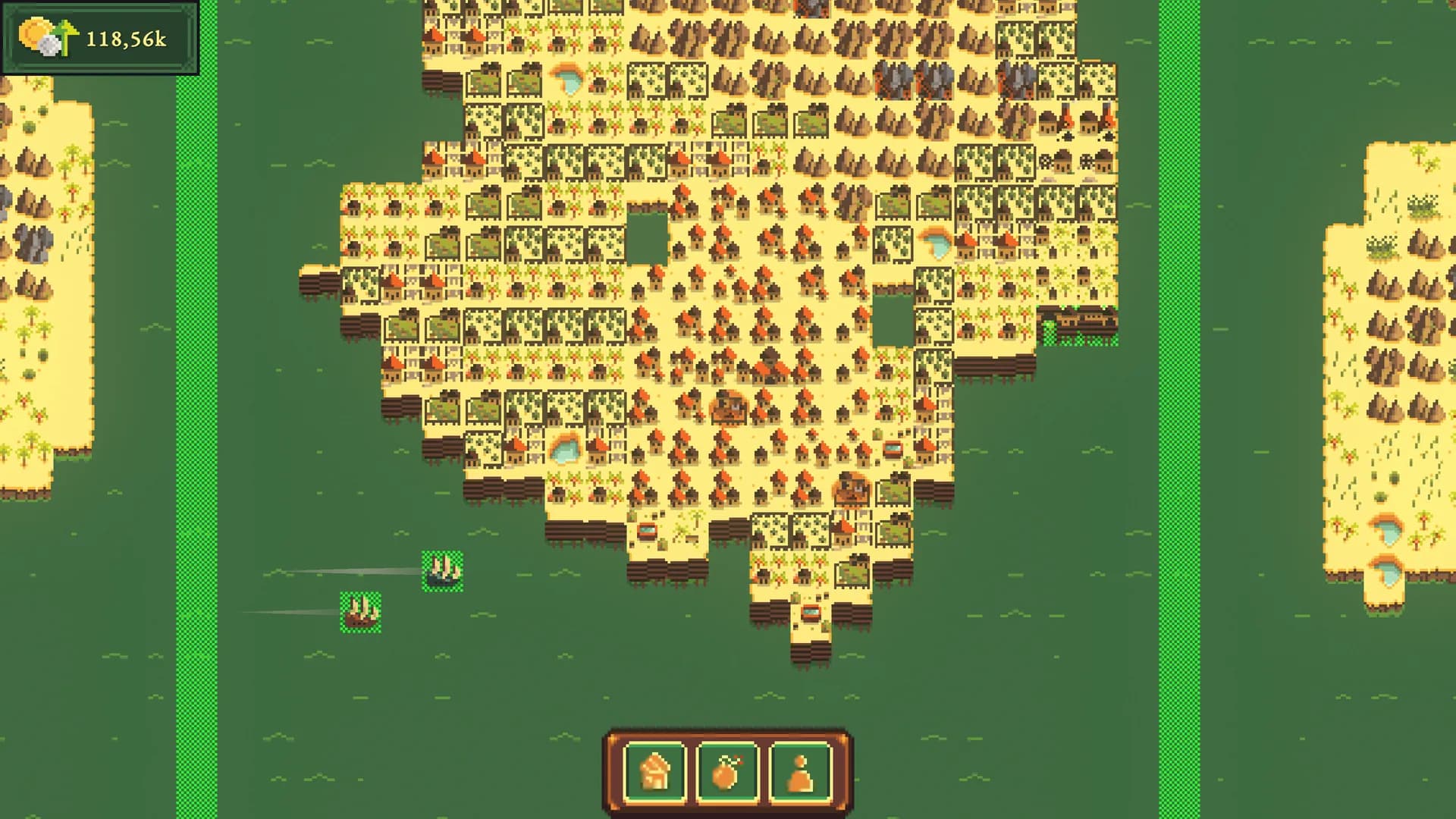
Archipeo: thousands of islands, ships running a shuttle service, and me not sleeping
A procedural Anno where haulage is the real game. Every badly assigned freighter takes its revenge forty minutes later.
Alexandrosse
8 min
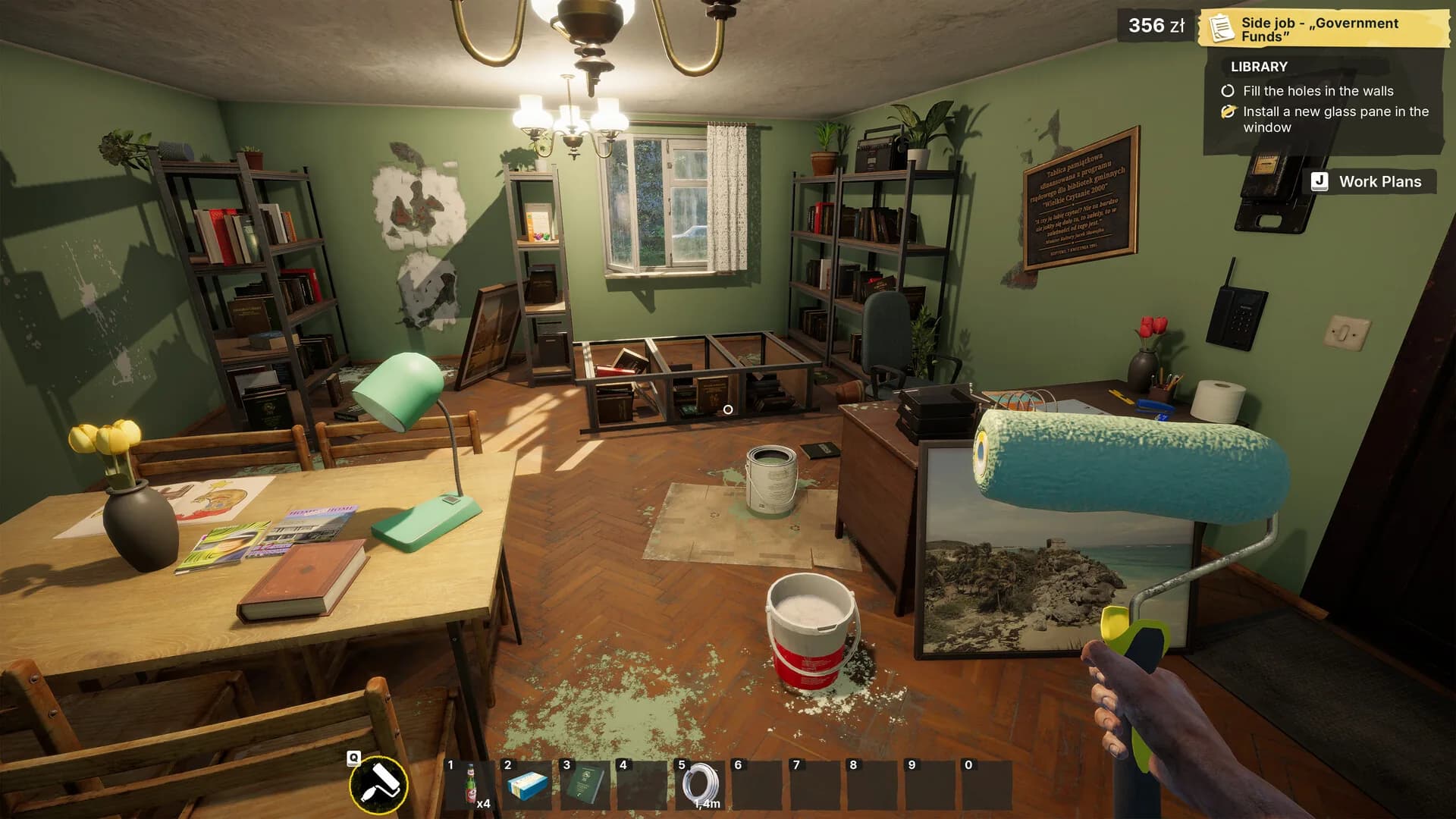
Dilute the paint, lay tiles without a level, throw the furniture out the window. A good idea in a shell we have seen everywhere.
Alexandrosse
InsertCoins.press Score
6.5/10
Verdict
Mixed
Your reaction was the right one, and for once we can document it precisely: yes, this game has exactly the same graphics as Chop Chop Inc., as the shop simulators and as the whole family. No, that is not a coincidence. And yes, it will probably be streamed heavily.
Let us start with who is responsible, then with the good surprise, because there is one.
Low-Budget Repairs is developed by Gray2RGB and published by Simplicity Games with PlayWay. That last name explains just about everything.
PlayWay is the Polish house that industrialised the trade simulator. Its model consists of publishing a very large number of titles built on the same foundations, the same task-completion logic and, yes, the same visual signature. That is what produces the nagging feeling of having already played a game you are discovering, and it is why your eye made the connection immediately.
Add to that a piece of information the studio publishes itself in the disclosure box Steam provides, and which is worth reading carefully: AI was used for some of the translations, the music and the visual assets. The studio does specify that the game generates no AI content during play and that the code was not written that way.
As we wrote about Figure Shop Simulator, that transparency beats silence, and a small studio cannot always afford to put an artist on the payroll. But the declaration here is broader: it also covers music and translation. And when you set out to understand why these games all look alike, the explanation is right there, written by the people who made it.
Now the credit, because stopping at the packaging would be unfair.
The concept is far cleverer than the genre average. You are a self-employed handyman in a 1990s Polish apartment block, and your goal is not to do good work: it is to make as much money as possible by cutting corners wherever you can.
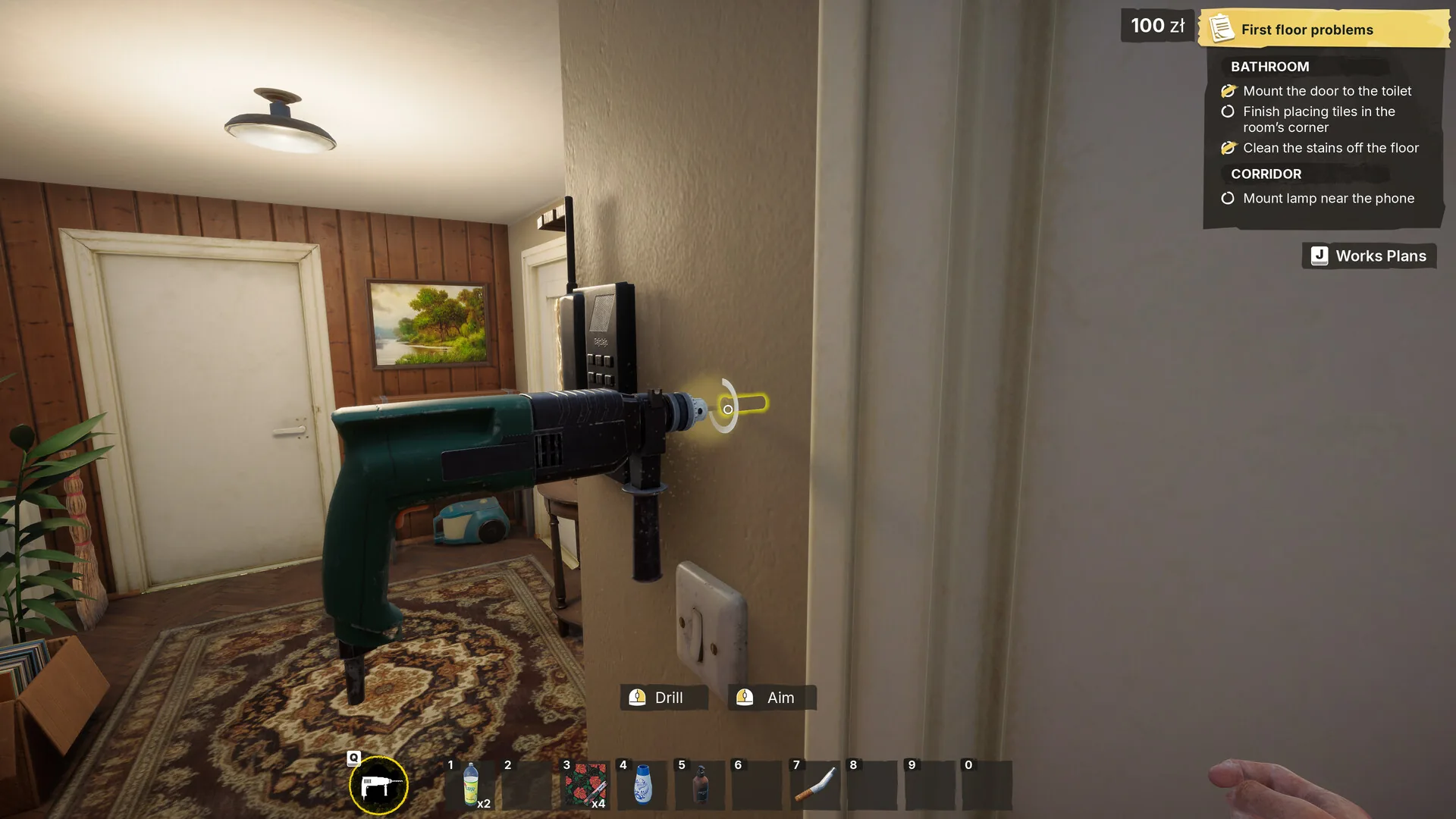
Dilute the paint with water so it covers the whole flat? The colour will be duller, but who is going to notice. Lay tiles without a level? A little unevenness adds character. Furniture that will not fit through the door? Open the window and let gravity handle it, and hope nobody parked below. At the hardware store you hunt for the cheapest tool that will sort of do the job: a discounted hammer that survives three blows, take two.
And the key mechanic, the one that gives it all its bite: if the client spots the flaws after you have left, too bad for them, the profit is already banked.
That is a delightful moral inversion. Where most trade simulators reward careful work, this one rewards cheating, and turns every job into a calculation between immediate profit and the cascade of trouble that follows. The 1990s Polish setting, with its housing blocks, grounds the whole thing in something lived rather than generic.
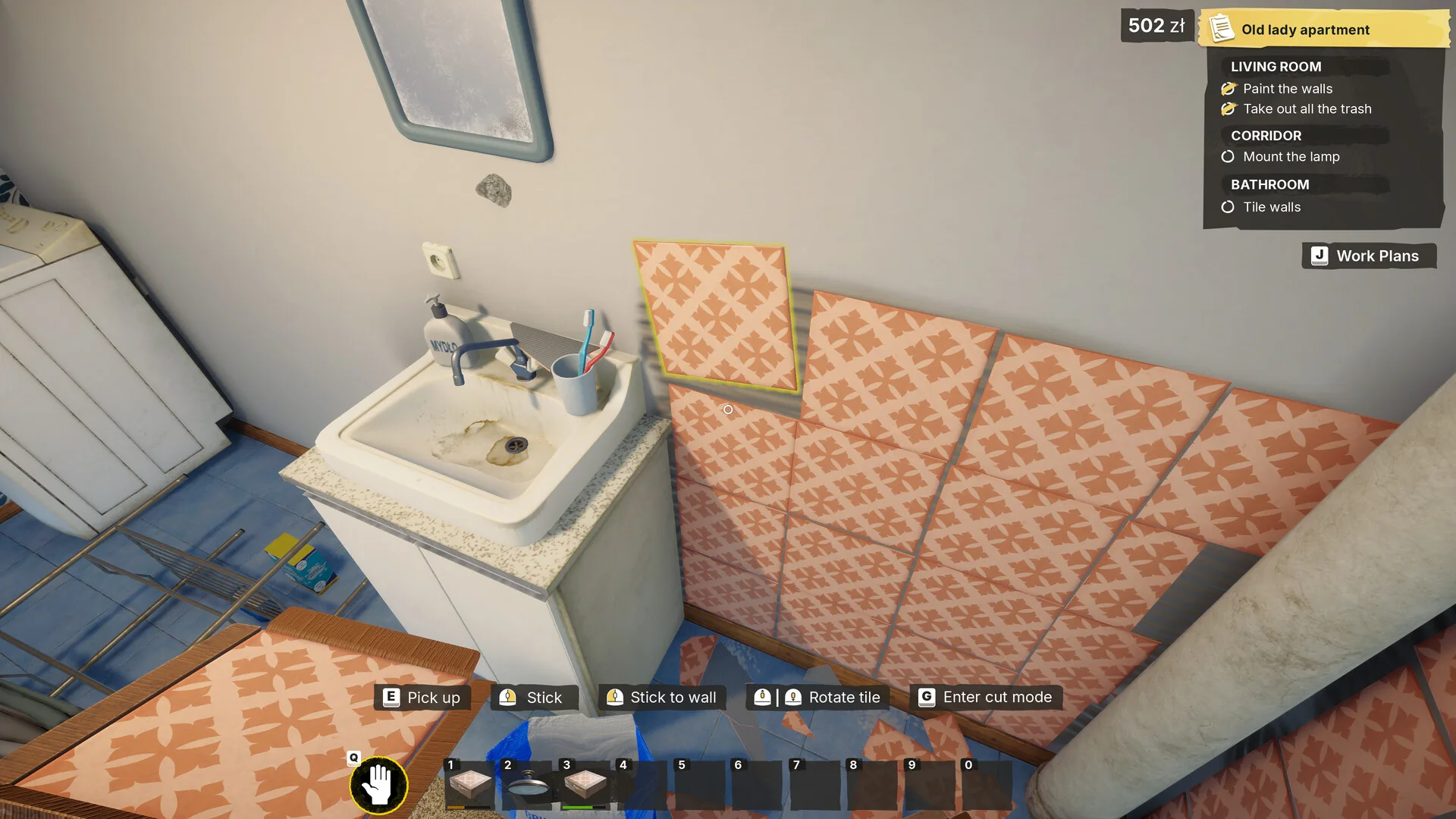
On streaming you are right, and it is in fact the target audience. A game where you can hurl a wardrobe out of a third-floor window is written to produce clips, and it will produce them.
The reservations belong to the genre and to the publishing house. A task simulator lives on the variety of its jobs and the quality of its handling, and serial production guarantees neither. The risk is that an excellent writing idea ends up served by generic execution, which would be a shame.
It is available in French, with the caveat that the translation is partly automated according to the studio's own declaration, something that will show in use.
A demo exists. For this kind of production, that is clearly where to start.
It credits an excellent writing idea, the moral inversion that rewards botched work, and penalises serial-production packaging along with partly automated localisation.
Tell us in the comments: what is the worst corner you have ever cut in real life to save three euros?
The discussion carries on over on our Discord, where we relitigate scores for far longer than is reasonable.
Community
Your rating
Advertisement
Loading comments...
You might also like
A procedural Anno where haulage is the real game. Every badly assigned freighter takes its revenge forty minutes later.
Towers, troops, a single pool for both. Every coin spent on defence is a coin you will not be sending the other way.

Crossing finally matters and defending responds. Then the screen goes black. 57 per cent positive on Steam, at 69.99 euros.