5
Test
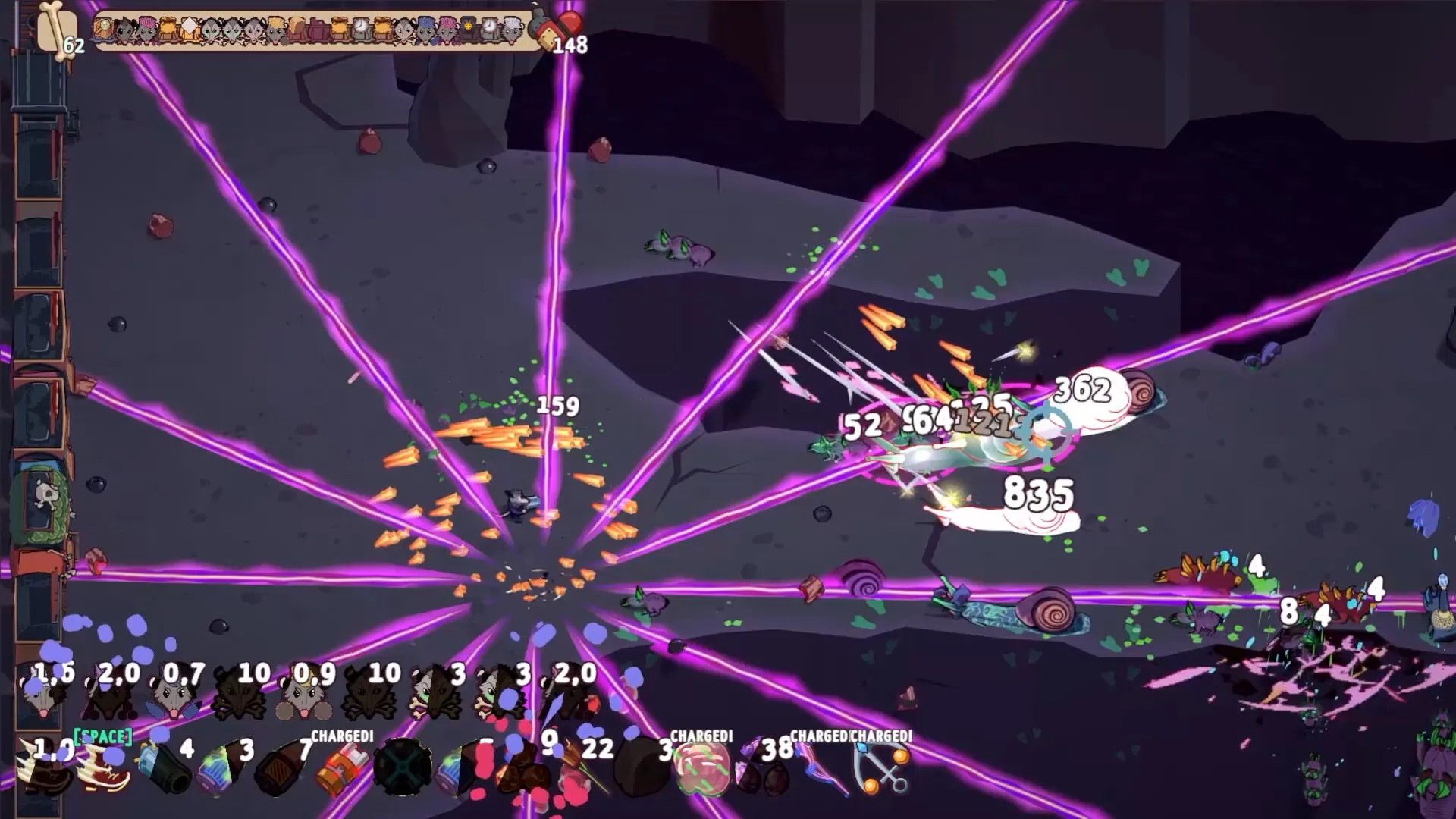
Ammossum: the best idea of the year, on a train that does not always start
Your railcars are your health and your skills at the same time. Assuming the game gets past the loading screen.
Alexandrosse
7 min

You've always been the hero who hits. Here you're the healer keeping three idiots alive. Master Healer Kale holds a golden idea, but stops just before digging into it.
Alexandrosse
InsertCoins.press Score
6/10
Verdict
Mixed
In thirty years of RPGs, we've played the knight, the mage, the thief, the chosen one, the fallen god and the kid with the big sword. We've almost never played the one who, in the shadows, keeps that whole crowd from dying. Master Healer Kale rights that wrong with an idea as simple as it is irresistible: what if, for once, you were the healer, and what if, on top of that, your party was made of three misfits?
Master Healer Kale with useless party is a small incremental game developed by Evrac Studio, released on 2 July 2026 on PC and Mac for a trifling four euros or so. You play Kale, a healer, on the road to defeat the Demon King with a party that gives the game its title: a tank who sleeps constantly, a rookie archer and a brilliant but insufferable mage. Designed to be finished in four hours, dressed in anime-flavored pixel art, it's the kind of modest object you open with no expectations and close with a smile.
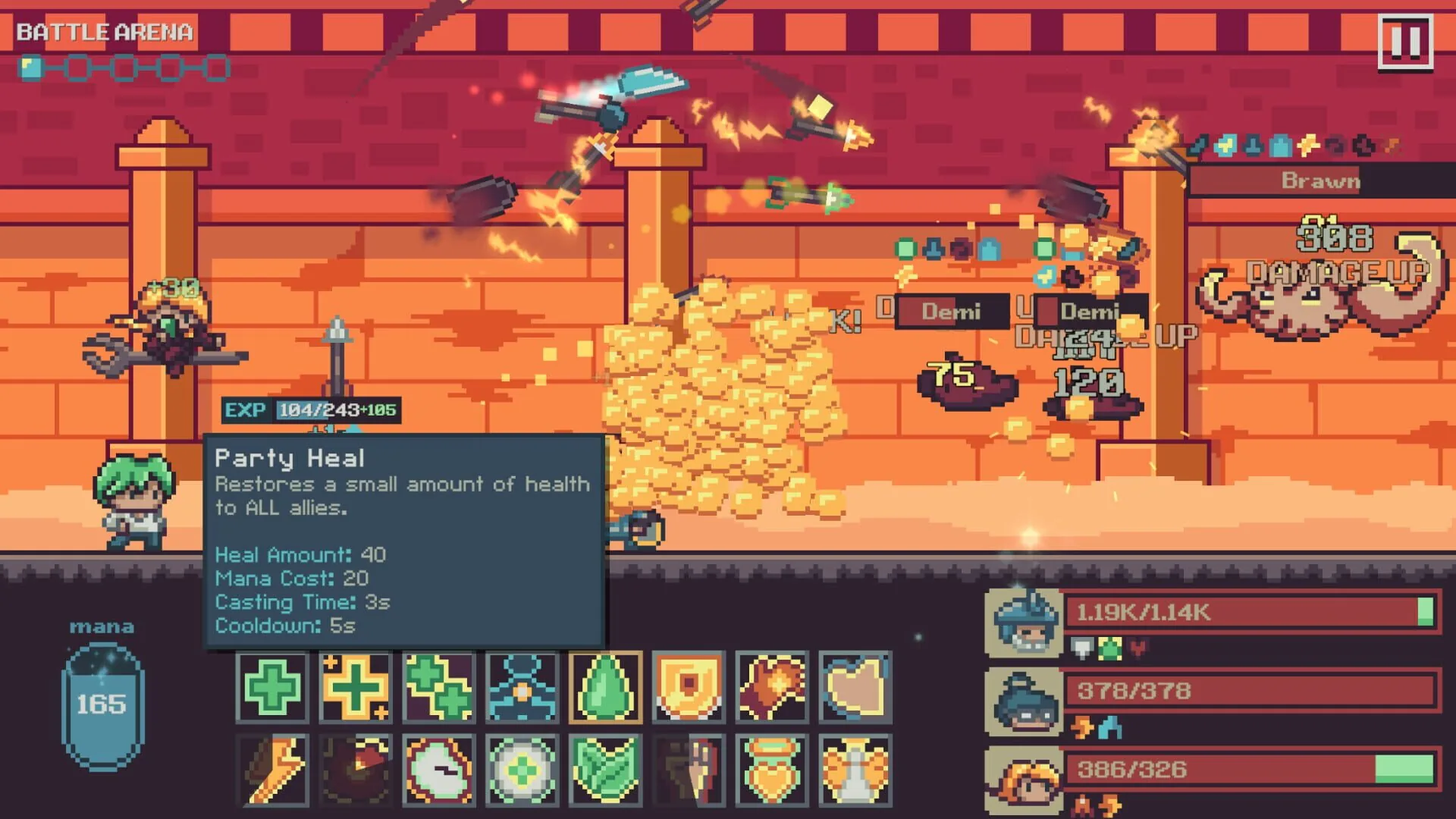
The big idea, the only one that really counts, lies in the reversal of perspective. The healer is the most thankless role in video games, the one you leave to the AI or force the most patient friend to take in a group. No one dreams of being the healer, and that's exactly why devoting a whole game to it is a find. Here, you don't hit, or so little. Your job, your one responsibility, is to keep three characters alive while they do anything and everything as you juggle your spells. The stress is inverted, and so is the satisfaction: a fight won isn't an enemy struck down, it's a party that survived thanks to you.
That shift changes the entire relationship to combat. Where a classic RPG asks you to optimize your damage, Master Healer Kale asks you to anticipate the dangers, prioritize the heals, choose who to save when it all goes sideways. You read the battlefield not to strike, but to patch. It's a rare mental gymnastics, and the game has the merit of placing it at the center rather than relegating it to a background task. For anyone who's ever loved playing support in an MMO or a MOBA, it's a love letter to an unloved role.
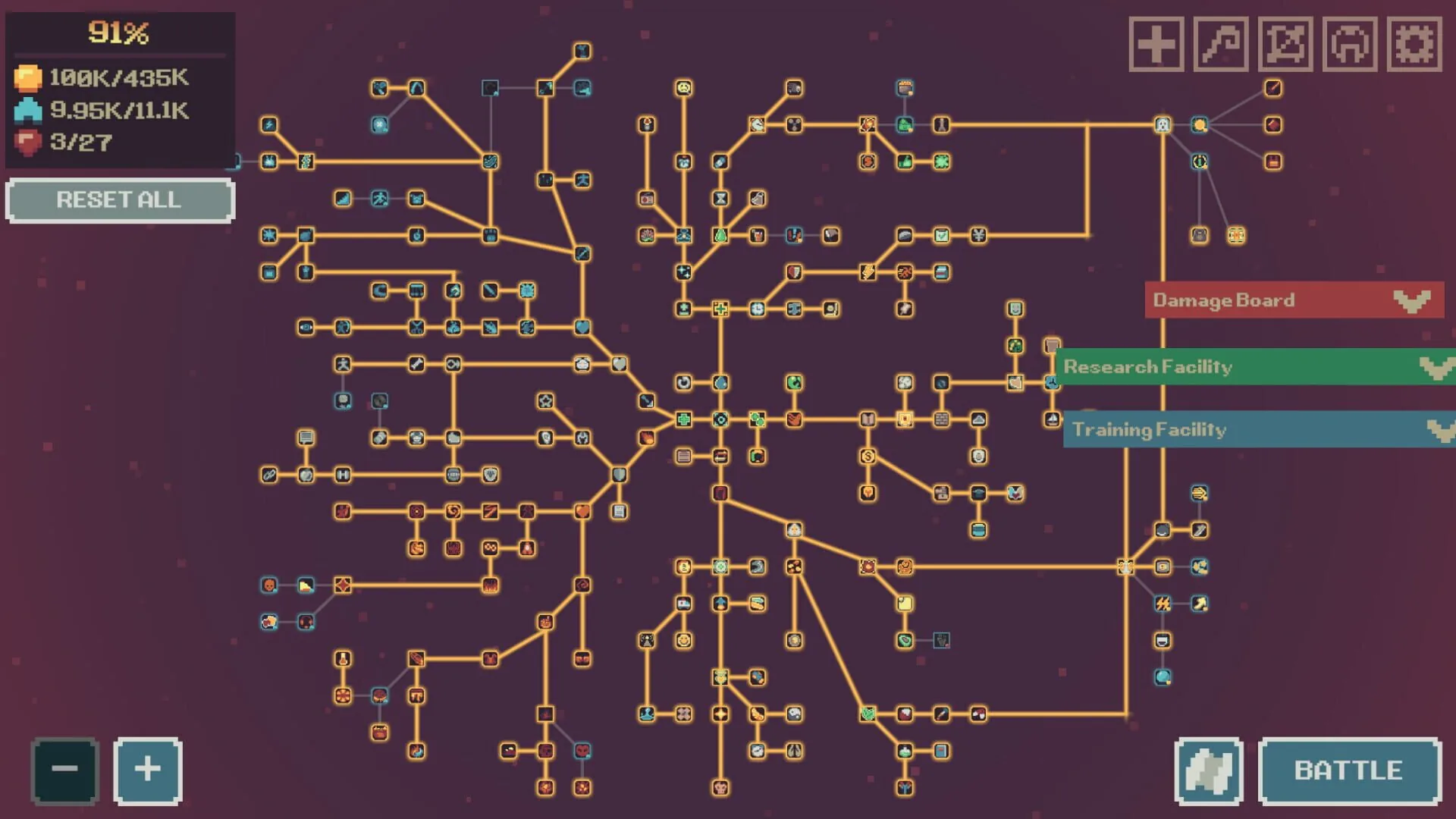
Beneath the concept, you find an owned incremental-game structure. Combat is largely automatic: your party acts on its own, and you step in with eighteen active support spells, from raw heals to buffs by way of a few offensive options. The real heart of the game is its skill tree of more than two hundred upgrades, which lets you sculpt your style, from the pure healer who only keeps people alive to the hybrid healer who ends up dealing non-negligible damage. You progress through sixteen dungeons, you unlock tiers, you refine your build, and the gratification loop proper to the genre works perfectly.
What saves the whole thing from passivity is that the bosses refuse the simple heal-spam. They force you to vary approaches, to play with spell timing and the arrangement of abilities, and those tension peaks regularly remind you there's a brain to put behind the automatics. The tree is generous enough to give a real sense of growing power over the game's short length, and at four euros, the content density is perfectly honest. You clearly get your money's worth.
And yet, you stay a little hungry, because the game stops right when its idea becomes gripping. The first lack is structural: it's an incremental, so a good chunk of the action plays out on its own, and the healer role, however clever, often boils down to clicking your spells at the right moment on a fight you don't really control. We'd have dreamed of the concept moving toward more direct interaction, more positioning decisions, more control over the chaos you're supposed to catch up on. The idea of the heroic healer deserves a real tactical system, not just a layer of heals laid over idle.
The second lack is one of narrative ambition. A party of misfits, a sleeping tank, an obnoxious mage: there was material here for a tasty adventure comedy, for dialogue, for a real group dynamic that would have given flesh to the gimmick. The game brushes that humor without ever committing to it, and its characters stay labels more than companions. Add a four-hour length that leaves the concept barely explored, and you get an excellent demonstration of intent rather than a game that goes all the way with its promise. The skeleton of a very great little game is there; it's missing the flesh.
Master Healer Kale with useless party is one of those small games you want to defend for their idea before even talking about their execution. Putting the player in the healer's shoes, that shadow hero no RPG ever puts forward, is a find that deserves to have offspring. The mechanic works, the skill tree is rich, the bosses give something to chew on, and for the price of a coffee, it's a clever, endearing parenthesis that fills a real blind spot in the genre.
But you can't help dreaming of the game it could have been. The incremental format curbs its ambition, the automation dilutes the pleasure of control, and its cast of misfits stays a backdrop rather than a comedy. Master Healer Kale is the brilliant proof of concept of a game that doesn't quite exist yet, the one that would take this heroic-healer idea and draw a real tactical system and a real story from it. As it stands, it's a lovely curiosity we recommend without hesitation at that price, hoping very hard that Evrac, or someone else, one day dares the full version.
A golden idea, the healer finally at the center of the game, served by an honest but too-safe incremental: we love the concept, we stay hungry on the execution, and we're already dreaming of the sequel.
Strengths:
Weaknesses:
Tested on PC.
Played it too? Tell us how it went on the InsertCoins Discord.
Community
Your rating
Advertisement
Loading comments...
You might also like
Your railcars are your health and your skills at the same time. Assuming the game gets past the loading screen.
Five euros, a strip of ARPG along the bottom of your desktop, and a Steam market where you resell your minions. The success is real, so is the wall.
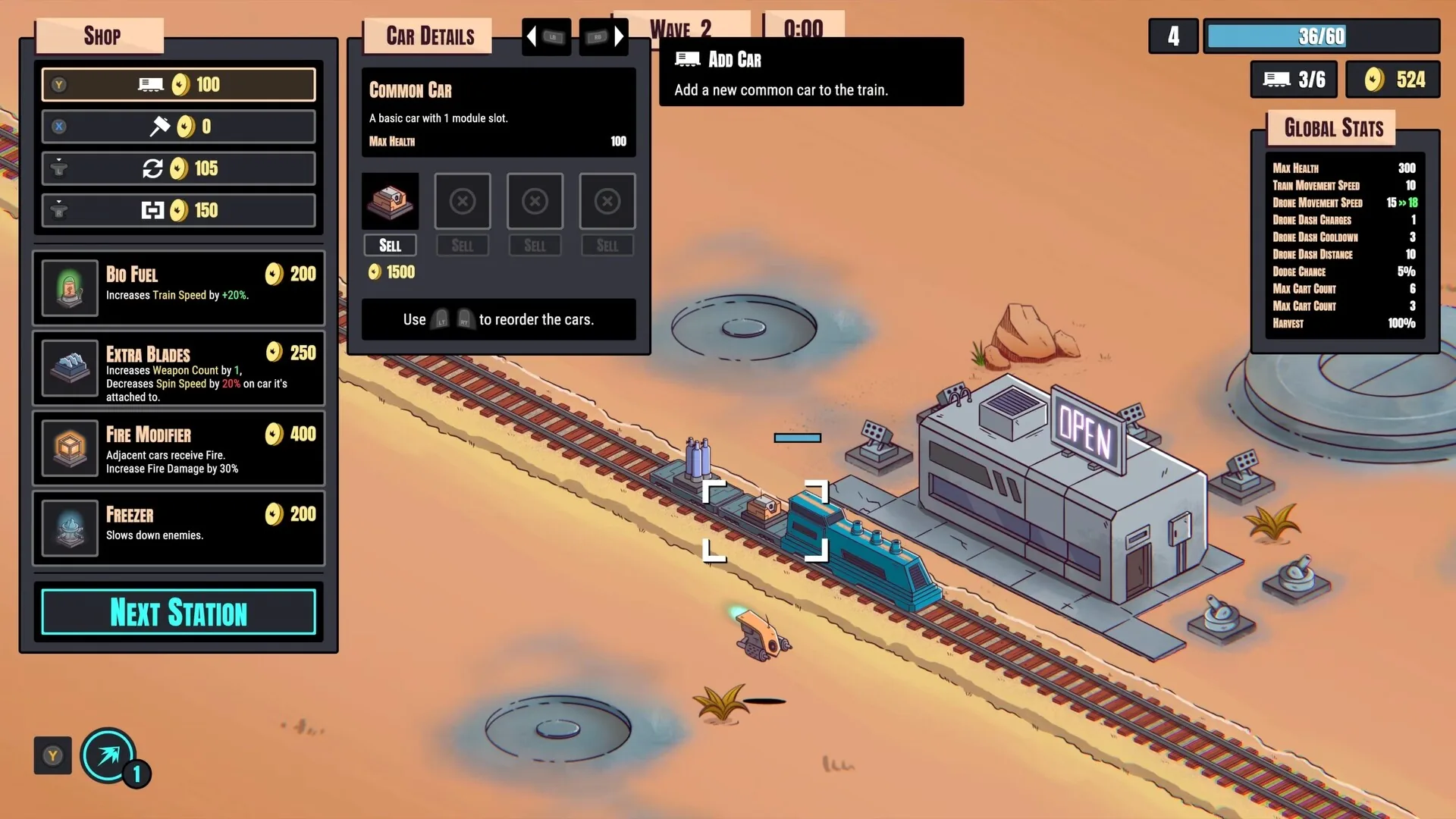
The train on the mouse, the drones on the keyboard, thirty-second rides. A small game that knows exactly how long it lasts.