6
Test
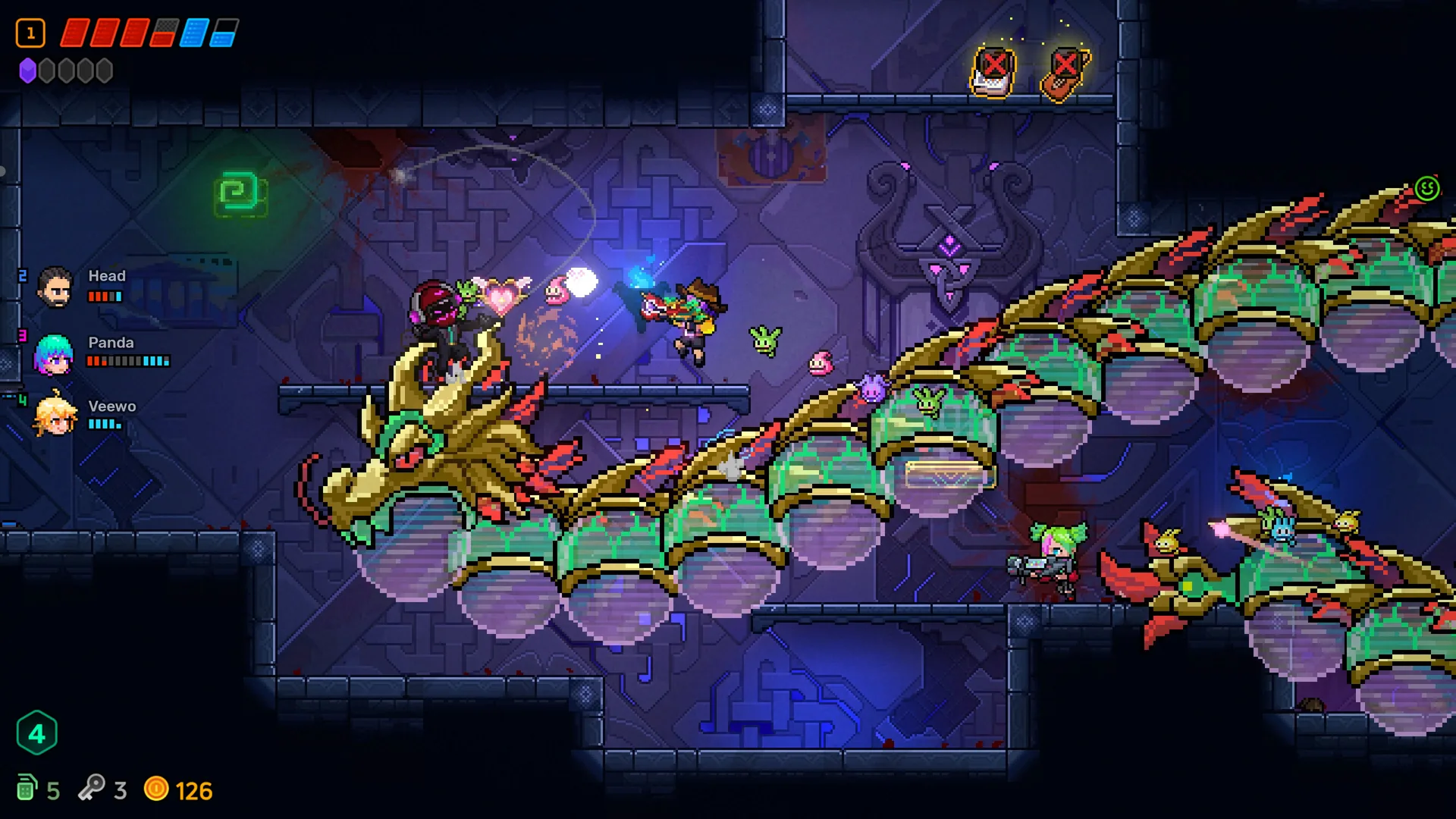
Neon Abyss 2: four-player co-op, where only the host unlocks anything
The 1.0 lands today. The game is as twitchy as ever, but one design decision undercuts its entire selling point.
Alexandrosse
9 min
Jonathan Blow's third game after Braid and The Witness. It took ten years, a home-made language, and ideas he did not invent.
Alexandrosse
InsertCoins.press Score
8/10
Verdict
Recommended
Jonathan Blow released Braid in 2008. The Witness in 2016. And then nothing for ten years.
During those ten years he did something practically nobody does: he wrote his own programming language. Jai. Not an engine, not a tool, a language. Because the existing ones did not suit him.
You can find that brilliant or completely mad. Both readings hold up, and the game that came out of it proves both right.
Here is the detail that made me look up when I read it, and it is almost nowhere in the marketing.
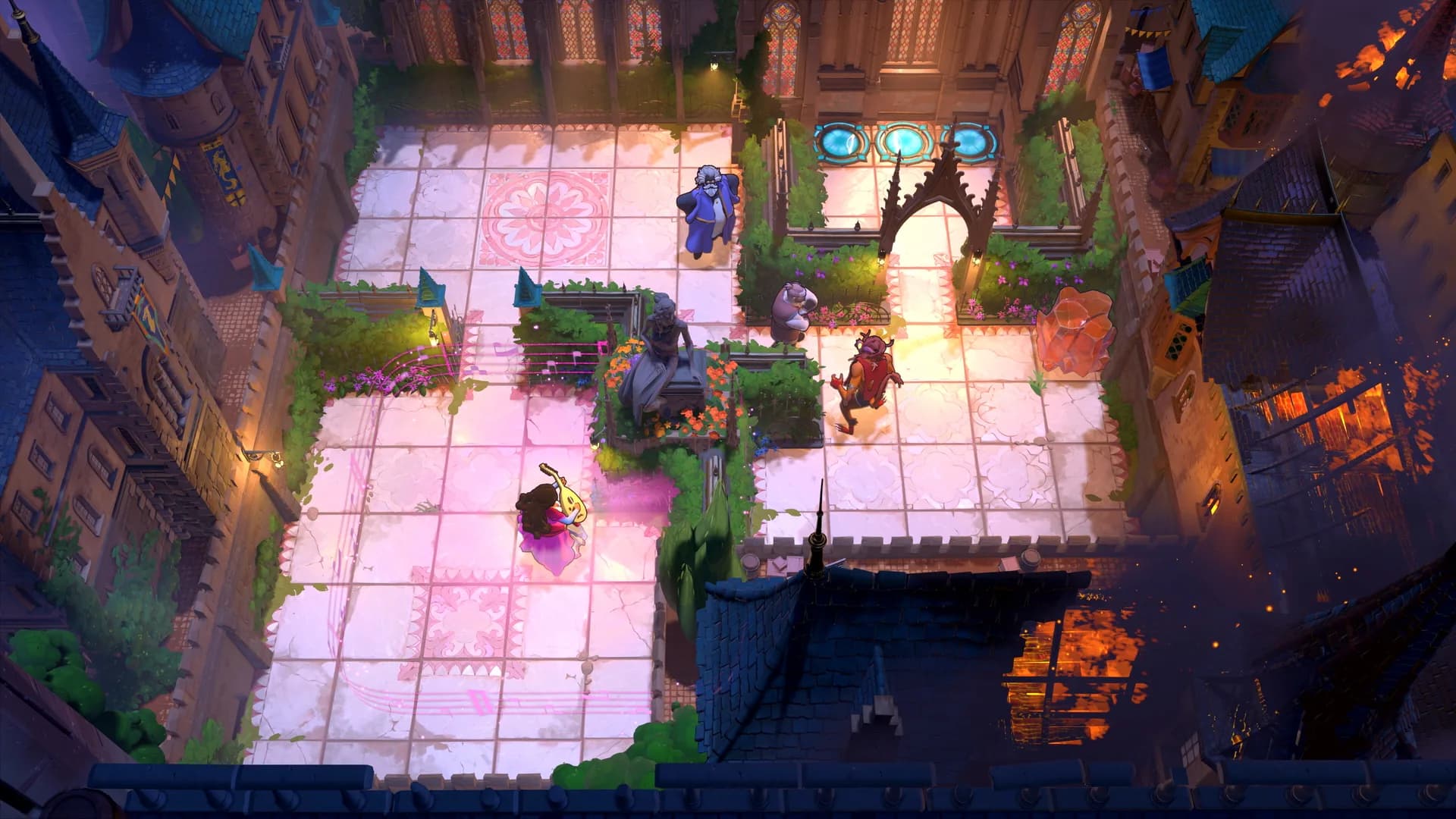
Order of the Sinking Star is not a puzzle game. It is four independent puzzle games, licensed from their authors, and assembled into one world.
Here they are:
Heroes of Sokoban, where you push blocks with a party of characters who each have their own verb. One pushes, one pulls, one swaps places with a block.
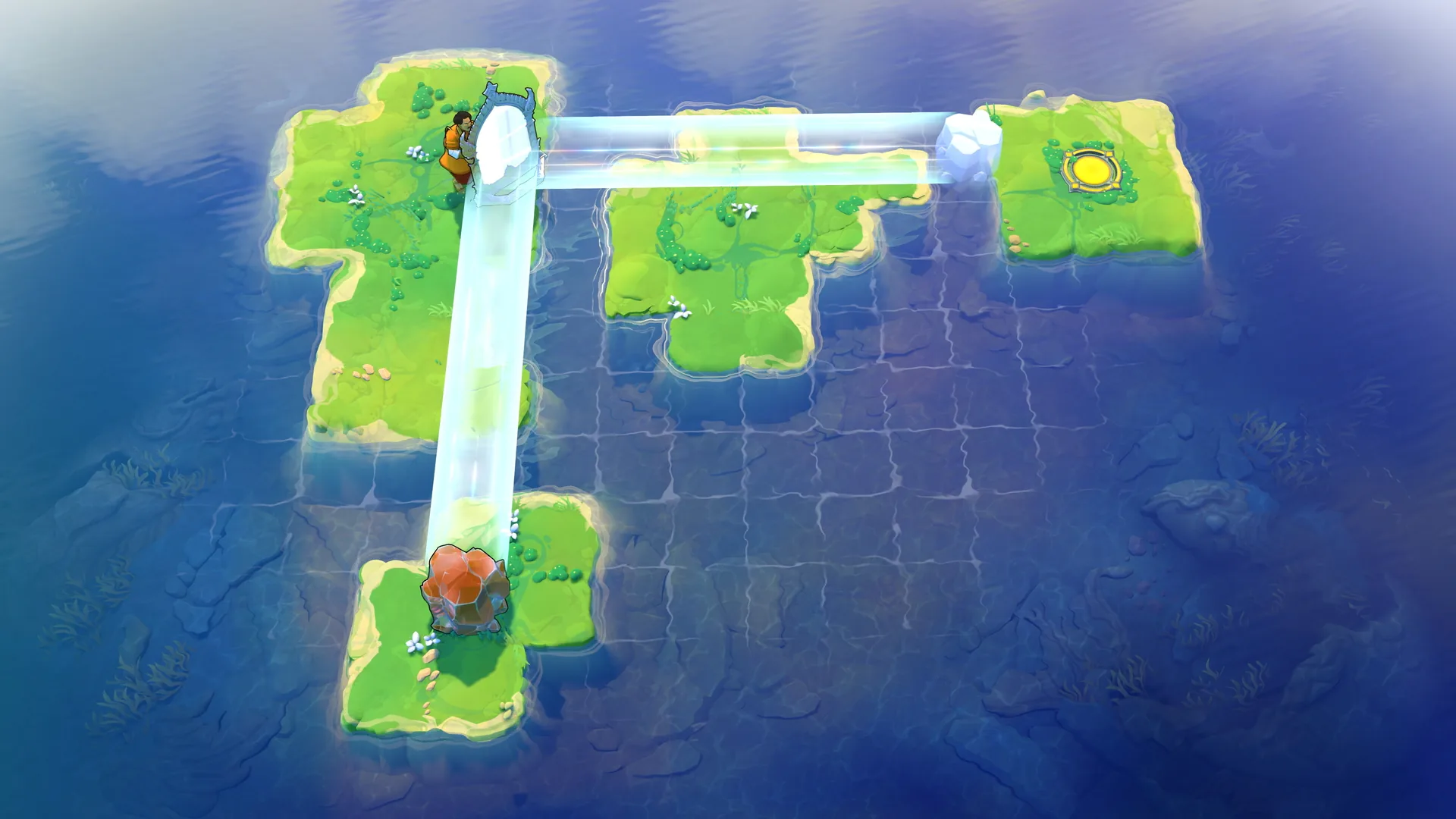
Promesst, with its switches and coloured light beams producing different effects depending on the hue.
Mirror Isles, whose principle is that mirrors split your character and scatter them across the map.
Skipping Stones to Lonely Homes, where you push rocks into water to skip across to another platform.
These are small games almost nobody has played, with excellent mechanics. Rather than inventing four puzzle systems, Blow went and bought the four best ones he knew.
I find that an unusually honest piece of thinking in a field where everyone badly reinvents what already existed.
This is where it gets serious.
A Queen explores a temple-like structure and finds voice recordings left by a previous explorer. She meets characters from the four original worlds, each with their own story: a hauling company here, a man returning to the places of his childhood there.
She progresses across an overworld, solving puzzles to gain abilities, and those abilities unlock further puzzles on the overworld. There is a wardrobe system that changes the colour of her cape and, with it, what she can do.
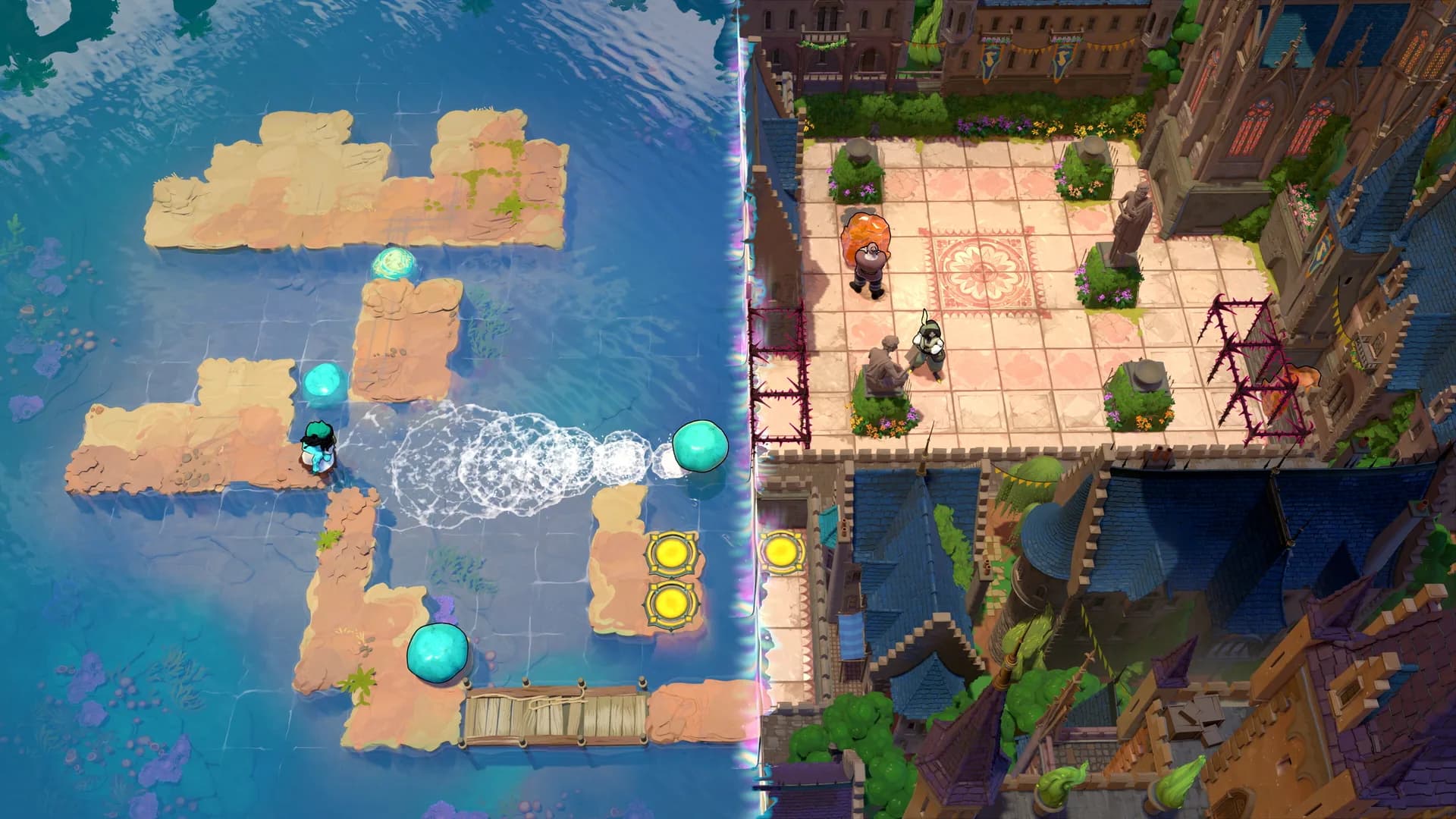
And the sections mix the four games' mechanics.
Blocks to push and mirrors that split you and coloured beams, in the same room, at the same time. Kotaku's writer describes puzzles within puzzles within puzzles, and writes that it is overwhelming until it resolves, and then it is beautiful.
Over a thousand puzzles. Blow says 250 hours at a normal pace and more than 500 to solve everything.
Read that figure again. Five hundred hours. That is a full season of your life.
The reviews have landed and they pull in two directions, which is itself information.
On one side: one of the best puzzle games ever seen. A game that makes you earn your wins. The difference from the rest of the genre is that most puzzle games have a central gimmick that runs out the moment you master it, whereas here you are constantly learning.
On the other: the execution is described as wonky, and the word buggy keeps appearing. GameSpot's headline says the game is enormous, for better and worse. Nintendo Life calls it intense, sometimes gruelling, but always inventive.
And two specific complaints recur that you should know about before buying.
Readability. Objects are small, scenes are busy, and several reviewers report struggling to parse the environment. In a game where the solution is often right in front of you, not seeing clearly is a real problem rather than a nicety.
The writing. Dialogue judged vague, underdeveloped relationships between characters, and an overarching mystery that does not hook everybody. For a game by the author of Braid, half of whose reputation rests on what it says between puzzles, that is the complaint that stings most.
It should also be said, in fairness, that the review builds sent to the press were incomplete: placeholder voice work mixed in with the professional cast, subtitles with typos and mismatches. Those are things fixed before or just after release, and I am not charging them to the finished game without checking.
Let me be blunt, because this is a 250-hour game and nobody wants to get it wrong.
If you finished The Witness and remember the peculiar sensation of staring at a wall for forty minutes before it clicked, this is for you and you already know it. Close this article, go.
If you love block-pushing games, you will find here the most ambitious project ever built on that foundation. Four systems talking to each other is something the genre has never attempted at this scale.
If you are looking for a story, be careful. The reports converge: the narrative is there, it is beautiful in places, and it is not the strong point.
And if you do not enjoy feeling stupid, walk away without regret. One reviewer put it in a sentence I will borrow: this game is not for the puzzler who shrinks from a challenge. There is no hint system holding your hand.
The development time has been mocked a lot, and the joke is easy.
But look at what came out of it: a studio of around ten full-time people, a programming language the studio will publish free and open source, and a game containing four other people's games, paid for.
I do not know whether Order of the Sinking Star is better than The Witness. Nobody will know for months, because this is the kind of game whose value is measured by what is left of it two years later.
What I do know is that there is barely anyone else, today, willing to disappear for ten years and come back with a thousand hand-made puzzles rather than a calibrated sequel.
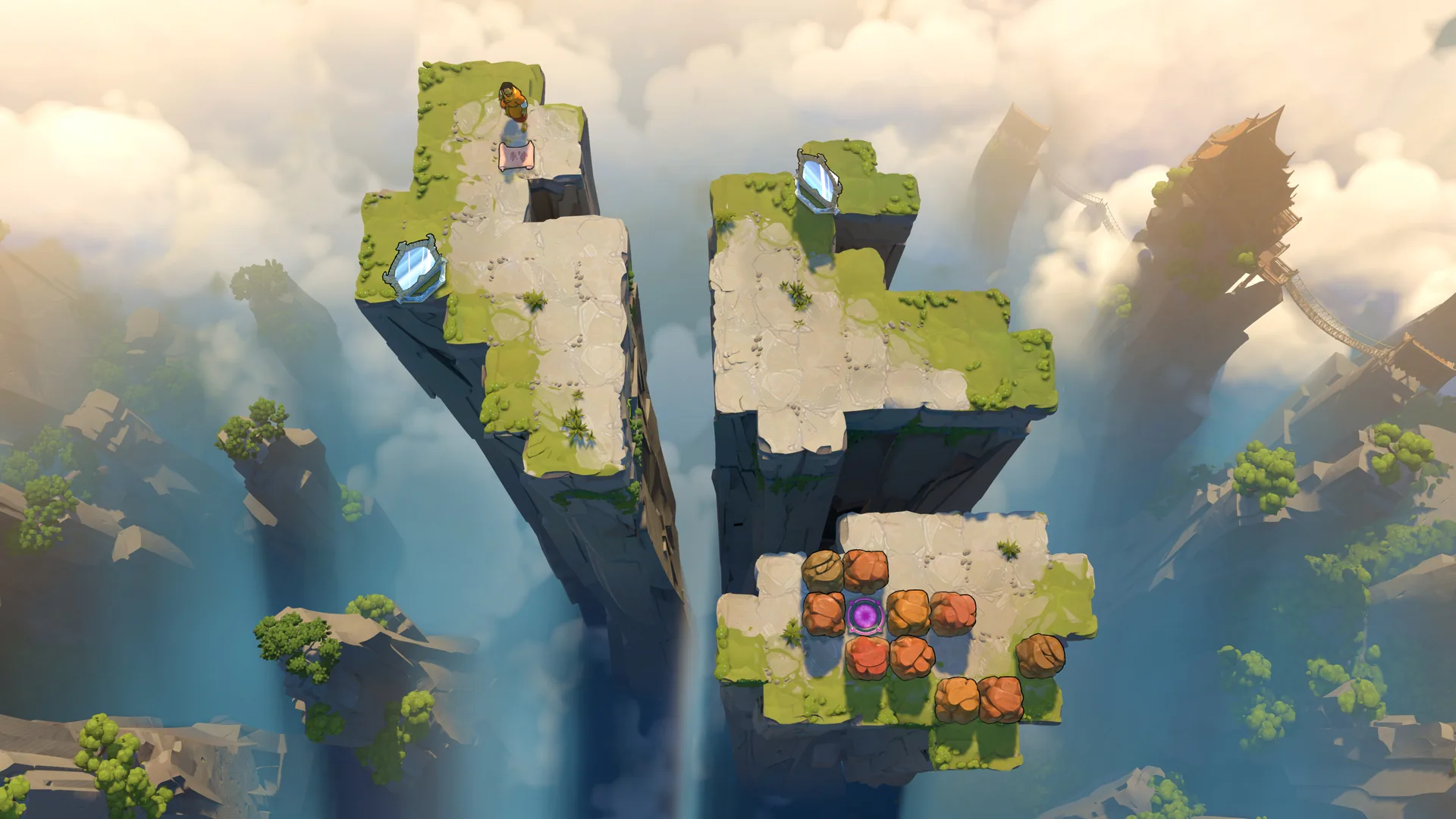
For the price of a game, you are buying an entire winter. Provided you accept that the game will never help you.
Stuck on a puzzle for forty minutes? Do not give the solution, give the hint, that is the rule on the InsertCoins Discord.
Community
Your rating
Advertisement
Loading comments...
You might also like
The 1.0 lands today. The game is as twitchy as ever, but one design decision undercuts its entire selling point.
The movement has never been better and Unreal Engine 5 delivers. But Horde lost its 50 waves and there are only six maps.
Made by Criterion's former boss. We wanted 1999 on the Nintendo 64, we got a roguelite Burnout. And it is very good.