7
Test
Archipeo: thousands of islands, ships running a shuttle service, and me not sleeping
A procedural Anno where haulage is the real game. Every badly assigned freighter takes its revenge forty minutes later.
Alexandrosse
8 min
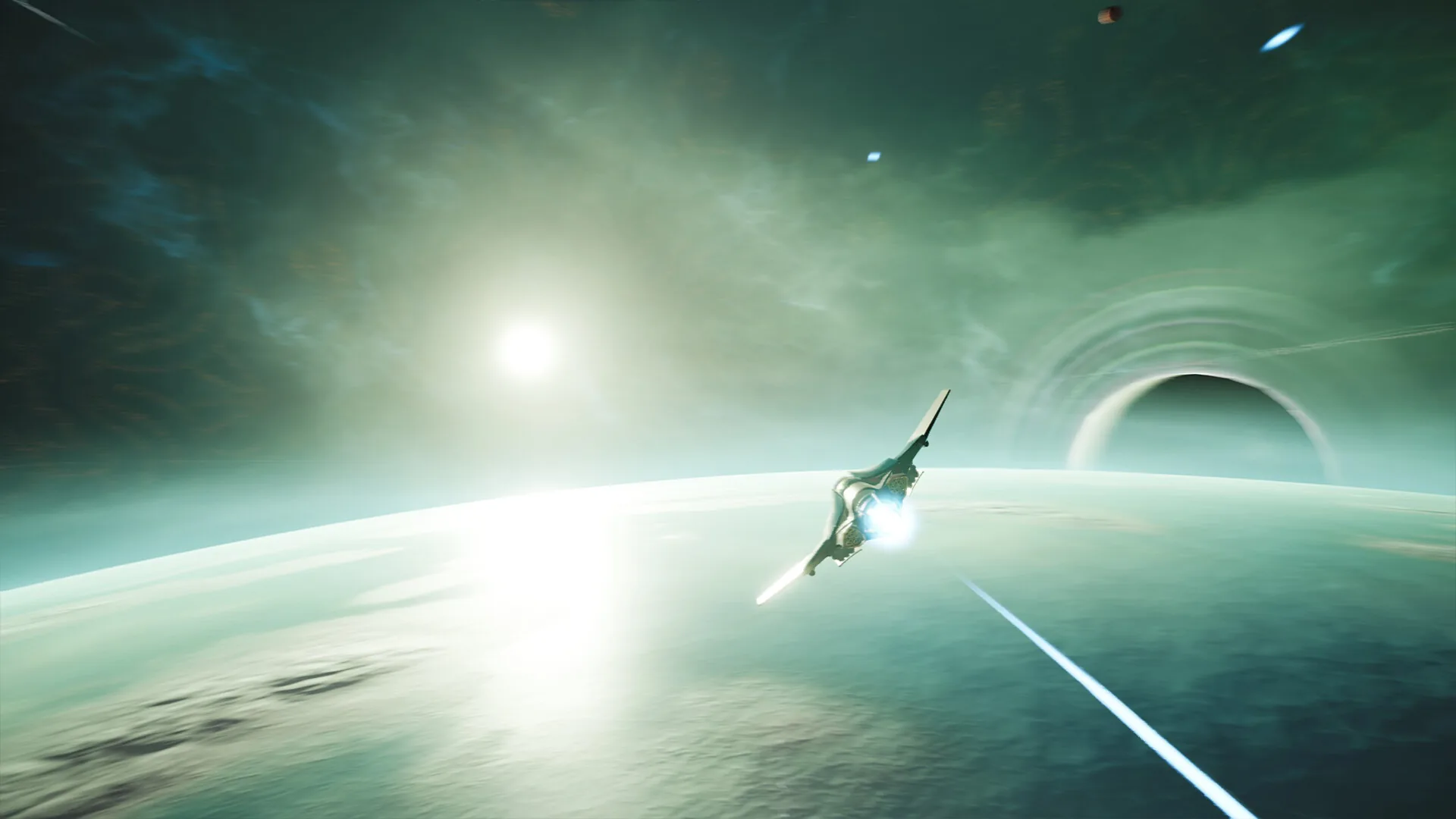
Arcade space combat, sharp and legible, from a single British developer funded by the label set up by the creators of Among Us.
Alexandrosse
InsertCoins.press Score
8/10
Verdict
Recommended
There is a sentence that comes up in every conversation about space combat, and it is always delivered with the same sigh: one day we will get the starfighter game we keep being promised. Rogue Eclipse promises nothing at all. It is out, it costs the price of an indie game, and it flies very well.
The contrast with a certain project is hard to ignore, so let us take it head on.
Star Citizen, developed by Cloud Imperium Games under Chris Roberts and his studio Roberts Space Industries, has been in development since 2012 and has raised sums with no equivalent in the history of crowdfunding. On 24 May 2026 the total officially passed one billion dollars, at roughly 1,004,122,732 dollars contributed by 6.54 million backers. It took more than ten years to reach 900 million, and only six months to add the final hundred. Fourteen years on, the complete game still is not out, and its single-player component Squadron 42 is still awaited.
I will not call it a scam here, because that is an accusation for a courtroom rather than a game review. I will say what is factual and amply sufficient: fourteen years, a mountain of money, and meanwhile a single British developer, under the name Huskrafts, has shipped a finished, playable and frankly good space combat game. Draw your own conclusions.
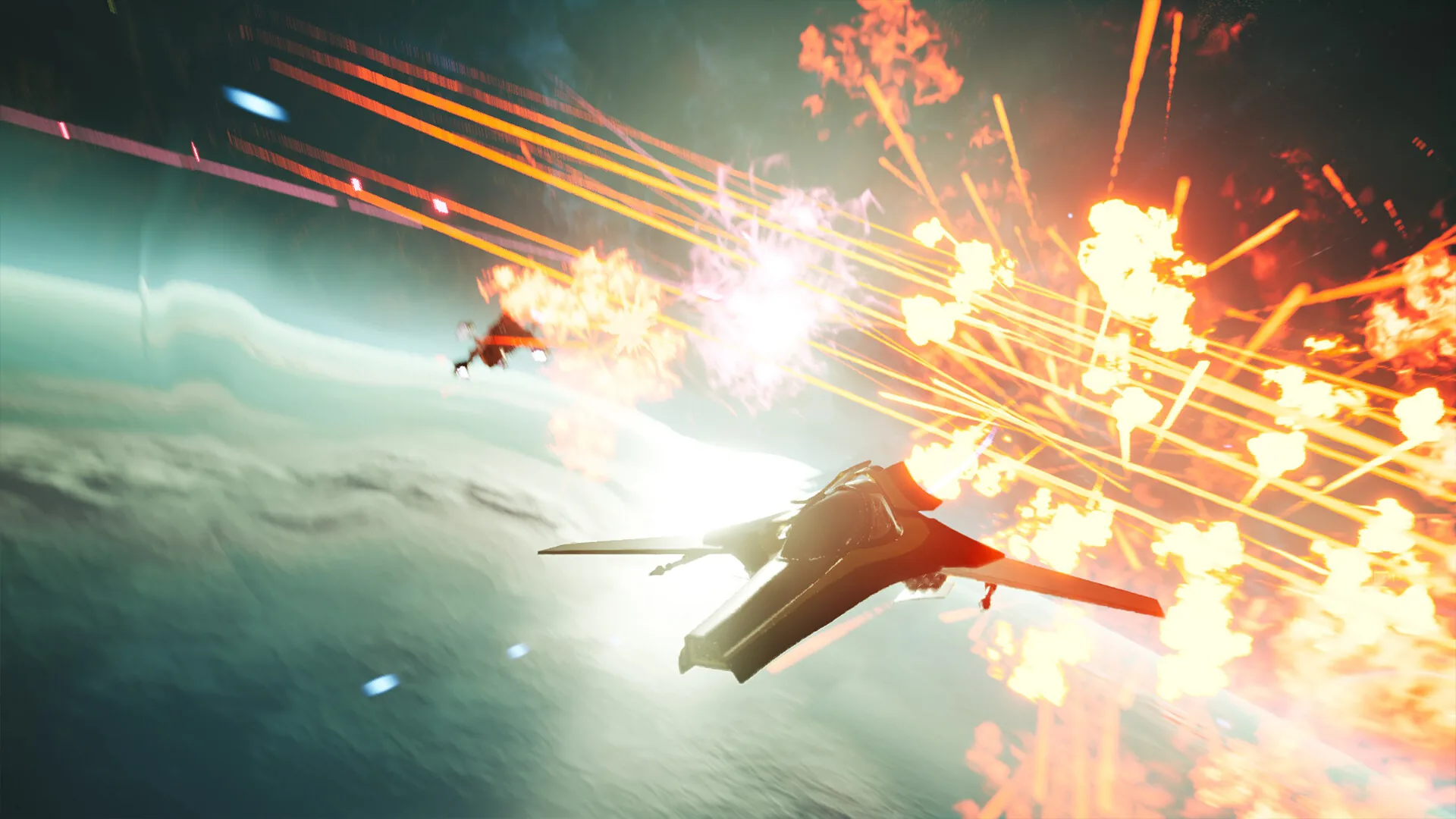
Rogue Eclipse bets on arcade rather than simulation, and that is what saves it. You boost at absurd speeds into pitched battles, cut through swarms of starfighters, push inside enormous vessels and tear apart fully destructible environments. The game is easy to pick up and hard to master, which is exactly the contract of the great arcade starfighter games.
The structure is a roguelike: you try, you die, you start again, you upgrade your fighter between attempts, you customise it, and you push through a narrative campaign toward your nemesis. That loop serves space combat beautifully, because it turns every death into a piloting lesson rather than a punishment.
The art direction deserves a word too, and it is not a detail. The game claims Arabesque Futurism as an inspiration, which produces a far more inhabited and decorated space than the genre's usual metallic grey. The comparisons that keep coming up, Star Fox for the snap and Armored Core for the customisation, are fairly apt.
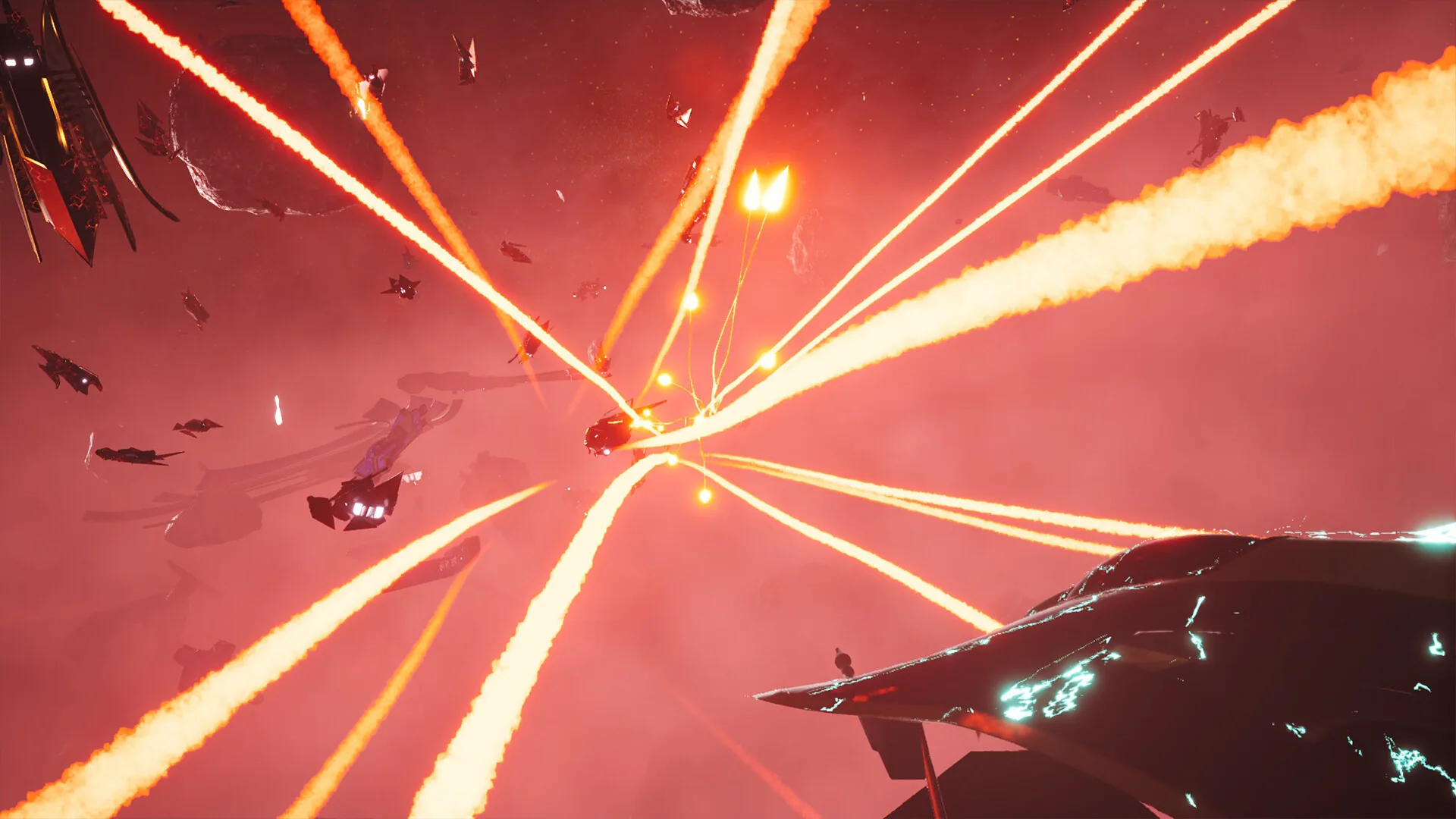
Rogue Eclipse will not replace the dream of the persistent universe. It is an arcade action game built on runs, not a space simulator with an economy, professions and free exploration. Anyone who has waited fourteen years for an entire world will not find it here, and it would be dishonest to suggest otherwise. It makes the ship fun, not the galaxy alive.
The other limit is the roguelike's own: repetition. The loop holds as long as fighter progression and encounter variety keep up, and a game of this format is judged on its twentieth hour more than its second. At this stage we lack perspective, the game having launched the same day.
What remains is the essential part, and it raises a smile: the space combat is immediately satisfying, and it has actually shipped. By one person, with support from Outersloth, the funding label set up by the creators of Among Us. There are production lessons here that need no commentary.
Your verdict differs from ours? The Discord is the place to make your case.
Community
Your rating
Advertisement
Loading comments...
You might also like
A procedural Anno where haulage is the real game. Every badly assigned freighter takes its revenge forty minutes later.
Towers, troops, a single pool for both. Every coin spent on defence is a coin you will not be sending the other way.
Crossing finally matters and defending responds. Then the screen goes black. 57 per cent positive on Steam, at 69.99 euros.