Preview
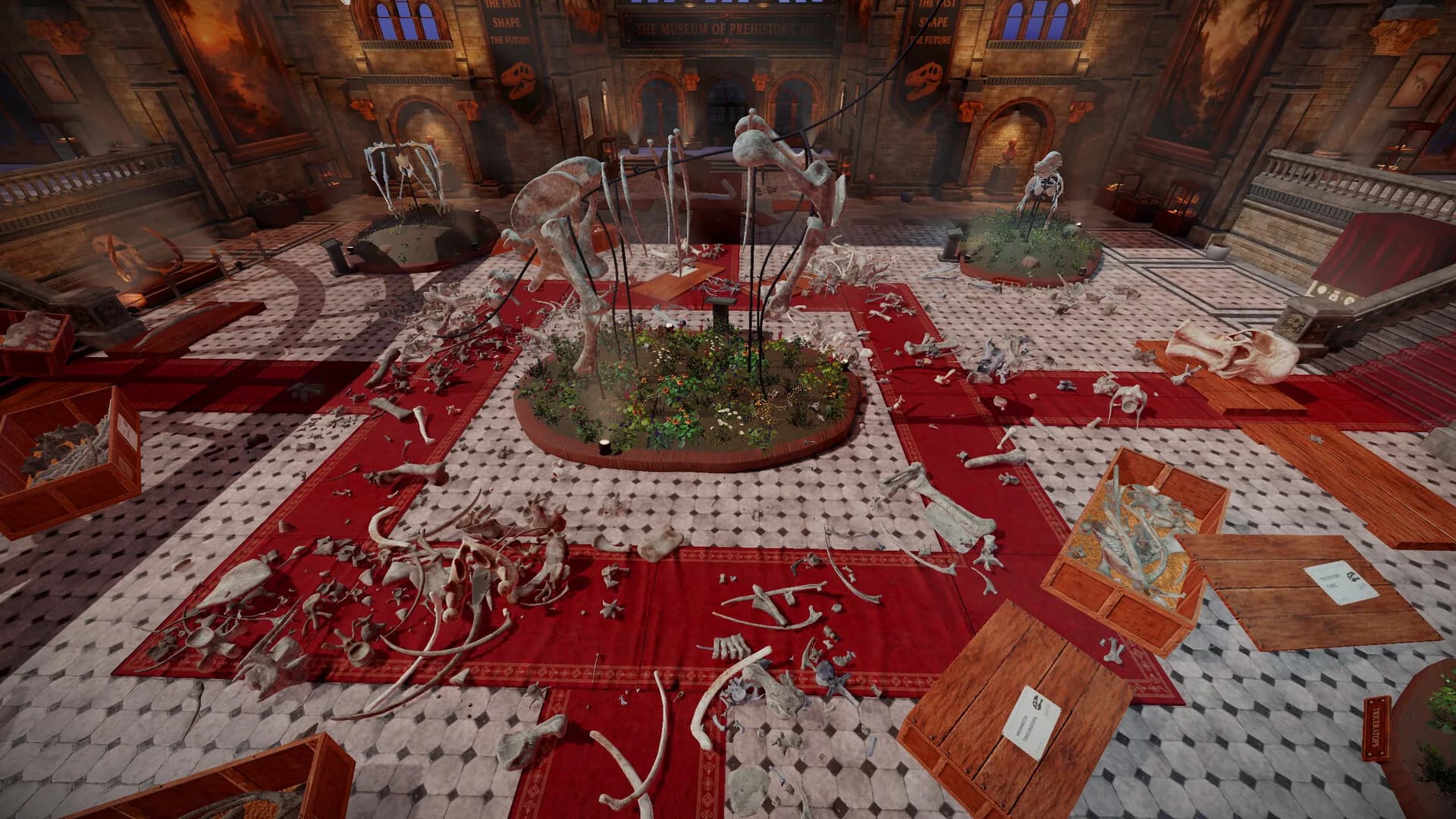
DinoBones: nine skeletons in pieces, a museum to put right, and a cat
A sorting game where every bone starts out unknown and you learn to recognise it. No date yet.
Alexandrosse
6 min
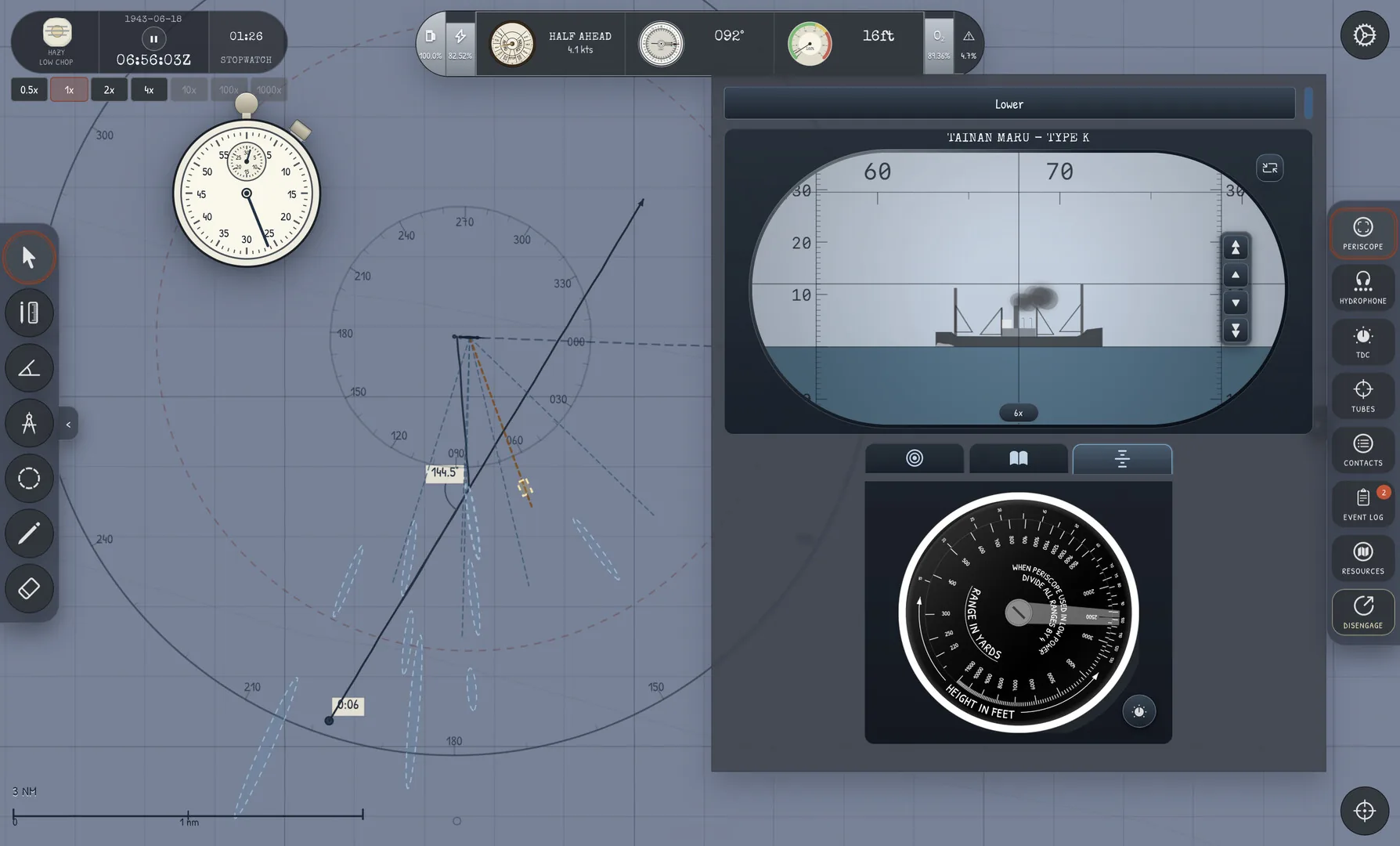
Hydrophone, stadimeter, torpedo data computer and thermal layers. A deep simulator from a solo developer, and a disappointment worth reframing.
Alexandrosse
Twenty years ago we played submarine simulators where you could see almost nothing. A chart, some bearings, a stingy periscope, and the sound of diesels in your headphones. It was austere, it was slow, and it was magnificent, because everything happened in your head: you listened, you estimated, you plotted, you waited.
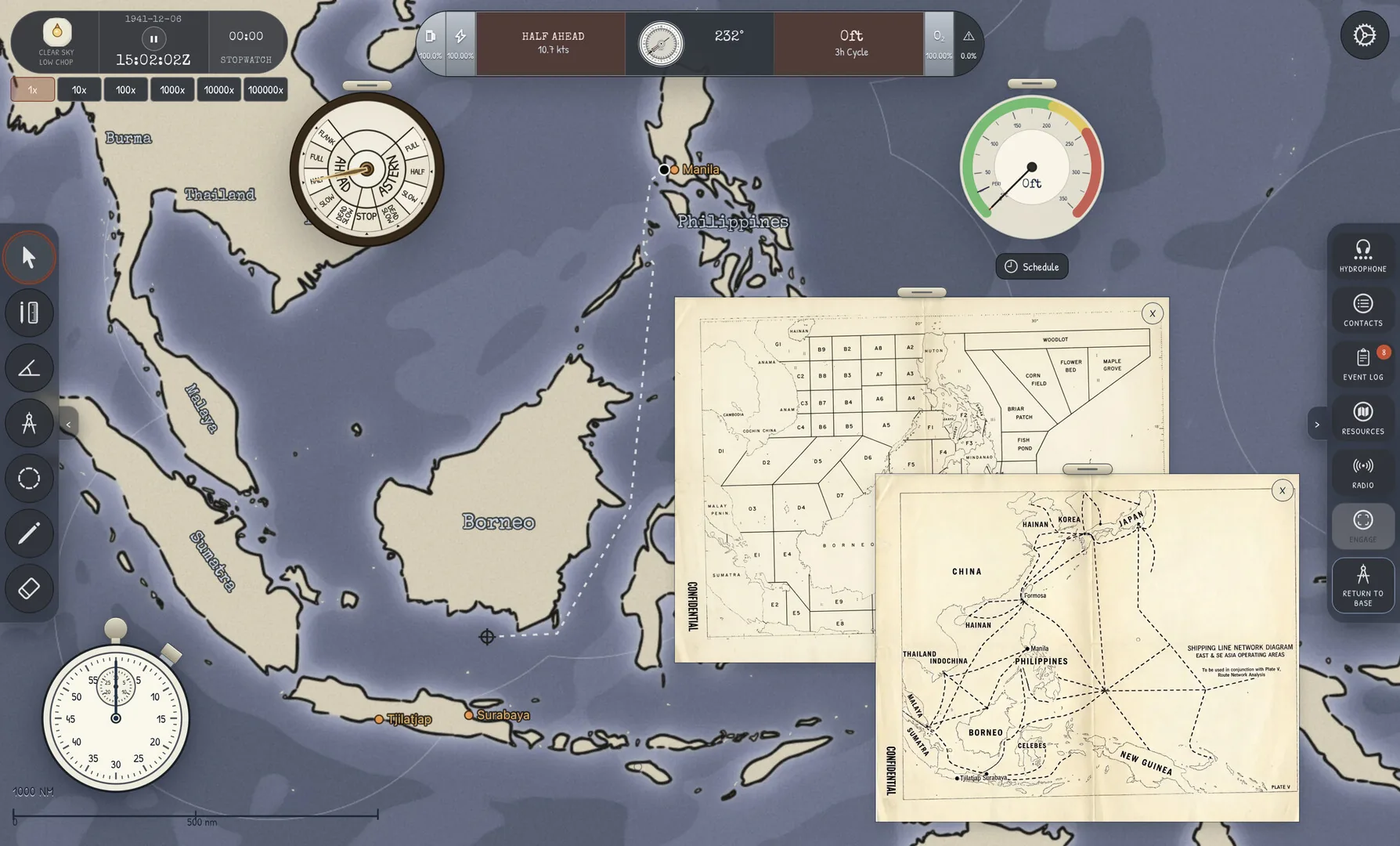
So when you open Silent Shark in 2026 and find a tactical chart with period instruments, the first reaction is legitimate: is that it? In twenty years, is that all we gained?
I understand the disappointment. I simply think it is aimed at the wrong target.
Your memories speak of U-boat diesels. Silent Shark does not play that tune: it is set in the Pacific Theater, commanding American submarines, with progression through six boats from the Porpoise class to the Balao class. It is not the same war, not the same doctrine, and not the same prey.
That matters, because the Pacific campaign rests more on long patrols, fuel and torpedo management, and hunting escorted merchant convoys, where the Atlantic fed the myth of the wolfpack. If your nostalgia is specifically German, be aware you are changing oceans.
And this is where the charge of stagnation deserves revisiting, because the advertised depth is considerable.
You track contacts by hydrophone, telling freighters from escorts by ear, through pitch. You identify ships through the periscope at two magnifications. You estimate range manually with a stadimeter, first identifying the ship to learn its mast height, then measuring the angle to the masthead. You then enter angle-on-bow, speed, bearing and distance into a torpedo data computer fitted with a position keeper, before handling tube flooding, gyro angle, spread and salvo.
In other words, the game does not merely reproduce the austerity of twenty years ago, it models the entire firing solution chain. That is precisely what most players back then delegated to an automatic system.
The rest is of the same order. Sea state, weather and time of day genuinely affect visibility and stealth. There are dynamic thermal layers depending on time and region, measurable with a bathythermograph, which gives depth a tactical meaning. And above all, the destroyers do not follow a script: they act on their own predictions of your position, drawn from a sonar model and their own hydrophone readings.
That last line is the most important of the lot. An escort that guesses where you are rather than knowing where you are is exactly what the games of twenty years ago lacked.
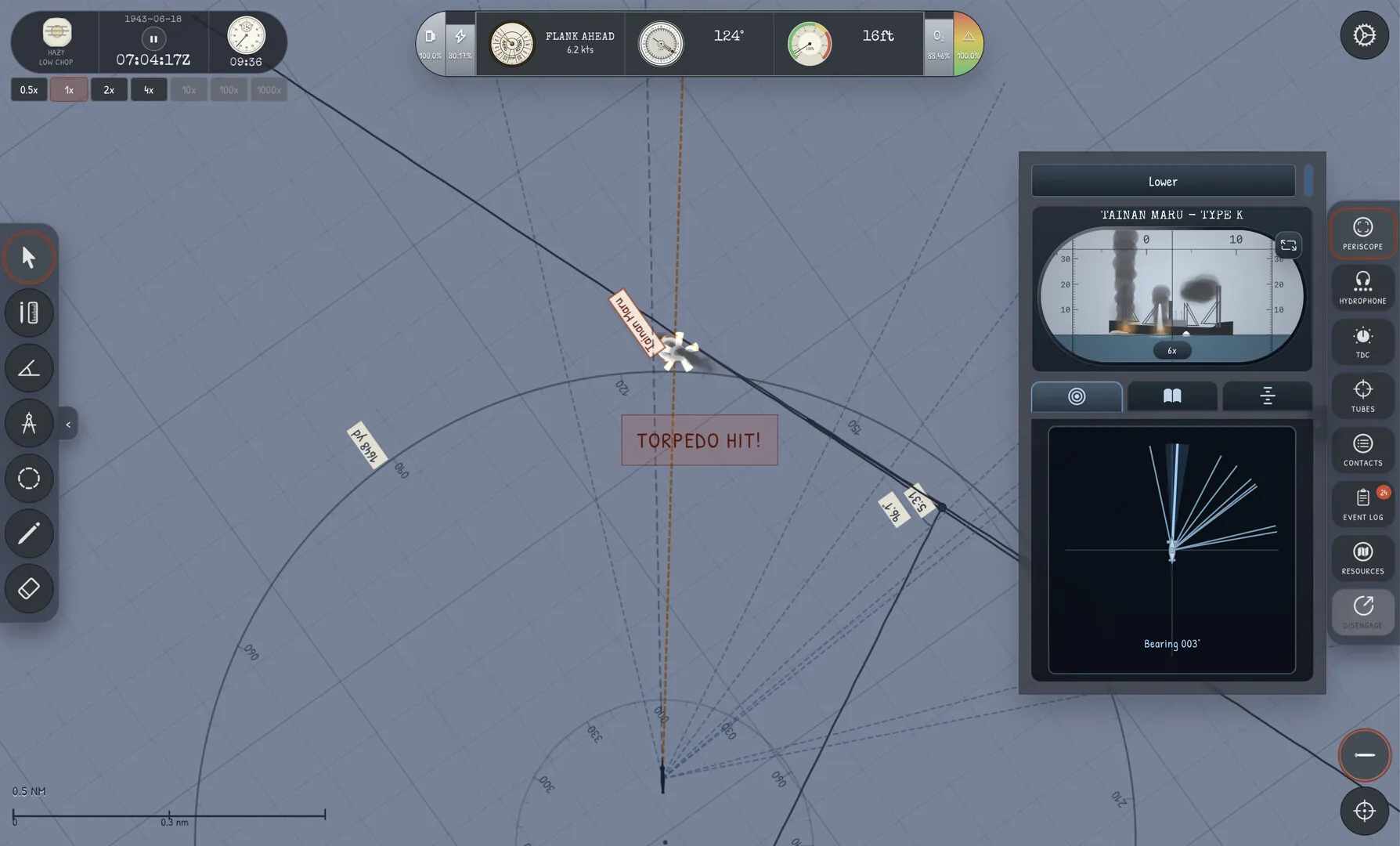
Because the problem is not this game, it is the genre.
Wartime submarines were abandoned by the big publishers. The great series that fed your nostalgia stopped in the early 2010s, and nobody has picked up the torch with a real budget since. The result: the last fifteen years of submarine simulation have been carried by enthusiasts, often working alone, and Silent Shark is no exception since it comes from a single developer, John Goering.
Which puts the disappointment back in its proper place. It is not that the genre failed to progress, it is that nobody spent what was needed to make it progress visually. A lone developer can model thermal layers and credible escort intelligence; he cannot produce a photorealistic ocean and a fully walkable submarine interior. Resources dictate where progress goes, and here it went into the systems.
That said, your expectation is legitimate, and it is not about to be met: in 2026 there is still no big-budget submarine simulator anywhere on the horizon.
The game is out today, has no reviews yet, and so we are not scoring it. Its demo, on the other hand, is very well received at close to 95 percent positive, on a still modest sample of around twenty reviews.
On the menu, a full Pacific campaign with assigned patrol zones, long-range mission planning, radio intelligence, historical events including the early-war loss of the Manila and Sumatra bases, reputation-based progression, resource management across long patrols covering fuel, torpedoes and fresh air, and an aircraft threat that imposes surface discipline. Add tutorials, standalone scenarios and a scenario editor, plus dynamic music built on Holst's Planets.
Two pieces of good news to close: the game is available in French, and a demo lets you check for yourself whether owned austerity still speaks to you, twenty years on.
The conversation continues on our Discord, between the believers and everyone else.
Community
Your rating
Loading comments...
You might also like
A sorting game where every bone starts out unknown and you learn to recognise it. No date yet.
Announced for 25 September. What the store page describes, what it does not say, and why we will wait to play it before judging.
A magical sorting game where you unlock spells to work faster. No date yet, so no score yet.