5
Test
Ammossum: the best idea of the year, on a train that does not always start
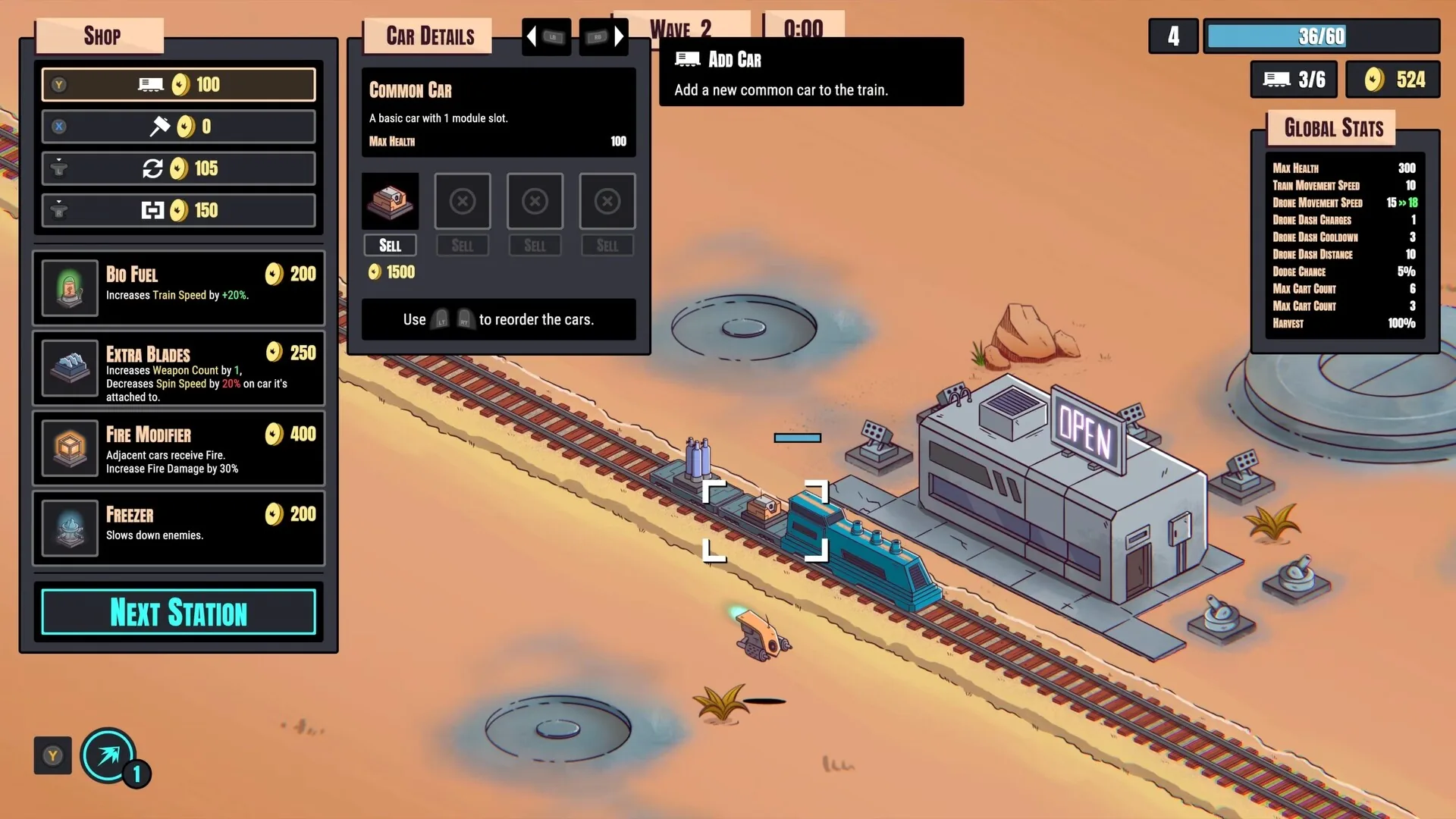
Your railcars are your health and your skills at the same time. Assuming the game gets past the loading screen.
Alexandrosse
7 min

A simulation where water flows, forests burn and lava hardens into new land. An MMO built on the memory of worlds and mutual aid between players.
Alexandrosse
InsertCoins.press Score
7/10
Verdict
Recommended
The first few minutes are misleading. Colourful planets, first-person view, resource gathering: you think you recognise another No Man's Sky and settle in to count rocks.
It is something else. It is a single-shard MMO, where the whole galaxy is shared, and where worlds keep the memory of what is done to them.
The studio is Playable Worlds, and its founder is Raph Koster. The name is worth knowing: lead designer on Ultima Online in 1997, creative director on Star Wars Galaxies in 2003. One of the few people to have invented the genre he still works in, and the author of the classless skill system everybody has copied since.
You feel it the moment you scratch the surface. Stars Reach is not trying to produce content to consume, it is trying to produce a society. That is an unfashionable ambition, and it is exactly what makes it interesting.
The heart of the game fits in one line: the planet reacts, and it does not forget.
Water genuinely flows according to terrain. Forests burn. Lava cools and hardens, forms new materials and creates new land. These are not visual effects laid over a fixed set, they are states that persist.
Around that foundation, the worlds live their own lives. Climate changes, creatures migrate, disasters strike, and the whole reacts in ways you never fully control. Every planet has its ecosystems, its resources and its constraints, and you travel between them through wormholes.
The consequence is where everything is decided: every planet begins untouched, and what it becomes depends on who passes through. Cities grow or decline, ecosystems shift, species go extinct, resources are used up or recover according to how they are treated. You can protect a world or strip it for profit, and other players will live with whatever you leave behind.
That is rare, and it is what justifies this game's existence.
No classes. Dozens of skill paths you mix freely to construct your own role: protecting settlers as a ranger, building a trade empire, hiring yourself out as an architect.
The principle is the one that made Star Wars Galaxies' reputation, and it has lost none of its value: you are locked into nothing, you experiment, you combine, you end up occupying a place nobody else occupies in quite the same way.
Skill growth comes through use. Every path has its equipment, and mastery arrives by working with it rather than by filling a bar.
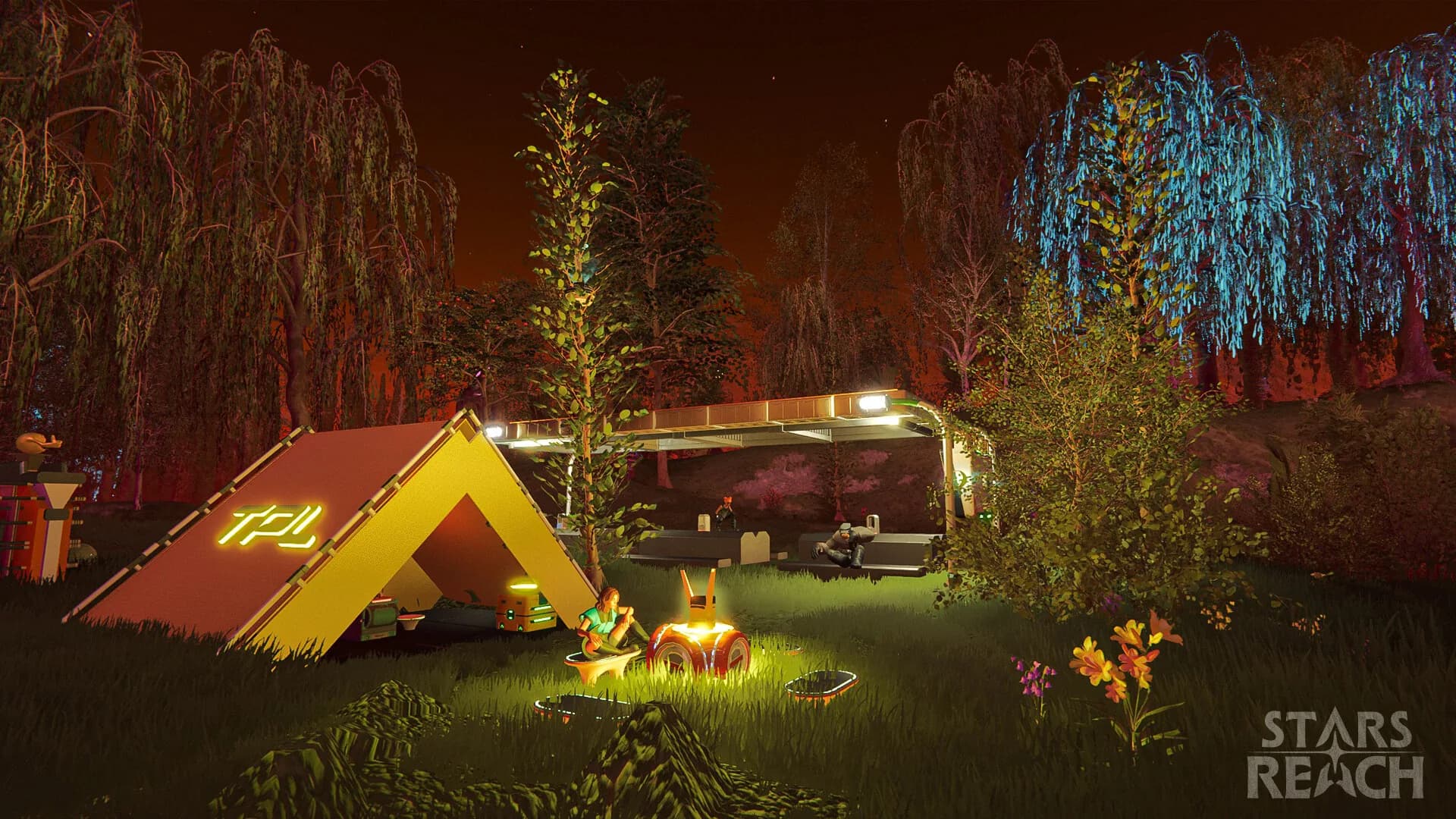
Then comes the cleverest detail in the game, the one that says everything about its intent: your contributions to the community raise your proficiency. A camp you build earns you experience when other players rest at it. The studio deliberately built its rules to reward mutual aid and reduce the capacity to harm, in a genre where griefing is a recognised sport.
You can settle for a cabin on a remote hill and make your living quietly in your corner. The game does not punish solitude.
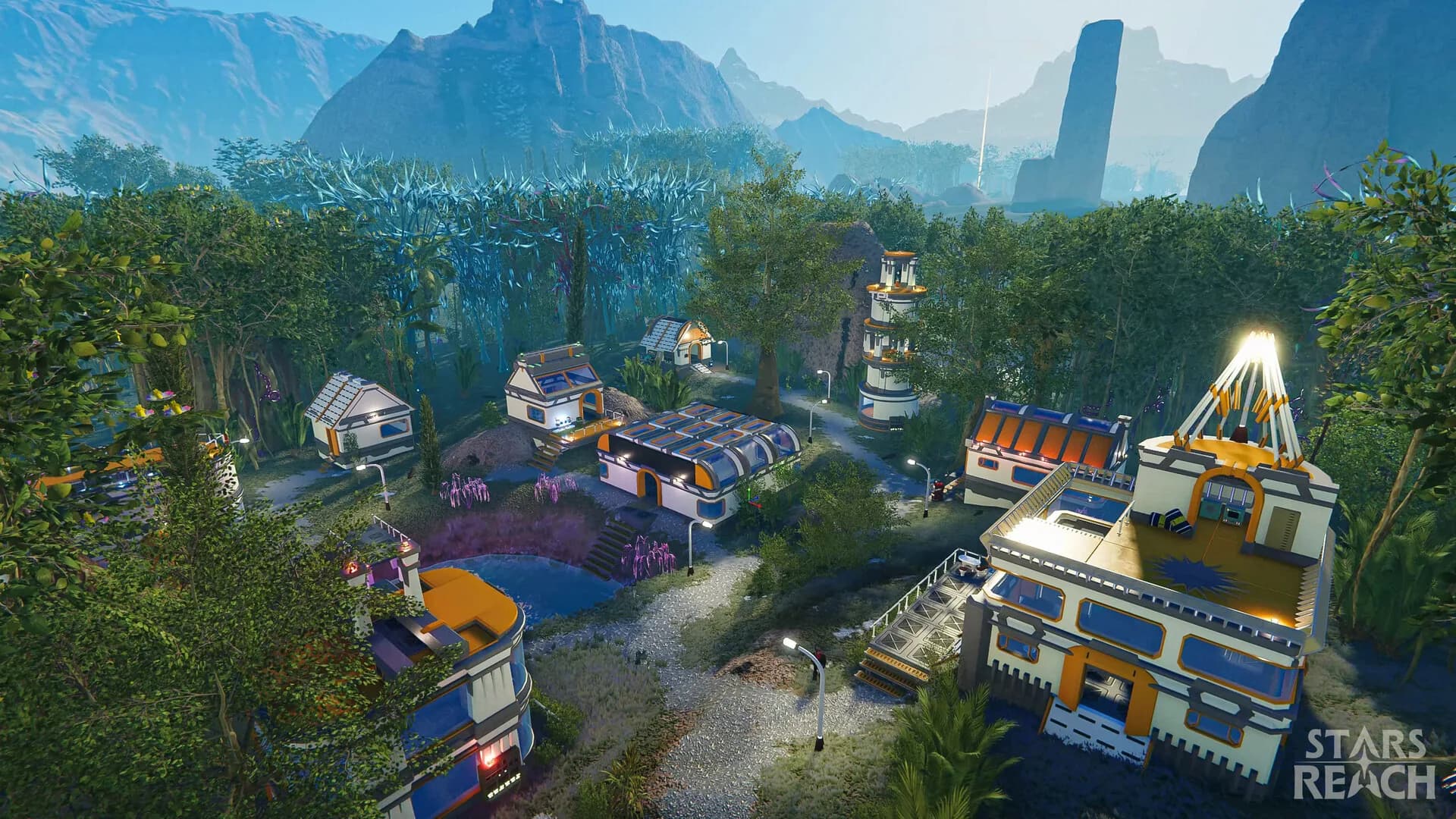
But the other path is more ambitious: claim a large plot, cluster your land with other players', build a settlement and then a town, and decide together how it is governed and where it goes.
The economy follows the same logic. It is unified across the galaxy and entirely player-driven. You gather to sell, or you refine to craft tools and technology you ship to distant worlds that need them to survive. You specialise, you become a reference in your craft, and that reputation travels.
These are systems that only mean anything collectively, and that is where both the promise and the danger sit.
It has to be said plainly: this game will be worth whatever its population is worth.
The player economy, the shared consequences, the governed towns, the camps that serve others, none of it exists without people on the other side. A deserted sandbox MMO is not a sandbox MMO, it is a solitary survival game with expensive servers to maintain.
The game arrives today in paid early access, after a closed test that ended on 12 August with a character wipe. So it starts from nothing with everything to prove, and six months will be enough to know whether the galaxy filled up or stayed a beautiful empty set.
It is also, mechanically, a game that will be better in a year than it is today, provided there is a year from now.
It rewards a proposition nobody else is putting on the table: a persistent shared simulation where worlds keep a record of who passed through, a classless skill system inherited from the best the genre ever produced, and a social architecture designed to reward mutual aid rather than endure its opposite.
It marks down thin launch content, a galaxy that feels narrow if you arrive with an explorer's habits, and the gamble of paid early access in a genre where the bodies pile up.
It also factors in a risk that is neither technical nor artistic but demographic, the one thing a studio can do least about.
This game is for people who want to inhabit a world rather than visit one. If the idea of leaving a trace others will see appeals to you, there are not many places offering it.
So, a question: would you rather have an immense universe where nothing persists, or a small one where everything remembers?
The debate is open on the InsertCoins Discord, where opinions on sandbox MMOs run very firm.
Community
Your rating
Advertisement
Loading comments...
You might also like
Your railcars are your health and your skills at the same time. Assuming the game gets past the loading screen.
Five euros, a strip of ARPG along the bottom of your desktop, and a Steam market where you resell your minions. The success is real, so is the wall.
The train on the mouse, the drones on the keyboard, thirty-second rides. A small game that knows exactly how long it lasts.