
7
Test
Barfender: my idiotic friend drank all the beers
A co-op bar that collapses while you serve. 98 per cent positive, and one of the rare times chaos is the actual subject.
Alexandrosse
7 min
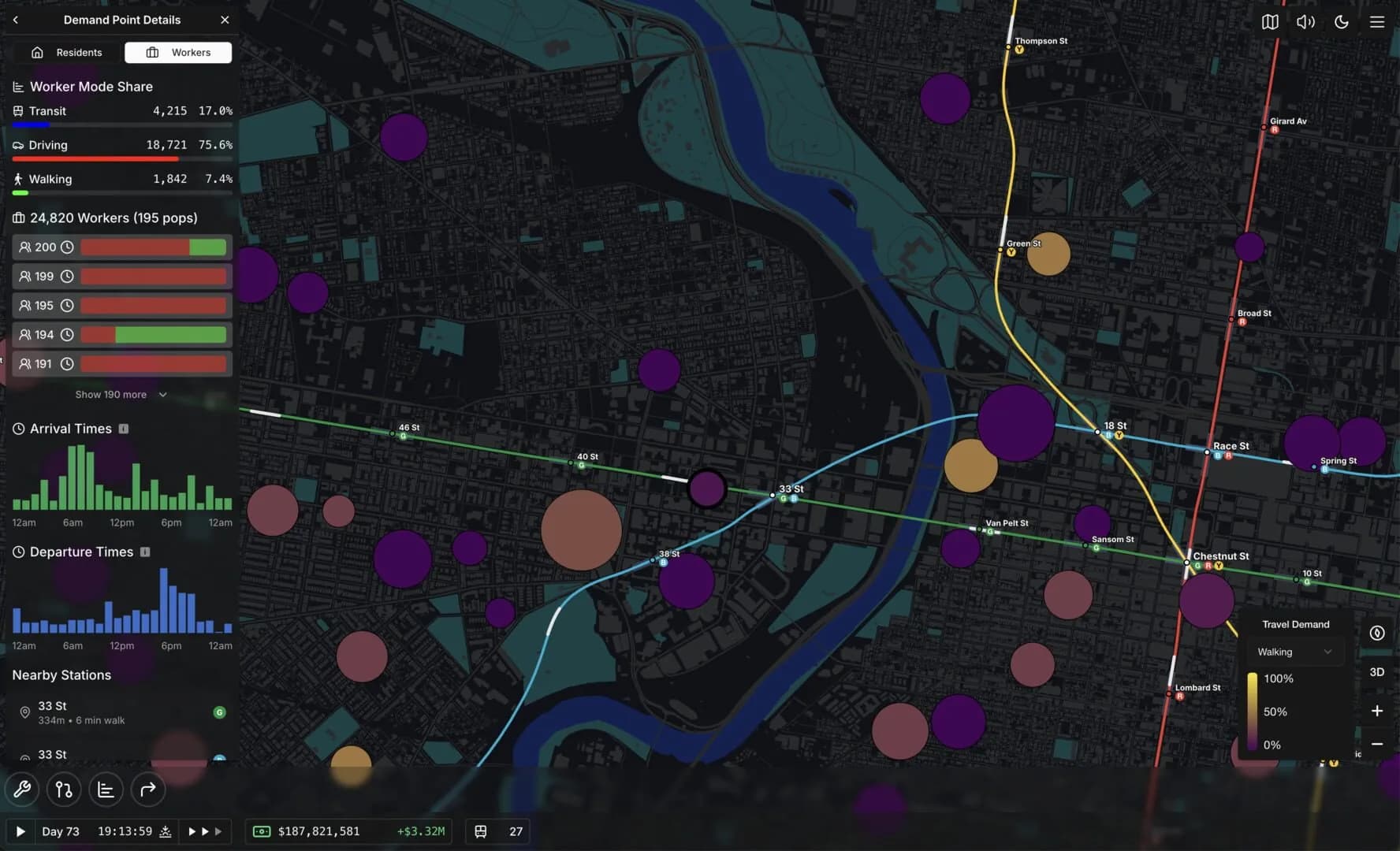
Build New York's or London's subway on real data, with real simulated riders: the idea is fascinating. But at 40 euros, buggy and sold as hyperrealistic, Subway Builder promises more than it delivers.
Alexandrosse
InsertCoins.press Score
6/10
Verdict
Mixed
There are games whose concept alone is enough to make any transit fan dream. Subway Builder is one of them: build a subway network from scratch in real cities, on real geographic and demographic data, with millions of simulated riders finding their way as in real life. On paper, it's the absolute fantasy of any urbanism and rail enthusiast. In practice, it's a bit more complicated, and the game's community, as passionate as it is lucid, isn't fooled.
Subway Builder is a transit simulation developed by a small team led by Colin Miller and published by Borough Studio, available on Steam since 17 July 2026, priced at thirty euros on its official site and forty on Steam. The pitch is ambitious: build a subway system from scratch in real metropolises, from New York to London by way of Boston, Chicago, San Francisco, Manchester or Liverpool, dealing with real-world constraints and costs. It's a game aiming for the ultra-niche but devoted market of public-transit lovers, and it built a loyal community even before its Steam release.
What radically sets Subway Builder apart from every other transit management game is its grounding in the real world, and it's a proposition unique of its kind. The maps aren't invented: they're drawn from real geographic data, OpenStreetMap style. The riders aren't abstract numbers: millions of commuters are generated from census data and simulated with the same route-finding algorithms as your smartphone. In other words, when you plot a line, you can actually see whether it captures the population flows as it would in the real city. It's an exhilarating, almost documentary idea that turns the game into an urbanism laboratory.
That fidelity to the real is both the game's great strength and its central argument. You build your tracks and stations under credible constraints, you design lines, you manage operations to best serve a population that behaves plausibly. For anyone who has ever daydreamed over a subway map imagining the missing line, the promise is irresistible. The richness of the available cities, American and British alike, and the existence of an active modding community testify to real potential and a core of won-over players. The fantasy is there, whole, and that's already a lot.
The trouble is that Subway Builder sells itself as a hyperrealistic simulation and a finished product, and reality struggles to keep up with that talk. The community, which nonetheless loves the game, is the first to point it out fairly. The title actually rests on two core mechanics, track building and route-finding, and those two pillars must be near-perfect to justify the stated ambition. Yet they're still riddled with flaws: route-finding bugs, lost saves, performance issues, updates that temporarily broke the experience. When you charge full price for a game while presenting it as hyperrealistic, the slightest grain of sand in those two mechanics is immediately visible.
The price question crystallizes the tensions. Forty euros on Steam, for a game whose maps and data are pulled from public sources and which rests on two still-unstable mechanics, many long-time players feel it's too expensive for what's actually delivered. The gap between the marketing promise, that of a polished hyperrealistic simulation, and the game's current state, that of an ambitious but still rough project, is the real underlying reproach. It's not that the game is bad, far from it: it's that it sells itself for what it isn't yet, and that this price sets a bar the execution doesn't always clear. In its favor, the team has been responsive, quickly fixing bugs and listening to its community, which leaves hope for an upward trajectory.
Subway Builder is a fascinating case, that of a game whose concept is truly unique and whose execution doesn't yet quite do it justice. Its grounding in the real, its maps drawn from real data, its millions of riders simulated with real route-finding algorithms, all of it makes it a proposition without equal, a dream made playable for anyone who has ever mentally plotted a subway line. For the transit fan, there's nothing comparable, and for that alone, it deserves close attention. The core is brilliant, the ambition is fine, and the team's responsiveness bodes well.
But we can't ignore what sticks, as the community does with a lucidity that does it credit. Sold for forty euros and presented as a finished hyperrealistic simulation, Subway Builder sets expectations that its current state, buggy and built on two still-improvable mechanics, doesn't fully meet. It's a game we recommend to the genre diehard, ready to deal with the rough edges to live a unique fantasy, but that we advise the curious to wait for on sale, or in a more stable version. The potential is immense; it's still missing the polish and the honesty of positioning that would make it the masterpiece it could become.
A subway simulation with a concept unlike anything else, grounded in real data and real riders, but whose hyperrealistic label and 40-euro price exceed the game's still-rough state.
Strengths:
Weaknesses:
Tested on PC.
We debrief every release on our Discord. The door is open, and so is the argument.
Community
Your rating
Advertisement
Loading comments...
You might also like
A co-op bar that collapses while you serve. 98 per cent positive, and one of the rare times chaos is the actual subject.
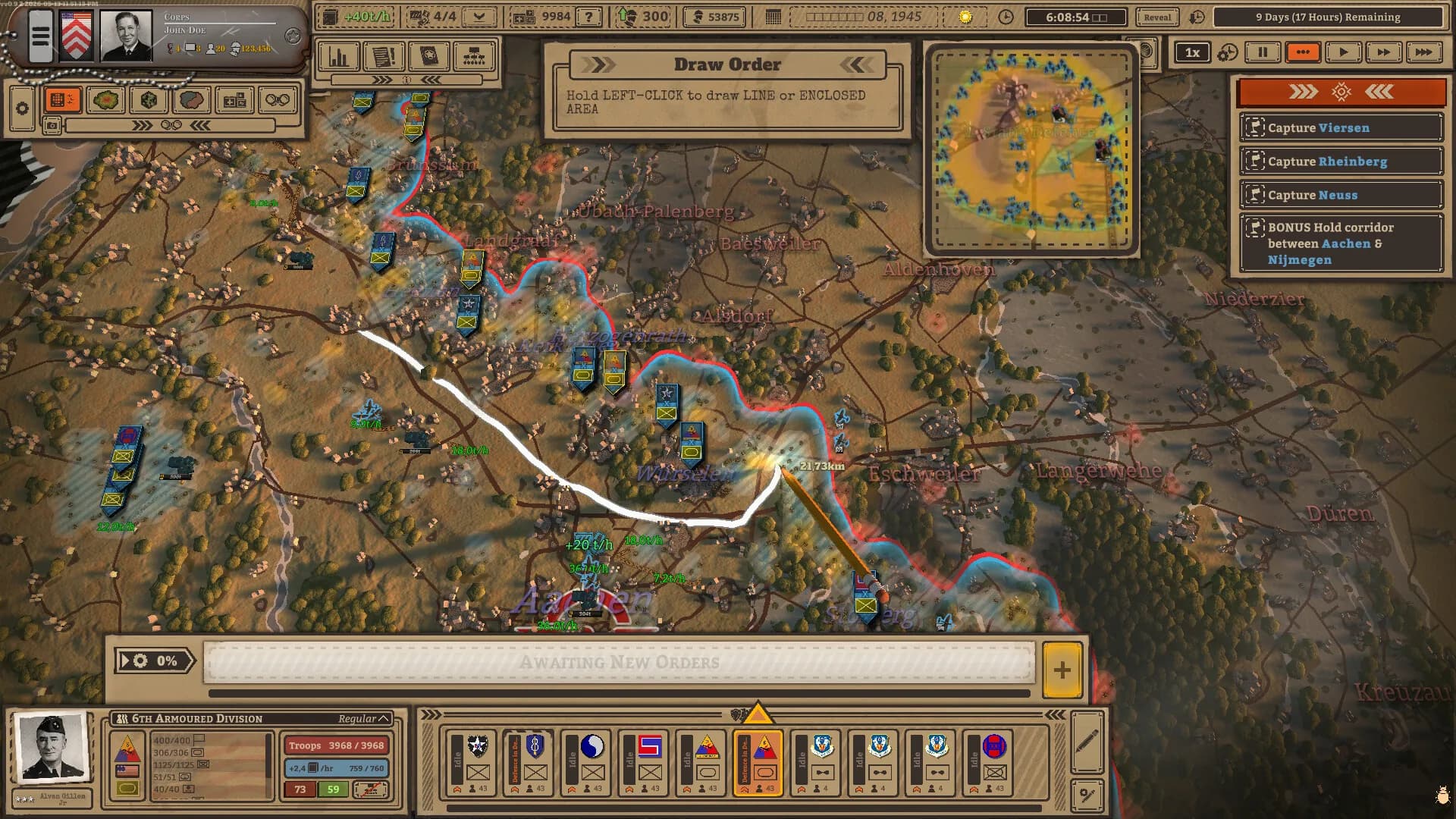
You draw a plan on the map and officers execute it alone. Except the game crashes every other planning phase.
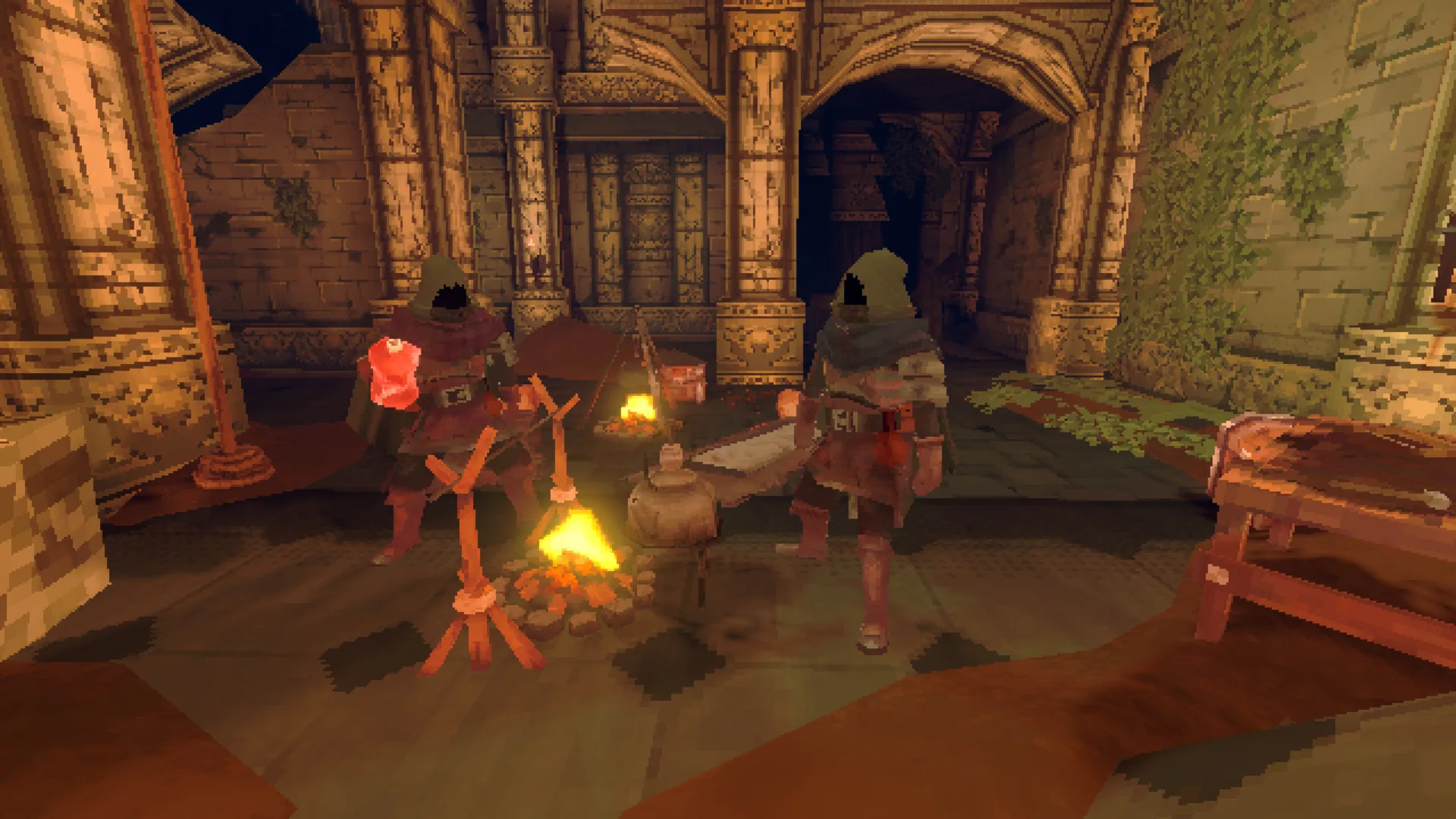
The Knights of Pen & Paper team return with a dungeon where you come back to camp, cook, and unlock recipes that change your stats.