7
Test
Barfender: my idiotic friend drank all the beers
A co-op bar that collapses while you serve. 98 per cent positive, and one of the rare times chaos is the actual subject.
Alexandrosse
7 min
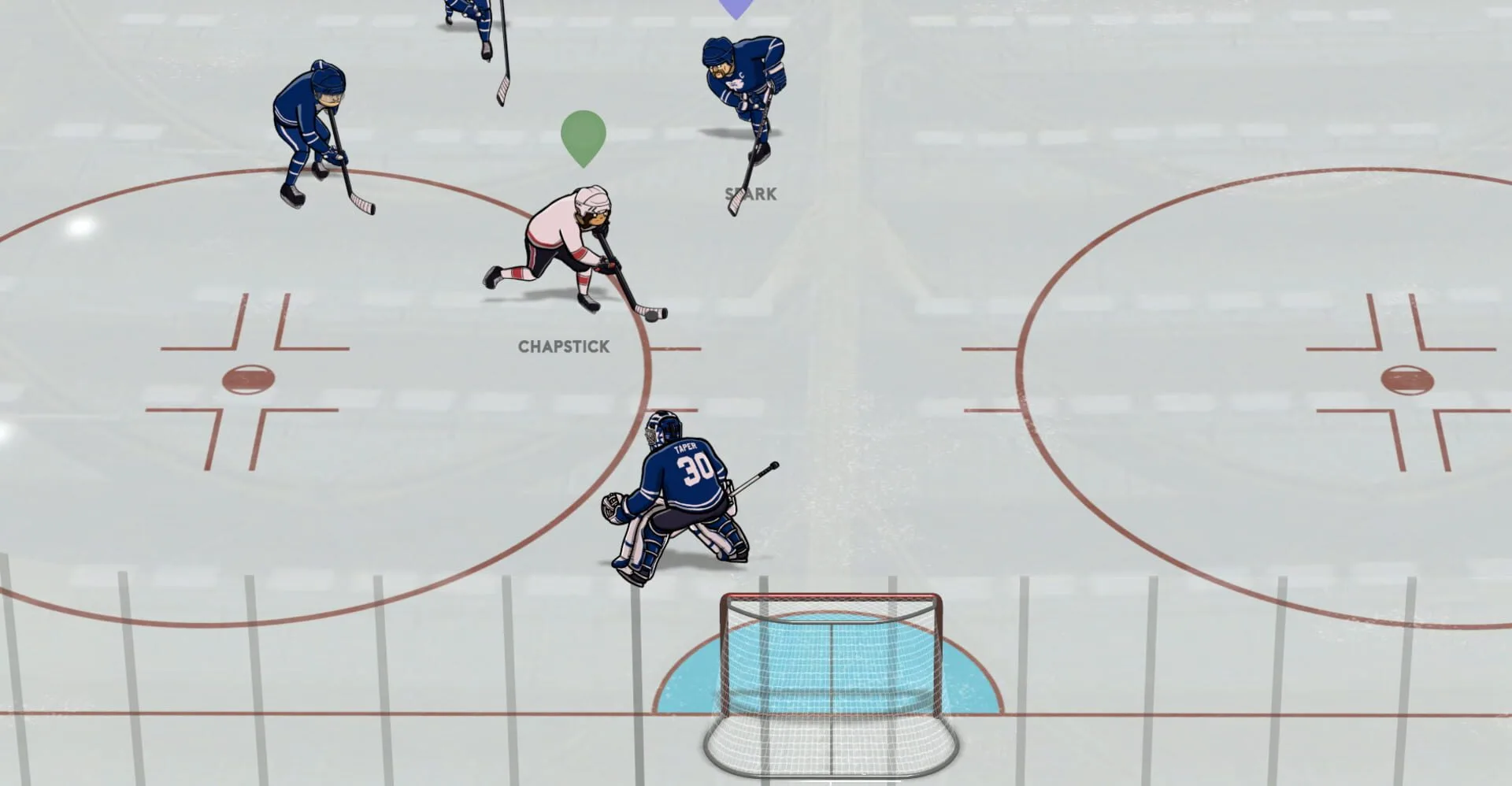
EA Sports killed arcade hockey twenty years ago. Excellent Rectangle, a Montreal studio, arrives with build synergies, absurd power-ups, comic book body checks, and genuine Canadian hockey culture baked in. This was the game that was missing.
Alexandrosse
InsertCoins.press Score
8/10
Verdict
Recommended
EA Sports killed arcade hockey twenty years ago. Since NHL Hitz, since the tight turns in the corners and the body checks that sent opponents into the boards with a sound your reptilian brain recognizes immediately, the genre had disappeared. Tape to Tape is the game that fills that void, three years of Early Access and one Montreal studio later.
Here's what it feels like to finally play hockey that doesn't ask you to memorize a simulation manual.
Tape to Tape is an arcade hockey roguelite developed by Excellent Rectangle, a Canadian studio based in Montreal. You build a team of third-line fighters, questionable snipers, and goalies with shady track records, develop them run by run, and try to win a tournament nobody gets out of completely unscathed.
It's not a simulation. There are no contracts, no salary cap, no twenty-three-man roster to balance. There's ice, sticks, absurd power-ups, and the primal satisfaction of a game that knows its audience wants to wreck people, not manage a spreadsheet.
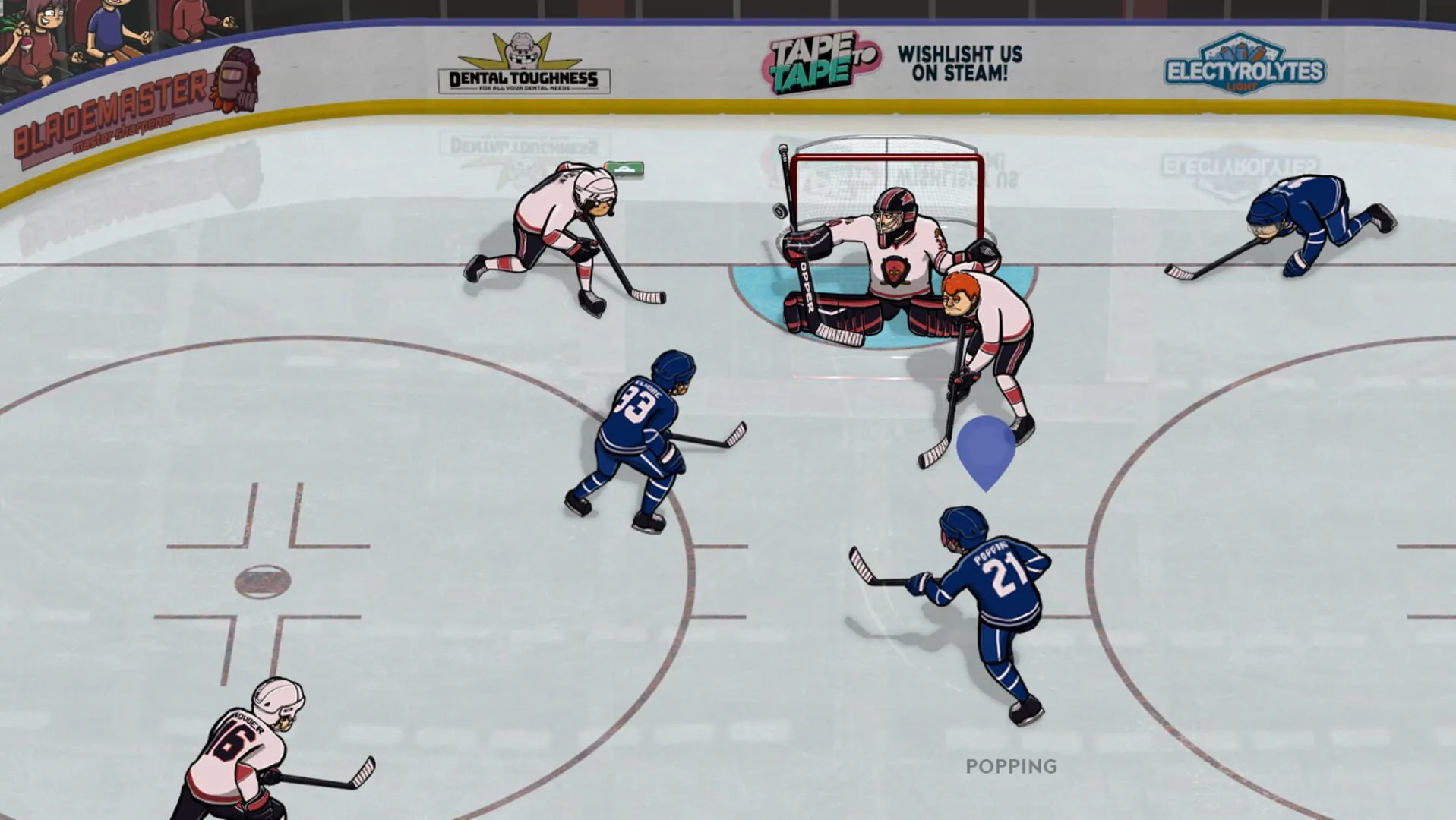
The base gameplay covers everything that makes hockey physically interesting. Tape-to-tape passes, the hockey term for a perfect pass from one stick's tape to another's, trigger special effects depending on your players' skills. Some players produce an explosive pass, others a pass that cuts through defenders. The same action, different results depending on who executes it.
Shots have weight. Body checks are calculated from the speed and position of both players involved: a full-speed check in the corner sends the opponent into the boards with the exaggerated animation of a comic book panel, and that's exactly what you want. It doesn't look realistic and that's precisely why it works.
Each player has active abilities usable in-game, with cooldowns. A fighter can trigger a devastating charge that goes through blockers. A playmaker can slip through a body check and create a counter-attack opportunity. A sniper activates a temporary precision mode that turns their shots into lasers. These short power windows force fast decisions: activate now or save it for the end of the period.
This is where Tape to Tape stops pretending to care about the rulebook. The game offers power-ups to activate mid-match: throw your stick like a tomahawk at an opponent, trigger glass-shattering hits, deploy abilities that have nothing to do with the NHL rulebook and everything to do with immediate fun.
There's also the option to bribe the referee. It's a full strategic system: spending resources to get the linesman's cooperation at the right moment can change the outcome of a tight game. It's the kind of decision that makes each run slightly different from the last, and it says everything about the game's tone.
Random events and boss battles punctuate progression. The game treats the season as a proper roguelite structure, not a sequence of identical matches.
Between matches, you access a recruitment and preparation hub. This is where Tape to Tape builds its depth.
Players have classes (forward, defenseman, goalie, enforcer) with their own skill trees. Each run, you build your team from the hub: some players are available in the shop, others unlock based on your on-ice performances. A goalie who was tough to beat during a match might join your roster.
Equipment plays a central role in build construction: sticks, skates, helmets, pads. Each piece has properties that interact with player skills. The same sniper stick on an enforcer produces a different result than on a playmaker. The synergy system lives here: certain player-plus-equipment combinations trigger effects that don't exist in either piece separately. It's the kind of mechanic that gets discovered through play, theorycrafted, and generates community discussion around optimal builds.
Meta-progression between runs unlocks additional starting players, initial bonuses, and new equipment types. Failed runs still advance things: you come back with more options, not nothing.
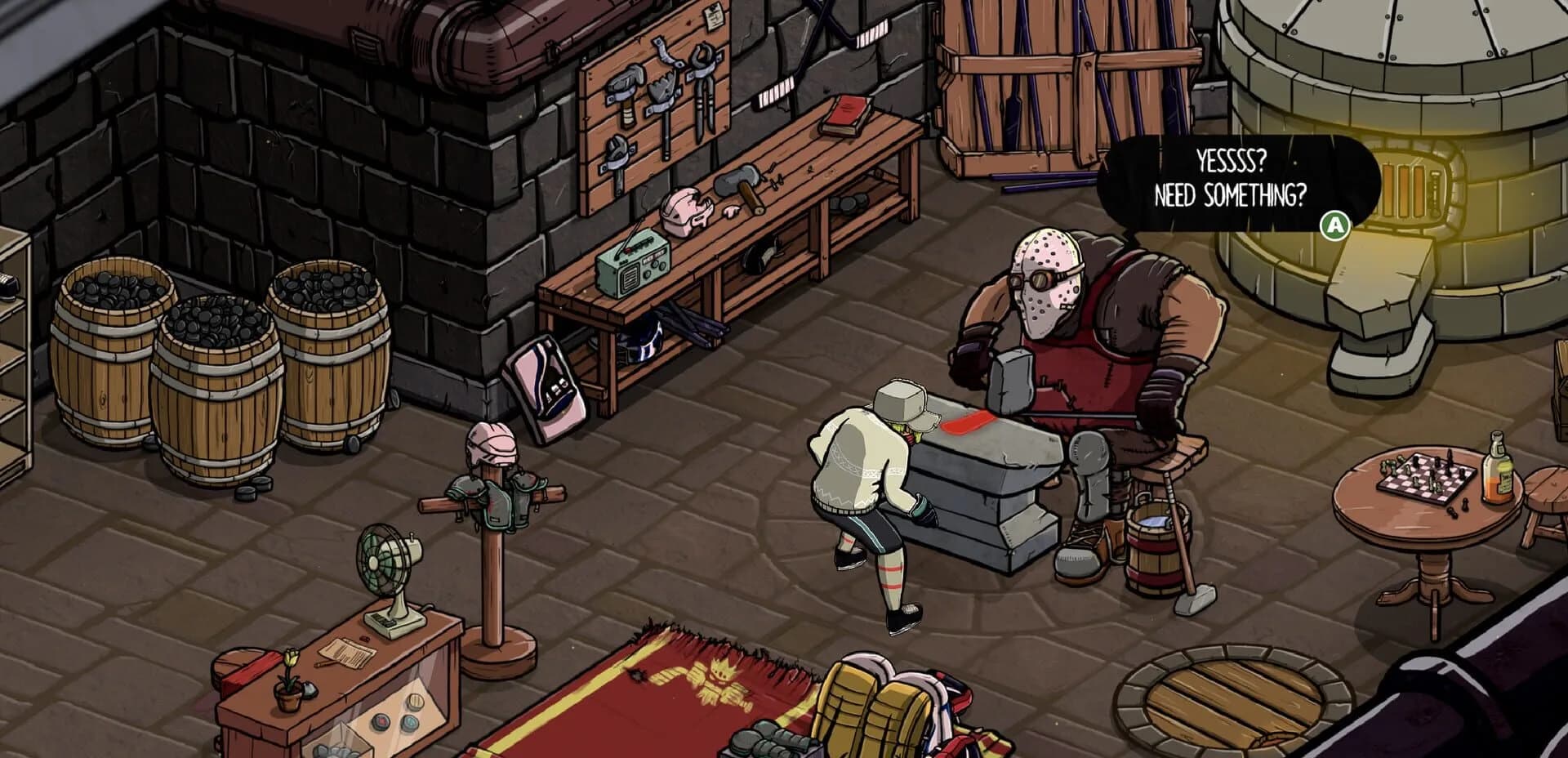
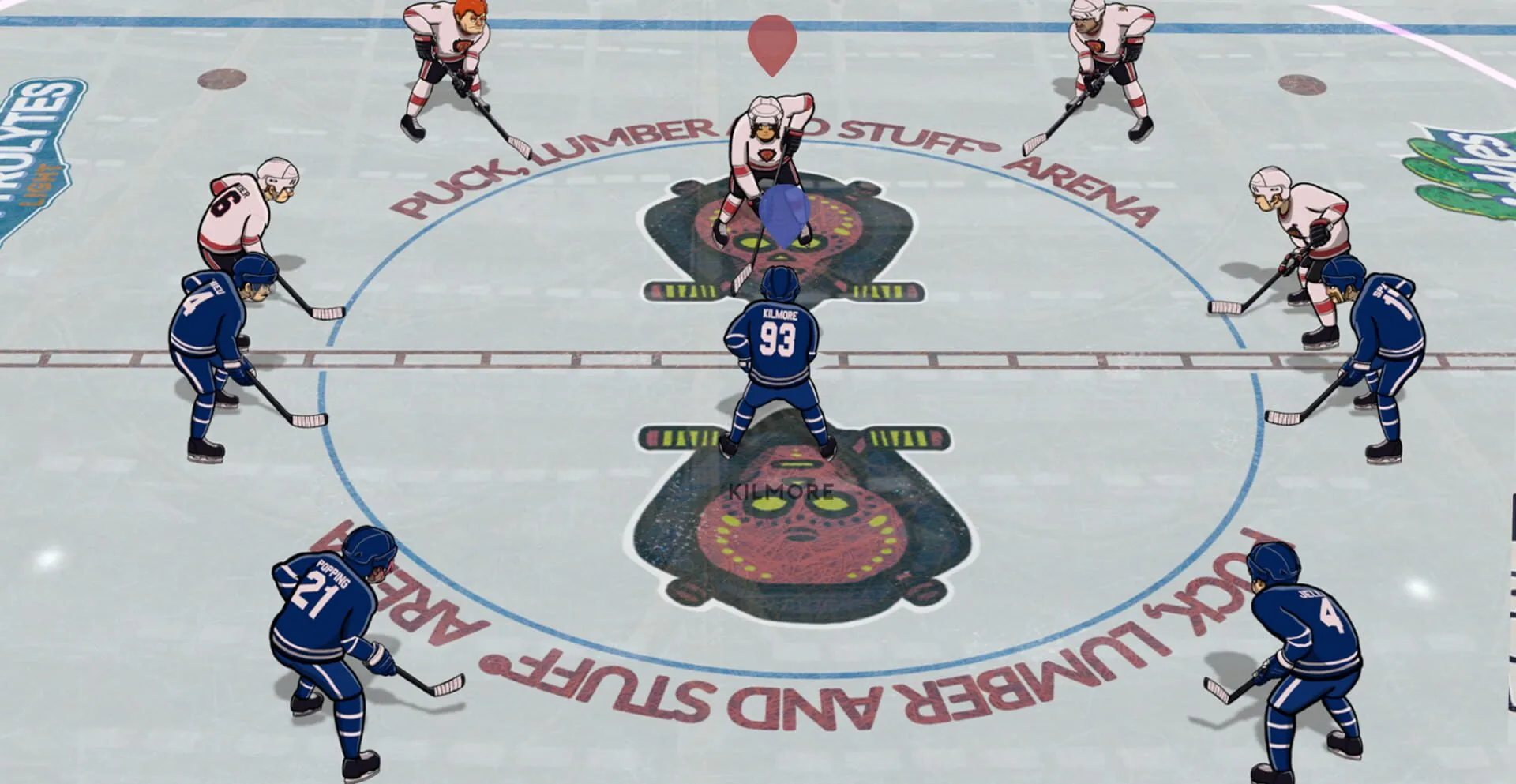
The comic book style is the decision that makes Tape to Tape immediately recognizable. Characters are hand-drawn with deliberately exaggerated proportions that amplify every animation. A slapshot doesn't look like a simulation shot: the player winds up, the stick bends, the puck launches in a burst of energy. The whole thing looks like a panel from a Canadian sports comic from the 1980s, and that's a compliment.
This style held up through three years of Early Access without aging, which proves that a coherent art direction mattered more here than chasing realism.
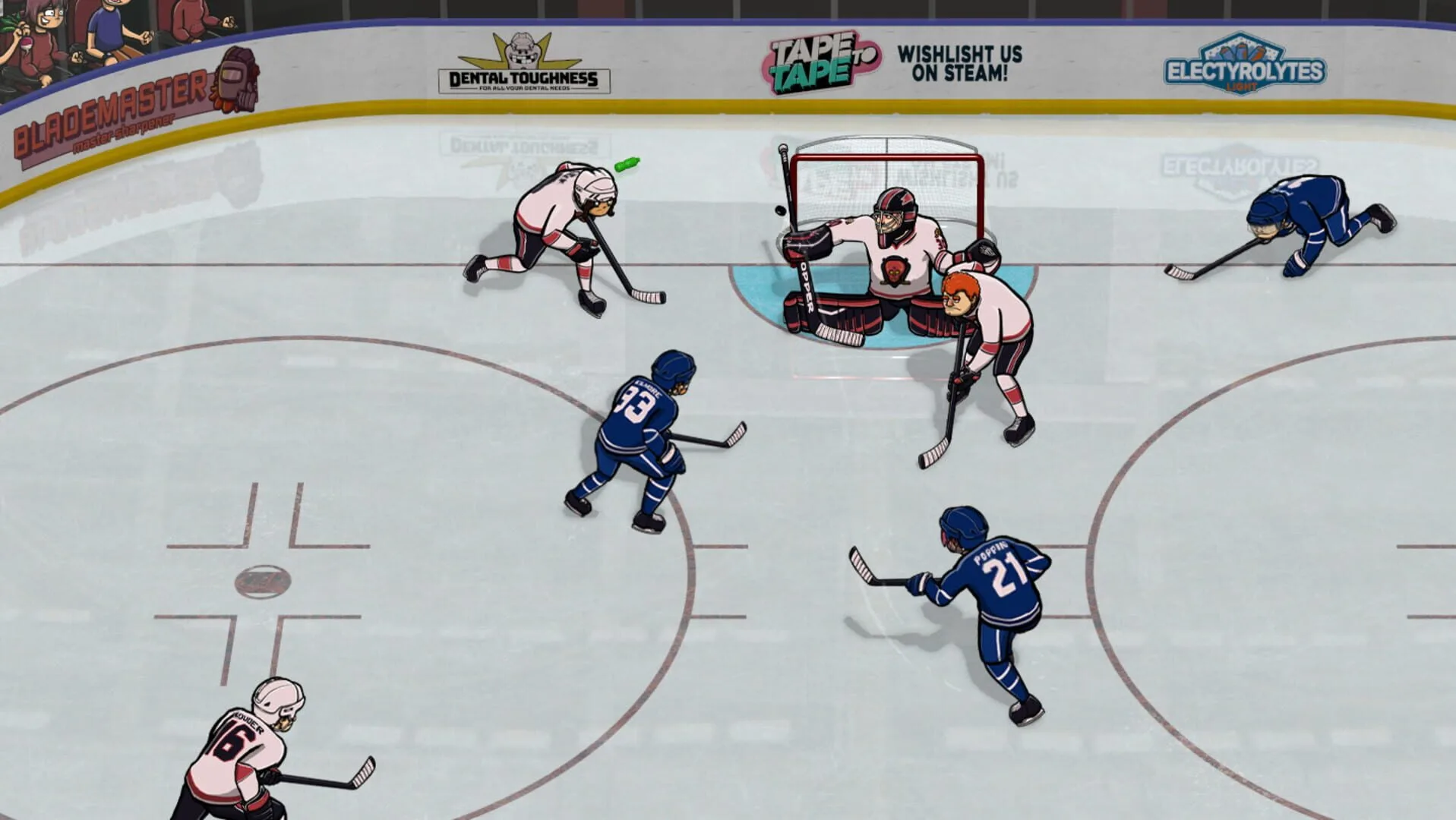
Excellent Rectangle is from Montreal, and you hear it. The narrator has the cadence and humor of Letterkenny applied to hockey, with lines that circulated through Reddit from the first day of Early Access. Several characters have Quebec French voice variants with joual-inflected dialogue. The community immediately compared the announcer to Shoresy, the Letterkenny spinoff character, which is about the most precise compliment you can pay a Canadian hockey game.
The humor runs through every line of dialogue, every player name, every team description. It's not generic humor. It's culturally grounded hockey, made by people who grew up with the same references as their audience.
"It's like positive Canadian stereotypes and the movie Dodgeball had a child," summarized one Reddit commenter at launch. That's not a bad description.
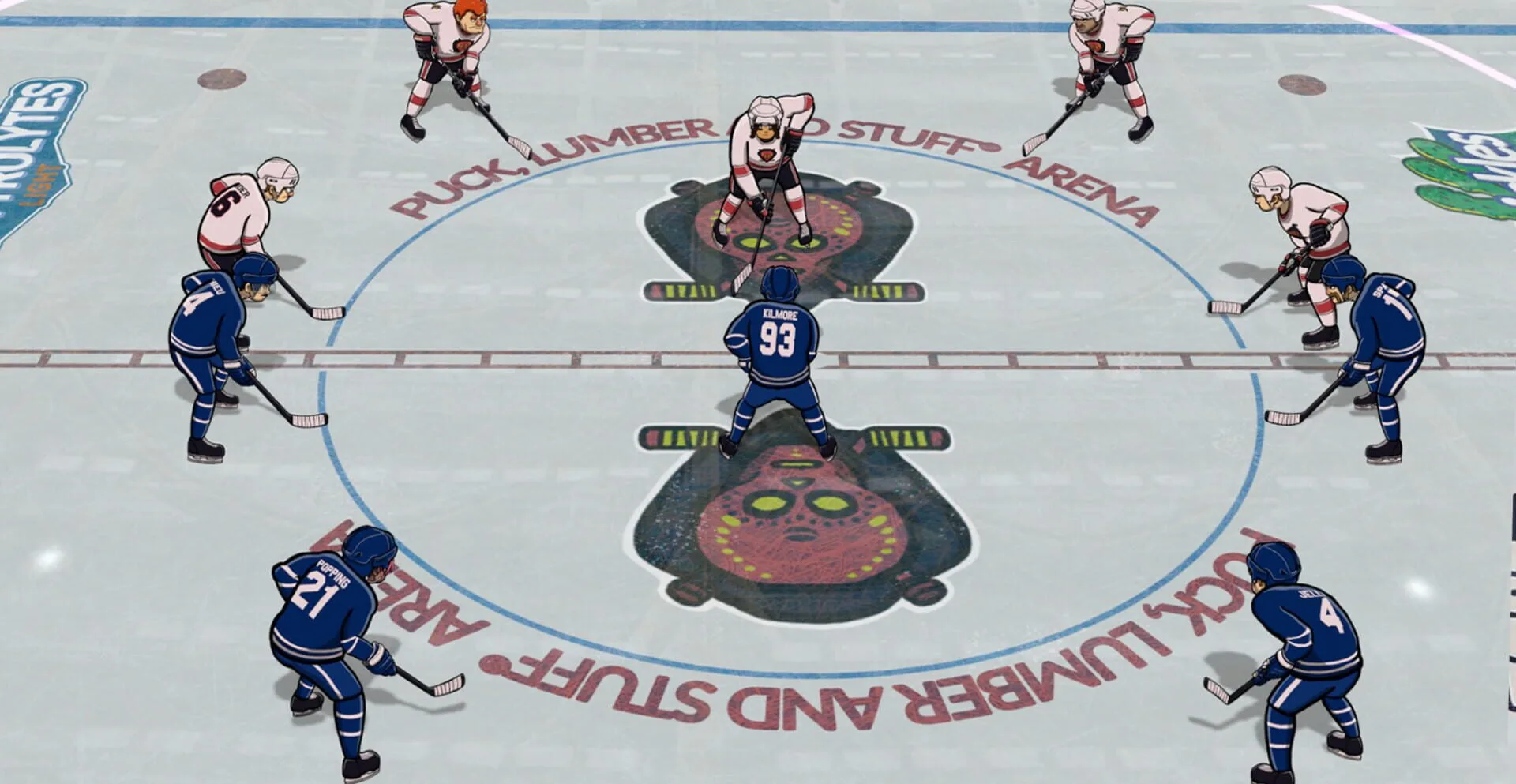
After Early Access, the game reached its final version with substantial content: multiple playable seasons, around ten player classes, hundreds of equipment combinations, and a local co-op mode up to four players that turns each run into a couch or office session.
The comparison that's been circulating in the community since day one remains accurate: it's the spiritual successor to NHL Hitz that nobody expected since EA decided simulation was the future of the genre. One player summed it up at launch: "I just scored my first goal in a hockey game in seven years and I'm clapping like when I scored my first goal in NHL 96. THANK YOU."
That comment says the essential thing about what Tape to Tape accomplishes: it doesn't replace simulation hockey, it reawakens something simulation had switched off.
The Steam Deck runs at a locked 60 FPS, making it one of the best portable games for short sessions. Remote Play Together works cleanly, with multiple community reports of smooth online co-op through the feature.
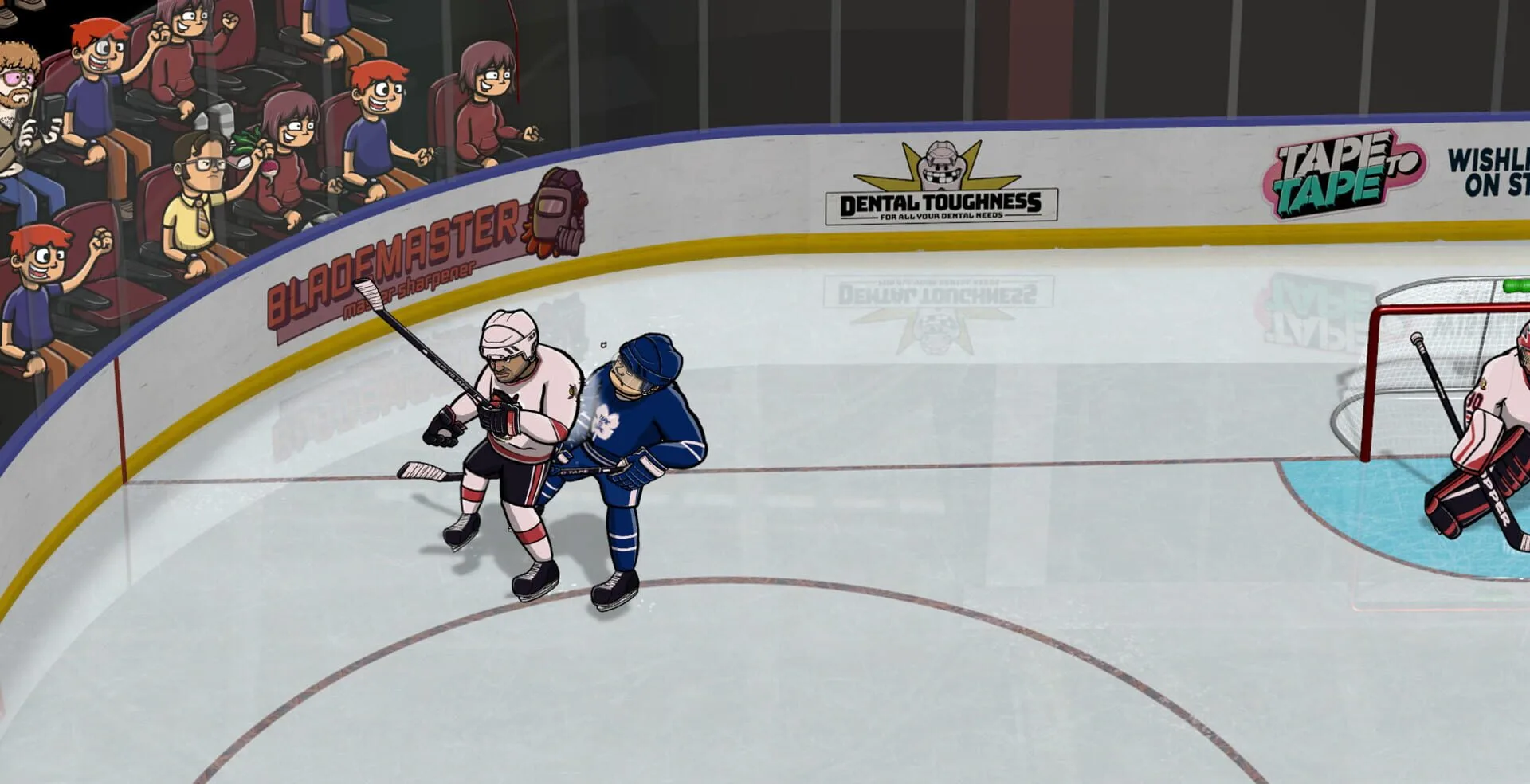
Tape to Tape knows what it is and doesn't pretend to be anything else: arcade hockey with roguelite depth that justifies the hours spent optimizing lineups with explosive synergies. The comic book art direction holds up, the on-ice gameplay delivers immediate satisfaction, and the Montreal studio's DNA gives the game an identity major hockey productions have never had.
The one friction point: the synergy system can be steep for a player who comes purely to wreck people without thinking about builds. The roguelite depth might put off an audience who wanted pure NHL Hitz. That's not a dealbreaker, it's just something to know before starting your first run.
Beyond that: it's the best independent hockey game released since EA decided simulation was the genre's future. And if you can still hear the sound of a puck hitting boards on a Saturday afternoon on NHL 2006, this is for you.
The discussion carries on over on our Discord, where we relitigate scores for far longer than is reasonable.
Community
Your rating
Advertisement
Loading comments...
You might also like
A co-op bar that collapses while you serve. 98 per cent positive, and one of the rare times chaos is the actual subject.
You draw a plan on the map and officers execute it alone. Except the game crashes every other planning phase.
The Knights of Pen & Paper team return with a dungeon where you come back to camp, cook, and unlock recipes that change your stats.