7
Test
Gears of War: E-Day: a new foundation, and a lot of missing rooms
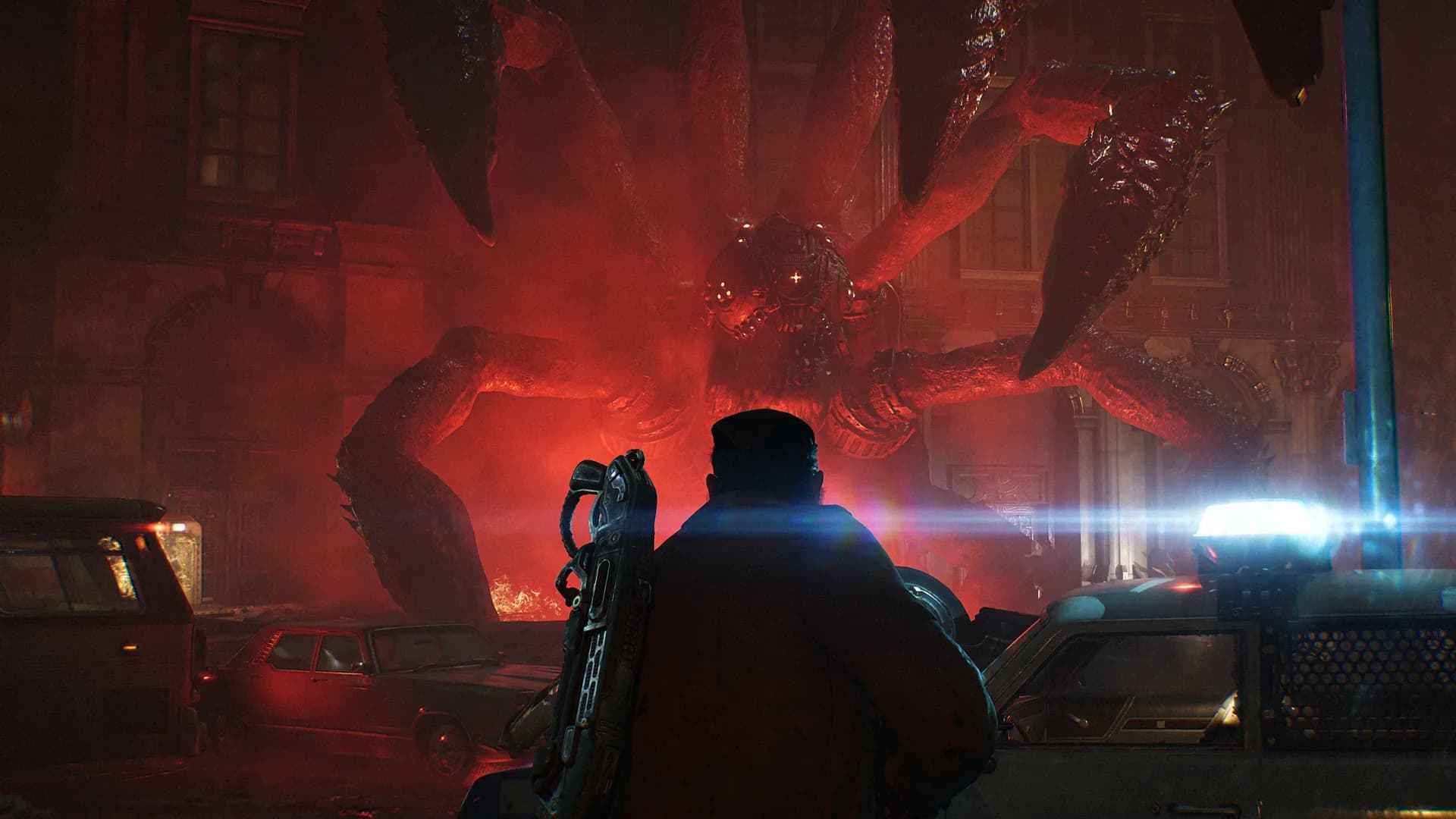
The movement has never been better and Unreal Engine 5 delivers. But Horde lost its 50 waves and there are only six maps.
Alexandrosse
11 min
From the mine to the sword's edge, every production stage is here. But it stands alone, where a 2006 game offered it among a thousand others.
Alexandrosse
InsertCoins.press Score
6.5/10
Verdict
Mixed
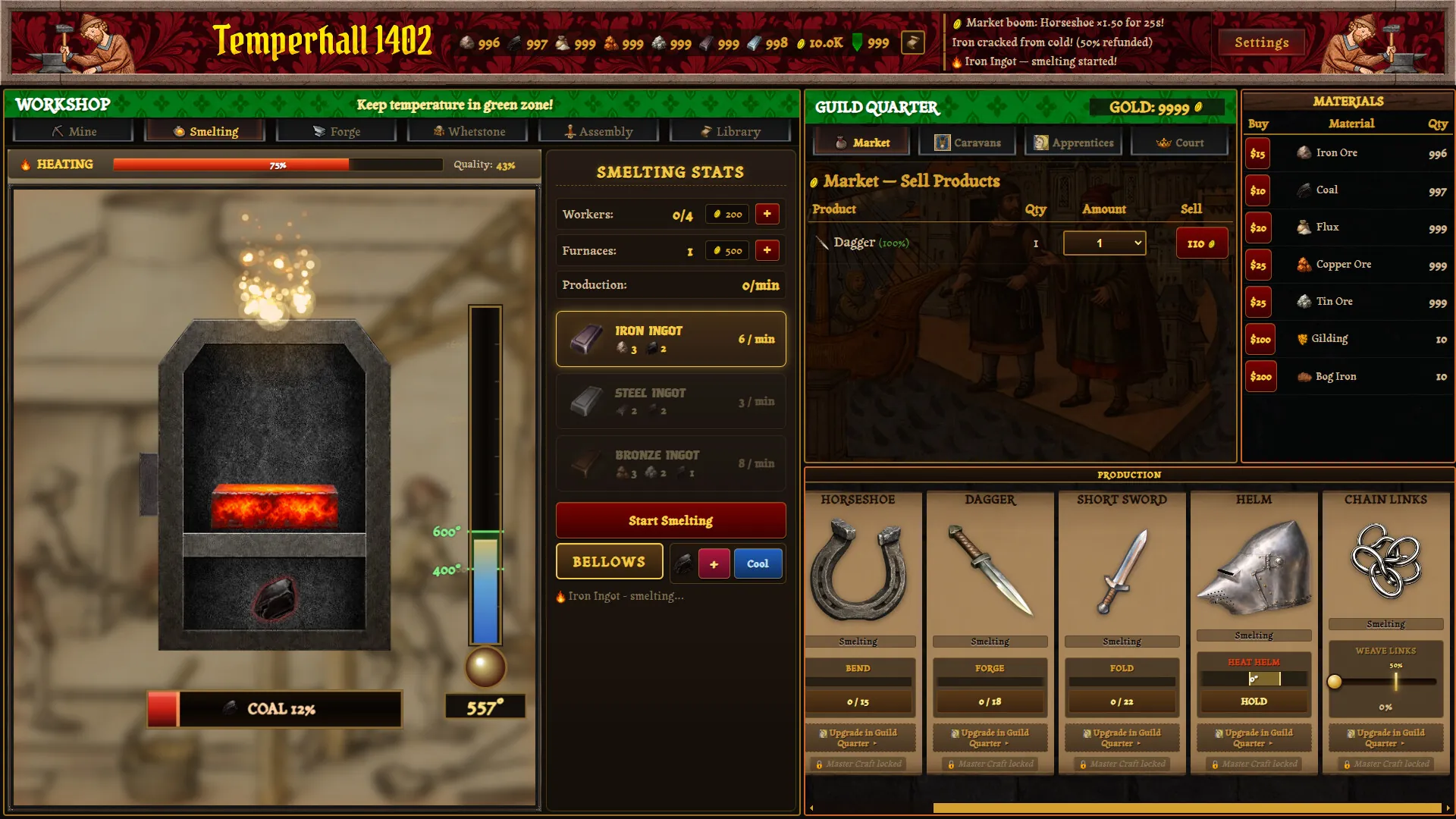
Let us start with what this game does well, because it is real: the forge is simulated with a seriousness you rarely see.
You manage a medieval blacksmith guild, growing it from a small workshop into an influential organisation of masters. And above all, you complete every stage of the production chain, from mining and buying ore to assembling the sword.
The vocabulary the game uses states its ambition: you forge, you temper, you sharpen. These are not three words for the same thing, they are three distinct operations, and separating them is already a statement of intent.
Production covers a credible range, from horseshoes to swords by way of armour. You fulfil varied orders, raise your guild's reputation, buy resources at markets, track ore supplies and keep the workshop in uninterrupted production.
On top sits a staffing layer: you send blacksmiths for training so they master new techniques.
It is coherent, it is specialised, and for anyone who enjoys trade simulations there is plenty here.
Except that while playing, a comparison imposes itself and it is not flattering.
The Guild 2 came out in 2006. It let you run a forge, with its supply chain and its employees. But it also let you marry, have children who inherited, stand in town elections, buy titles, sabotage a rival, take him to court, have him assassinated, and watch your dynasty cross generations.
The forge there was one trade among many, an entry point into an entire simulation of medieval life.
Twenty years later, Temperhall 1402 does the forge better. It does the forge, and nothing else.
You can defend that choice: specialisation allows depth, and one developer cannot rebuild a complete social simulation. That is true, and it is an honest answer.
But the question remains, and it goes beyond this game: have we not shrunk? Today's trade simulations are more precise and infinitely narrower than what a mid-sized studio dared twenty years ago. We gained in detail what we lost in world.
That is a little sad, and it is not this particular game's fault.
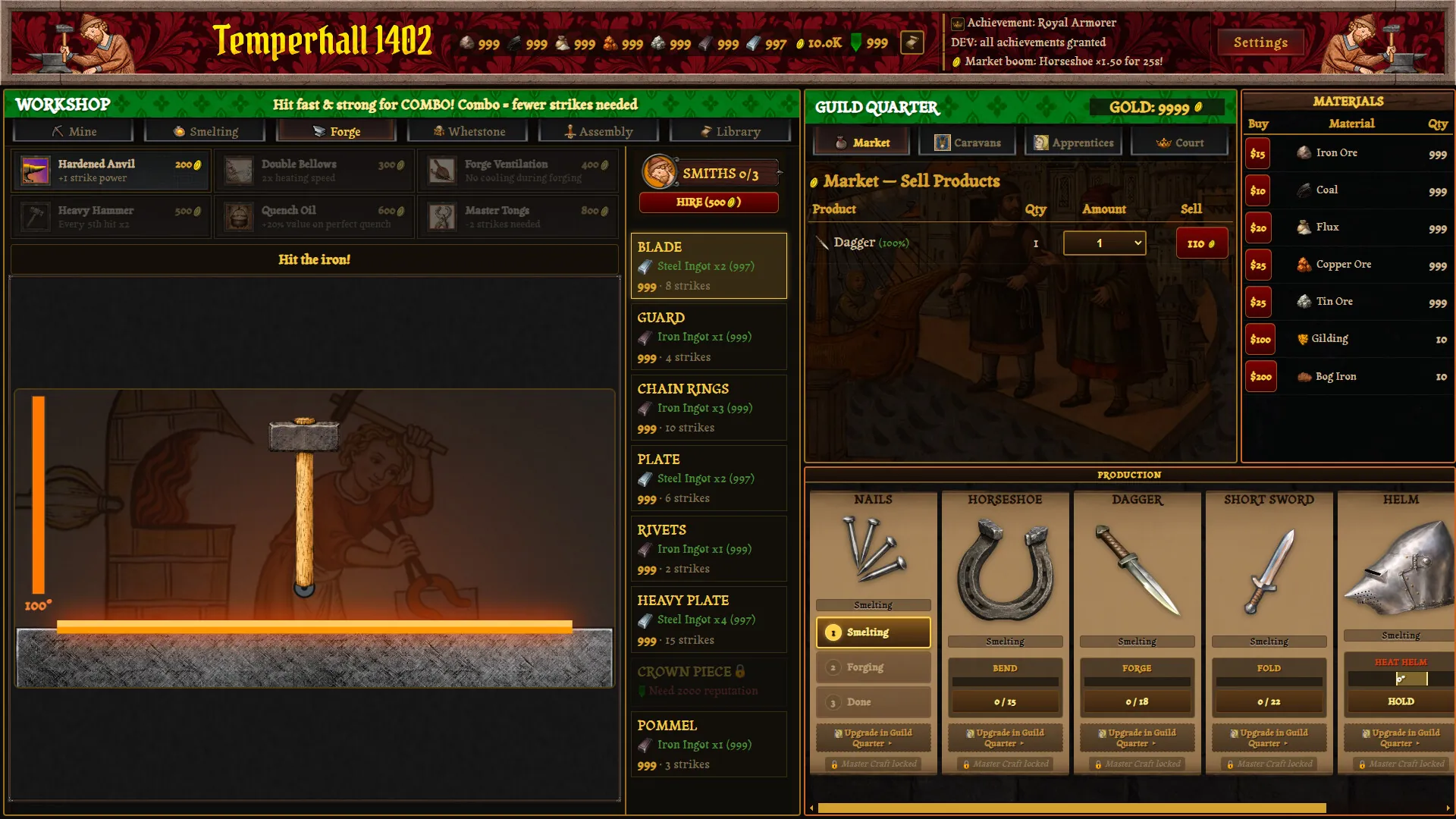
The pleasure is that of a well-tuned chain. Ore comes in, orders go out, reputation rises, you recruit, you train, you expand the workshop.
The limit is that of every single-loop game: everything depends on the depth of the central system. If the forge offers enough variables, temperatures, alloys, qualities, wear, you stay. If it reduces to chaining mini-games with rising numbers, you exhaust it fast.
On that front the mechanic is more developed than average, but it carries the entire structure alone.
The game launches today, made by one person, with no community reviews yet. A demo exists, and it is the safest way to check whether the act of forging grips you before buying.
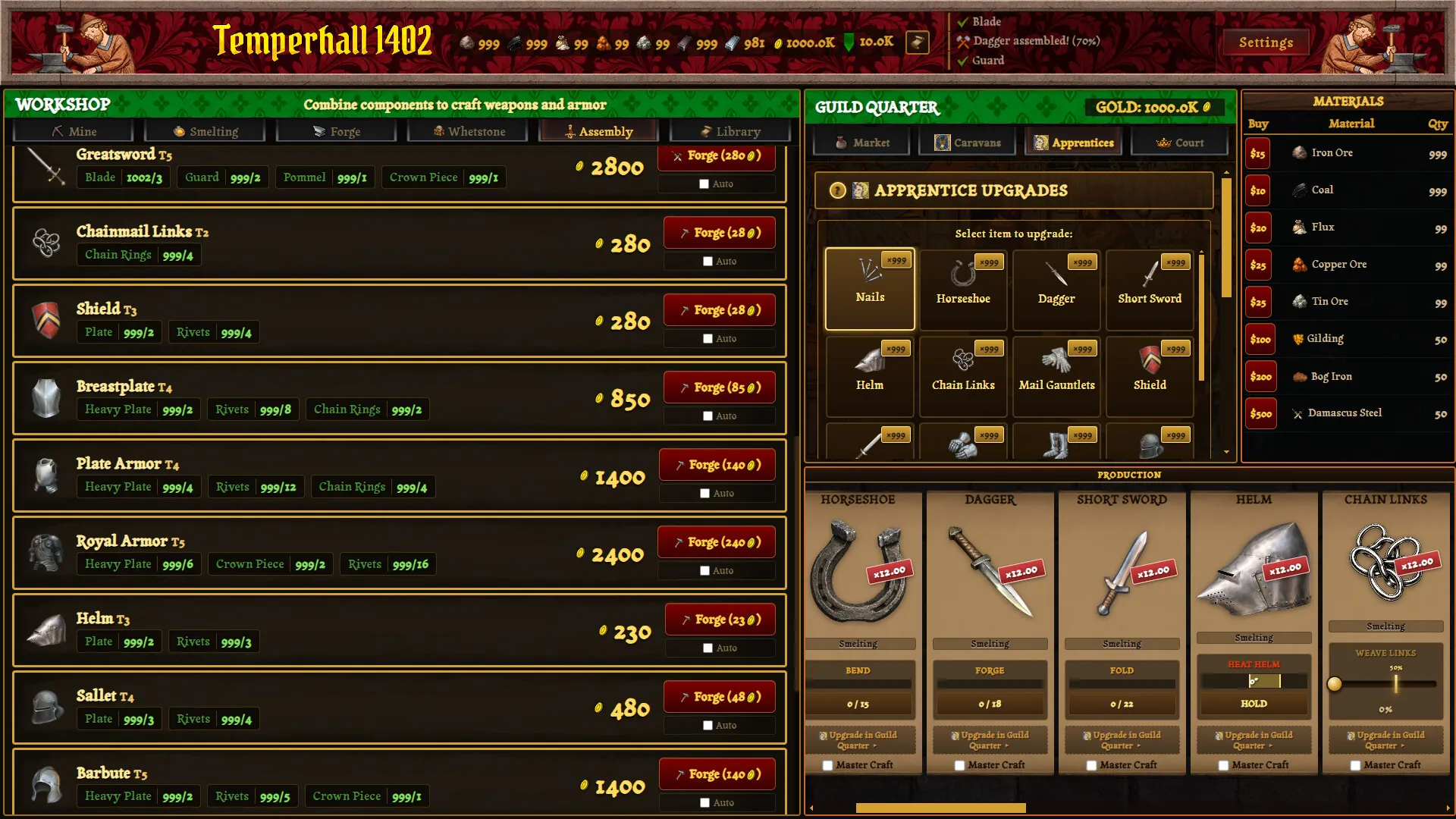
It rewards a genuinely detailed forge simulation, which separates operations instead of merging them, covers the whole chain from the ore, and adds staff management with training. For a solo production, that is serious work.
It accounts for a deliberately tightened scope that rests all the longevity on a single system, and the absence of everything that usually surrounds a medieval trade: the town, the competition, the family, the politics.
It is a good forge simulation. It is not a blacksmith simulation, and the distinction makes all the difference.
Do you remember The Guild 2? Come and talk about it on the InsertCoins Discord, we have dynasties to recount.
Community
Your rating
Advertisement
Loading comments...
You might also like
The movement has never been better and Unreal Engine 5 delivers. But Horde lost its 50 waves and there are only six maps.
Made by Criterion's former boss. We wanted 1999 on the Nintendo 64, we got a roguelite Burnout. And it is very good.
A year of silence, reviews calling it a dead project, and then a new chapter, a new boss and a rebuilt Endless Mode.