7
Test
Archipeo: thousands of islands, ships running a shuttle service, and me not sleeping
A procedural Anno where haulage is the real game. Every badly assigned freighter takes its revenge forty minutes later.
Alexandrosse
8 min
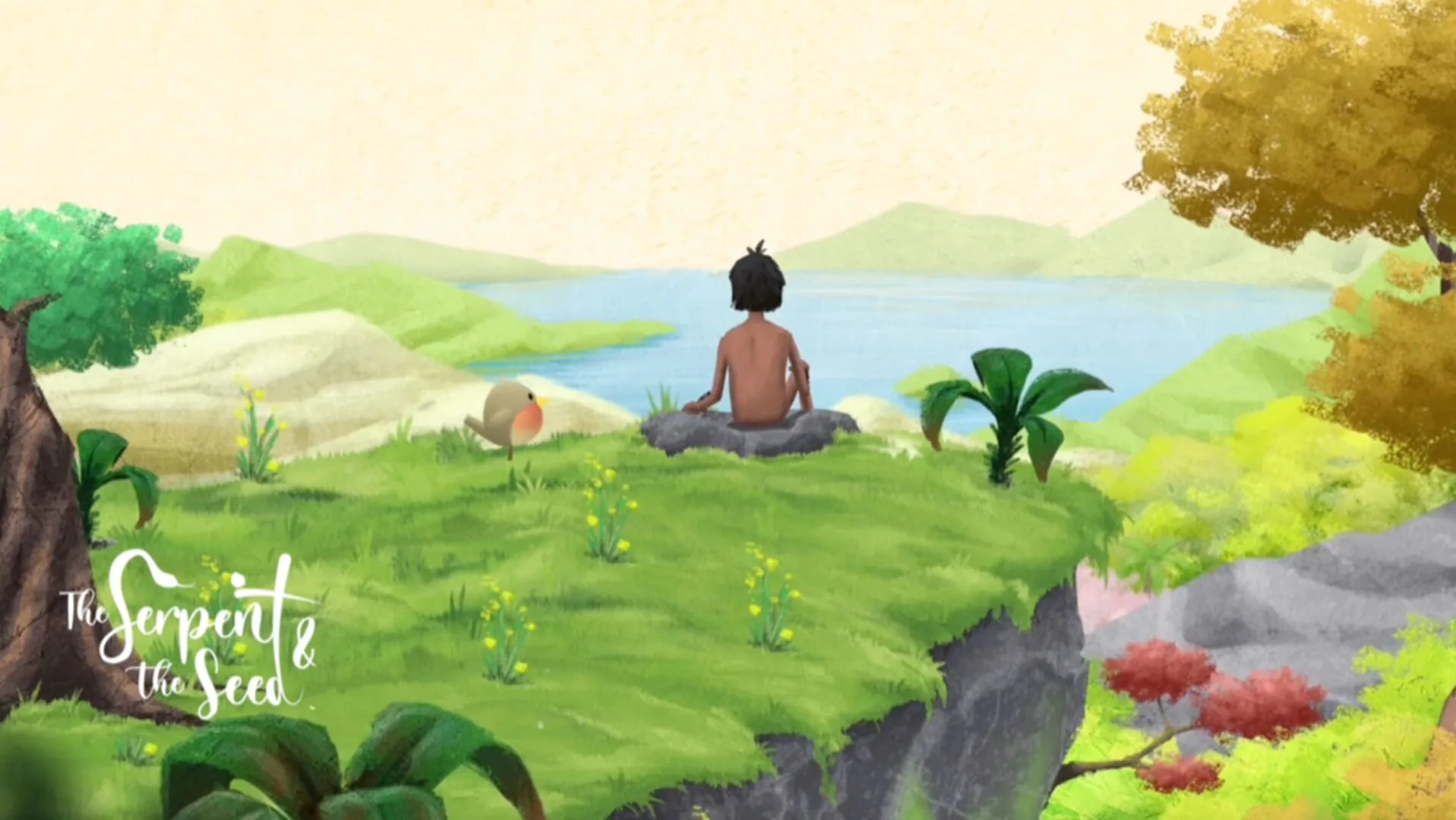
A robin, an ancient book, and the entire Bible from Genesis to Revelation in watercolor. The Serpent & The Seed is gorgeous, and far smarter than it looks.
Alexandrosse
InsertCoins.press Score
7/10
Verdict
Recommended
It took some nerve to pitch, in 2026, a game that tells the entire Bible, from Genesis to Revelation, with a robin for a hero and not a single firearm. The Serpent & The Seed did it, and the most destabilizing part is that you come away less with the feeling of having been preached at than of having walked through one of the most beautiful picture books ever animated.
The Serpent & The Seed is a narrative puzzle adventure made by Discipleship Tech, released this 29 June 2026 on PC and Mac after a well-received mobile career and three NYX Game Awards (narrative, storytelling, soundtrack). The project comes from a charity, led by a studio that owns its faith without hiding it, and that's a fact to lay out up front: we're talking about an openly Christian game that rereads the biblical text as one great story. The real surprise is that it doesn't function at all like the piece of proselytism we feared.
You play Mungo, a robin who discovers an ancient book in a post-apocalyptic future smothered by thorns and ruled by the power of a serpent king. From there, the game unfolds its retelling of the Old and New Testaments as a fresco, making the famous seed of the woman mentioned in Genesis the thread that ties it all together. It's an idea of insane elegance: rather than illustrating isolated episodes, the game looks for the line that runs through them, and it follows it with a coherence of writing that commands respect even when you don't share the belief behind it.
The gameplay is deliberately gentle. You explore hand-painted tableaux, solve atmospheric puzzles, chain mini-games that never try to trap you. Push a mechanism, guide a light, assemble a pattern: nothing here is designed to frustrate you, everything is meant to keep the rhythm of the narrative going. You're closer to a contemplative interactive book than a demanding brain-teaser, and you should know that before buying.
That's where the debate lies. If you come looking for a puzzle game that flexes your brain, walk away without hesitation: the puzzles in The Serpent & The Seed will never cross the threshold of real challenge, and some solve themselves almost on their own. The game makes no mystery of this intent. The mechanics are breaths, ways of making you take part in the story rather than endure it, and each one weds the passage it illustrates.
The bet works because interaction gives weight to scenes a mere cutscene would have flattened. Reconstruct a gesture, accompany a character, trigger a narrative shift yourself: the controller turns the spectator into a witness, and that's exactly what the game is after. The problem is the absence of any peak. Over the long run, you'd love at least one or two puzzles that resist, if only to break the lullaby. The permanent comfort ends up bordering on passivity, and that's the main reservation we want to lodge.
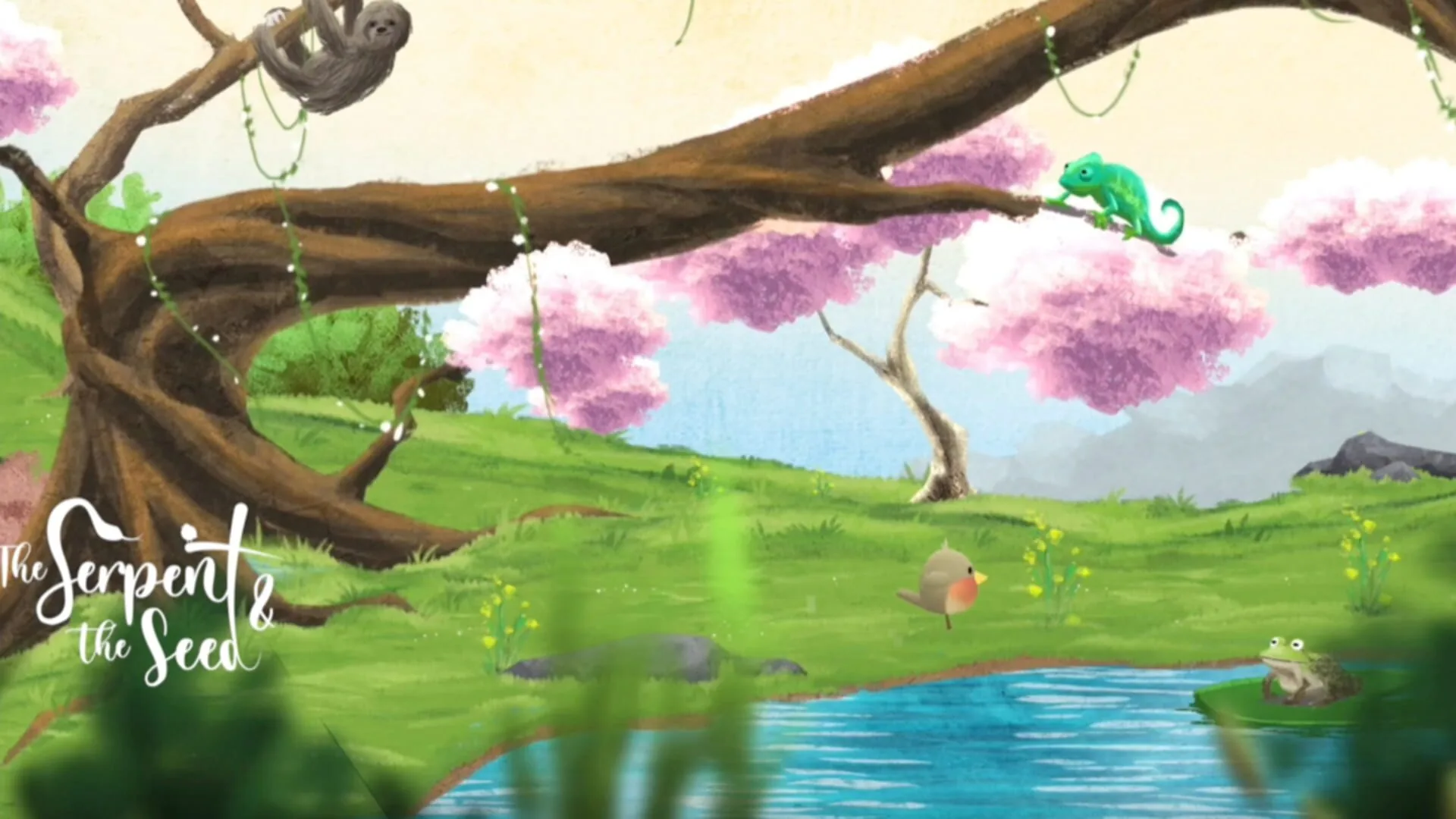
Let's say it plainly: this is the most beautiful art direction we've seen this year, and by a distance. Everything is hand-painted in a material that lies between watercolor and illumination, with a palette shifting from the ash of the thorns to bursts of golden light depending on the moment. Every tableau could be framed, and the game chains these tableaux for hours without ever repeating itself or sinking into pretty emptiness. It's the work of an artist, not a pipeline, and you feel it on every screen.
The soundtrack holds exactly the same level. Composed by folk duo Poor Bishop Hooper, it accompanies Mungo's journey with a restraint that avoids pathos, and it rises several times to the height of the images, which is no small feat. You understand very quickly why the game swept its best-music award: there's a real sonic identity here, not an interchangeable ambient layer. When image and sound align like this, you're holding one of those rare games you want to show off just for the pleasure of the eyes and ears.
There's the obvious fact: The Serpent & The Seed is a game of faith, and it doesn't hide it for a second. Its reading of the Bible is sincere, never aggressive, but it remains a reading, with its thesis and its intent. The game doesn't seek to debate, it seeks to move and to transmit, and depending on your relationship to the subject, it will be a magnificent doorway or a stance you keep at arm's length. Our role isn't to judge the belief, but to be honest about what you're buying: a confessing work, not a neutral documentary.
What commands respect is that you can be entirely a stranger to this faith and still be floored by the object. The visual beauty, the narrative coherence and the gentleness of the journey far transcend the audience it was aimed at. That's rare, and it deserves to be underlined.
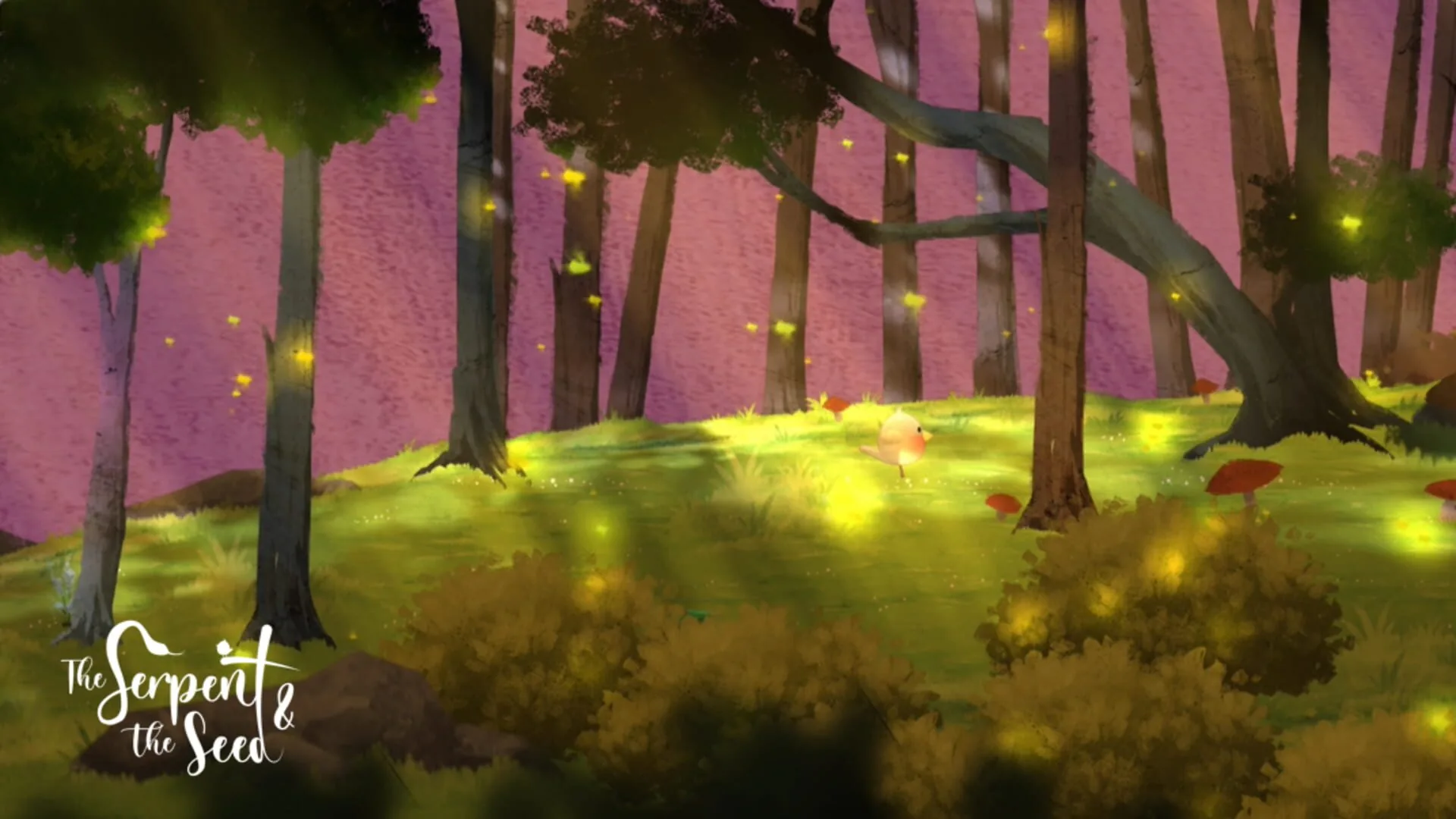
The Serpent & The Seed is a thing apart, one that pulls off its riskiest bet: turning a biblical retelling into an experience that even an agnostic can find overwhelmingly beautiful. The art direction is a slap, the soundtrack accompanies it without faltering, and the idea of telling the whole text as a single story carried by a robin has a grace we didn't expect. It's a work, in the full sense, and it's contemplated as much as it's played.
But you need to know where you're stepping. The puzzles are breaths, not challenges, and their constant ease deprives the game of any ludic relief. Add an openly confessing message that won't suit everyone, and you get a superb but narrow experience, reserved for whoever seeks contemplation over challenge. For that audience, it's almost flawless.
The year's most beautiful art direction in service of a biblical tale of rare gentleness: gorgeous to look at, light to play, and far more moving than expected.
Strengths:
Weaknesses:
Tested on PC.
The discussion carries on over on our Discord, where we relitigate scores for far longer than is reasonable.
Community
Your rating
Advertisement
Loading comments...
You might also like
A procedural Anno where haulage is the real game. Every badly assigned freighter takes its revenge forty minutes later.
Towers, troops, a single pool for both. Every coin spent on defence is a coin you will not be sending the other way.

Crossing finally matters and defending responds. Then the screen goes black. 57 per cent positive on Steam, at 69.99 euros.