Preview
DinoBones: nine skeletons in pieces, a museum to put right, and a cat
A sorting game where every bone starts out unknown and you learn to recognise it. No date yet.
Alexandrosse
6 min
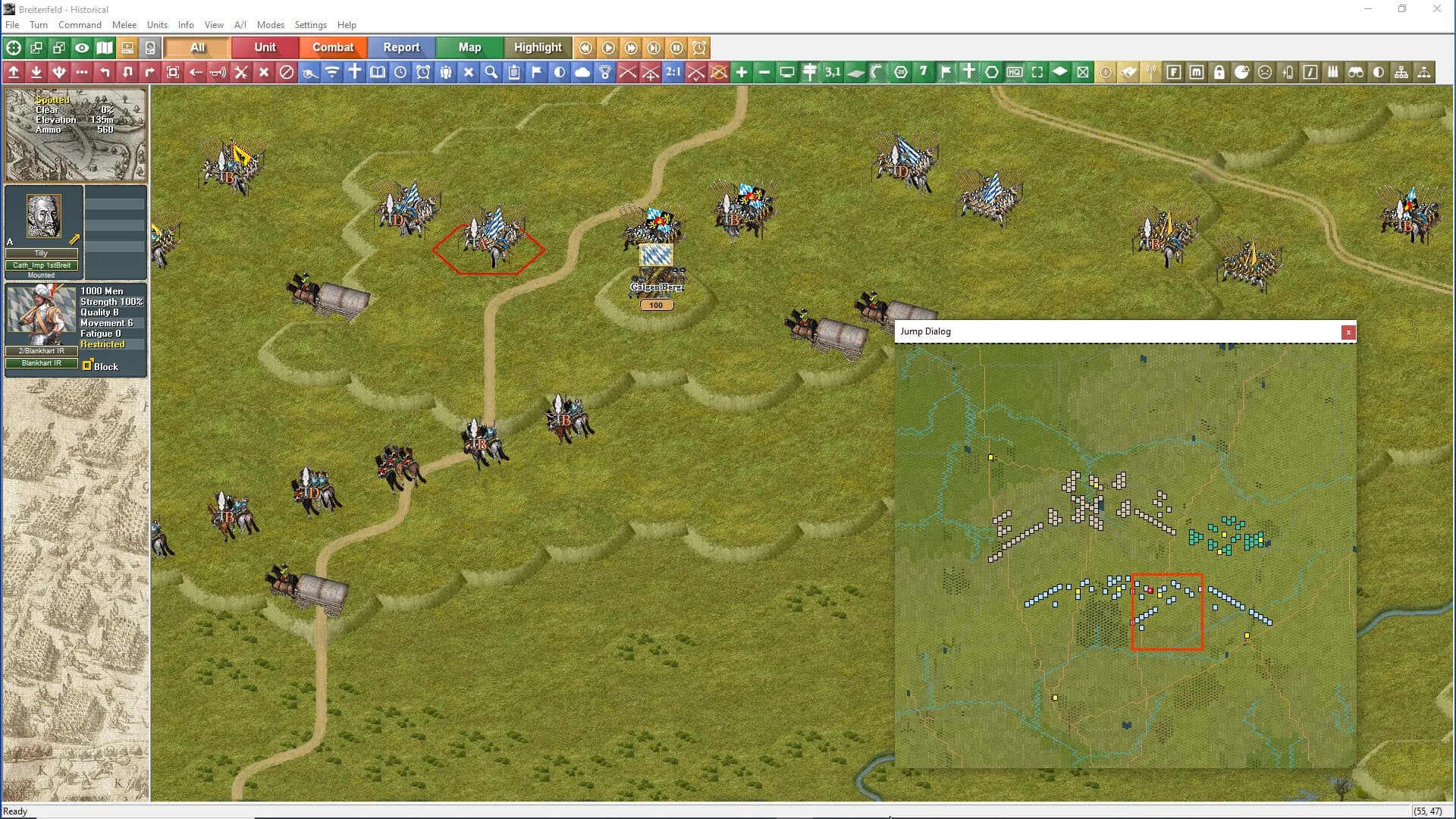
80 scenarios, pike and shot, Gustavus Adolphus and Breitenfeld. A hex wargame descended directly from John Tiller, as rigorous as it is austere.
Alexandrosse
You need to know where we are speaking from, because it changes everything.
Before we had salaries and bank cards, we drew our own wargames. Hexagons ruled out by hand, forests scribbled inside them, brown cardboard cut into little counters with stick-figure cavalrymen and stick-figure musketeers on them, attack and defence values written in biro in the corners. We played whole afternoons of that on a kitchen table. It was ugly, it was wobbly, and it was magnificent.
Today we are older, we can buy the real games, and our partner is ready to hand the entire collection to anyone who will take it away. Which is to say we are thoroughly qualified to judge this one.
Thirty Years War arrives on 14 August 2026, developed and published by Wargame Design Studio. That name may mean nothing to you, but you should know what stands behind it.
Wargame Design Studio bought the entire John Tiller Software catalogue, its source code and its name, in a deal finalised in 2021. John Tiller is the man who moved hex-and-counter wargaming from cardboard to the screen, and did it so well that he converted a whole generation of board players, while bringing others to tabletop gaming by the opposite route. The in-house catalogue runs to nearly a hundred titles, with series like Panzer Campaigns, Panzer Battles and Civil War Battles.
In other words: what you were drawing in felt-tip on cardboard, these people made their profession for thirty years. The lineage is direct and openly claimed, and that is precisely why this game deserves discussion rather than being left to pass by.
It is a tactical wargame on the Thirty Years War, covering the entire conflict rather than one convenient slice. You move through the Bohemian Revolt and the Palatinate campaign, the Danish intervention against Tilly and Wallenstein, the Swedish intervention of Gustavus Adolphus with Breitenfeld and Lützen, then the French intervention and the Franco-Spanish struggle through to Rocroi.
The announced content is substantial: 80 standalone scenarios. On the Imperial and Catholic League side you field Imperial infantry and cavalry, Tilly's armies, Spanish Habsburg forces, the later Bavarian army under Mercy, Croatian light troops and mercenary cavalry. Facing them, the Swedes under Gustavus Adolphus, the Danes, the German Protestant armies under Mansfeld, the French, the Palatinate contingents, and the Saxons who switch sides depending on the period, something the game models rather than smooths over.
The part that should speak to you is the era itself. The Thirty Years War sits exactly at the hinge between Renaissance warfare and the early modern battlefield, and the game makes that its subject. The matchlock remains standard, flintlock appears only in limited roles, dense pike-and-shot formations structure infantry combat, cavalry shock action stays decisive, and artillery grows in importance without ever being deployed consistently. Above all, the orders of battle reflect the mercenary reality of the conflict: multinational armies, understrength, unevenly trained, where quality varies enormously between veterans, levies and hired troops.
For someone who used to write values in biro in the corner of his counters, that is exactly the level of granularity that delights.
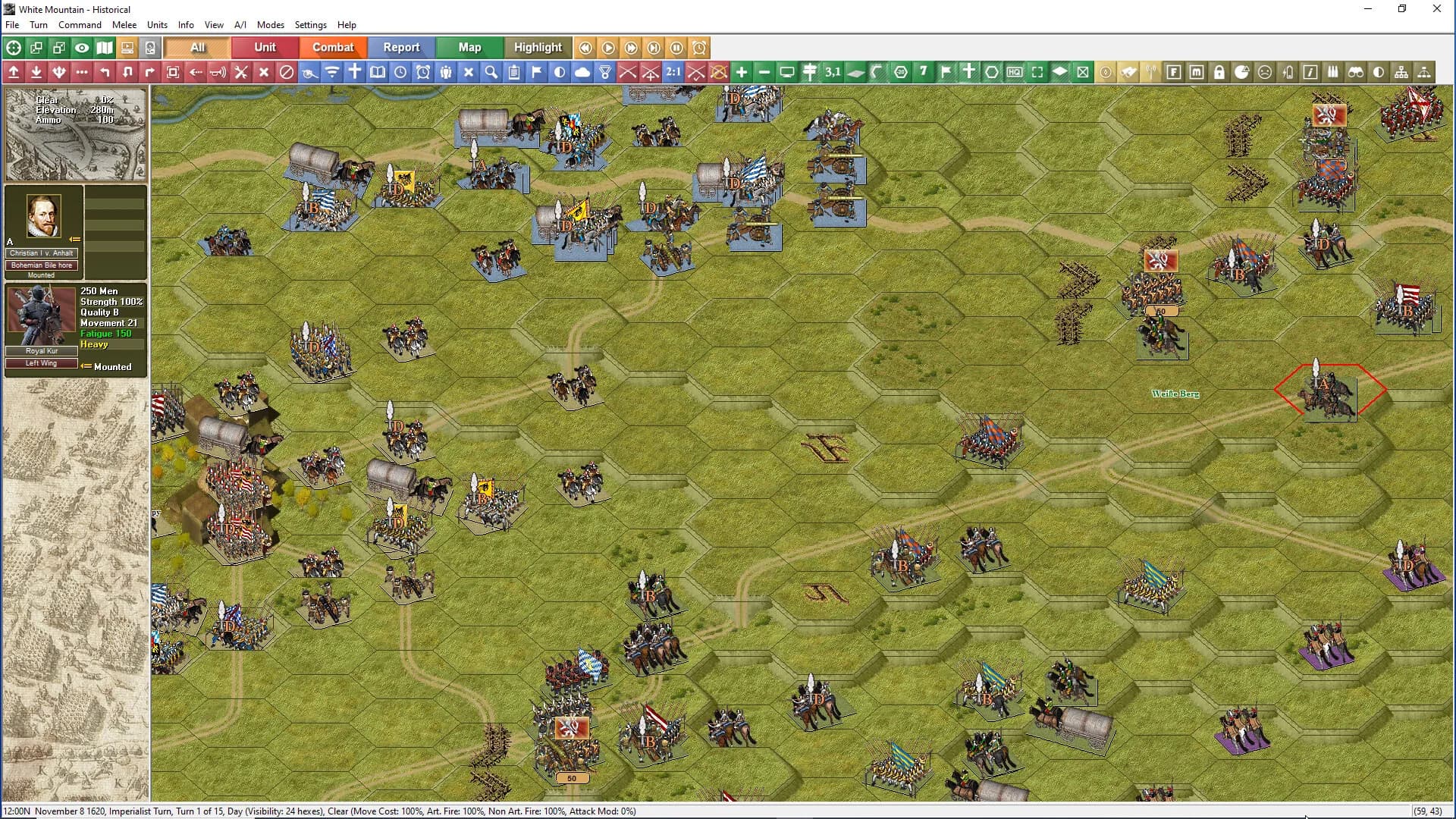
The game is not out yet, so we will not score it, and we will not pretend to have played it. We can judge the proposition, though, and here we know very well what to expect, because this studio does not change its method from one title to the next.
The best of it first. At WDS, historical rigour is not a marketing line, it is the product. Orders of battle are documented, scales are respected, and the depth of simulation goes well beyond what mainstream strategy games offer on the same period. Eighty scenarios is a quantity very few publishers still dare to promise.
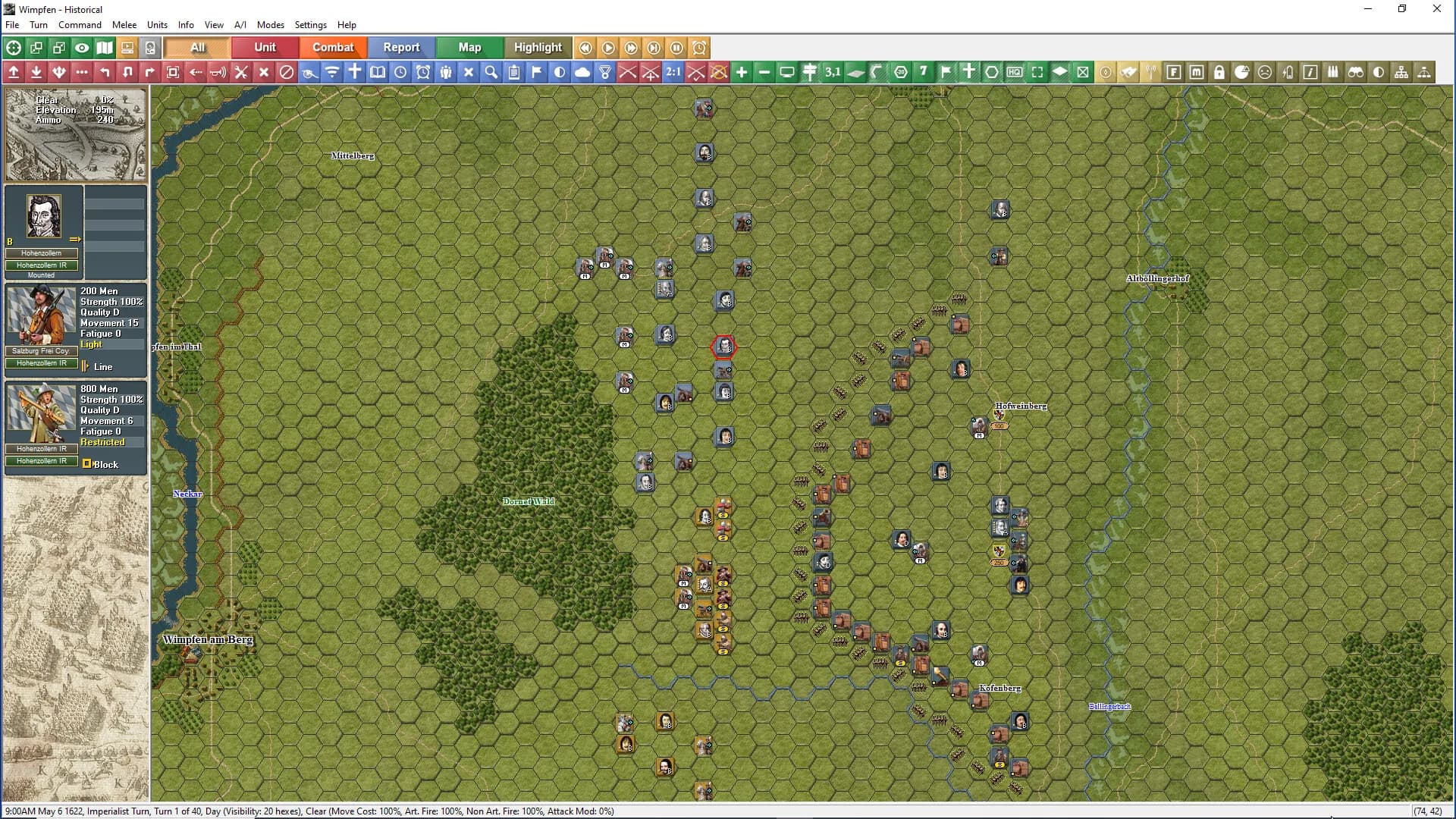
The less good, and let us be blunt. Games from this catalogue are famously austere, and that is putting it kindly. Dense, unwelcoming interface, dated presentation, a vertical learning curve, documentation to be read like a board game rulebook. That is not an accident, it is a philosophy: these games address people who want the rules, not the ergonomics. If you enjoyed spending an hour drafting your own house rules on a kitchen table, you will feel at home. Otherwise, you will suffer.
One last point, and it validates the joke better than expected: the game is announced in English only. No French version, now or on the horizon. So you will probably not be the sole French sale of the title, but you will belong to a very small club, and not for want of taste, for want of translation.
So yes, it will again be the Anglosphere and Central Europe keeping the shop open. Too bad for us. And if your partner keeps pushing for space, remind her of the unanswerable argument: this one takes up no room on the shelf.
Waiting for this one as well? Come and say so on the InsertCoins Discord.
Community
Your rating
Loading comments...
You might also like
A sorting game where every bone starts out unknown and you learn to recognise it. No date yet.
Announced for 25 September. What the store page describes, what it does not say, and why we will wait to play it before judging.
A magical sorting game where you unlock spells to work faster. No date yet, so no score yet.