7
Test
Archipeo: thousands of islands, ships running a shuttle service, and me not sleeping
A procedural Anno where haulage is the real game. Every badly assigned freighter takes its revenge forty minutes later.
Alexandrosse
8 min
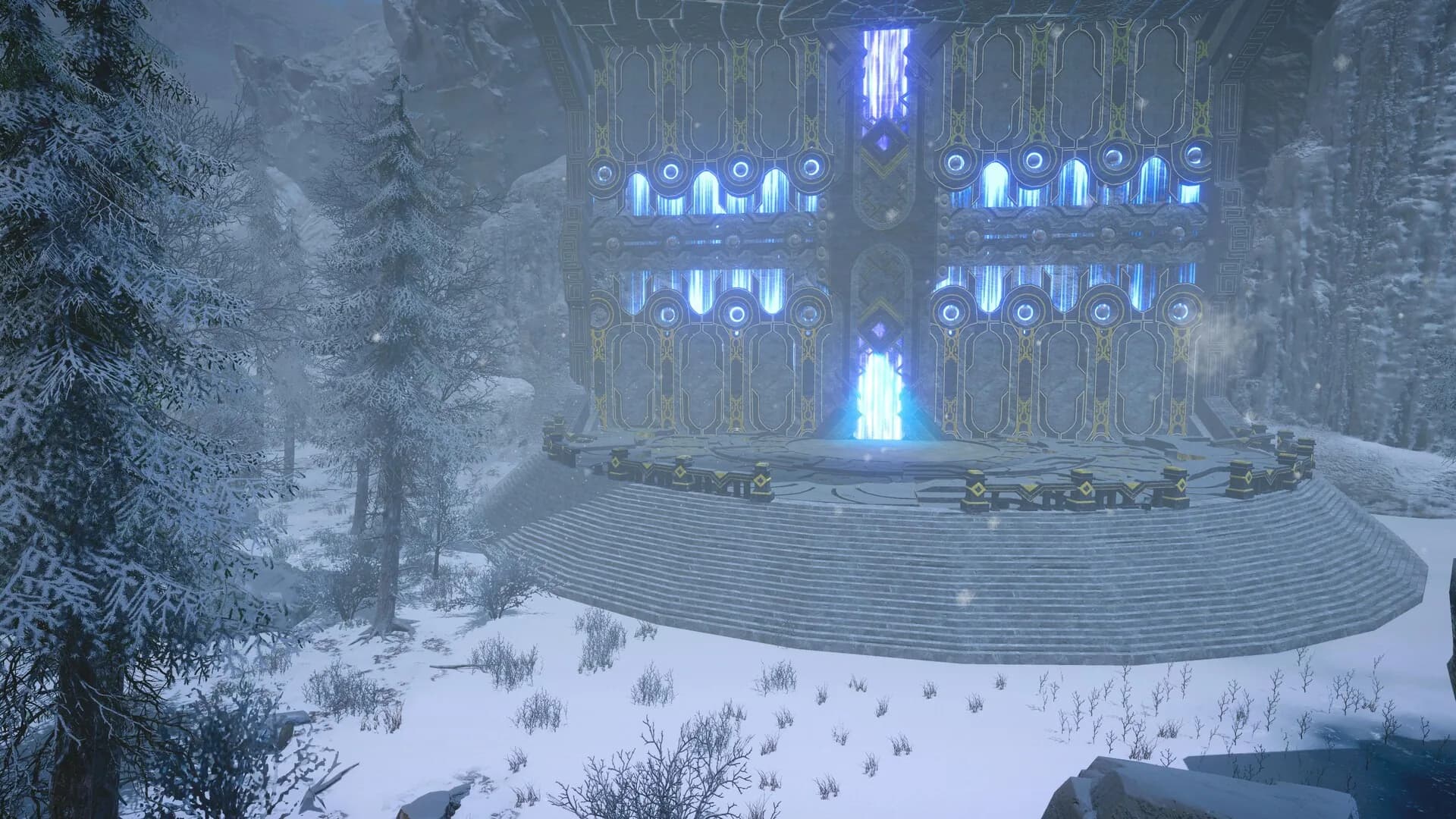
Two players required, no solo, no AI. Puzzles of light, rhythm and platforming inside a cave that keeps changing its rules.
Alexandrosse
InsertCoins.press Score
7.5/10
Verdict
Recommended
There is a moment every couple who play together knows. You are on the other side, the platform is cleared, all is well. And behind you there is someone staring at the gap, backing up, taking another run-up, backing up again. You wait. Ten minutes. You say nothing, because saying something would be the worst decision of your married life.
If you know, you know. And it had been a long time since that happened to me.
The studio Vellichor Games made the most radical decision available: no solo mode, no computer-controlled companion, no shortcut. The game is played by two or not at all. It is a choice that closes the door on part of the audience, but it carries an enormous virtue: when a game is designed for two and only two, puzzles can demand genuine coordination instead of staying solvable by one resourceful person.
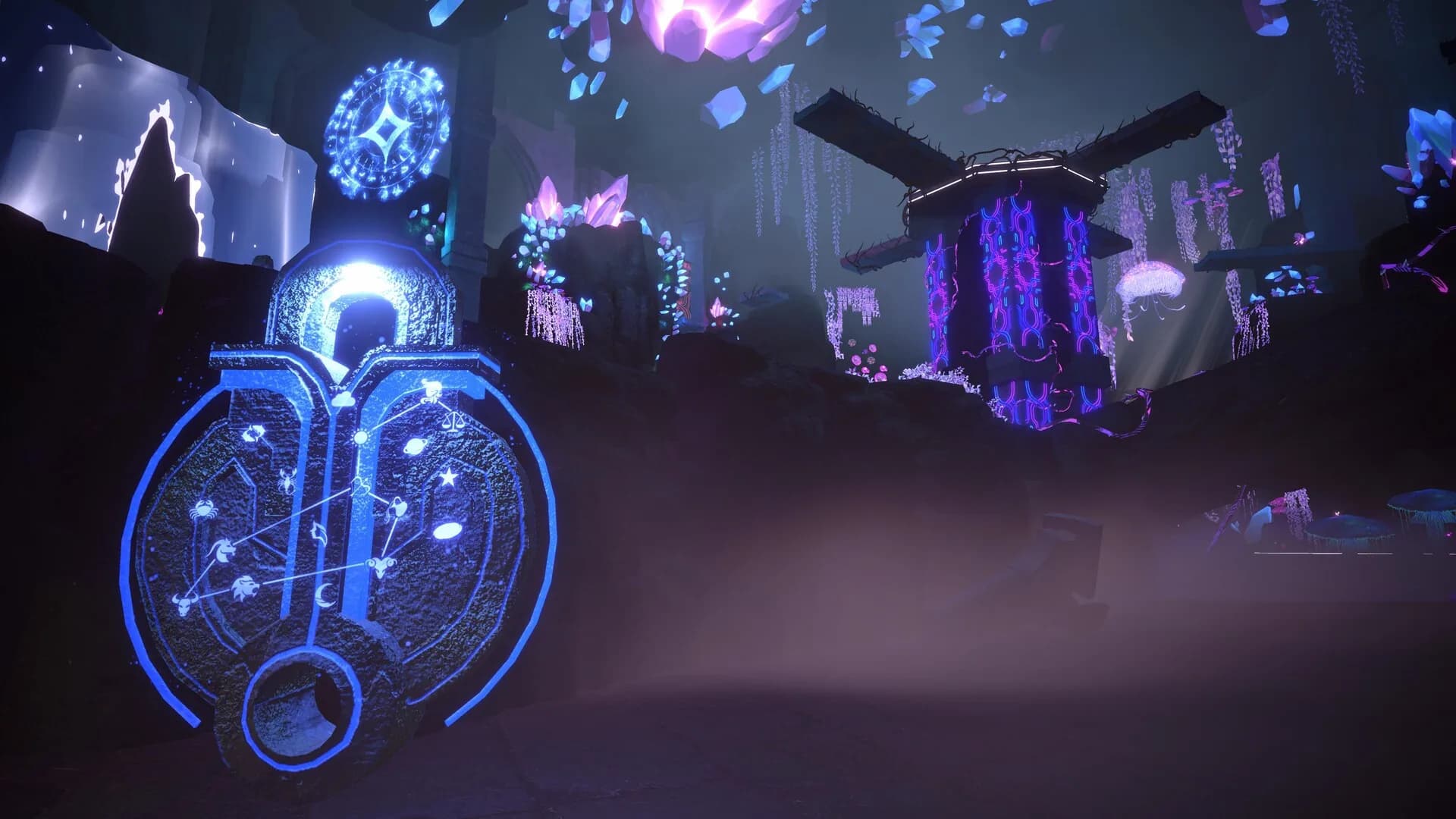
The setting is an ancient cave atop a mountain, which two adventurers explore by descending through four distinct biomes. The good writing idea is that the cave is not a place but a living entity: it transforms, opens and closes paths, and seems aware of your presence.
The game leans on four families of puzzles, which avoids the trap of a single concept stretched across five hours.
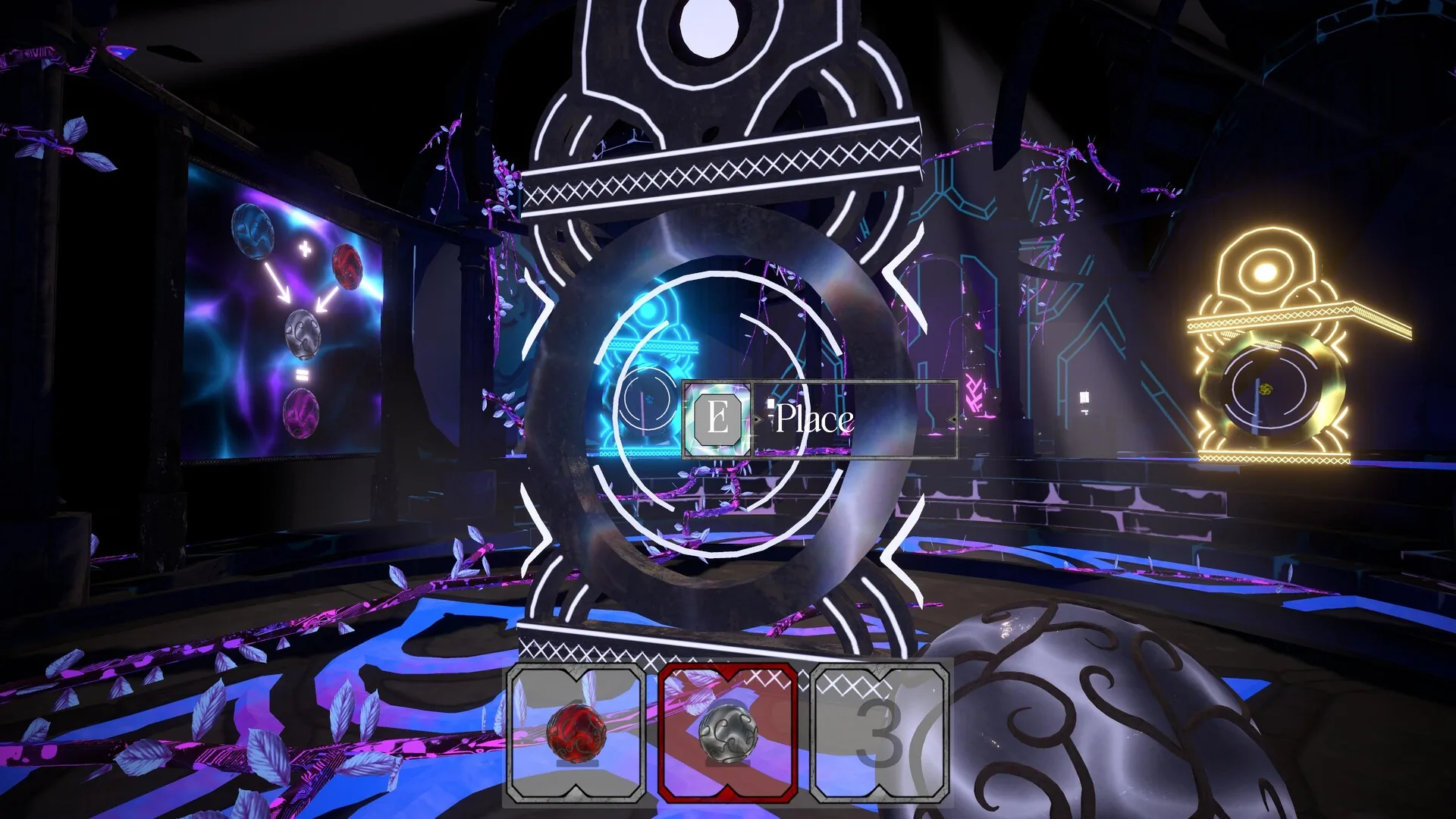
First come the light puzzles, where you bend a beam around obstacles. These demand the most communication, because each player only sees part of the path and has to describe what is in front of them.
Then come the labyrinths and spatial puzzles, where one player advances while the other watches a view of their own. Then the platforming trials, which are exactly the territory of the ten-minute wait mentioned above. And finally the musical and rhythm puzzles, which only resolve if both players land it at the same time. That is the most original category, and the one most likely to produce helpless laughter or friction, depending on the pair.
On top of all this, the cave changes its own rules as you descend. Each biome introduces new mechanics and new hazards precisely when you thought you had worked the place out. The environmental traps, for their part, do not forgive sloppy communication: the game punishes you for not listening.
The two-player constraint is both its strength and its fragility. You need someone, available at the same time as you, and willing to invest in puzzles that demand mutual patience. If your partner drops out, the game stops dead, with no plan B. For a purchase that is a real factor to weigh, far more than for a conventional co-op that falls back on an AI.
The other point concerns the form. A puzzle adventure of this shape finishes and does not really get replayed, since the solutions are known. It is a lovely evening, or two, not a game you install for the year. And as I write, there are no user reviews of the full version, released the same day, the free prologue that served as its shop window having been delisted at launch.
Still, the genre was missing, and this one looks made by people who understood why we play these. It is not to solve puzzles. It is to solve them with someone, and to have something to talk about afterwards. Including the ten minutes in front of the jump.
Your verdict differs from ours? The Discord is the place to make your case.
Community
Your rating
Advertisement
Loading comments...
You might also like
A procedural Anno where haulage is the real game. Every badly assigned freighter takes its revenge forty minutes later.
Towers, troops, a single pool for both. Every coin spent on defence is a coin you will not be sending the other way.

Crossing finally matters and defending responds. Then the screen goes black. 57 per cent positive on Steam, at 69.99 euros.