Preview
Big Dig: digging up artifacts so Mayor Dog can build his highway
A short incremental narrative game where your job is removing the heritage getting in the way of a road project.
Alexandrosse
6 min
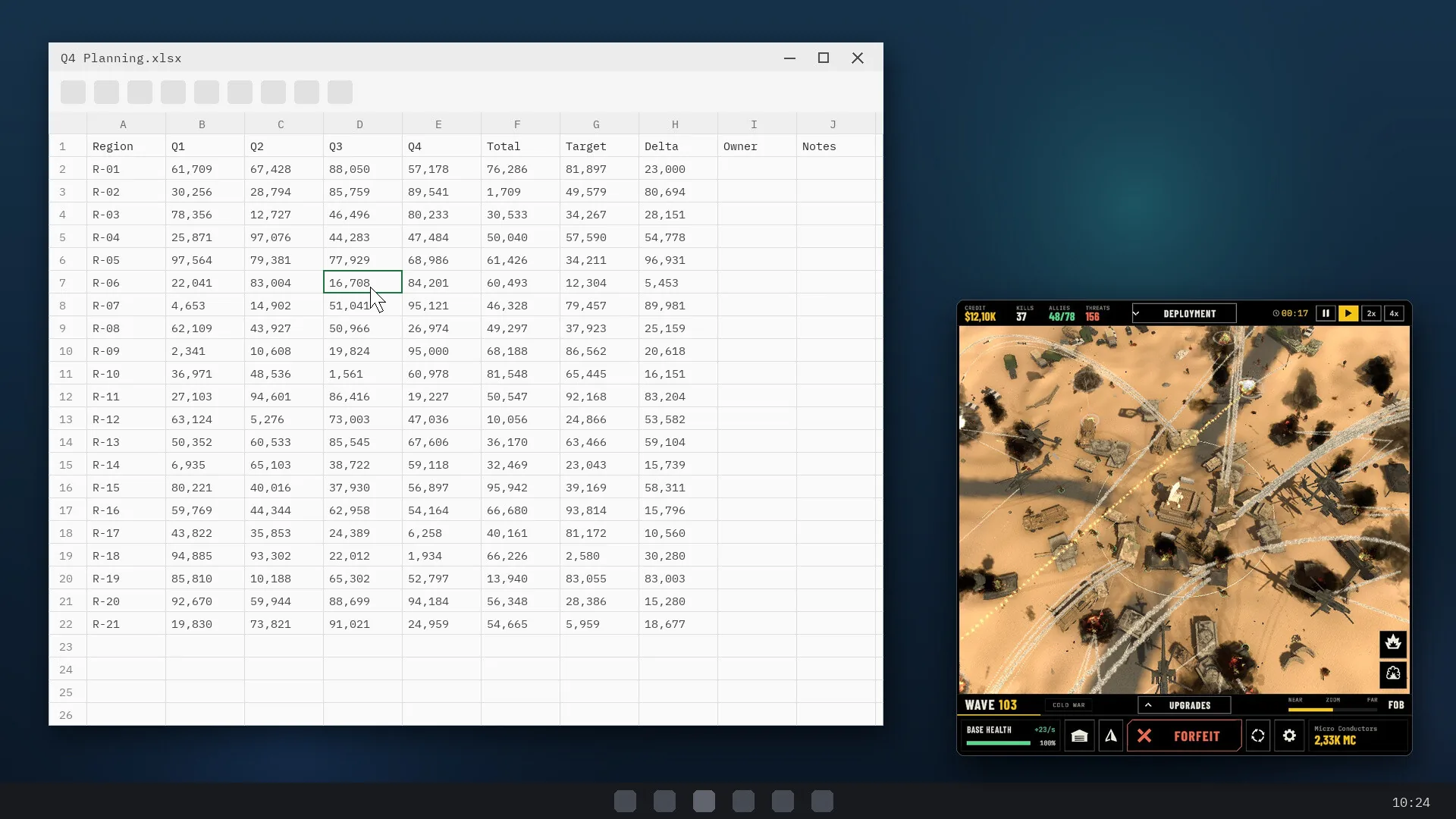
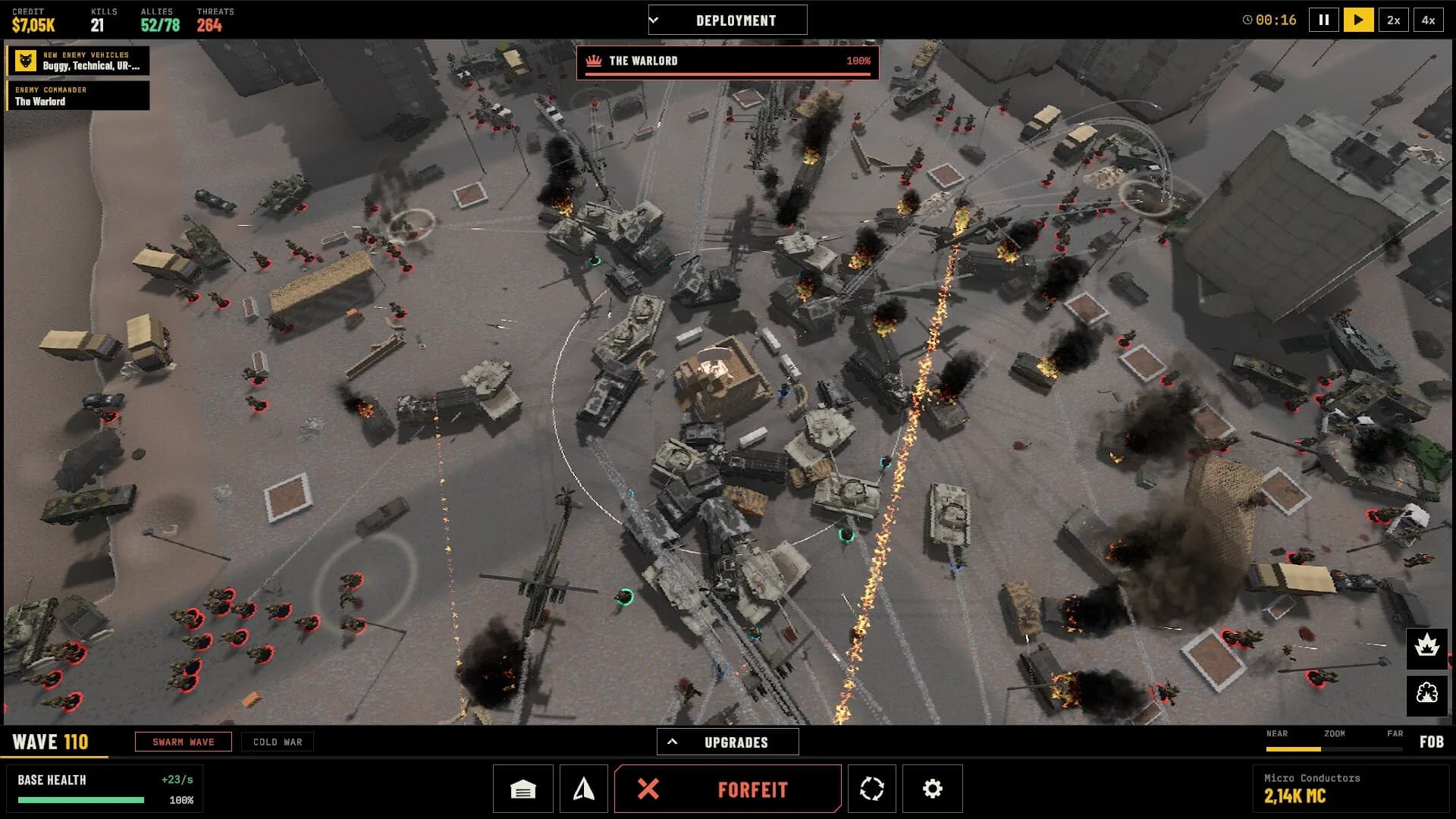
No lanes: enemies close in from 360 degrees. And your army has a cap, so where you deploy matters more than how much.
Alexandrosse
Wartide announces its distinguishing feature in its opening line, and it is unusual.
One war, two sizes.
The game runs as a small always-on-top widget in the corner of your screen while you work, browse or watch. When the swarm arrives, you go full screen and take command.
Same battle, same save, your choice of size.
Out on 21 October. No score today.
This is the third time in a month I have written about a game designed to live in the corner of a screen. There was Deskrawl, then Duelist: Idle Expedition, and now this one.
But Wartide does something the other two do not: it does not ask you to choose between playing and not playing.
Classic idle games run without you and reward you when you return. Here, the same session exists in two formats, and you switch between them according to what the situation demands. The widget is not a degraded version, it is the same battle seen differently.
That is an interface idea rather than a gameplay idea, and I find it far smarter than the background-game fashion.
And here, two design decisions that matter.
No lanes. Enemies close in on you from 360 degrees, wave after wave, with all-out assaults, enemy commanders and night attacks.
In a genre built entirely on the idea of lines to defend, removing the lines changes everything. You are no longer plugging a corridor, you are holding a perimeter, which is a far harder geometric problem.
And your army has a cap. The studio phrases it exactly right: where you deploy and what you field matters more than how much.
That is the sentence that convinced me to give it an article. Most defence games resolve into accumulation: if it does not hold, add more. An army cap turns every unit into a decision.
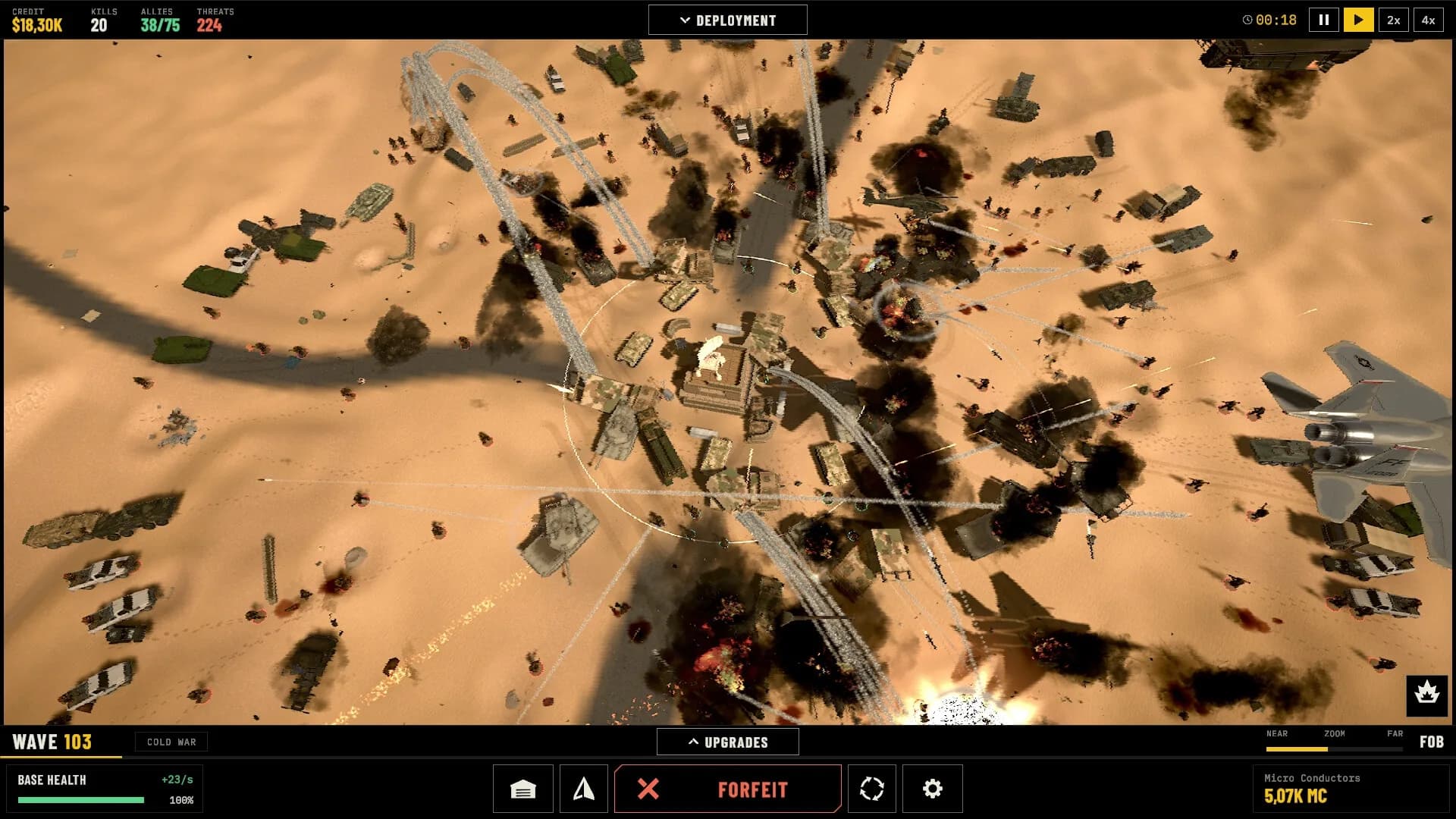
You start with Second World War halftracks and Shermans, then evolve eight vehicle lines: recon, carriers, tanks, tank destroyers, artillery, air defence, helicopters and jets.
Crossing three eras of military hardware in a defence game is a good progression structure, because it changes the nature of the problem rather than its numbers. A helicopter is not a better Sherman.
Readability in widget mode. A 360-degree battle in a small window is a considerable interface challenge. If the widget only tells you that something is happening, the idea loses half its appeal.
Balancing the cap. That is the central mechanic, and it is delicate: too low and the player feels powerless; too high and you fall back into accumulation.
And wave variety. All-out assaults, commanders and night attacks are announced. Three event types is a good start, provided they demand different responses.
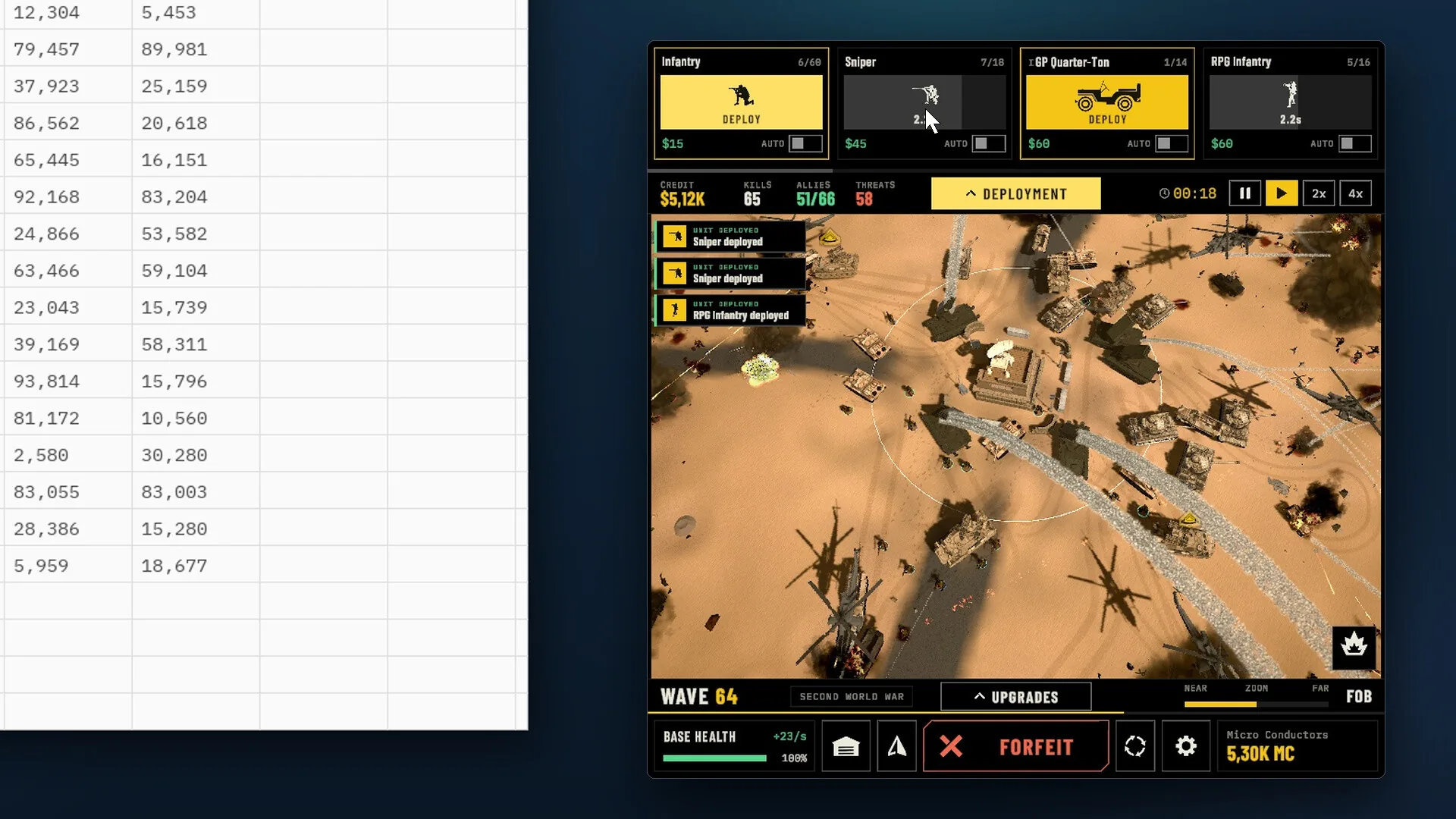
There is something quite accurate in the idea of a war game you can watch out of the corner of your eye and then take hold of when it heats up.
That is exactly how we actually play a lot of strategy games: long stretches of monitoring, and short moments where everything is decided. Wartide simply builds its interface around that truth instead of denying it.
Got a game permanently living in a corner of your screen? The list is growing dangerously on the InsertCoins Discord.
Community
Your rating
Loading comments...
You might also like
A short incremental narrative game where your job is removing the heritage getting in the way of a road project.
An invasion of South Korea, a Price on the run, and a pre-order that unlocks the campaign a week before release.
The first Final Fantasy in HD-2D, with Gilgamesh, a Colosseum, Ultima Weapon, and Visions drawn from the older entries.