8
Test
Car Park Capital: MicroProse is publishing a game about bulldozing neighbourhoods for tarmac
Hired by Big Auto to spread the Freedom of Car Dependency. It is funny, it is mean, and it sits at 96 per cent positive.
Alexandrosse
9 min
A western survival game that plants its settlement on the edge of collapse, with reactive factions and sandstorms that genuinely blind you.
Alexandrosse
InsertCoins.press Score
6.5/10
Verdict
Mixed
Survival crafting has become a genre where you recognise everything before pressing a key. A hunger bar, a tree to chop, a workbench, and the promise that eventually you will have a house.
Western Rye does not change the grammar. What it changes is where the language is spoken, and that matters more than you would think.
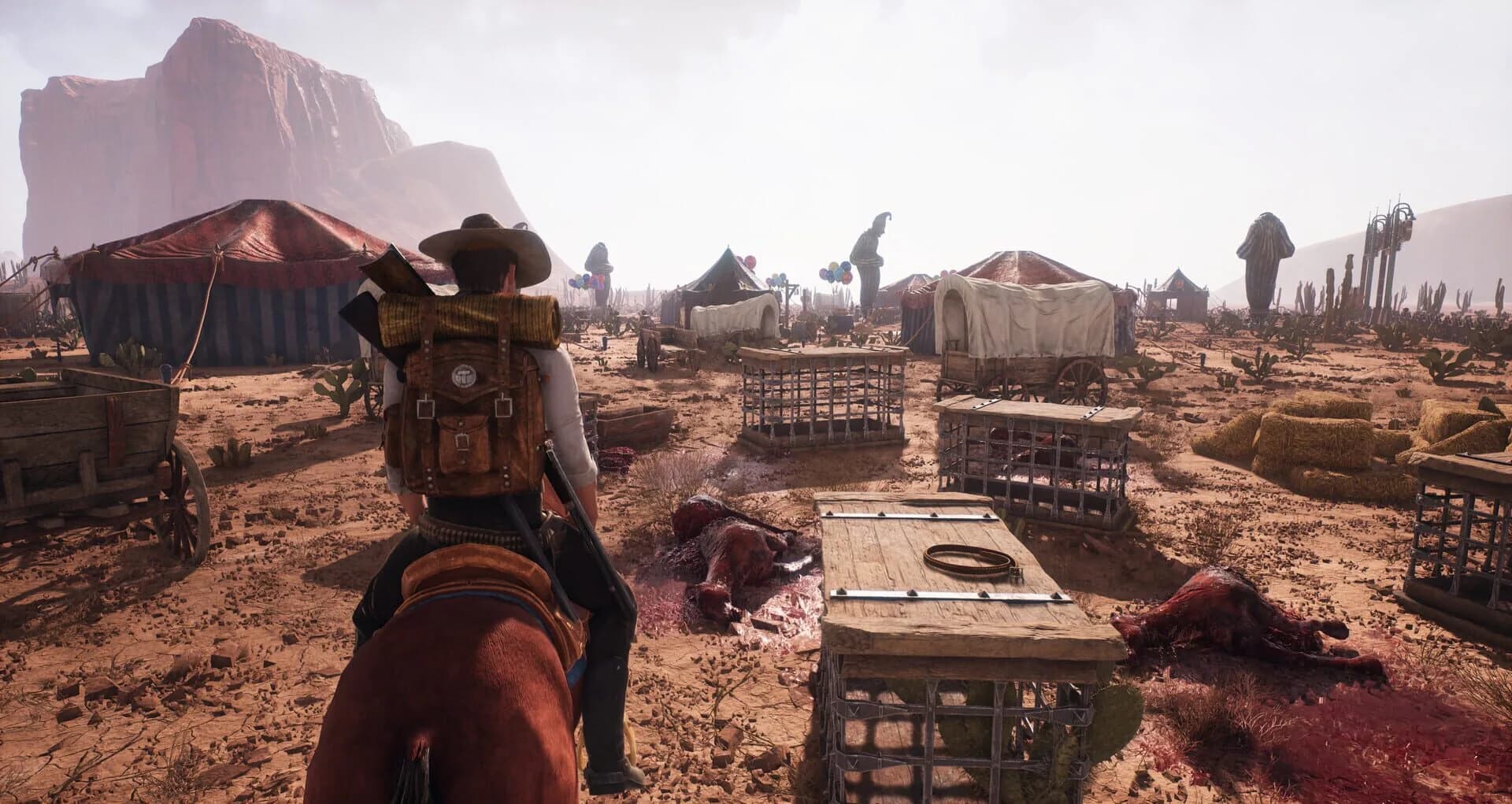
Monument Valley. Red buttes, dust, light striking at an angle late in the day. It is a frame we have seen a thousand times in cinema and almost never in a survival game, where you are usually condemned to temperate forest and its interchangeable pines.
The context is smarter than average too. This is not a generic apocalypse: the region is recovering from an epidemic called Rye Fever, and the settlement you arrive at is barely standing. That places the player in a world that has already had its tragedy, which is more interesting than a world that never had one.
The climate takes part. Sandstorms genuinely blind you, storms change the ground, and there are real moments when you decide not to go out.
The loop is the genre's, executed thoroughly.
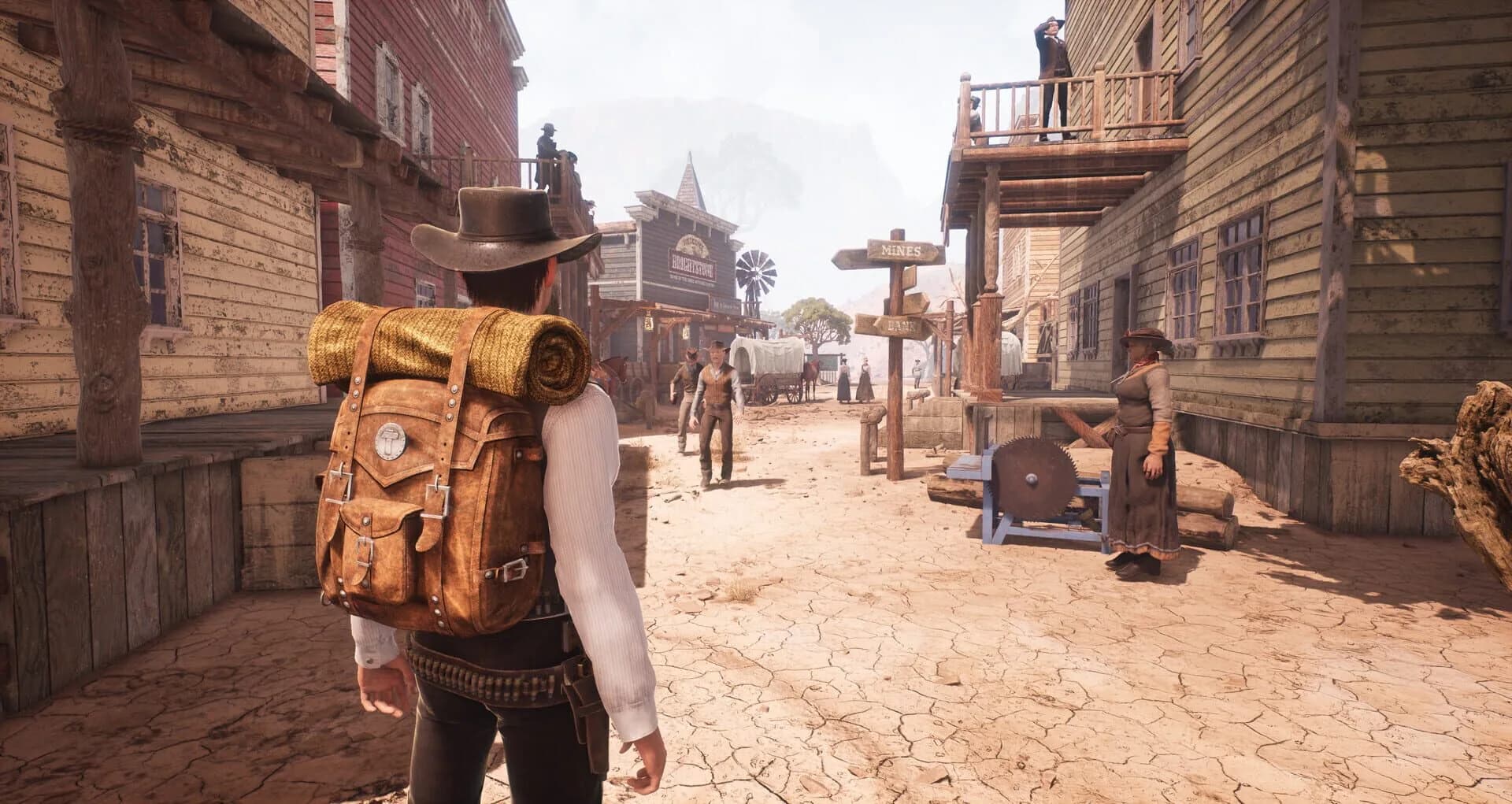
You build. Not a menu of prefabricated structures: foundations, walls, roofs, doors, piece by piece. The studio stresses this and it is right, because it is what separates a house you live in from a house you place.
You farm. Corn, wheat, beans, barley. You need a well before thirst gets involved, which is not a detail in a desert.
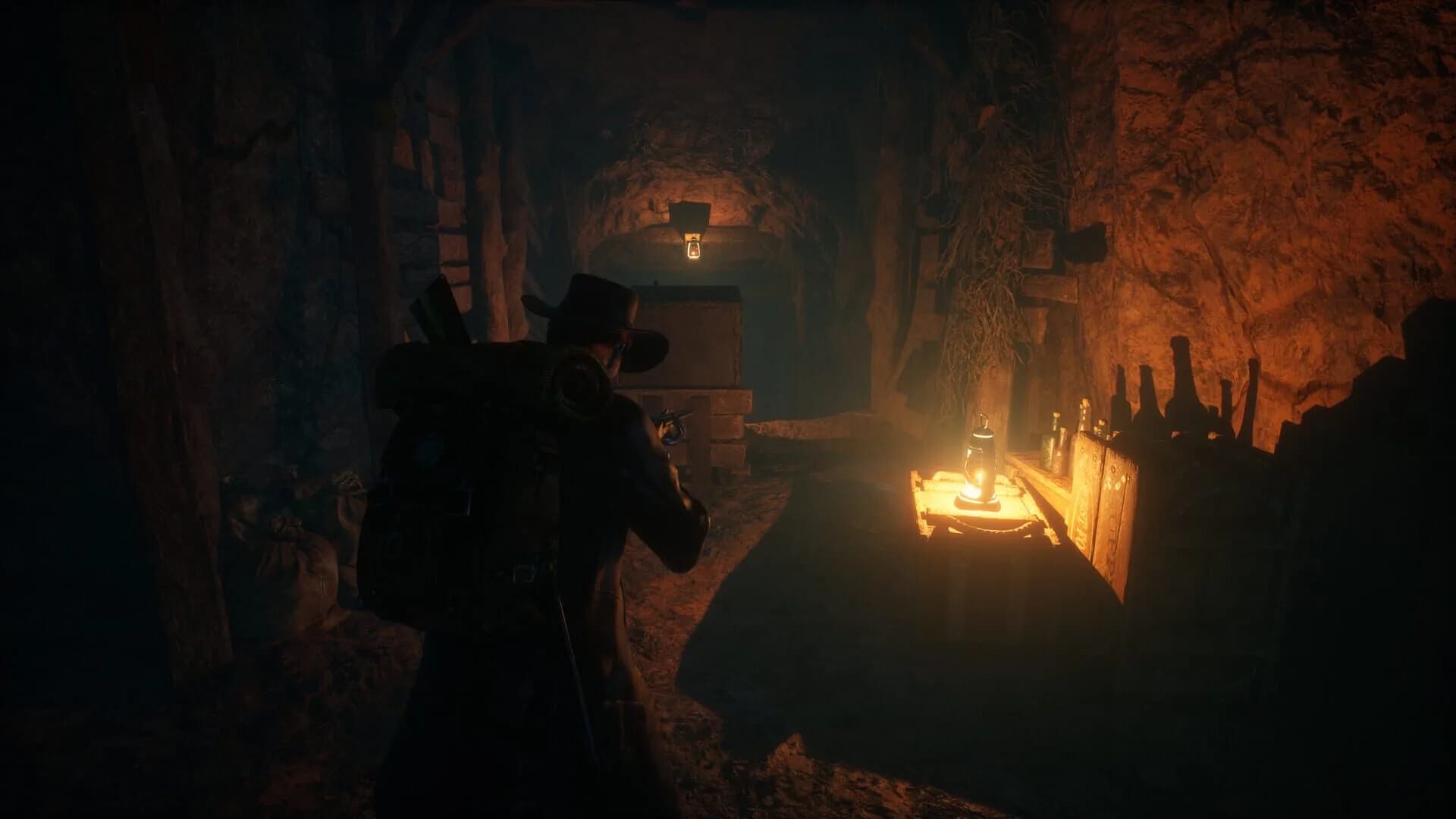
You extract and refine. Wood, herbs, cactus, raw ore to smelt into ingots. You raise your smelter, forge your weapons, repair your gear. The full chain is there, from stone to rifle.
And you negotiate. This is the part that interests me most: factions react dynamically to what you do. You trade with locals, you choose your alliances, and the advertised trajectory runs from desperate outlaw to local legend.
Let us be straight about two things.
It is early access, and the genre is saturated. There are dozens of games offering exactly this list of verbs. The difference will come down to the depth of the faction system, because it is the only element not already present elsewhere. If reacting dynamically means a reputation gauge that rises when you sell and falls when you steal, that will not be enough. If it means groups that remember, that move, and that close doors on you, then the game has something.
And a survival game's pacing is judged over time. The first three hours of a game like this are almost always good, because everything is new and every resource counts. The question is what remains once the cabin is finished, the well dug and the smelter lit.
The game launches today, made by Nixalon Studios.
Six and a half.
In its favour: a setting nobody else in this genre owns, weather with real consequences rather than surface effect, construction by the piece rather than from a catalogue, and a full production chain from ore to weapon.
Holding it back: early access in a genre where competition is ferocious, and a faction system that is its best argument without anyone yet being able to measure its depth.
For anyone dreaming of a cabin at the foot of a red butte, this is a good place to put your things down. For everyone else, better to wait and see what the factions deliver in six months.
Do you build first or explore first? Come and talk about it on the InsertCoins Discord.
Community
Your rating
Advertisement
Loading comments...
You might also like
Hired by Big Auto to spread the Freedom of Car Dependency. It is funny, it is mean, and it sits at 96 per cent positive.
You get a form and a description. Go find the item. In a warehouse you organised yourself.
A frozen world that refuses survival cliches. But in co-op, one player can do the whole questline while the others sleep.