7
Test
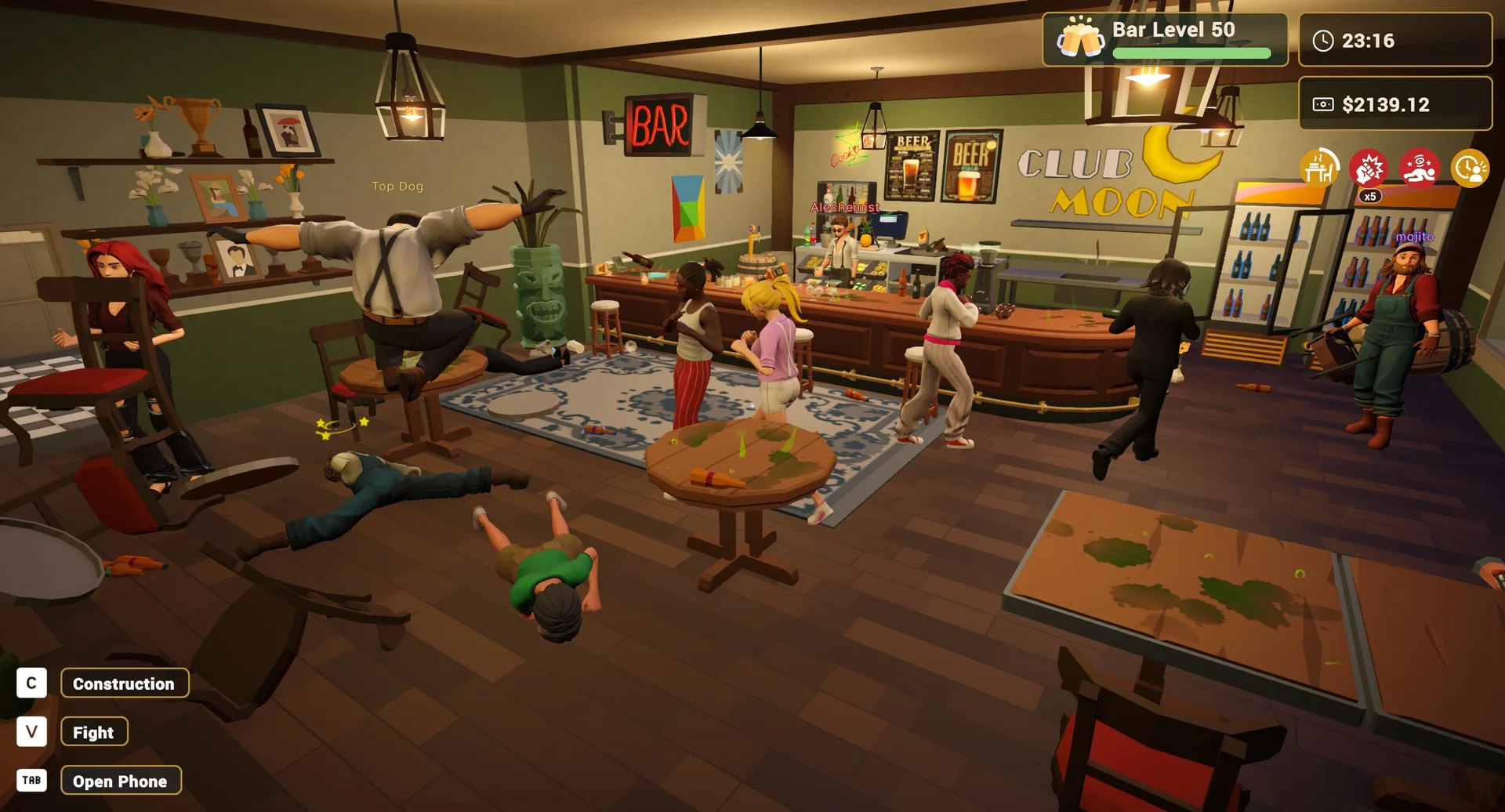
Barfender: my idiotic friend drank all the beers
A co-op bar that collapses while you serve. 98 per cent positive, and one of the rare times chaos is the actual subject.
Alexandrosse
7 min
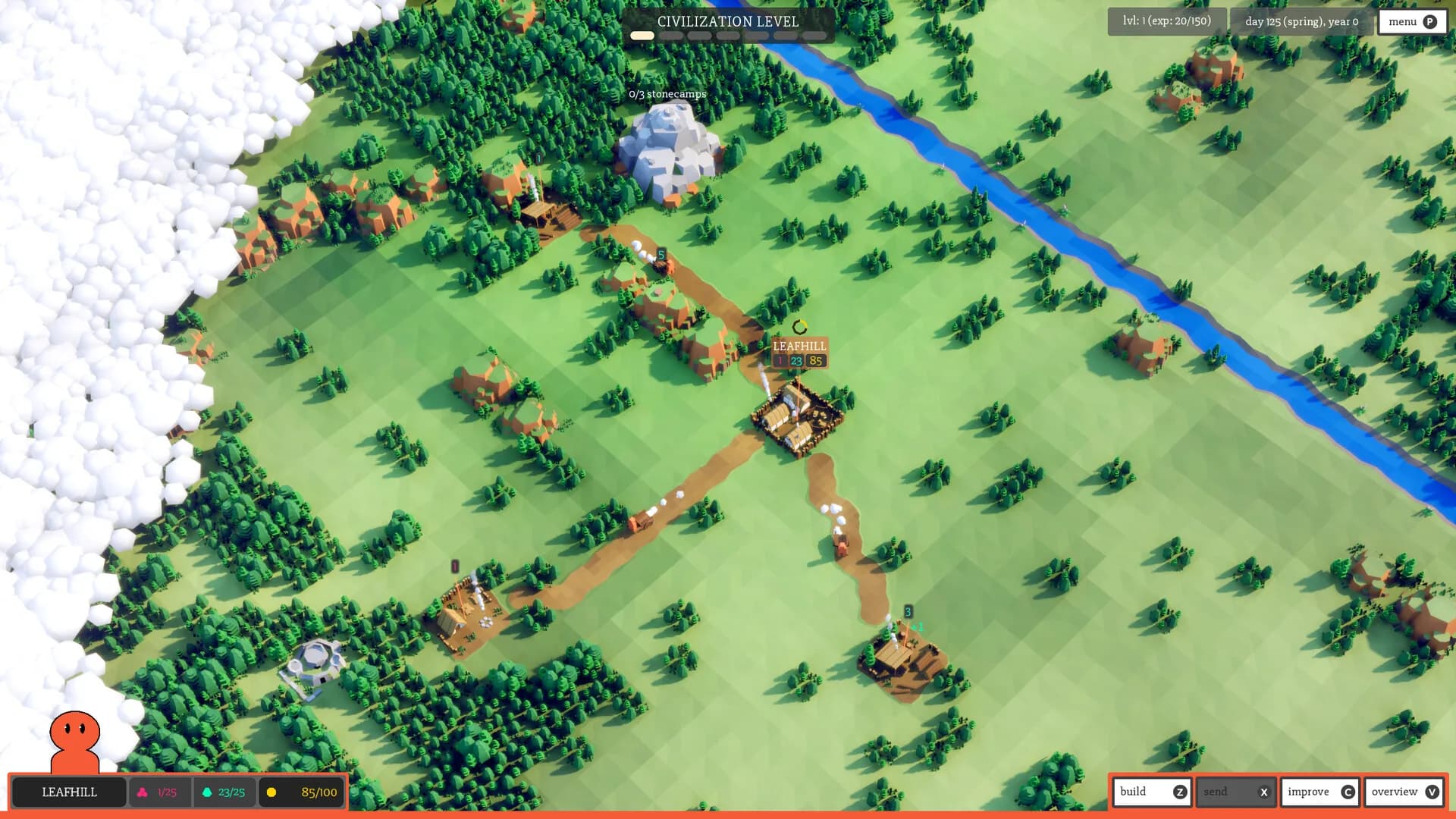
A cosy city builder where the temple consumes what you deliver. Beware the reviews you read elsewhere, they describe an outdated demo.
Alexandrosse
InsertCoins.press Score
7.5/10
Verdict
Recommended
A cosy city builder comes out every week. Same pastel palette, same busy little people, same promise never to hurry you. Most are forgotten in an evening.
This one has two ideas that lift it out of the pile, and both come down to the same thing: in A Little Age, distance costs something.
Start here, because it will save you from a mistake.
The game launches today. But its demo has been circulating since April, it was played by more than two thousand people during June's Next Fest, and several reviews published online cover those versions.
Meanwhile the developer, a solo creator going by Benerot, spent the summer fixing precisely what people complained about. The detail in a moment, but hold on to the principle: if you read an article criticising this game's zoom, its key bindings or its total absence of danger, you are reading a description of a version that no longer exists.
Three resources, not one more: food, materials, gold.
You start with a hamlet on a generated map hidden under fog. Buildings go on fixed spots. Woodcutters and stone camps produce materials, farms and forest lodges produce food. Everything is colour-coded, so you read your economy at a glance.
The village sells its output for gold, and that gold pays for what comes next.
So far, nothing warranting a review. What warrants one arrives now.
Workers do not teleport their haul. They leave the building, cross the terrain, and physically carry their load back to the village.
The consequence is immediate and it structures the whole run. A building near the centre pays quickly. A building at the edge of the map pays just as much, but more slowly, because you are waiting on little legs.
Which means placement stops being decorative. The question is no longer "where is the resource" but "what will the journey to it cost me". A distant, generous deposit can be less profitable than a mediocre one nearby, and you have to know when to walk away.
It is the same lesson the great logistics games teach, served here without a spreadsheet and without a manual. You grasp it by watching somebody walk.
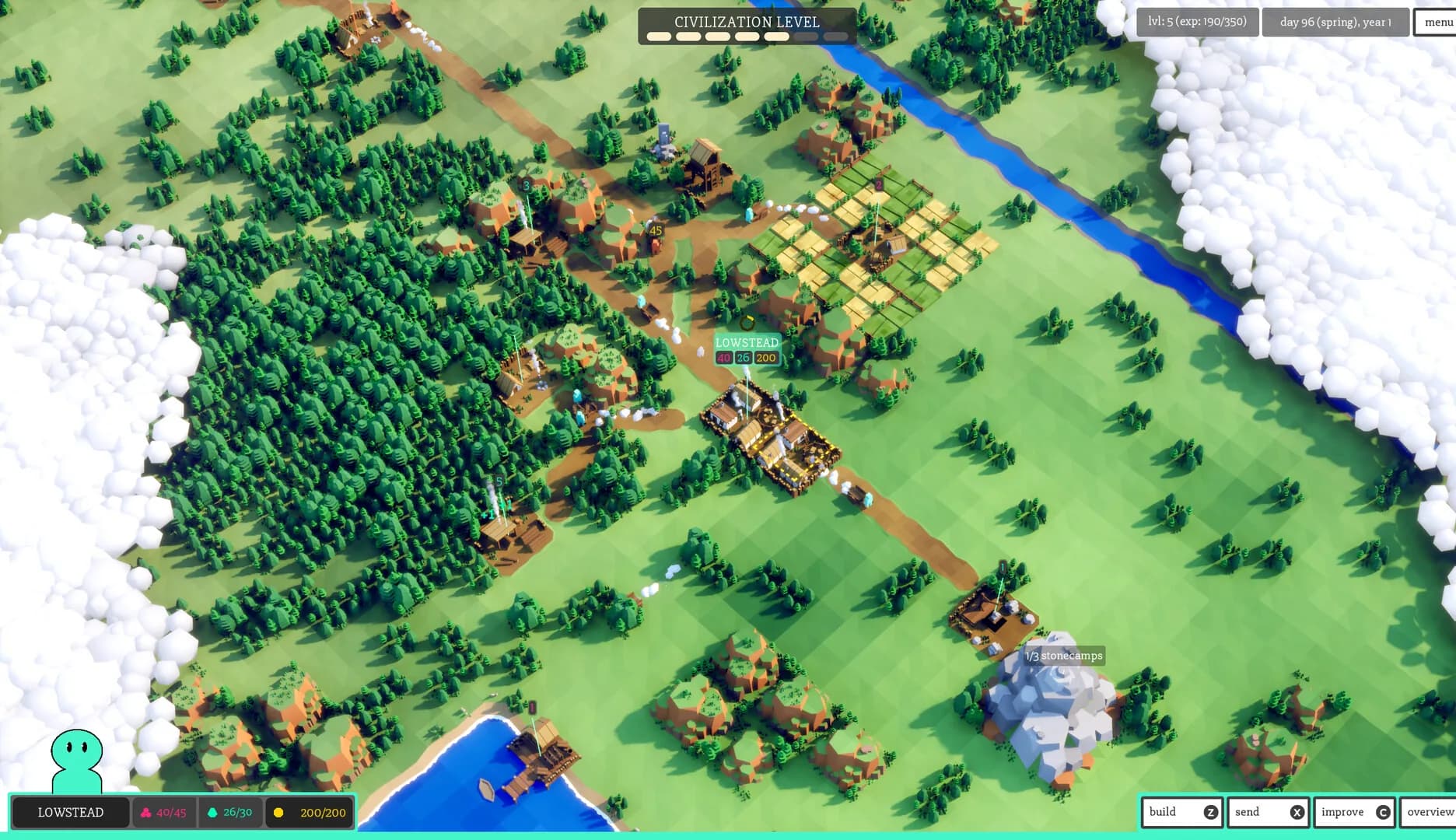
And since the July update there is better: the inhabitants create roads where they travel. Paths are not drawn by hand, they appear through use. Your map ends up narrating your own decisions, which is one of the prettiest ideas I have seen in this genre all year.
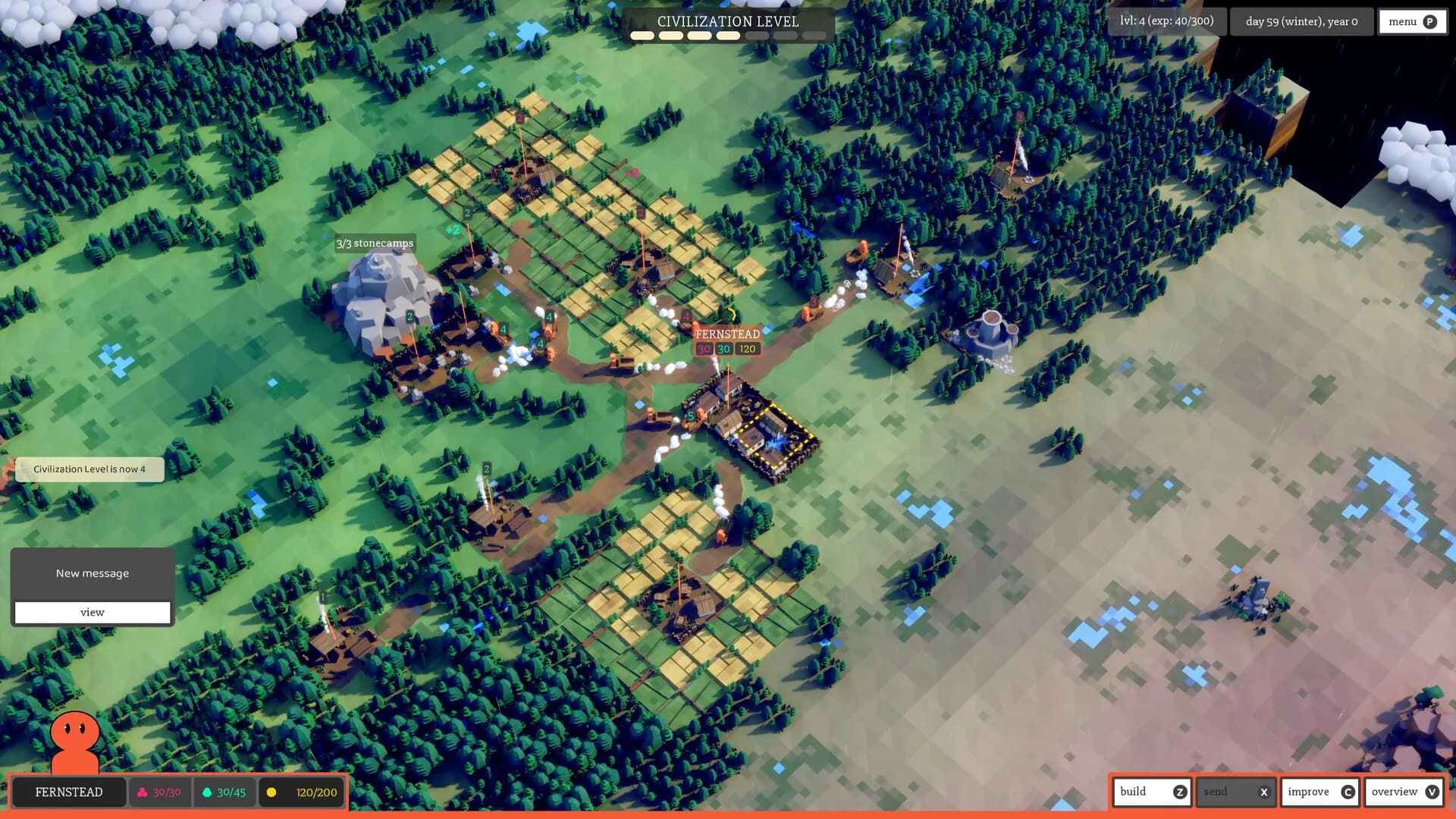
When you grow a village, the game offers three orientations. Two favour a specific resource, the third spreads production across all three.
That choice deserves to be taken seriously, because it depends entirely on the terrain. Orienting a village towards materials when it sits in the middle of plains means spending the rest of the run patching that hole. Procedural generation guarantees the right answer changes with every map.
Then you found new villages and start again. Each has its own local economy, and the studio stresses an important point: not every location is viable alone. Some settlements only work connected to the network.
Hence the delivery workers you hire to move resources between villages, prop up a new settlement, or keep afloat somewhere established in poor conditions. Solidarity between towns is not a theme, it is a mechanic.
Around that, exploration pushes back the fog, and ancient ruins grant bonuses when you build on them.
Here is the second strong idea, and it is what stops the game falling asleep.
All this activity earns experience. At a certain level, a temple appears at the centre of the map and becomes the objective. You have to route enough resources to finish it, and caravans handle the haul.
The detail that makes it work: the temple slowly consumes what you deliver. Sending is not enough, you have to send faster than it dissipates.
That installs a race beneath a perfectly calm surface. Nothing threatens you, nobody attacks, and yet a counter is falling while you think. That is exactly what most cosy games lack, confusing an absence of pressure with an absence of stakes.
And since April the loop has been tightened: weather events were reworked to harden as the temple progresses, rather than being a fixed hazard. The closer you get, the more the climate complicates matters.
Let us run through the complaints in circulation, and what survives them.
The tight zoom, which prevented planning a multi-village empire. Mouse-wheel zoom was added in June, and the developer notes it was the number one player request.
Uncomfortable bindings. The July update added keyboard layout selection, supporting QWERTY, QWERTZ and AZERTY. For once a solo developer thought about French keyboards before launch, so it deserves flagging.
No control over pace, when you are simply waiting for caravans to finish the job. An active pause on the space bar arrived in July. There is still no fast-forward, and that is the gap that remains.
A tutorial that could break when generated terrain placed the starting zone badly. Fixed back in April, with a patch explicitly devoted to the starting area not sitting close enough to a mountain.
And the absence of any danger, which flattened runs once you found the pattern. July added road bandits and guard towers. The game stays gentle, but it is no longer inert.
That is a lesson in follow-through. One developer, a public demo, feedback taken at its word, and five complaints out of six addressed before release.
I am not going to whitewash everything.
Fast-forward is still missing. Active pause helps you plan, it does not solve the moments spent watching a gauge climb. In a game whose second half consists of waiting for the system to work, two extra speeds would not be a luxury.
And the repetition risk is real. Once you hold a build order that works, procedural generation changes the scenery but not necessarily the method. The bandits and escalating weather point the right way, whether they suffice over time remains to be seen.
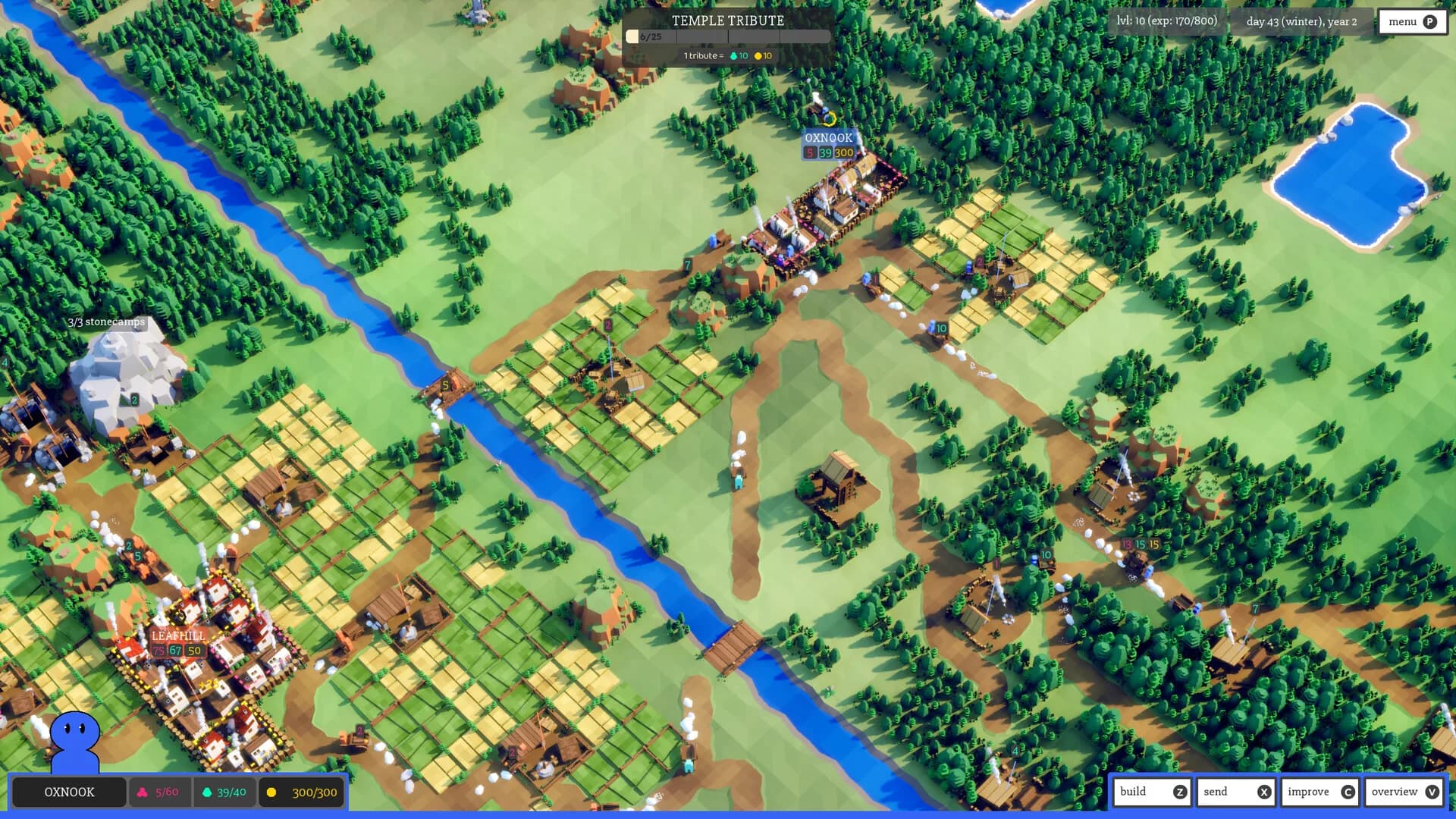
The best moment in my runs was not a decision, it came afterwards.
When production finally outpaced what the temple was consuming, there was nothing left to do. I let go of the mouse and watched. Farmers, builders, traders going about their business. Caravans winding towards the centre of the map. Paths nobody had drawn, appearing simply because people had walked there.
That is an unusual reward. Most management games congratulate you with a victory screen. This one gives you a few quiet minutes to notice the machine running without you.
There are no fishing boats on the lakes. That is not a complaint, it is an order.
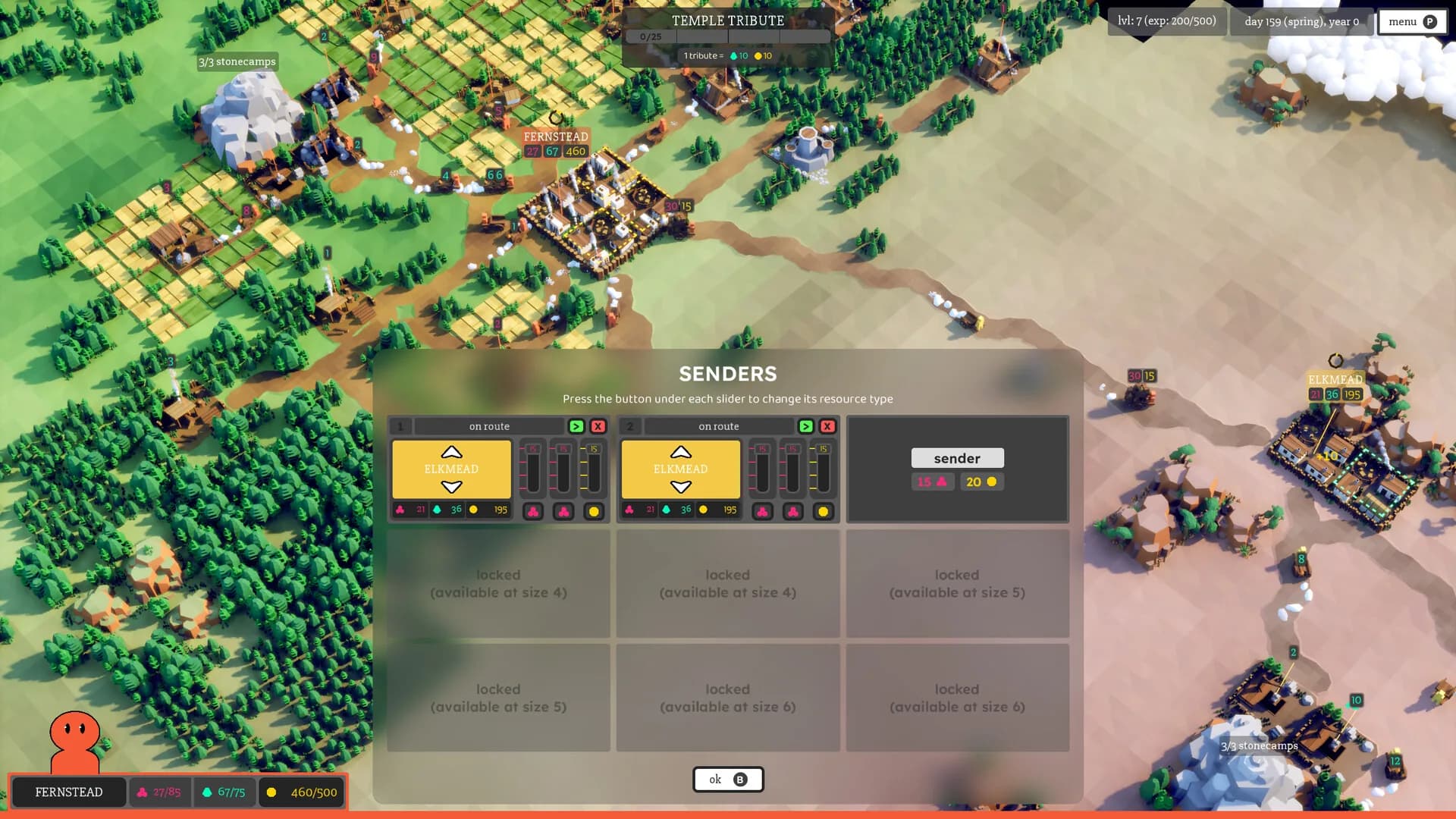
What do you orient your first village towards? Come and argue about it on the InsertCoins Discord.
Community
Your rating
Advertisement
Loading comments...
You might also like
A co-op bar that collapses while you serve. 98 per cent positive, and one of the rare times chaos is the actual subject.
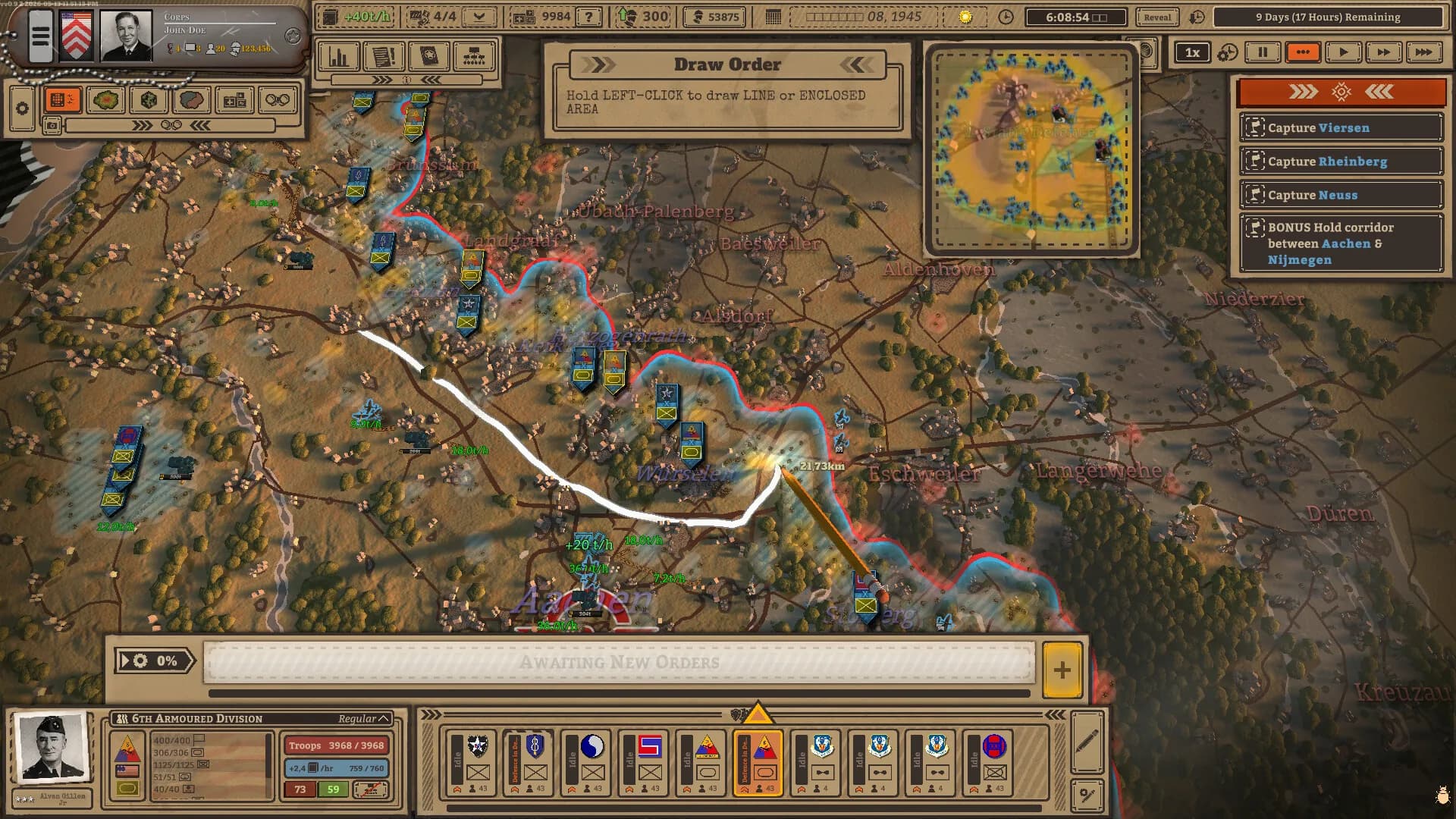
You draw a plan on the map and officers execute it alone. Except the game crashes every other planning phase.
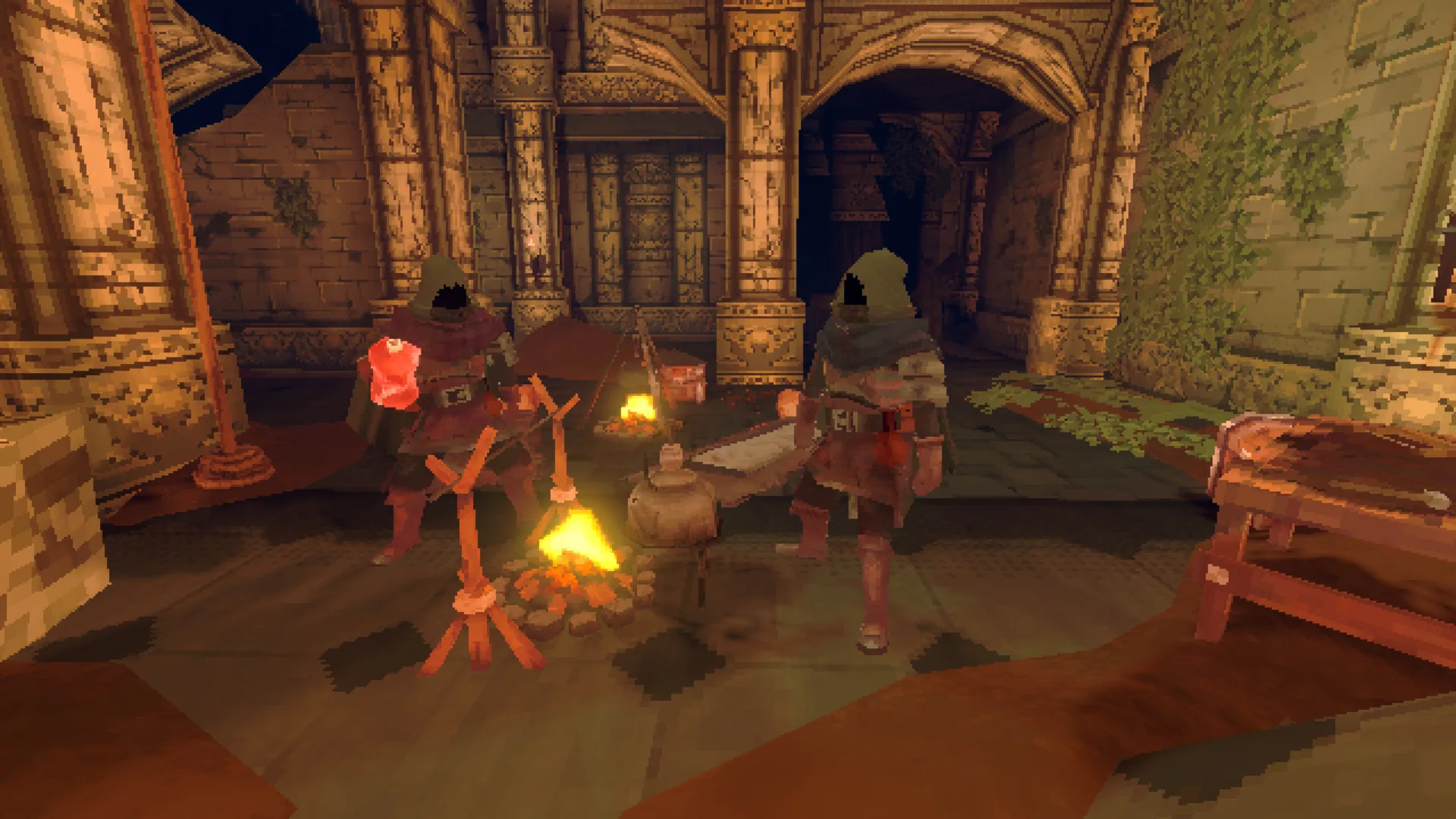
The Knights of Pen & Paper team return with a dungeon where you come back to camp, cook, and unlock recipes that change your stats.