Preview
Ace Combat 8: seven years of waiting and, for the first time, an online lobby
Thirty years of the series, seven without a numbered entry, and an air base where you meet other pilots as an avatar before taking off.
Alexandrosse
7 min
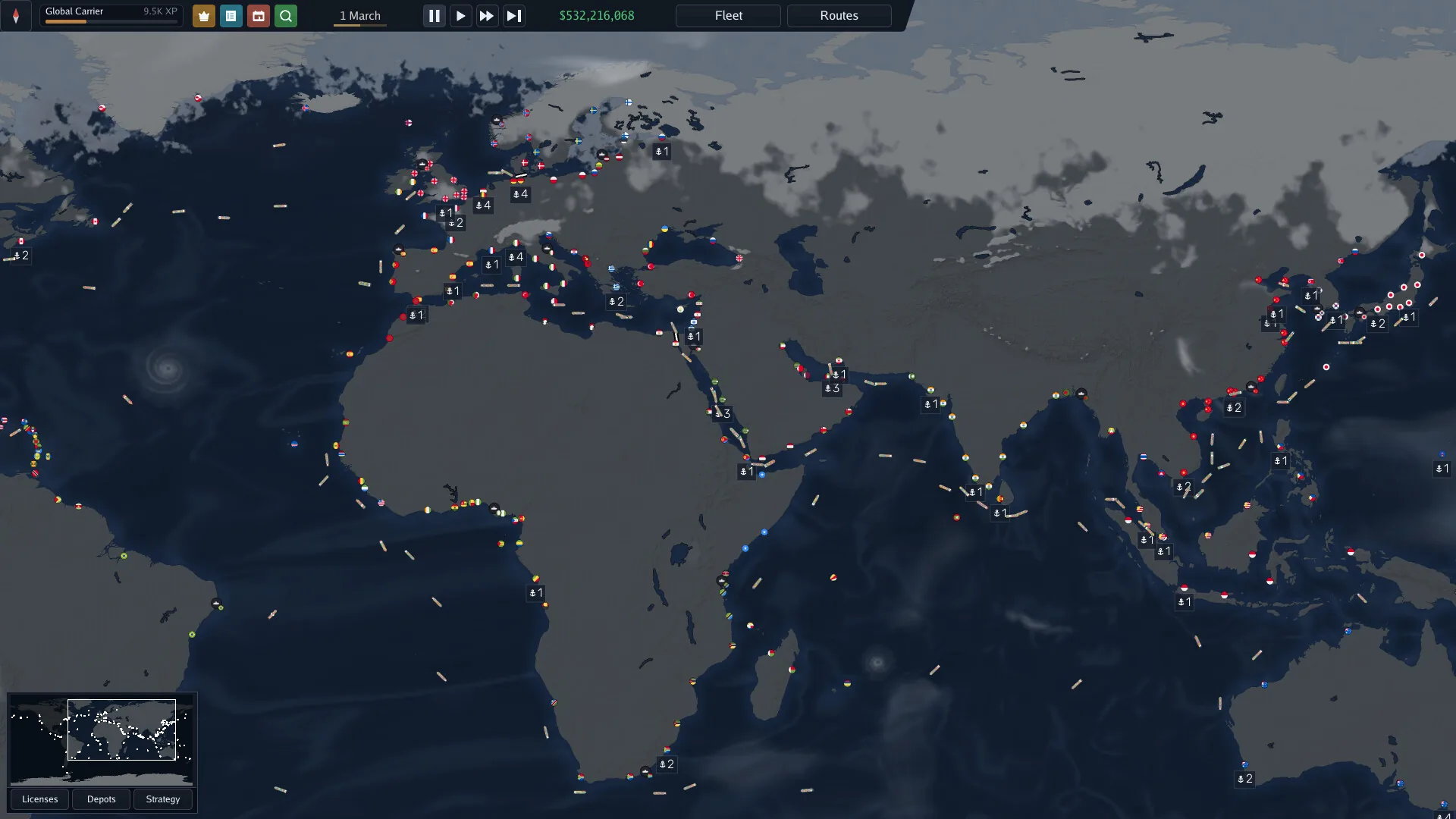
A global maritime logistics simulator, with real ports, automated routing rules, and 162 shipping licences to collect.
Alexandrosse
There is a line on Bering Tonnage's Steam page that made me put my coffee down.
The developer explains that you need to acquire 162 shipping licences to operate in every country, and then adds a warning in their own name:
"This will take thousands of hours."
That is not a content promise, it is a sign on the door. And I have to admit it is exactly what made me want to go in.
The game is out tomorrow. No score, then, but there is plenty to talk about.
A single-player maritime logistics simulator. You start a shipping company in one region of the world and grow it into a global operation.
The advertised numbers are precise to the point of being worrying.
295 ports, all built from real-world data. 86,730 possible routes. 16 shipyards to order new builds from, spread around the world. 148 ship variants across 29 manufacturers. And the 162 licences already mentioned.
You load in Miami, pass through the Panama Canal, deliver on the West Coast. Or you leave Rotterdam, cross Suez, arrive in Shanghai. Or you keep it modest and run back and forth between Helsinki and Sweden.
Because the real mechanic is not the voyage, it is the network.
Two systems build it, and they are what convinced me to keep an eye on this.
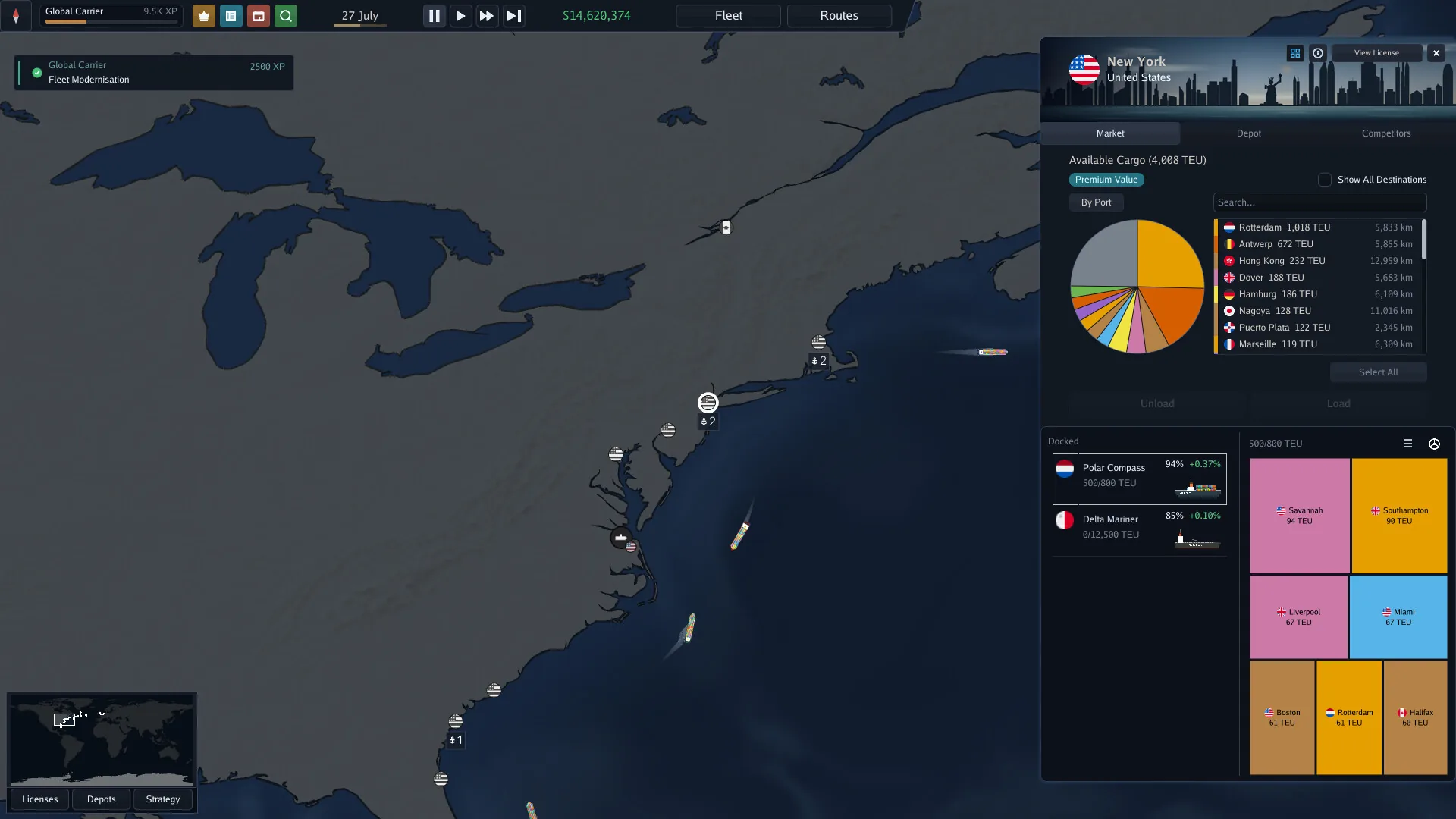
Depots. They let a port become a node in a wider network rather than an isolated pickup point. You store cargo there, collect it later, and use feeder services to move freight from smaller ports onto bigger routes.
If you have played a logistics game, you immediately know what that unlocks: you stop depending on the right port having the right cargo at the right moment. You build a buffer. And the buffer is the moment a transport game becomes a management game.
Automated routing rules. The developer puts it with a frankness I appreciate: once you have built a network funnelling all Australian cargo to Singapore, or all Caribbean cargo to Miami, you cannot run that by hand any more. The rule system exists so you can build the network of your dreams without lifting a finger.
In other words: the game hands you automation as a reward, not as paid convenience. That is the genre's common sense, and it is far too rare.
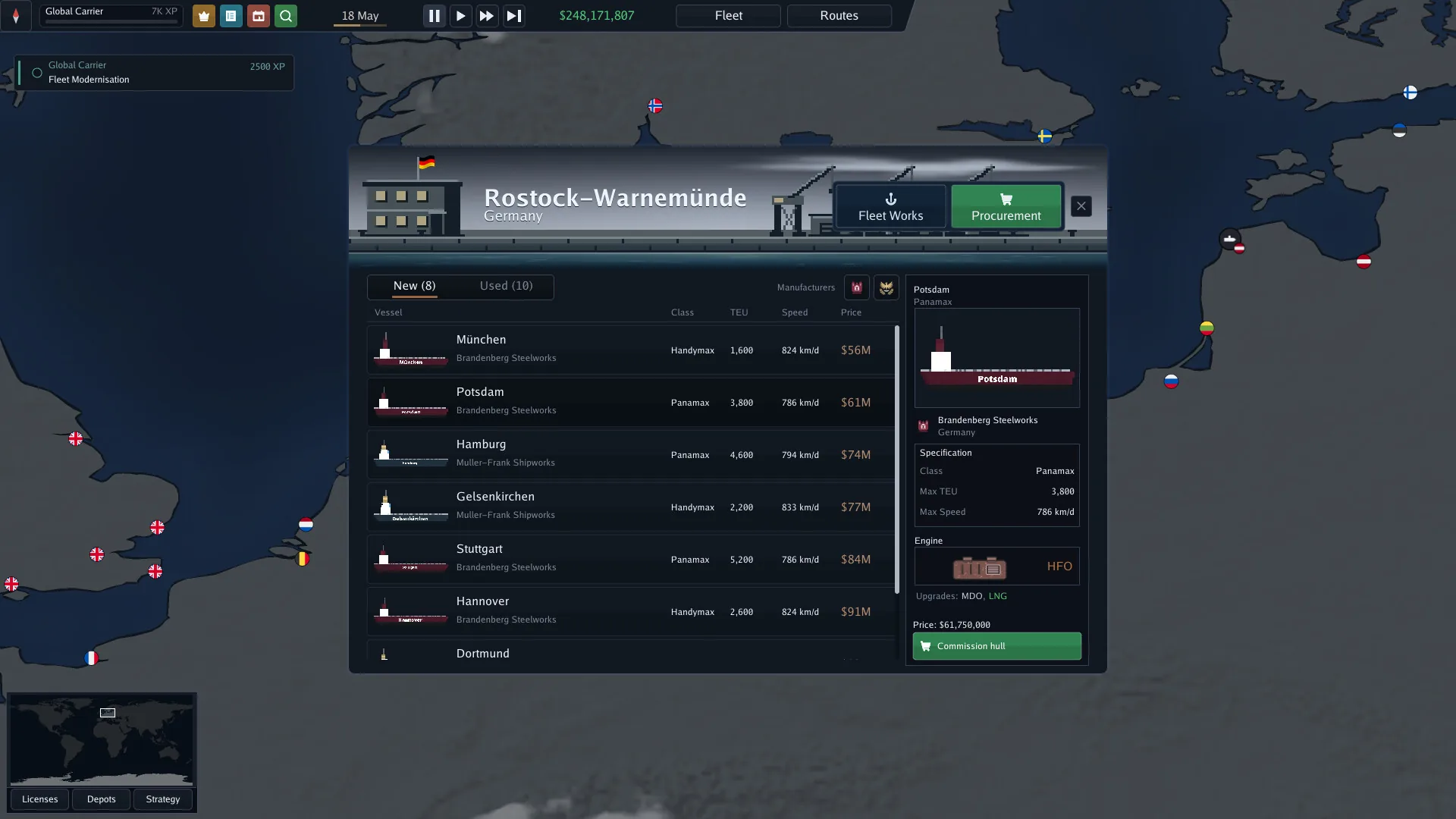
You start with two or three shipping licences for the countries you operate in. To expand, you have to build your brand's reputation and register your flags in the right places.
That is clever, because it turns the world map into a skill tree. You are not unlocking an ability, you are unlocking a country. And since every country brings ports, cargo and routes, every unlock reconfigures your network rather than adding a number.
You also customise your ship liveries to build a company identity. A cosmetic detail, but in a game where you will be looking at your fleet for hundreds of hours, not a useless one.
It is single-player. No multiplayer, so no living competitive market. In an economy game, the absence of other human actors means the difficulty comes entirely from the simulation, and a simulation that is too generous becomes a spreadsheet you always win.
The advertised numbers say nothing about depth. 295 ports is impressive, but the question is whether two different ports produce two different decisions. A logistics game is judged on the moment you hesitate, not on the size of the map.
And the interface will be the critical point. Running dozens of routes, depots, feeder services and automation rules demands overviews, filters and alerts that work. This is invariably where projects like this are decided, and invariably where they fail.
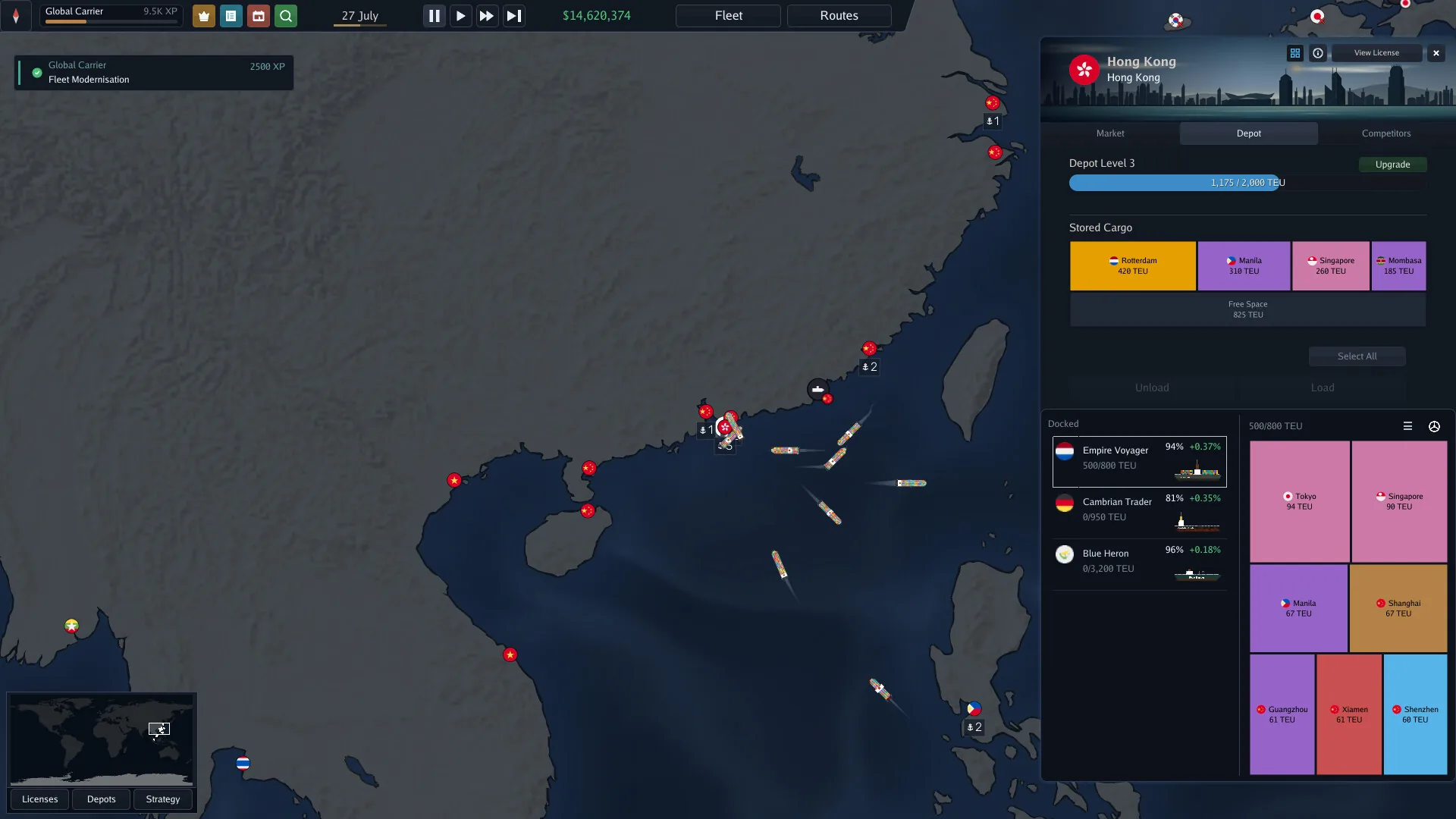
I will not pretend to neutrality. A game that offers me a world map and asks whether Caribbean freight should route via Miami or straight to Europe is a game aiming directly at my weak spot. I have already lost weeks to railway layouts and production chains.
What I will be watching tomorrow is not the port count. It is whether, fifteen hours in, I am still making a difficult decision or merely watching ships make money.
Got a weakness for logistics games? Come and confess it on the InsertCoins Discord, the support group is open.
Community
Your rating
Loading comments...
You might also like
Thirty years of the series, seven without a numbered entry, and an air base where you meet other pilots as an avatar before taking off.

Weigh-ins, meal planning, a day job between fights, accumulating injuries and a bareknuckle circuit. Halfbrick is not joking at all.
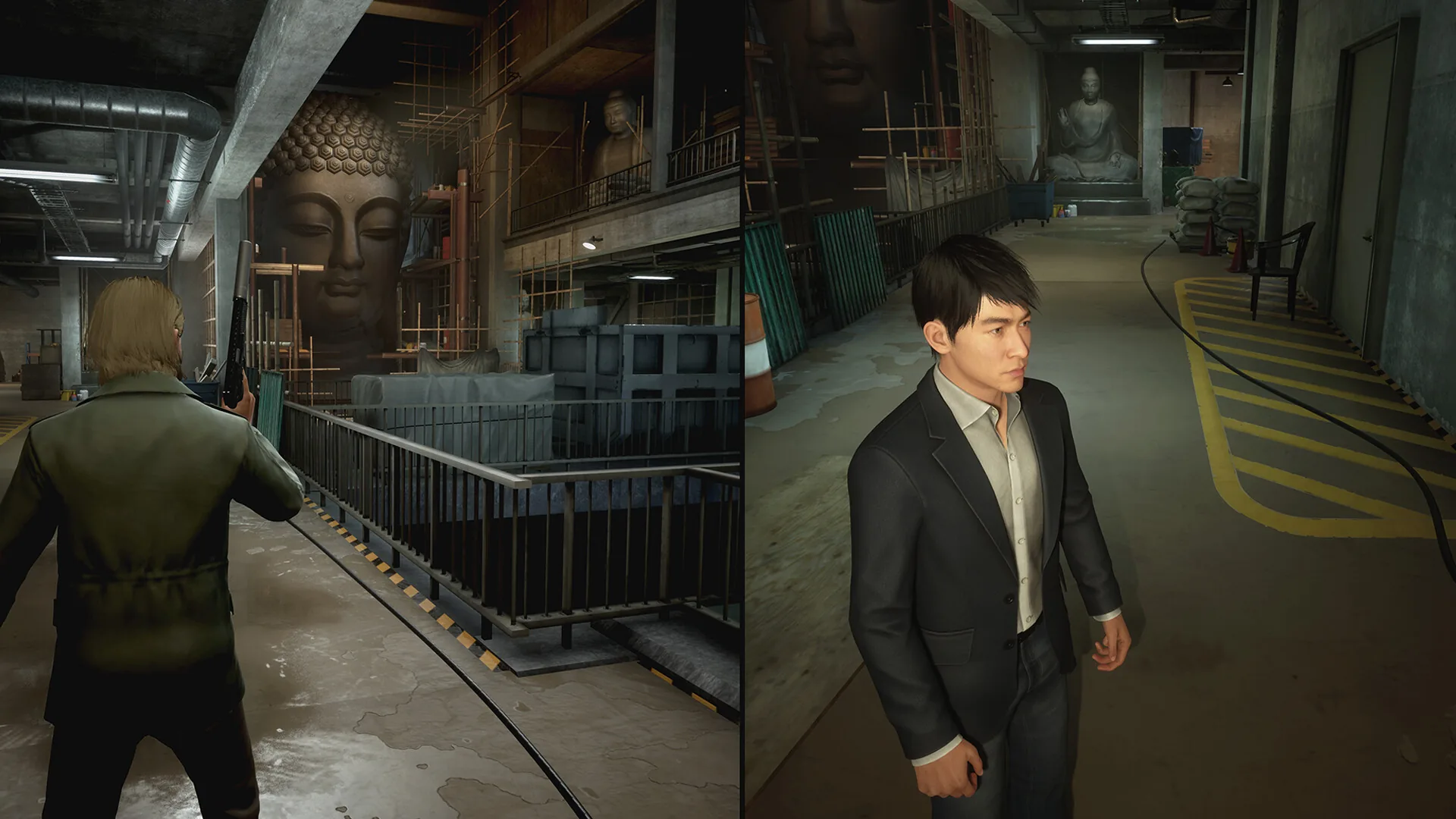
Split screen, Cantonese and Mandarin voice acting, and a return to Kowloon Walled City. One purchase is enough for two players.