7
Test
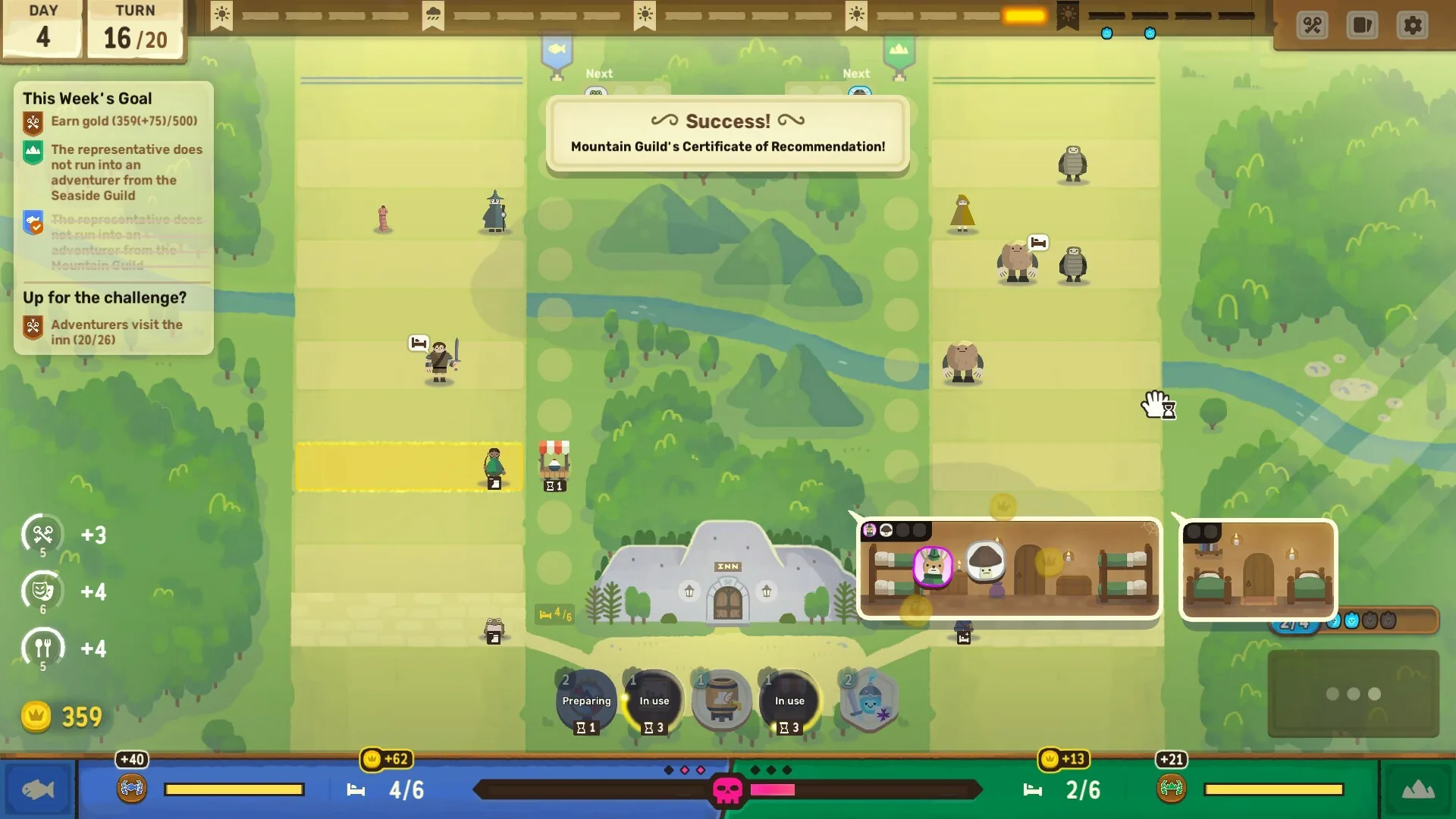
Dungeon Inn: running an inn while keeping two rival guilds from meeting
You struck a deal with a dragon. All that is left is serving both sides without either finding out. The 1.0 lands on 23 October.
Alexandrosse
7 min
Power networks, DNA from extinct species and no way to fail. A management game that chose calm, and pays for it.
Alexandrosse
InsertCoins.press Score
7/10
Verdict
Recommended
I launched BioEden this morning believing I was going back to it. Not discovering it, going back to it.
That is the odd sensation this game leaves: its demo has been online since 6 June, it circulated all summer, people talked about it and streamed it, and its release feels less like a premiere than a return from holiday. Almost three months between the reveal and going on sale, with a playable version available from the first day to the last.
So the question is not what BioEden is. It is whether the full game justifies paying at the till.
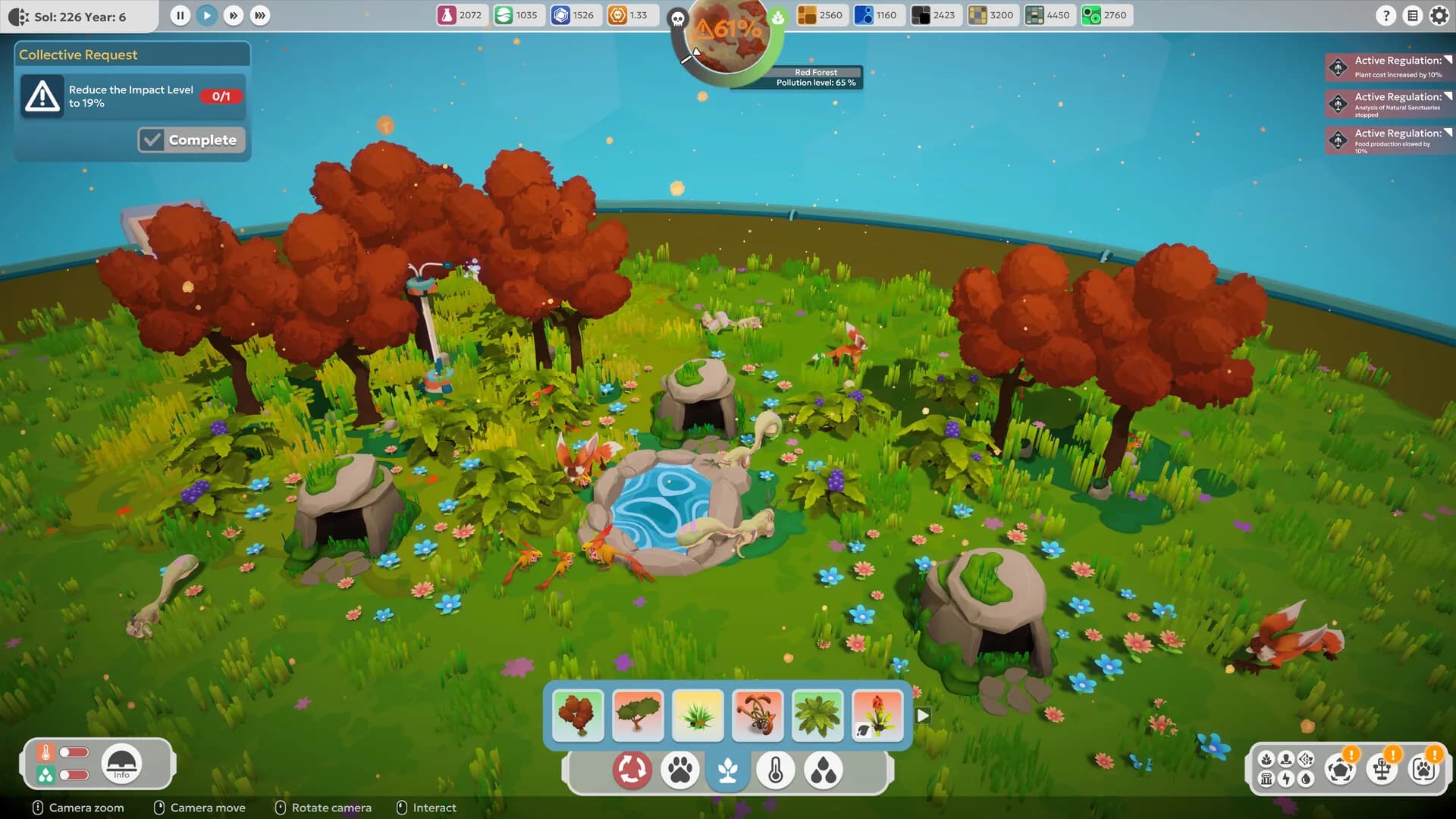
You are a Keeper. An organisation called the Cosmic Collective entrusts you with a planet at the end of its life, and the objective is to put it back in working order.
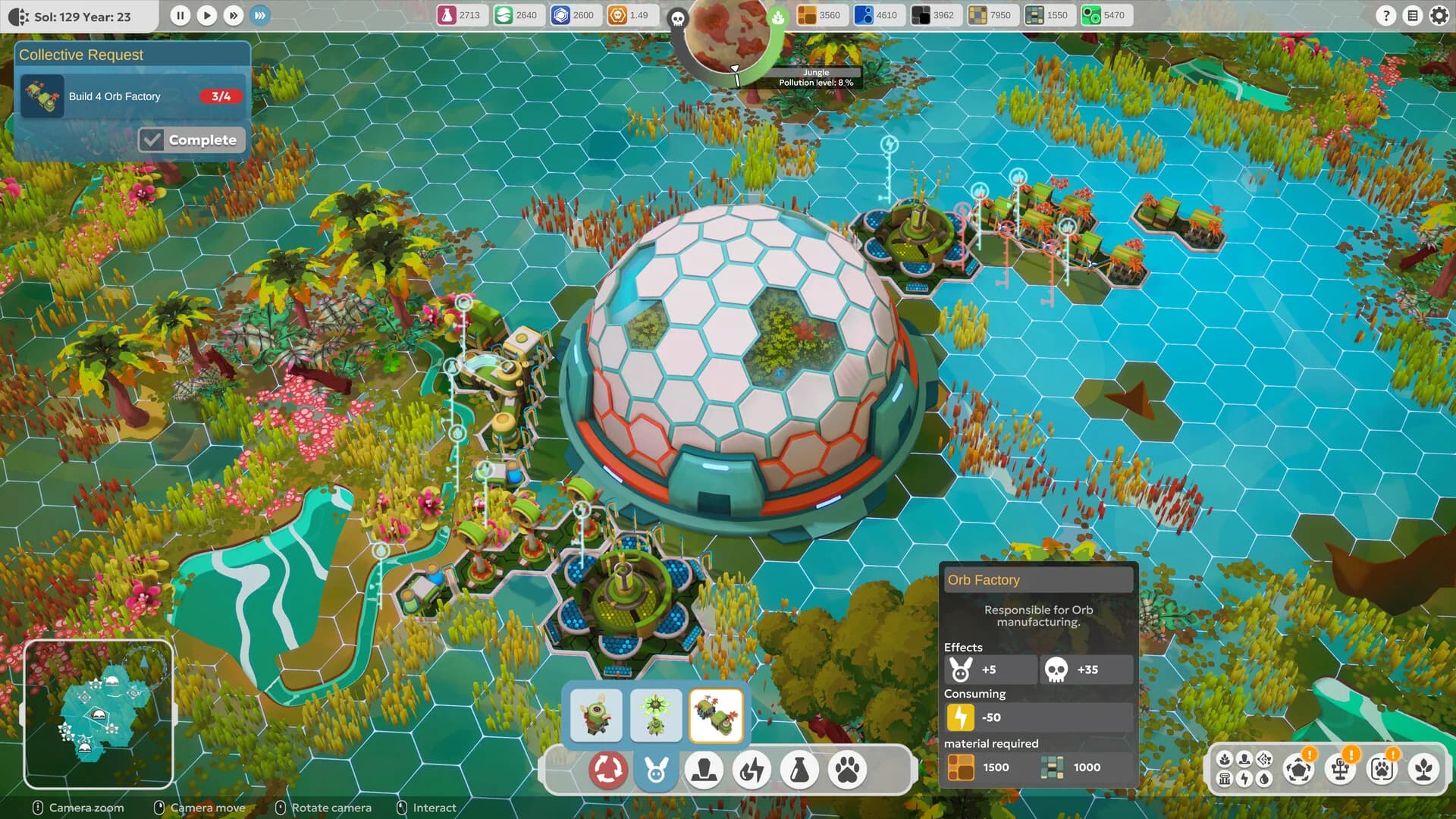
It starts with debris. Ruin sites are scattered across the map, you recycle them, and that recycling becomes your raw material. Without it, nothing gets built.
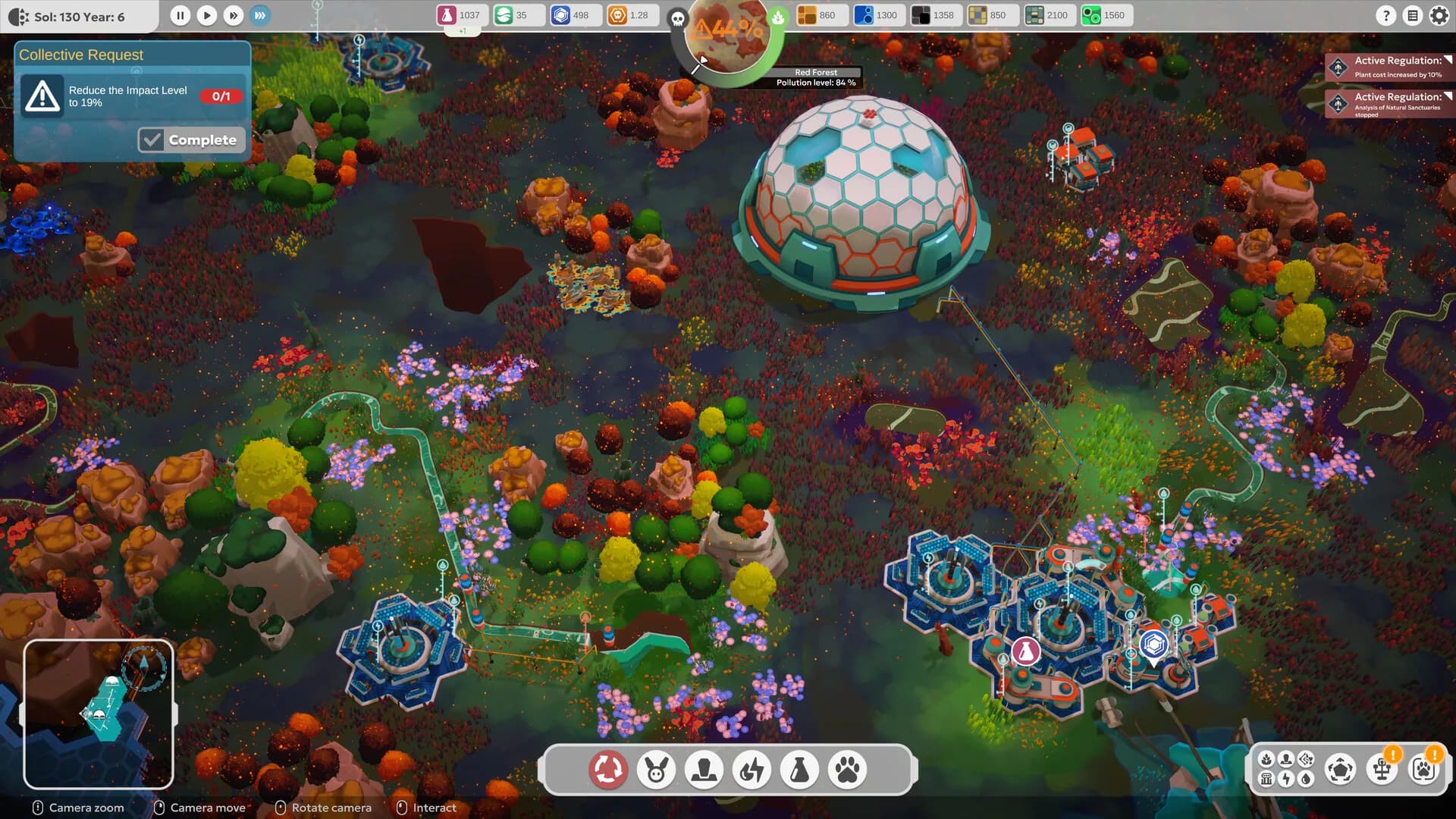
Then come the two networks that structure the entire run: a solar system that produces electricity and a water system that distributes it to everything you place. Every building has a demand, every source has a capacity, and your job is to keep the two together as the network stretches.
It is a game of connections more than construction. You spend a lot of time watching lines join things up, and it is pleasant.
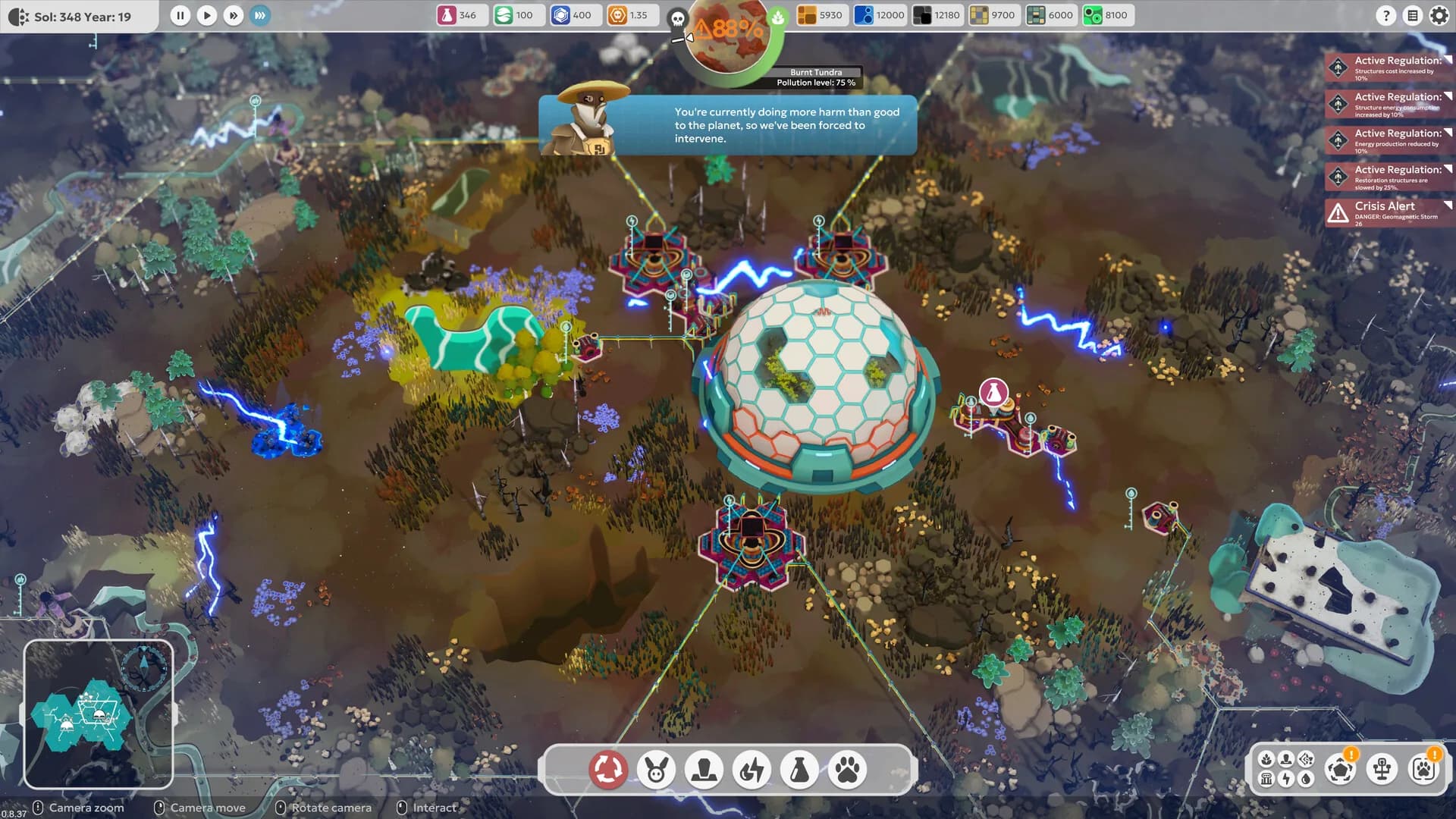
There is no enemy in BioEden, no disaster, no countdown. There is a gauge.
Every addition to the planet consumes resources, draws on energy and nudges pollution up a notch. In other words, the act that repairs is also the act that damages, and that is the game's smartest idea.
It changes how you play completely. In a conventional management game you build the moment you can. Here, placing one more building because you can afford it is nearly always a bad idea: you have to ask whether you have a use for it, or the gauge climbs for nothing.
And since you can dismantle whatever has served its purpose and recover the investment, town planning becomes a permanent movement. You build, you use, you erase. The studio's stated end goal is to leave no trace that you were ever there.
That is consistent with the subject, and it is rare for an ecological game to carry its message in its rules rather than in its dialogue.
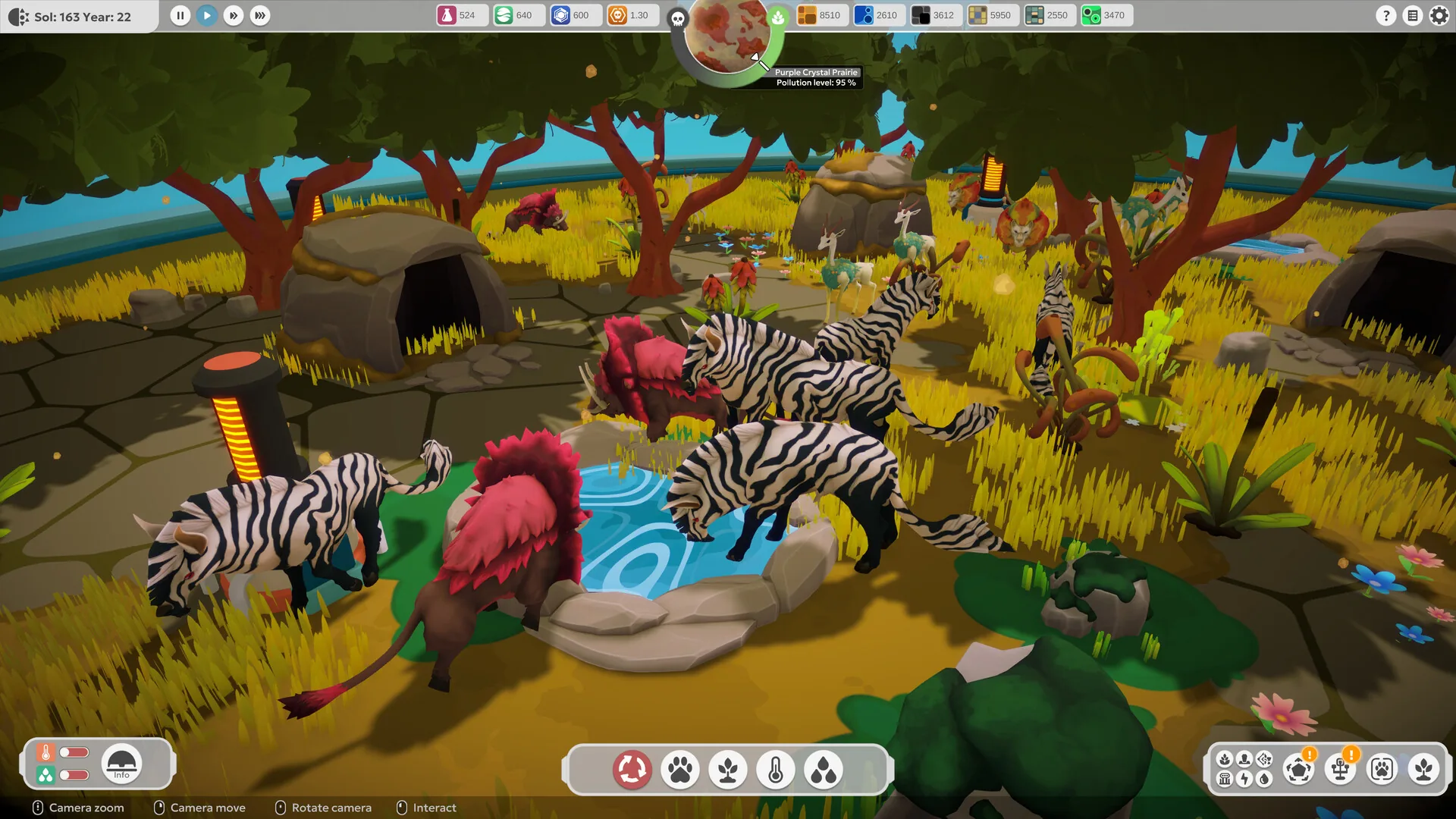
This is the part the game puts forward, and it is the prettiest.
Inside vast domes you welcome back dozens of extinct species. First you gather DNA samples, then you place cocoons, then you assemble the conditions each creature needs: temperature, humidity, the right vegetation.
A satisfied species flourishes and reproduces on its own. A badly housed one stagnates.
The pleasure is real, and it comes from the slowness. You adjust a setting, go back to your network, return ten minutes later, and there is life where there was only a cocoon. Every zone of the map has its own climate characteristics, which forces you to choose who lives where rather than piling everything into one spot.
The Collective divides into five guilds, each with its own identity, abilities and philosophy. They pursue the same goal and disagree about the method.
Your choice steers your approach and your progression, which gives the game its reason to be replayed. It is a class system dressed as a moral question, and it works better than I feared, because the guilds are not simply numerical bonuses.
Be very clear on this, because it decides whether you like it.
There is no way to fail. No defeat, no time limit, no counted turns. The studio states it outright: you take the time you need.
And nothing is irreversible. A botched building comes apart, the resources return, the mistake costs a few minutes.
Depending on your temperament that is a liberation or a frustration. For somebody new to management games it is the best entry point I know of this year: you learn networks, demands and balances without ever being punished. For a player who enjoys tension, the total absence of stakes eventually makes itself felt, and you then have to accept that the pleasure comes from watching rather than from risk.
The game offers time acceleration, which helps when waiting for resources, though speeding up time in a contemplative game remains an amusing admission.
The technical presentation stays modest. The landscapes lack animation and small details to breathe, and you quickly see the budget went into the systems rather than the scenery. The colourful art direction saves it, particularly when dead land regains its colours, but this is not a game that impresses on looks.
The pace is slow, deliberately. That is not a flaw, it is a contract. You should know you are signing it.
And the price is a publisher's price, 21.99 euros with a launch discount at 19.99. That is not expensive for a management game, and it is more expensive than most calm games in its category. Hardware-wise you need an SSD, a GTX 960 and 8 GB of memory, for 1080p at 30 frames per second.
A word on Broken Arms Games, because it explains the rest. The Italian team made Hundred Days, a winemaking simulator that made filling vats genuinely gripping, and Under Par Golf Architect. Their speciality is taking a slow activity and making it legible without simplifying it.
BioEden sits exactly in that line. It is not a game trying to reinvent management, it is a game trying to make management practicable on a weeknight, without a manual and without anxiety.
The demo was generous, it circulated widely, and the real question for you is whether the full world, its five guilds and its dozens of species deserve the follow-through. On my side, the recycle-network-dome loop held me far longer than expected, and I switched off at a moment when nothing was forcing me to stay. That may be the best compliment available to a game that removed all of its constraints.
How long did you last before dismantling your first entire base? We are comparing scores of shame on the InsertCoins Discord.
Community
Your rating
Advertisement
Loading comments...
You might also like
You struck a deal with a dragon. All that is left is serving both sides without either finding out. The 1.0 lands on 23 October.
A co-op horror fishing game at nine euros. You must sacrifice fish every day, and the beast is not the worst thing out there.
Scrapheap robots sent to exterminate a planetary fungus. The 1.0 lands tomorrow, and the upgrade grid is the genre's best idea.