Guide
BLOODLETTER guide: the queue is your real board, and rares will not save your runs
Purity, Health, Sickness, bloodstones, transmuters and four entities with different win conditions. The complete deckbuilder guide.
Alexandrosse
12 min
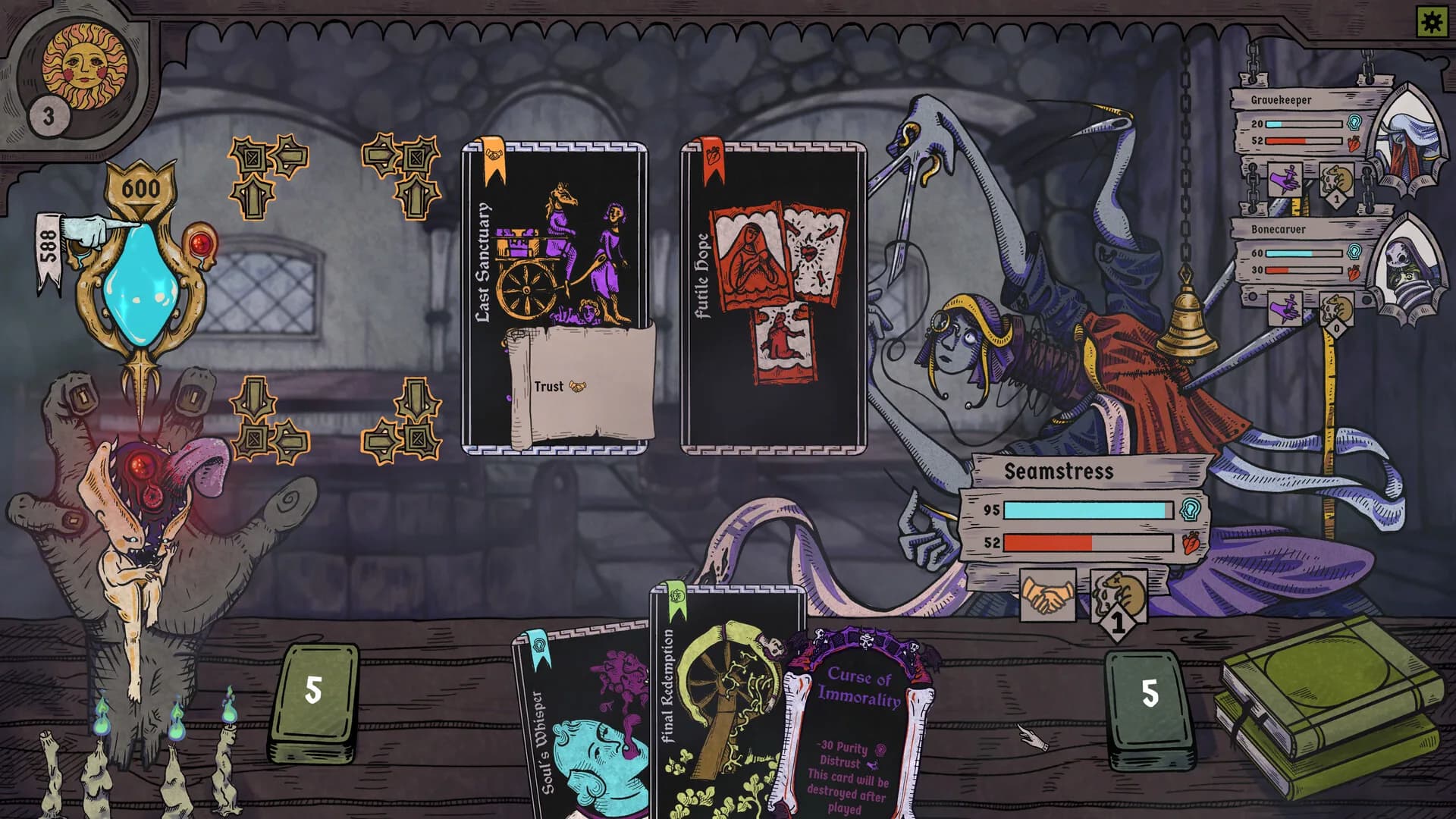
Four entities to cleanse, a queue of villagers, cards that merge. A superb art direction serving a rigorous deckbuilder.
Alexandrosse
InsertCoins.press Score
7.5/10
Verdict
Recommended
There is a wordplay question to settle first, and the answer is more interesting than expected.
In English, no: bloodletter is a perfectly straight technical word for someone who practises bloodletting. No mischief, it is simply the trade. In French, though, the natural translation opens a door English does not have: saigneur, the one who bleeds, is a homophone of seigneur, the lord. And this game is about exactly that, a man holding a razor and a power over other people's lives. The studio probably did not plan it, but another language handed it a gift.
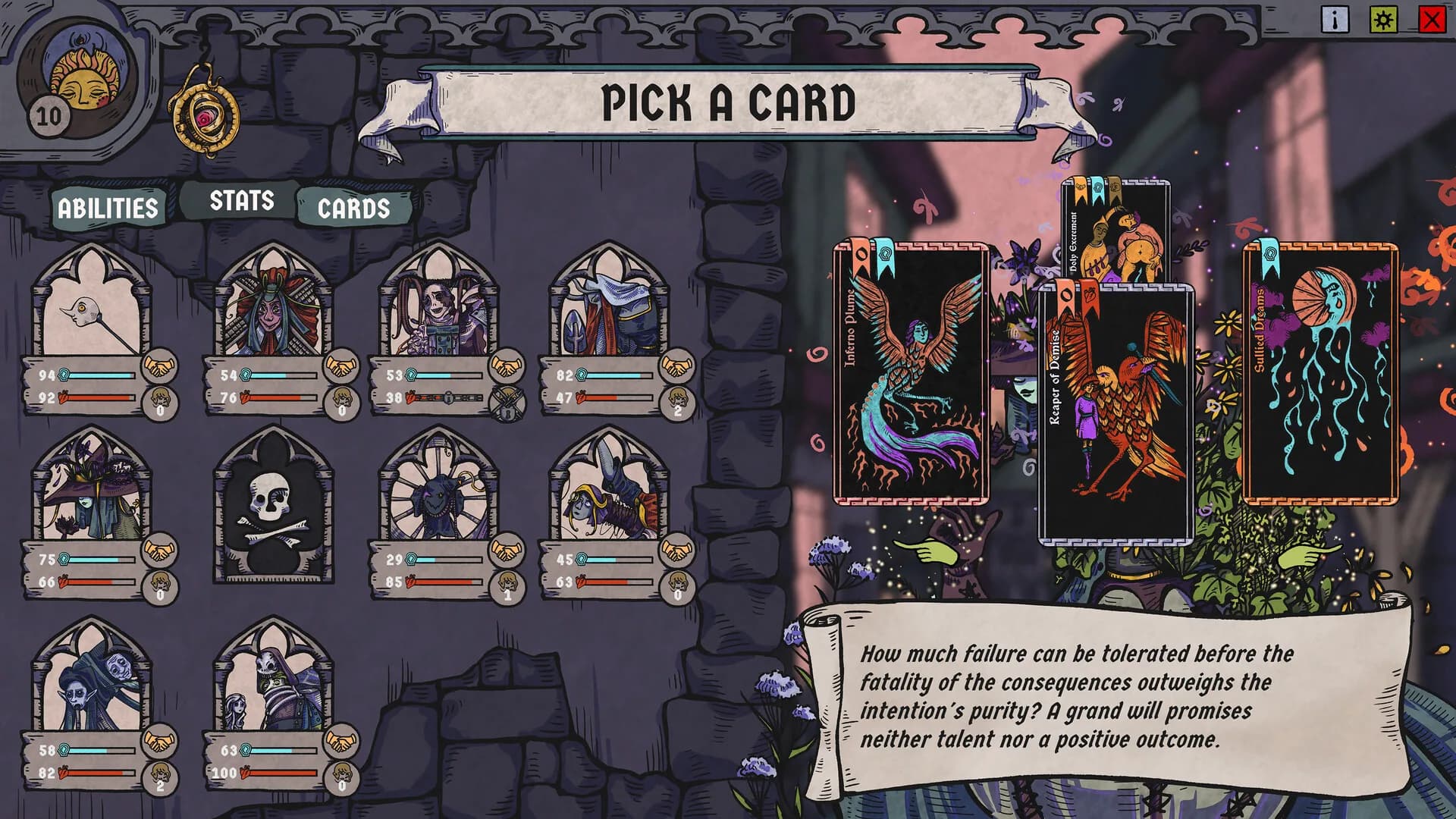
It is the first thing that hits you and the best thing about the game. German studio ALDAMAMI GAMES built its visual identity on tarot, and not as a coat of paint: the cards carry illustrations, titles and incantations that genuinely read like medieval tarot arcana, with that imagery of superstition, dubious remedies and suffering flesh.
It all unfolds in a bathhouse, each entity you face having its own environment. It is coherent, it is filthy in the good sense, and it looks like no other deckbuilder on the market, which is an achievement in a saturated genre.
The game took silver at the GWB Game Awards in December 2025, before it even reached early access.
You are a barber-surgeon. In front of you, a queue of villagers. Upon them, entities to cleanse.
The first good design decision is right there: the bosses are not health bars, they are entities each with their own win condition. You do not fight The Impaled One the way you fight Avarice and Cupidity. The first asks you to assemble sword pieces, the second is famished and demands you decide which stat to sacrifice to satisfy that hunger. Each entity is played across three difficulties, and content unlocks as you cleanse them.
You work three gauges: Purity, Health and Sickness. Your cards push them around in every direction, and the subtlety comes from how often they act on the other villagers in the queue rather than only on the one you are treating. Herald of Cures gives fifteen health to the other patients waiting, Welcome Sacrifice gives them fifteen purity. You are not treating a man, you are managing a waiting room.
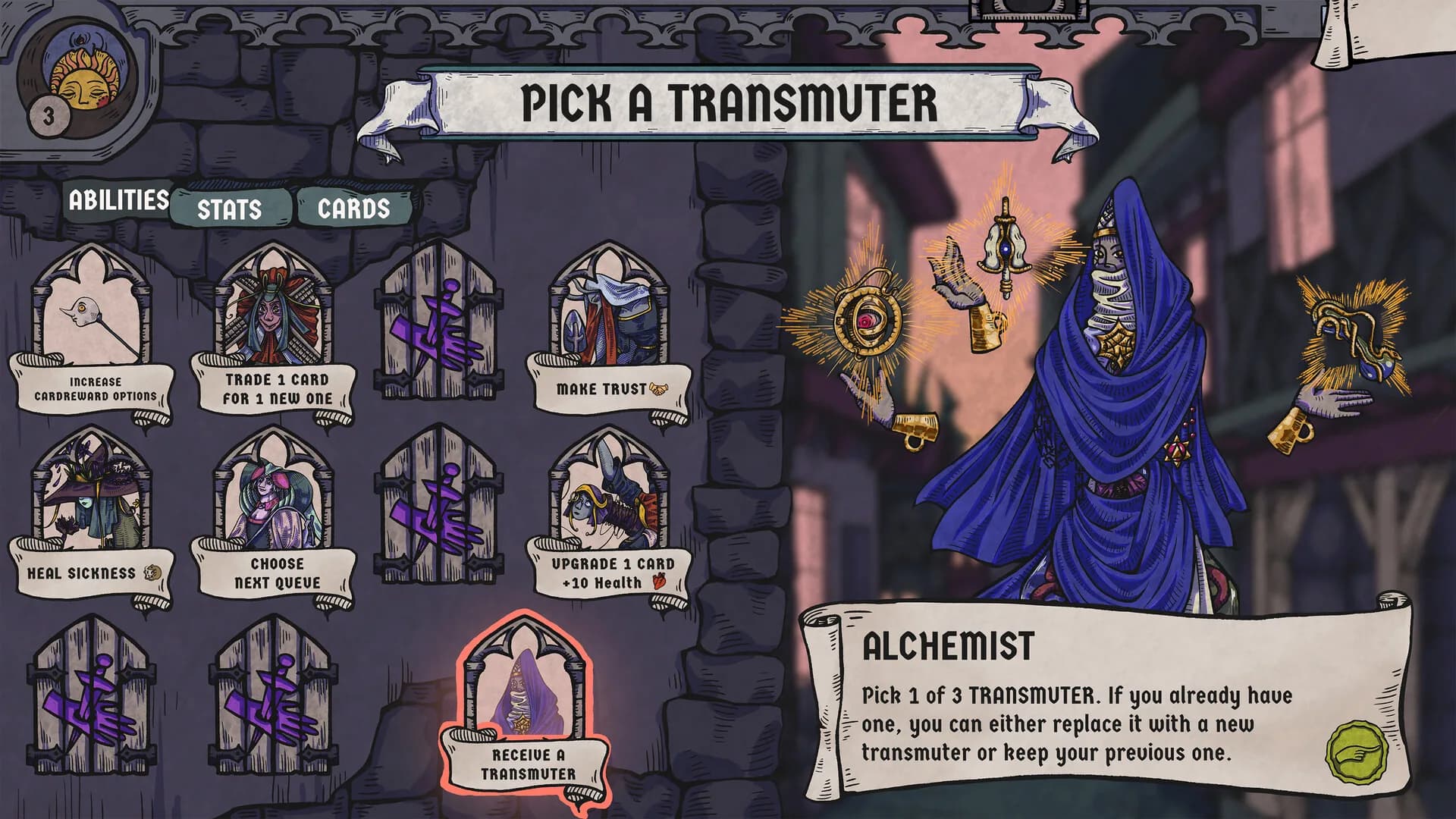
On top of that, two systems shape a run. The transmuters, a dozen of them, change what your cards are worth depending on which one is active: the same hand is not the same hand from one run to the next. And the eleven villagers, whose abilities upgrade your deck and bend the run in progress.
It has to be said, because it is the context of this review: BLOODLETTER leaves early access today, 17 August 2026, after a little under five months.
And the studio held its schedule, which deserves noting in an era when early access too often serves as an indefinite waiting room. It announced roughly four months and at least one large content update. It delivered two entities at the March launch, a third on 25 June with twenty-one cards and two transmuters, and the fourth today with another twenty-one cards and two transmuters.
The final version also adds a rite of severance, where you recruit your villagers as allies because this last entity cannot be fought alone, and a closing decision about the village's fate.
The unlock pacing is demanding and occasionally frustrating. Some cards only come from beating a specific entity at a specific difficulty: Rebirth wants The Impaled One on medium, Herald of Cures wants The Corrupting One on hard. The studio explains its logic, putting big-number cards in the low difficulties and complicated ones higher up, and that is defensible. In practice it means the most interesting tools arrive once you no longer really need them.
The second point is more arguable, and it is a deliberate studio choice: in June the chance of drawing a rare card from bloodstone extractions dropped from 35 to 10 percent. The intent is sound, aiming to stop every run looking alike by handing out every rarity. The side effect is that unlucky runs turn notably flatter.
The reception reflects all of this well. The game sits at Mostly Positive, with 101 positive reviews out of 129, around 78 percent. That is respectable rather than a triumph, and the gap comes mostly from readability expectations the studio has heard, since it reworked the design of the mergeable cards for this final version.
It rewards a visual identity that belongs to nobody else, writing that matches it, and above all win conditions differentiated by entity, which stop the game collapsing into optimising a single damage engine. The queue is a genuine find: it turns a duel into room management.
It accounts for a severe unlock structure that takes its time opening the toolbox, a deliberately tightened rarity variance that leaves some runs bland, and a content volume that remains a small studio's: four entities is coherent, it is not vast.
Credit for the localisation, the game is available in French, which counts for a lot in a genre where you read every card.
And at around ten euros, with a 35 percent discount as I write, the content-to-price ratio is frankly good.
So tell me, deckbuilder players: do you miss having different win conditions per boss elsewhere, or do you prefer the purity of a Slay the Spire where everything resolves into damage?
We rebuild the card game world on the InsertCoins Discord, come and defend your deck.
Community
Your rating
Advertisement
Loading comments...
You might also like
Purity, Health, Sickness, bloodstones, transmuters and four entities with different win conditions. The complete deckbuilder guide.
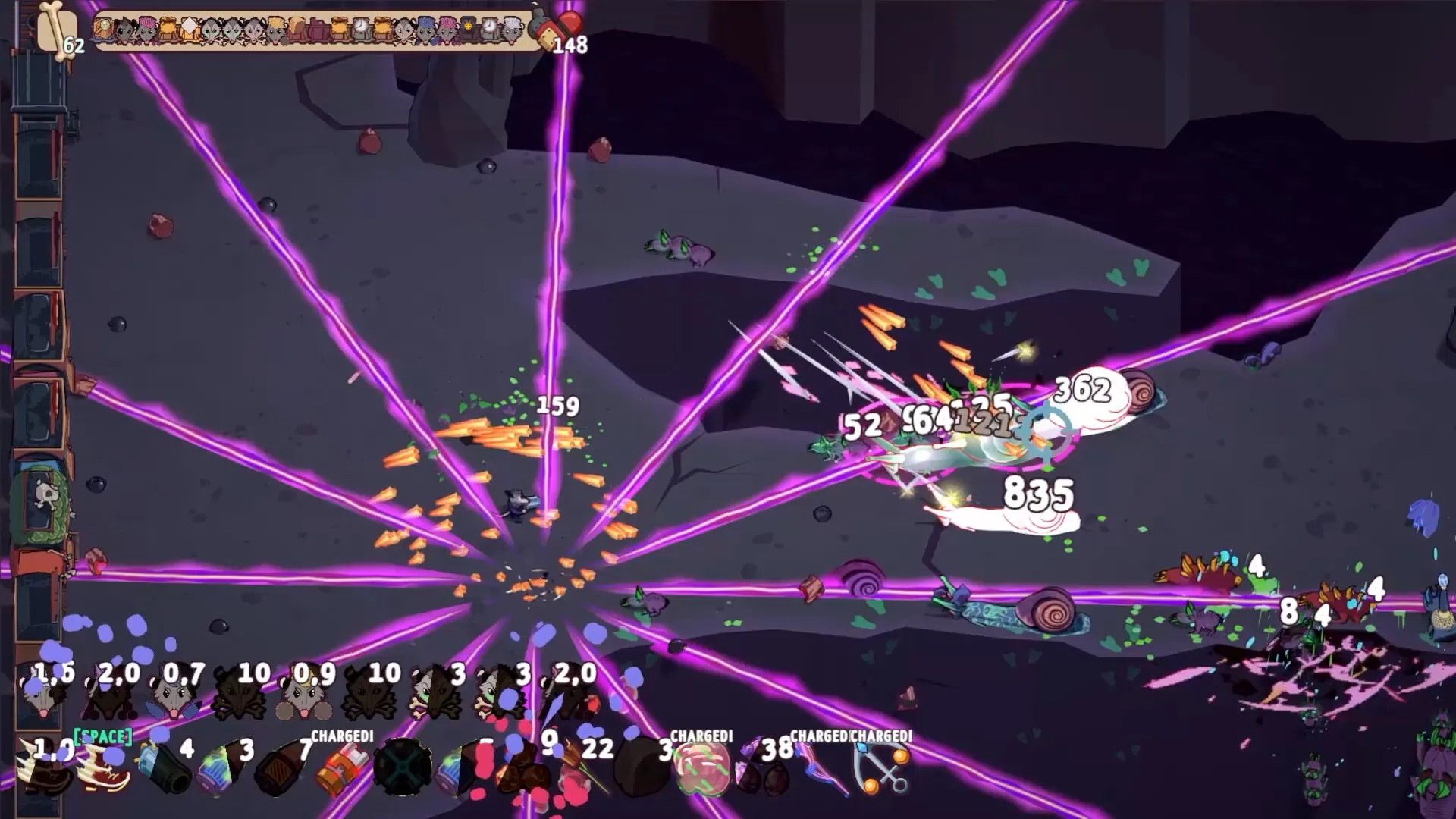
Your railcars are your health and your skills at the same time. Assuming the game gets past the loading screen.
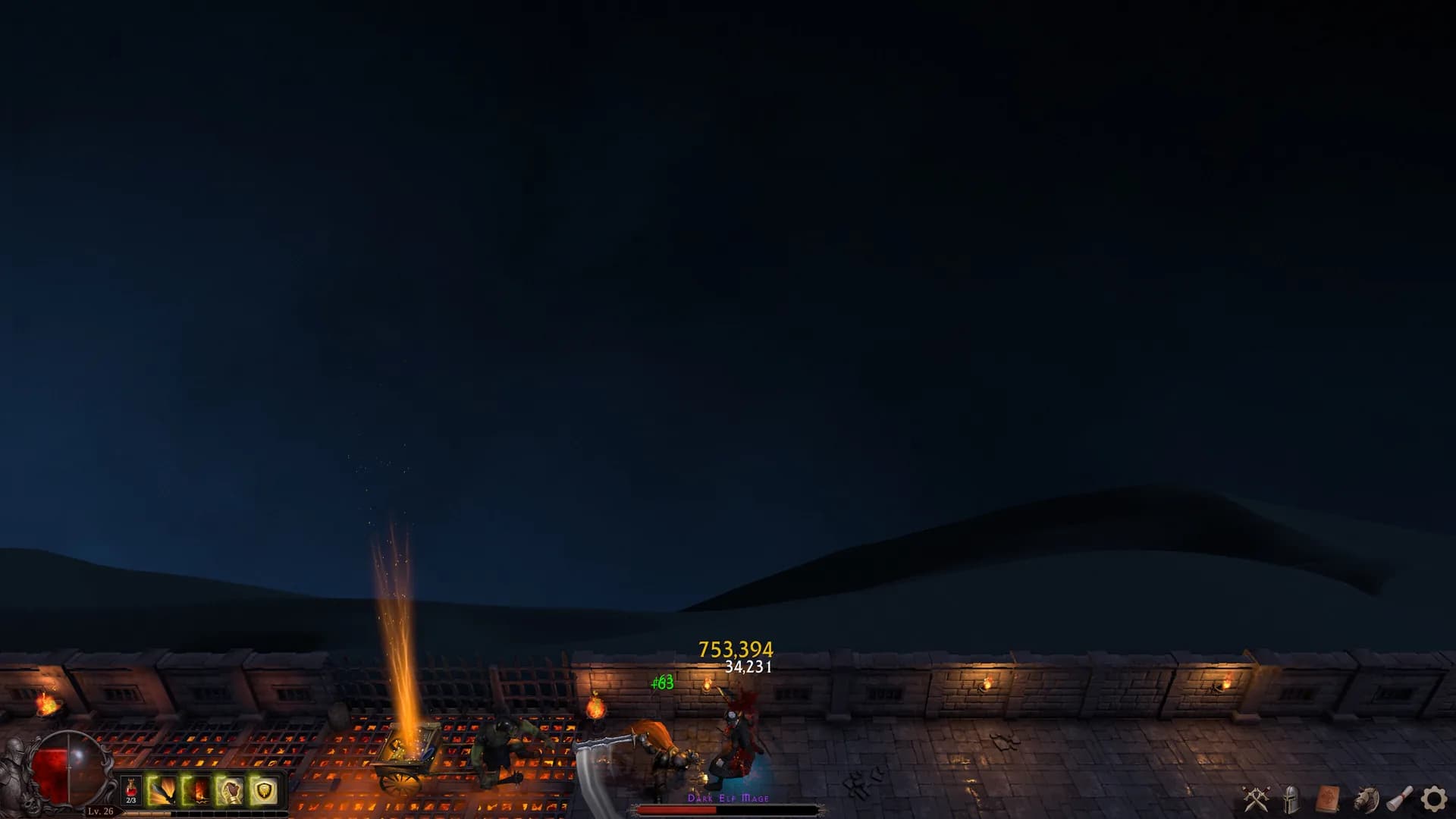
Five euros, a strip of ARPG along the bottom of your desktop, and a Steam market where you resell your minions. The success is real, so is the wall.
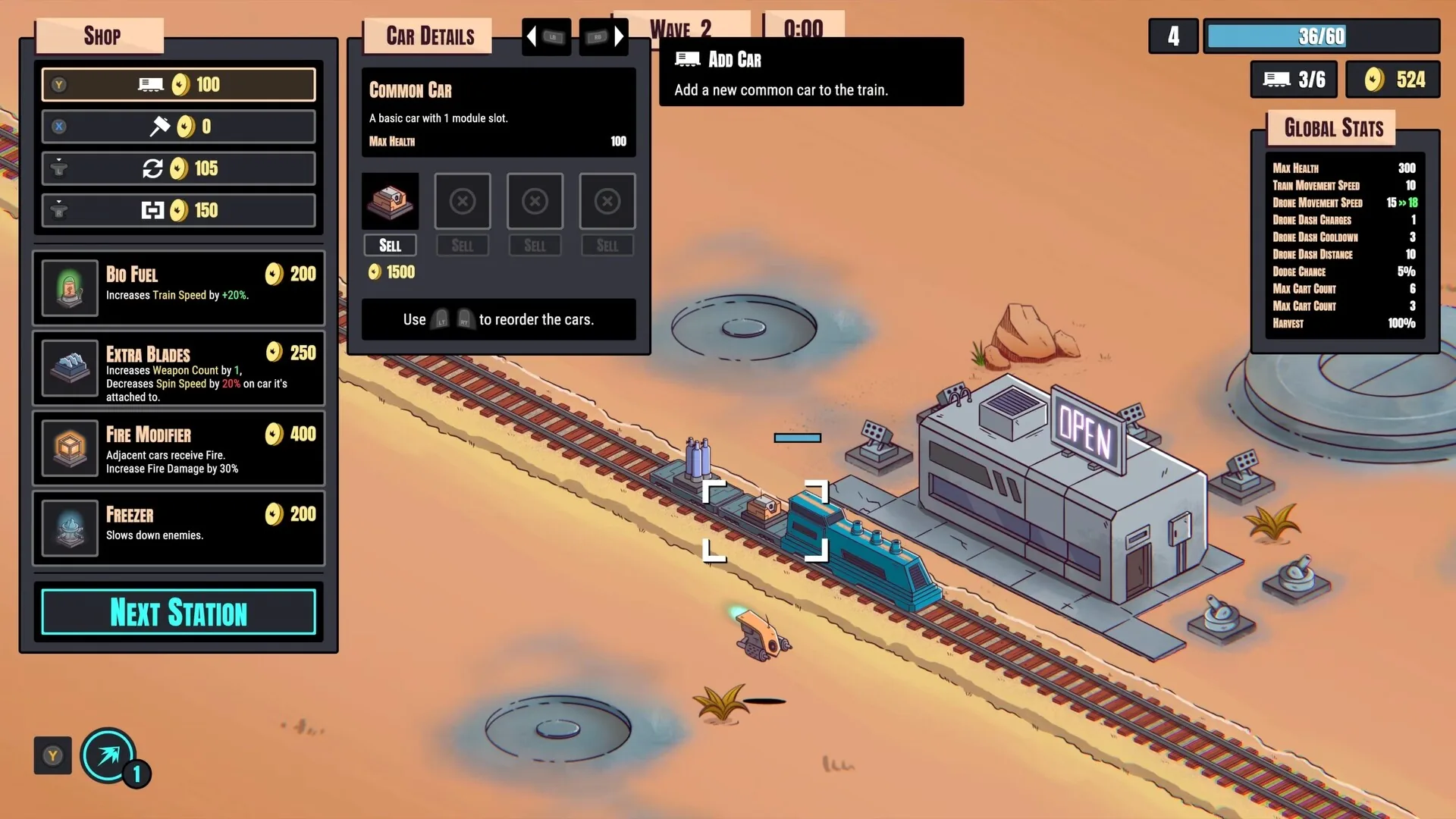
The train on the mouse, the drones on the keyboard, thirty-second rides. A small game that knows exactly how long it lasts.