Preview
Hubert: a tale of friendship, bravery, and barking at sheep
You are a shepherd dog in the northern wilderness. You see the world through movement, scent and instinct, and you gather a flock.
Alexandrosse
6 min
Fleet management roguelite with crisis management, real-time Viper combat and meta-progression. Scattered Hopes is Crying Suns with a BSG paint job and notable improvements, for better and for worse.
Alexandrosse
Battlestar Galactica: Scattered Hopes is developed by the studio behind Crying Suns, that space roguelite from 2019 that made an impression with its Foundation atmosphere and distinctive art direction. The comparison imposes itself from the first minutes: same jump-based progression structure, same fleet management loop, same narrative tension that accompanies every decision. But Scattered Hopes isn't a reskin. It's an evolution, with everything that implies in terms of positives and problems.
Scattered Hopes is a fleet management roguelite. You command a Colonial fleet gunstar in flight after the Cylon attack, trying to survive waves of adversity by managing your resources, your crew, and the crises that accumulate between each jump.
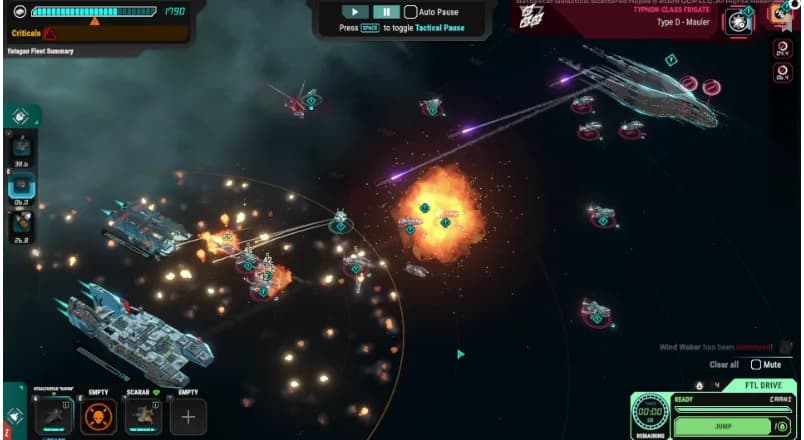
The gameplay operates on two layers. Navigation and management between jumps: decisions, events, resource allocation, crisis management. And real-time combat when the Cylons intercept your fleet: Viper squadrons to deploy, trajectories to read, threats to prioritize. Weapons fire automatically; you manage positioning and tactical micro-management.
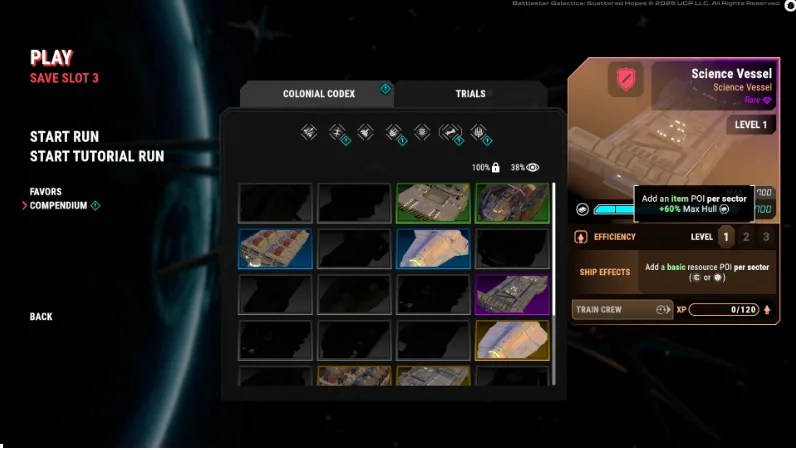
Meta-progression runs through a talent system unlocked between runs, with four different gunstars to unlock. Each run can take distinct paths based on your narrative choices: be militaristic, support organized crime, prioritize civilian welfare. The BSG lore is there, used coherently.
The hook is real. The first hours reward attention, the synergies between talents and armaments are interesting to build, and the BSG atmosphere holds even for someone unfamiliar with the series. The art direction blends several visual influences, which can seem heterogeneous at first but remains readable in play.
The combat works. Managing Vipers requires enough attention to create tension without tipping into stressful micro-management. A Viper lost through inattention in a minefield or under enemy fire that outranges your formation is immediately felt in the rest of the run. Consequences are readable and decisions have weight.
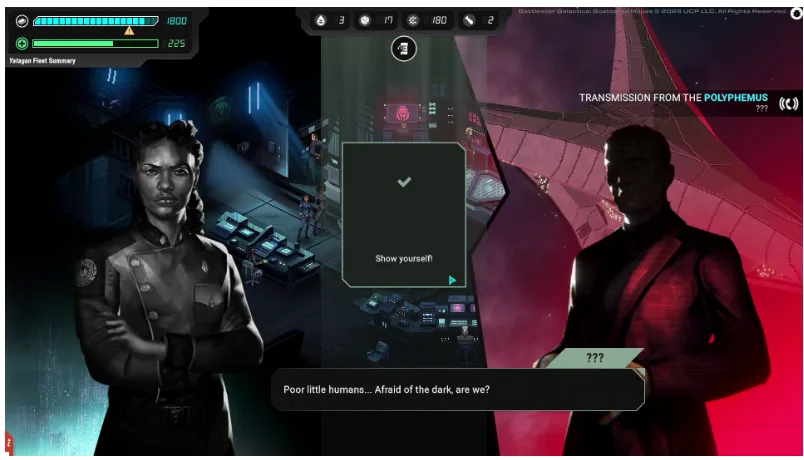
The game encourages discreet roleplaying: each crisis choice silently builds your command's identity, and multiple endings exist based on accumulated decisions. The special ending, like in Crying Suns, remains hidden and requires precise conditions.
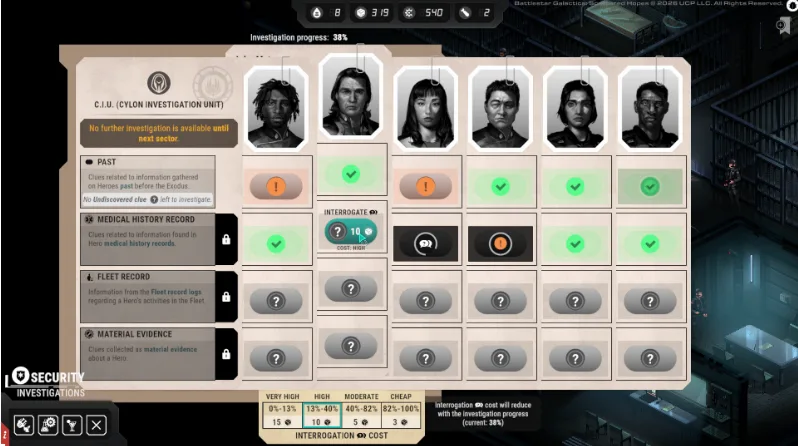
Repetitiveness is the central flaw and it's hard to ignore. Events repeat in the same order from one run to the next. It's not that the event order changes slightly: it's that the available narrative content is insufficient for the play time the game tries to offer. After two or three runs, you'll have encountered most possible situations. Encountering the same event three times in a single run is a content limitation, not a design choice.
Meta-progression is too slow to compensate for this lack of variety. The unlock pacing doesn't give enough reason to return once the main content has been absorbed.
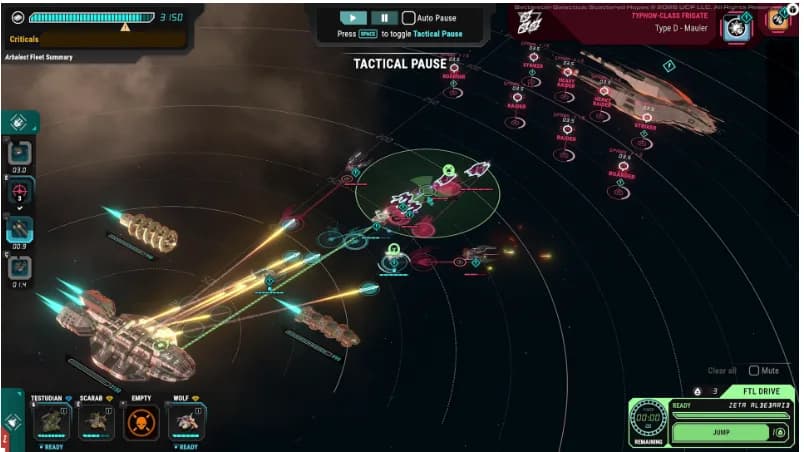
The absence of ship-vs-ship combat disappoints fans of the series. The Battlestar itself isn't playable. All combat happens at the fighter level. For a franchise whose iconography is largely centered on capital ship confrontations, it's a creative choice that can frustrate.
Bugs are present: the shop recharged too many times causes permanent slowdown, certain victories against an enemy basestar aren't recognized by the game. Nothing game-breaking in most runs, but visible enough to note.
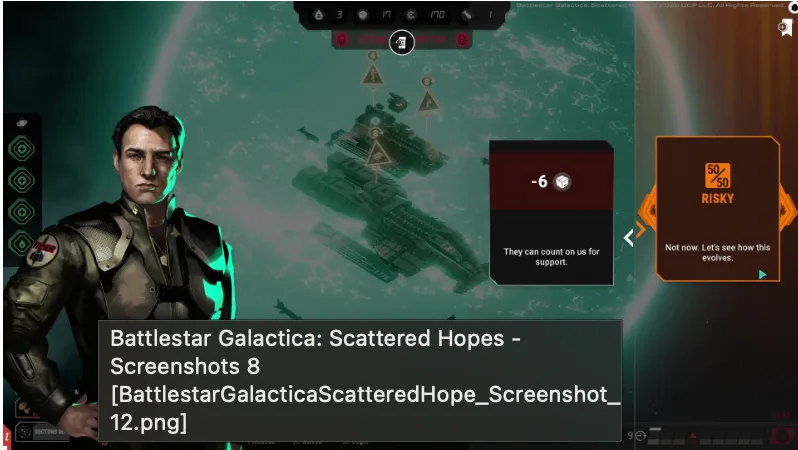
If you liked Crying Suns and want a mechanically richer successor, Scattered Hopes fills that role. The core systems are improved, the game loop is more varied, and the franchise brings a narrative coherence that Crying Suns had to build from scratch.
If you're a BSG fan looking to recapture the series' atmosphere in a game: it works, with the caveat that content is still limited for someone who wants to invest heavily long-term.
If you've never watched the series: the game is playable and engaging on its own, but the emotional connection to the narrative situations will be lesser. Fans unanimously report that the series' original soundtrack played in the background elevates the experience by a full notch.
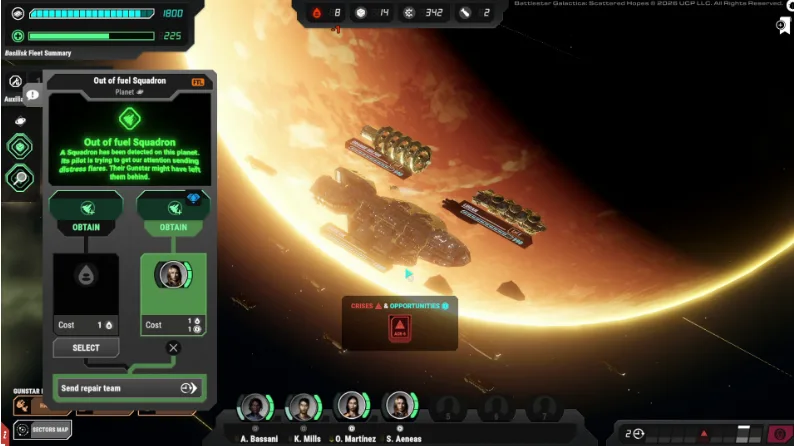
At 20 euros, the game is worth its first ten hours. The question is whether the studio will add content to justify returning. The developers have indicated discussions with the publisher about the continuation of development are underway. For now, Scattered Hopes is a good starting point waiting for its second wave of content to become truly recommendable beyond fans of the franchise.
Waiting for this one as well? Come and say so on the InsertCoins Discord.
Community
Your rating
Loading comments...
You might also like
You are a shepherd dog in the northern wilderness. You see the world through movement, scent and instinct, and you gather a flock.
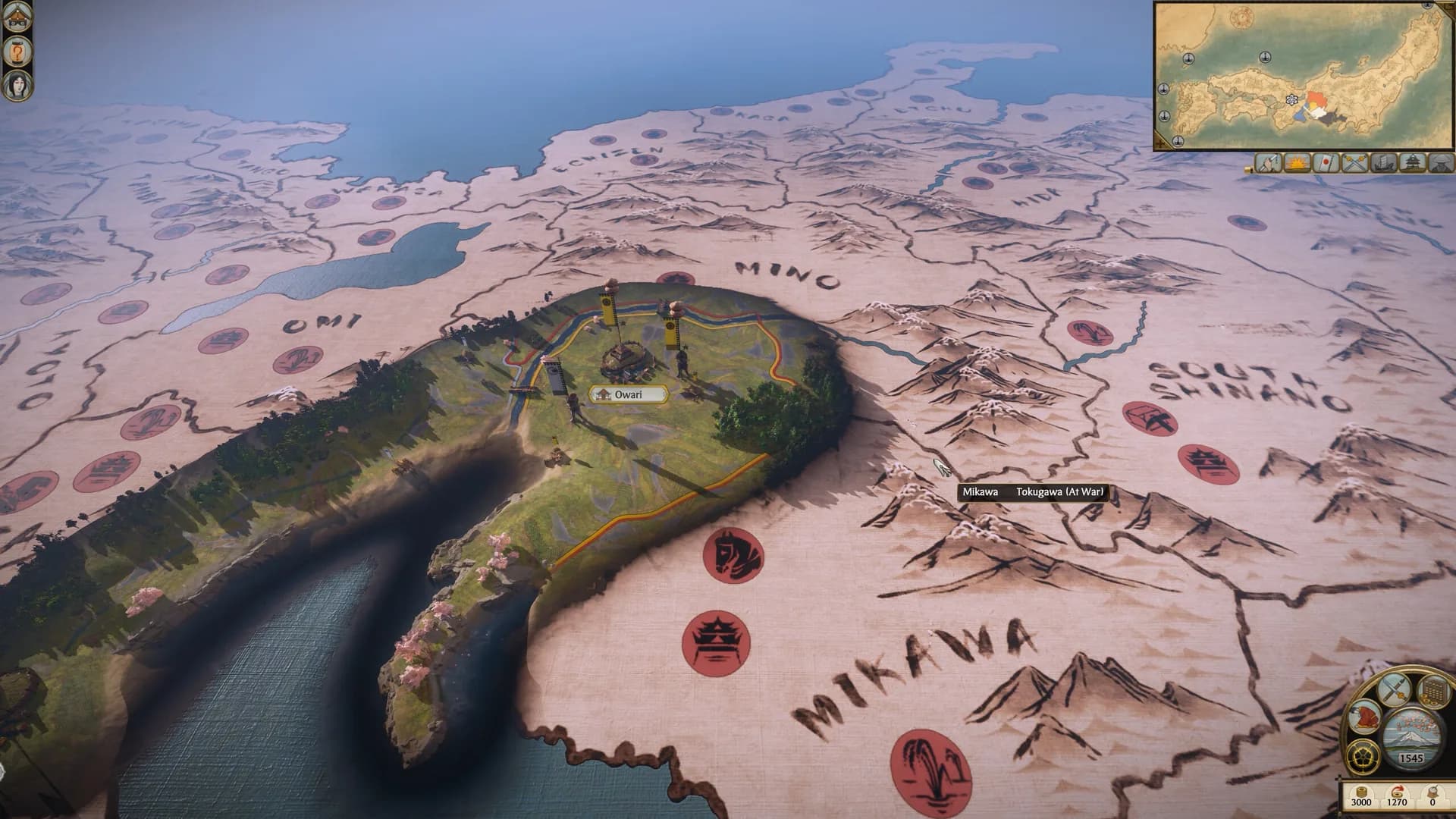
A 64-bit upgrade, built-in mod support, full Japanese voice acting, and over fifty minor factions made playable.
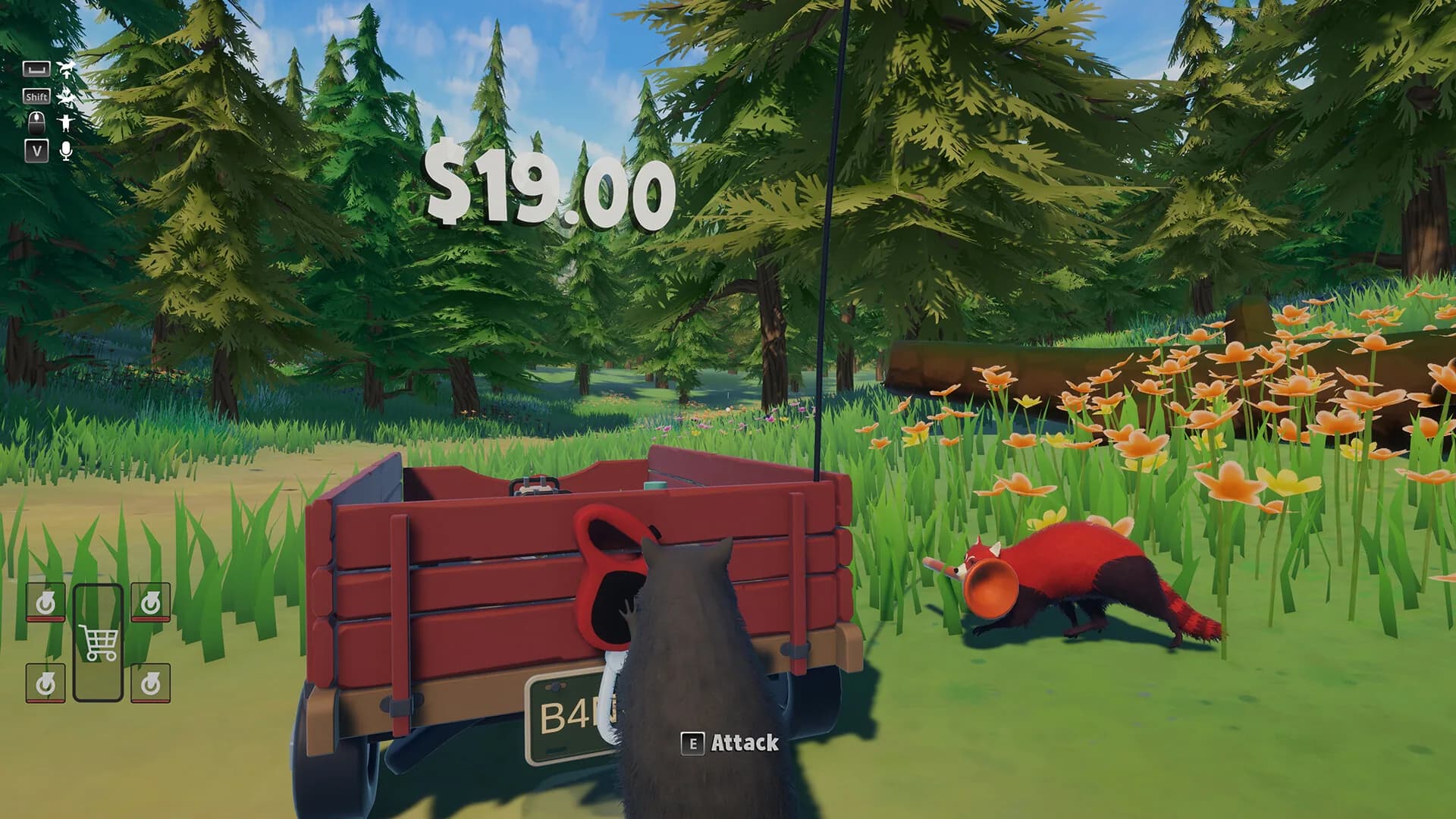
You can technically play solo, says the studio, but the wagon is a lot for one raccoon.