7
Test
Barfender: my idiotic friend drank all the beers
A co-op bar that collapses while you serve. 98 per cent positive, and one of the rare times chaos is the actual subject.
Alexandrosse
7 min
A goblin opens an armoury. Random rarity on every craft, haggling with a temper limit, and explorers dispatched across nine world zones.
Alexandrosse
InsertCoins.press Score
7.5/10
Verdict
Recommended
The title describes the loop, and it leaves out the best part.
Craft, sell, goblin, repeat. What that list does not say is that the first two verbs call on completely different skills. The forge is a lottery. The sale is a duel.
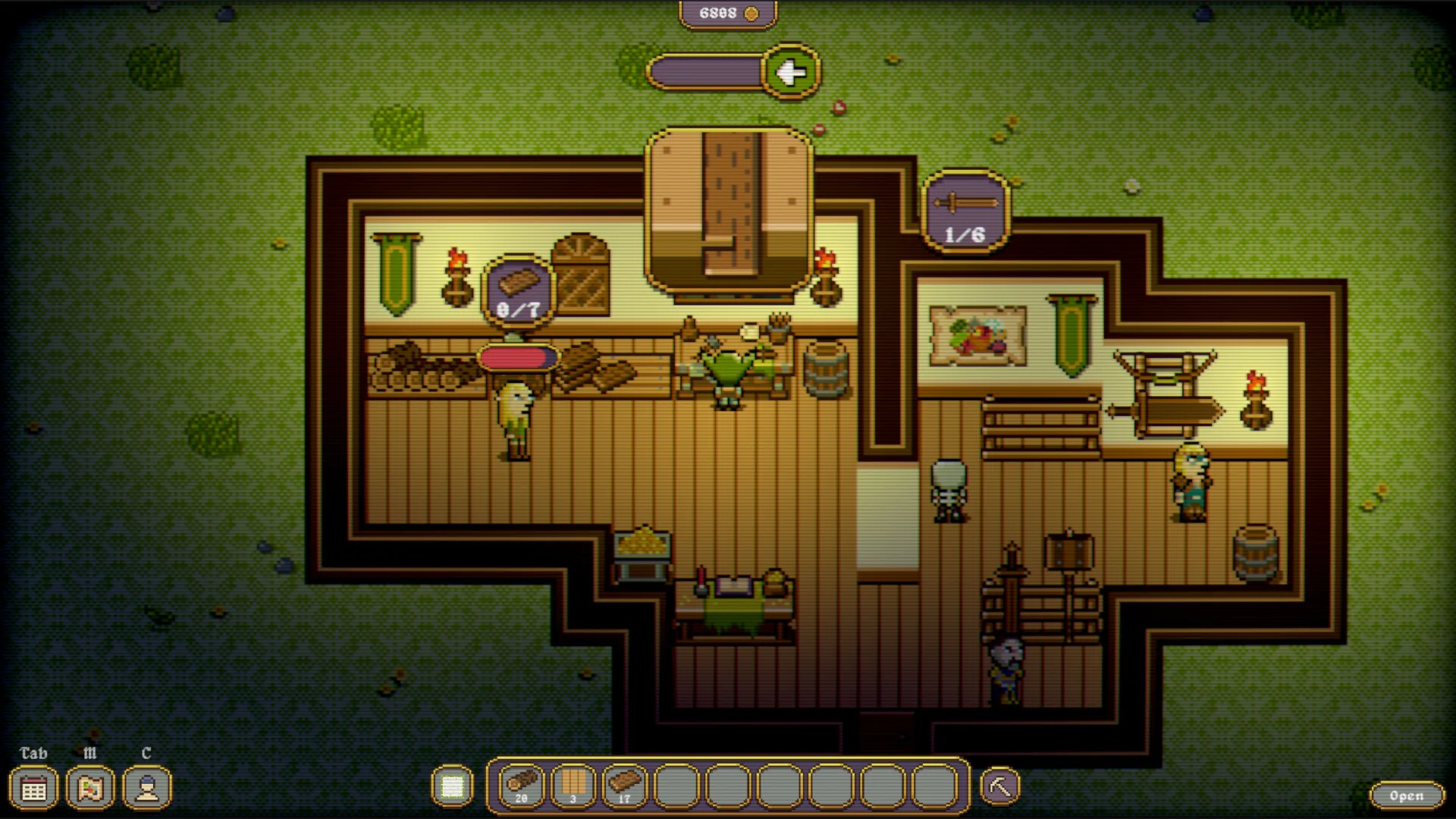
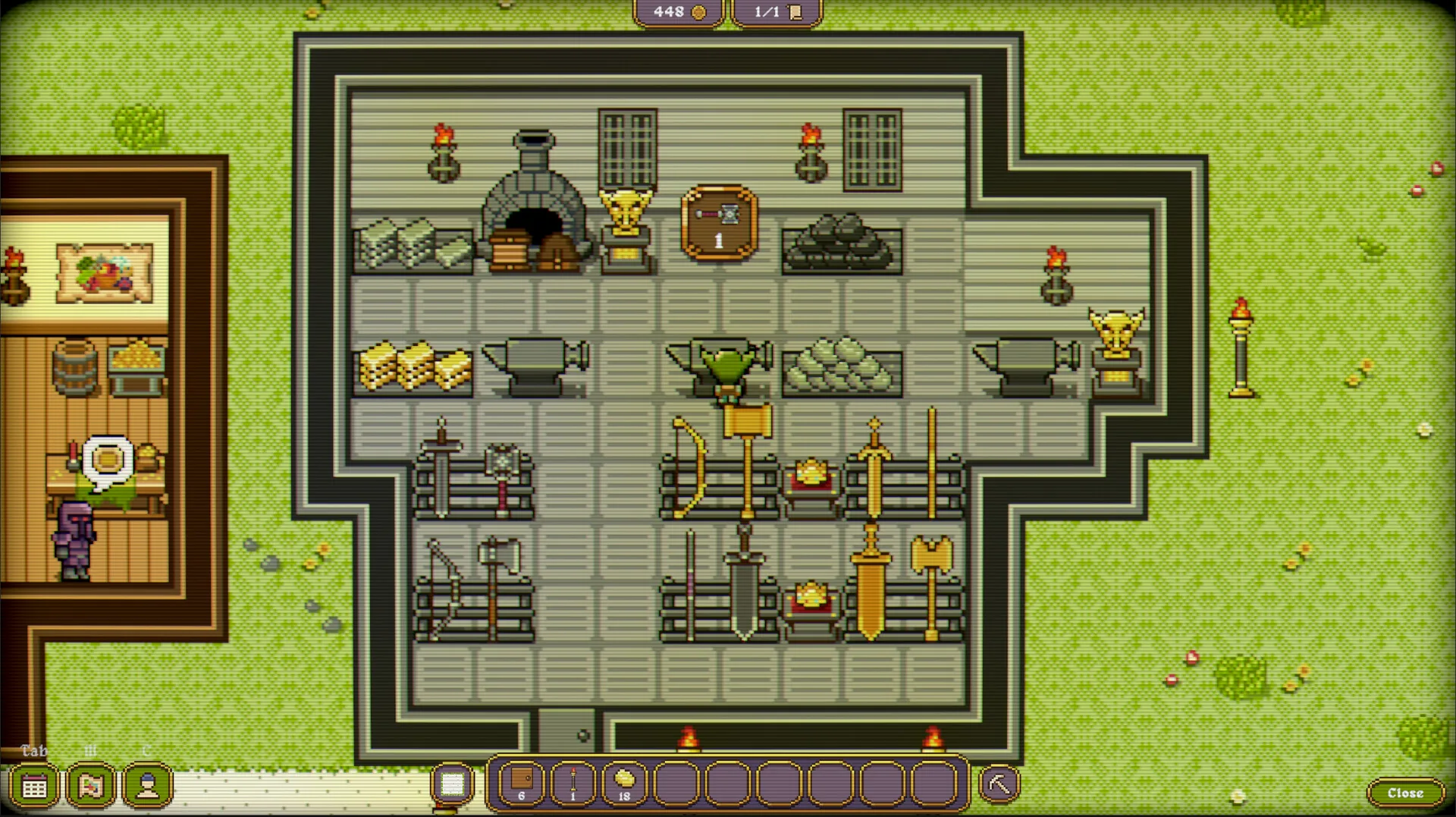
This is genuinely Game Boy Advance school pixel art, and not in the vague sense where that label gets slapped on anything with large pixels.
The precise markers of that period are all here. The top-down view with stocky, perfectly legible sprites. The warm, limited palette, those moss greens and wood browns that hold together without ever saturating. And above all the interface, with its purple panels edged in bevelled gold, which comes straight out of that era's menu vocabulary.
This is not nostalgia applied as a filter. It is a graphic grammar picked up with its rules intact, including the one that matters most in a management game: you read the screen at a glance.
You play a goblin finally opening his own armoury. You start from a tiny workshop.
Layout happens tile by tile. You expand the space, organise work areas, decorate. And decoration is not cosmetic: a better-looking shop attracts more customers.
The detail that sets the tone for the whole game sits elsewhere, in a quiet line from the studio: you remodel whenever you feel like it, no rush, and you decide when to open and close the store.
There is an "Open" button in the corner of the screen, and it only gets pressed if you decide so.
Here is why the title's first two verbs do not play the same.
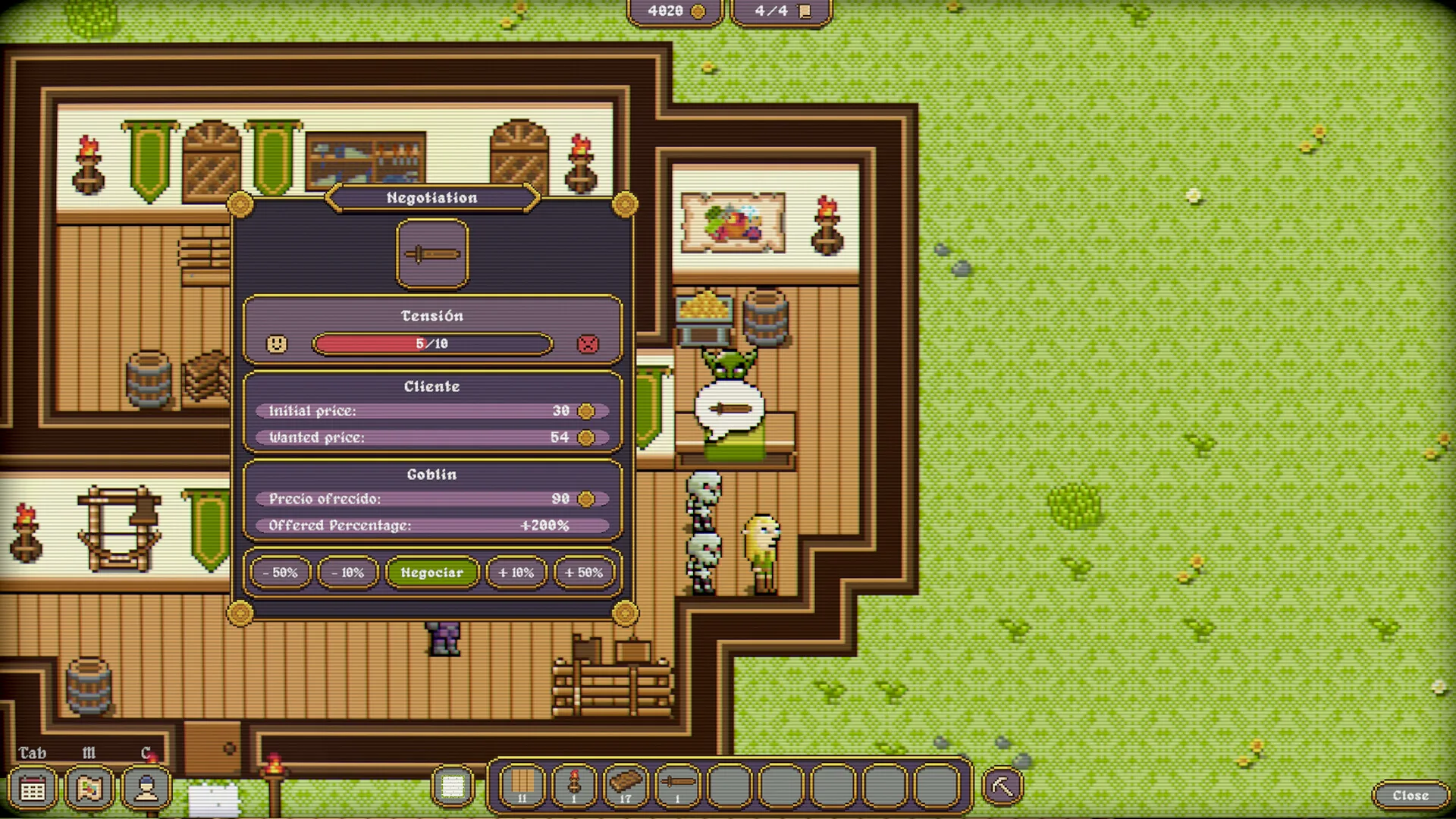
Every weapon you craft receives a random rarity. You do not choose the quality of what comes out of the forge. The rarer the item, the more you can ask, but you still have to convince the customer.
And haggling is a game of nerve. You raise the price, you ask for a little more, you take risks, and you have to accept before the customer gets angry.
It is a push-your-luck mechanism, applied to every sale. The consequence is elegant: your production is subject to chance, so your margin lives entirely in the negotiation. A lucky smith who negotiates badly earns less than an unlucky one who knows when to stop.
In other words, the game takes control away on one side to hand it back on the other, and that is what stops the loop becoming mechanical.
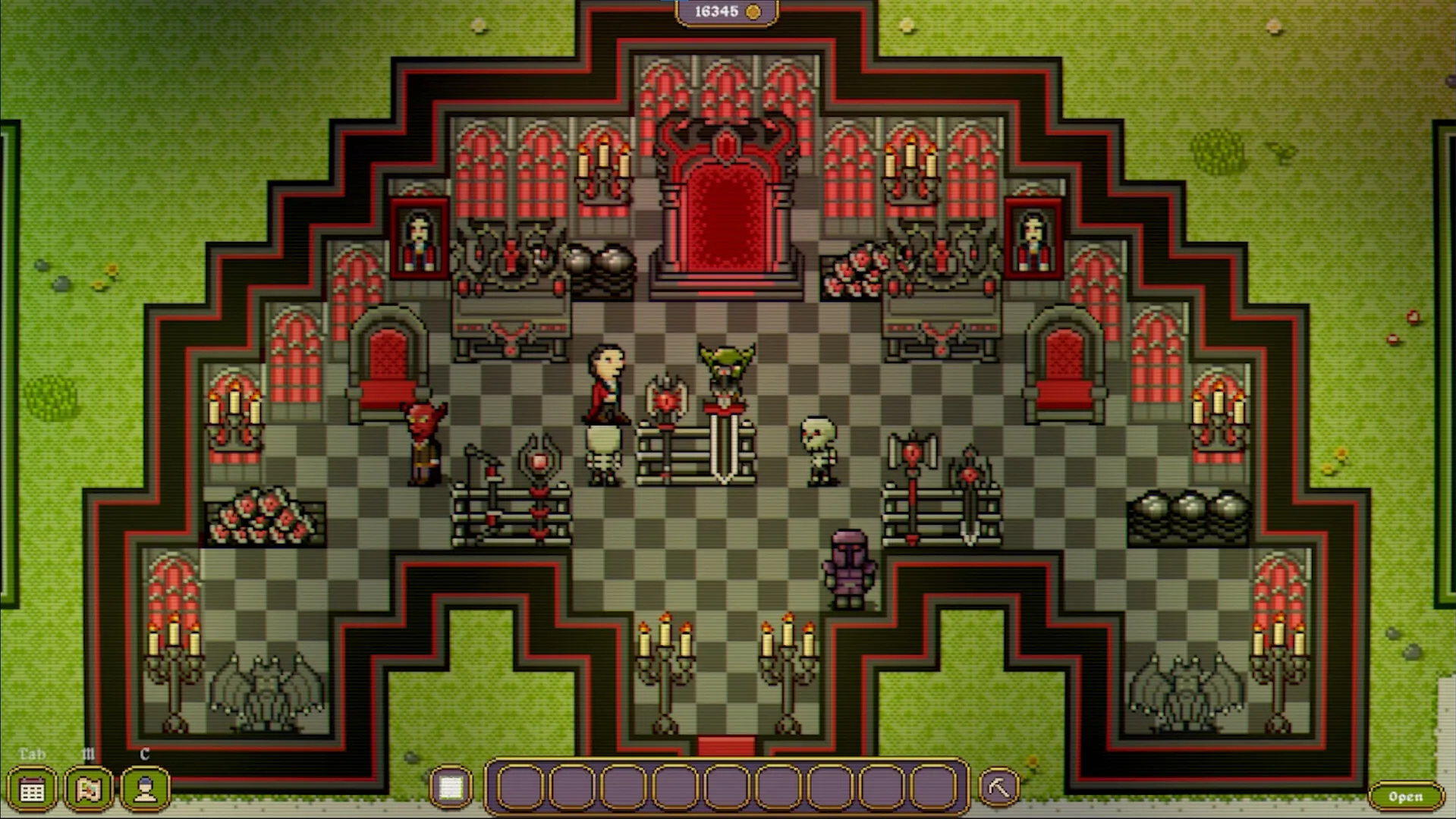
Crafting is not a filling bar. Every weapon and every building goes through a minigame, and more to the point each workstation has its own, discovered as you unlock new tiers.
That is a remarkable content commitment for one person. The lazy solution was a generic minigame in three speeds. Building one per bench means agreeing to design, balance and animate a complete little mechanic every time you add a station.
And it changes how progression feels. Unlocking a tier does not only grant better recipes, it grants a new action.
This is the system that interested me most, because it turns the shop into an operations centre.
You hire two kinds of staff. Builders craft components and weapons while you delegate, keeping things moving when you are busy elsewhere. And explorers head out on missions across the world, returning several days later with resources and new recipes.
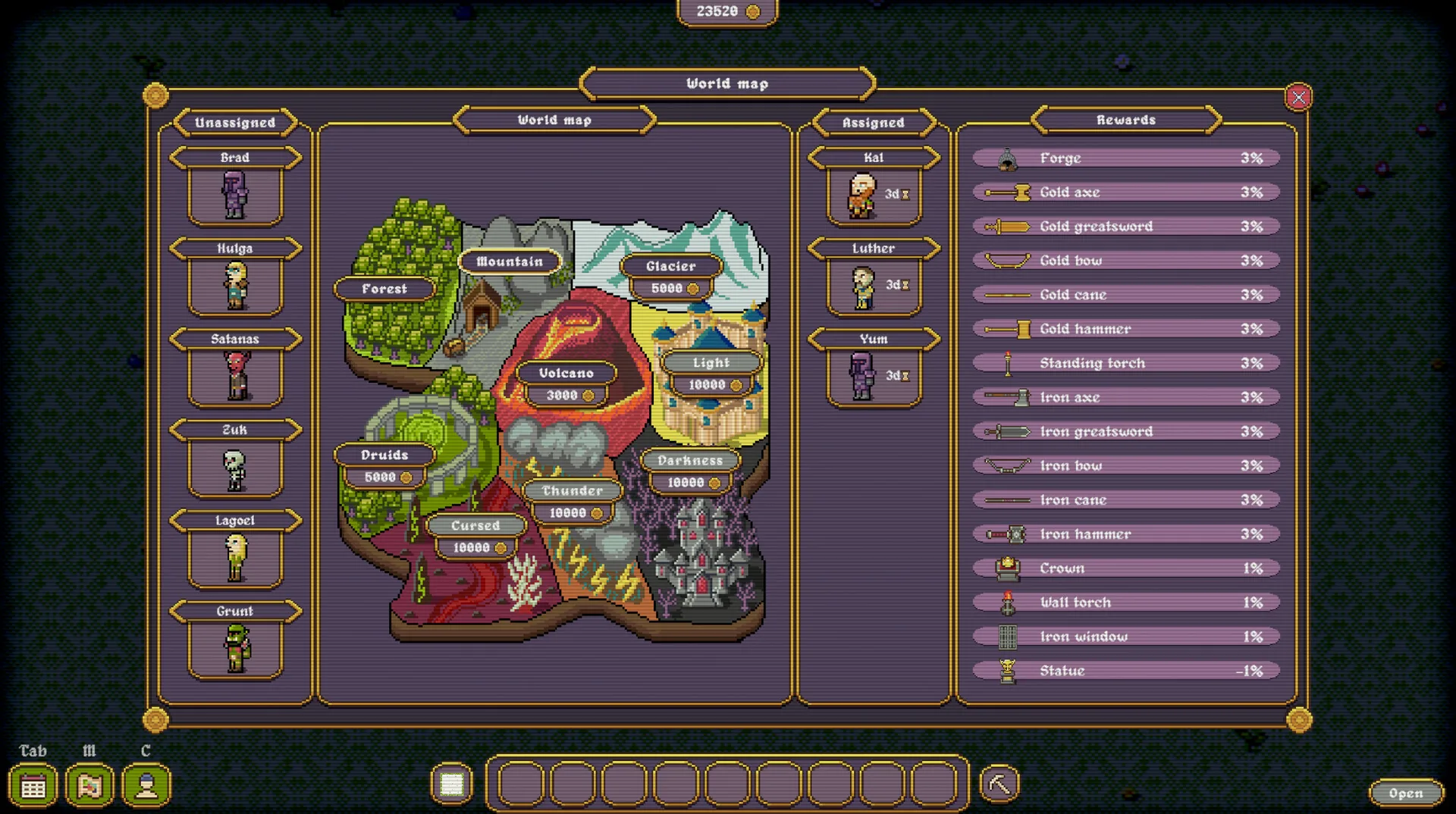
The concrete detail is worth giving, because it shows the system's real depth. The world map holds nine zones, from the starting forest through mountain, glacier, volcano, druid lands, light, thunder, cursed ground and darkness. Each unlocks for gold, between three thousand and ten thousand coins depending on difficulty.
You keep a stable of named, visually distinct explorers, from a goblin to a skeleton by way of a demon, assigned to a zone for a set number of days.
And the game shows you exactly what you are playing for: a rewards table with drop rates. A forge at 3 per cent, a gold greatsword at 3 per cent, a crown at 1 per cent, an iron window at 1 per cent. You know what you are hoping for and at what odds.
That is the part of the game that runs without you, and it gives the days a rhythm: you open the shop knowing three people are out there possibly bringing back the thing you lack.
Progression runs through unlocking zones that grant access to higher tiers. Each brings its own weapons, special buildings and exclusive materials, and you send explorers out to fetch its resources.
It is conventional and well calibrated. The loop closes: selling funds the unlock, the unlock opens a zone, the zone supplies materials, the materials allow better weapons, better weapons sell for more.
Worth addressing, because it is the game's identity and the studio announces it in capitals.
You can insult people. Customers, employees, even buildings. Without mercy, as a true goblin would.
It is pure garnish, it changes nothing mechanically, and that is fine. But it produces a contrast I find amusing: here is a game whose protagonist spends his time abusing everyone, and whose design is among the gentlest we have seen this month. No countdown, no timed input, an entirely free pace, and a shop that only opens if you feel like it.
The aggression is in the tone, never in the pressure. That is probably the right dosage.
The game launches today in early access, made by one person, Adrià Raventós. There is a demo, a soundtrack sold separately, and a supporter upgrade adding goblin skins.
It is single-player only, fully playable on a controller.
The honest reservation covers what cannot yet be judged: a shop game's longevity is measured at the point where the novelty of the minigames wears off. If they become a formality you rush through, the loop reduces to a repeated negotiation. If they keep a little demand, the whole thing holds for a long time.
Plenty of shop games come out, and most settle for a buy-sell cycle with a customer satisfaction gauge.
This one made a more interesting choice: it separated luck from skill. You do not control what your forge produces, you control what you extract from it. That gives every disappointing item a possible second life, and every exceptional one a risk of being undersold.
Add one minigame per bench, nine zones to explore with their odds on display, and an aesthetic that knows exactly which console it descends from, and you have a very good little game that never once tries to pressure you.
The goblin insults everybody and lets you take your time. There are worse bosses.
How far do you push the price before accepting? Come and confess your threshold on the InsertCoins Discord.
Community
Your rating
Advertisement
Loading comments...
You might also like
A co-op bar that collapses while you serve. 98 per cent positive, and one of the rare times chaos is the actual subject.
You draw a plan on the map and officers execute it alone. Except the game crashes every other planning phase.
The Knights of Pen & Paper team return with a dungeon where you come back to camp, cook, and unlock recipes that change your stats.