7
Test
Dungeon Inn: running an inn while keeping two rival guilds from meeting
You struck a deal with a dragon. All that is left is serving both sides without either finding out. The 1.0 lands on 23 October.
Alexandrosse
7 min
A colony to run above, a dungeon to empty below, and one rule that changes everything: the dead do not come back.
Alexandrosse
InsertCoins.press Score
8/10
Verdict
Recommended
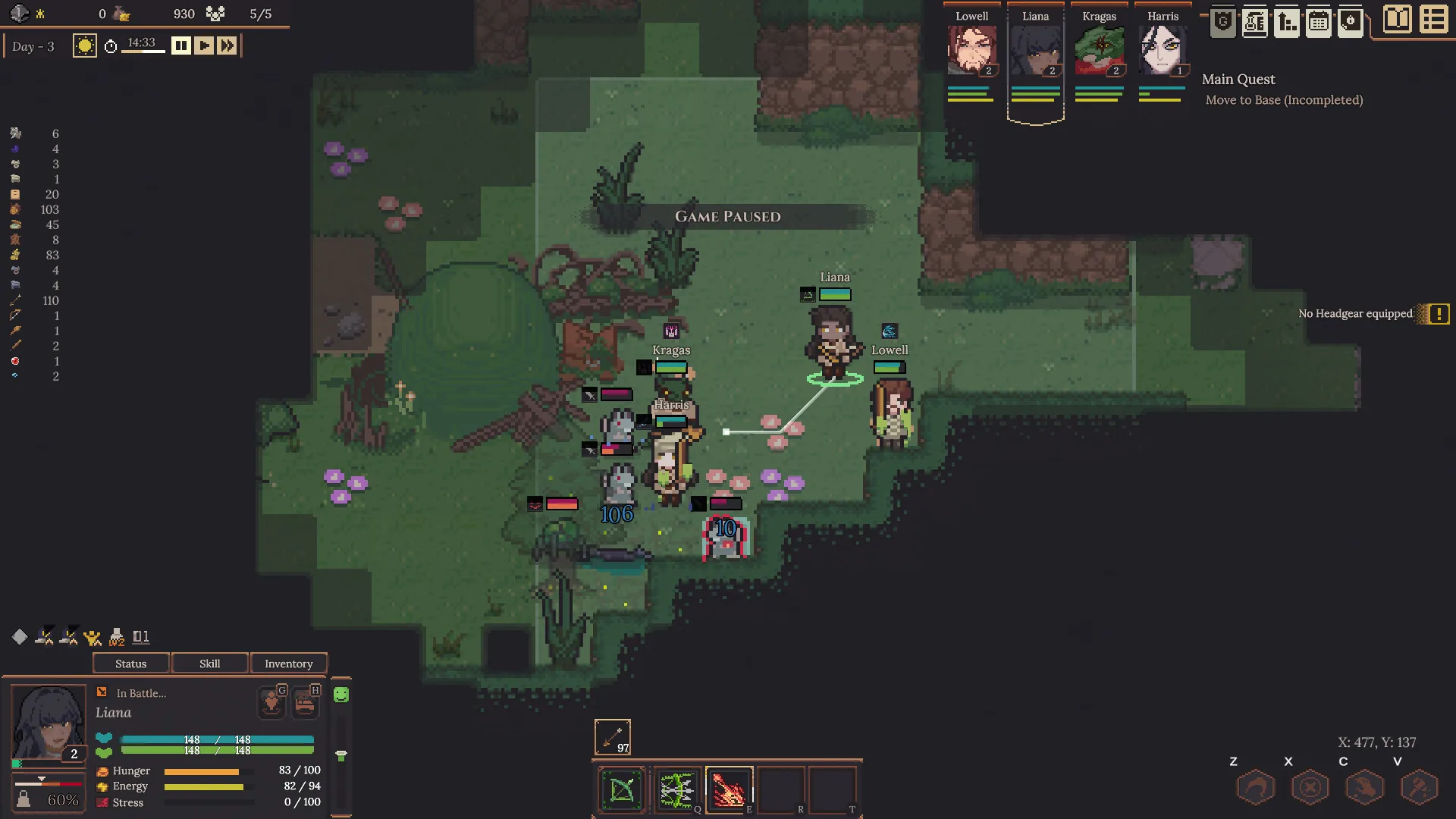
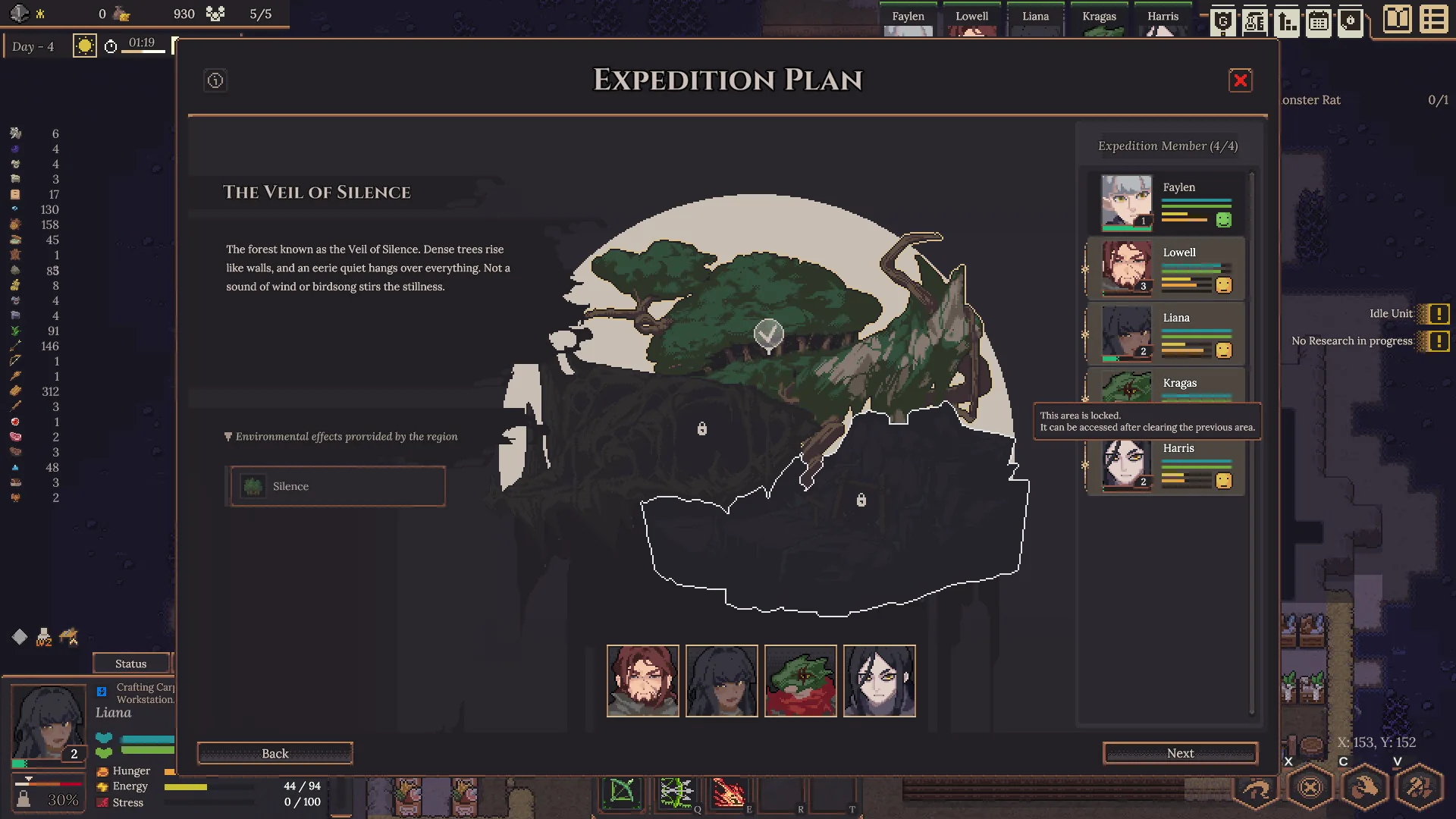
Day 4, eight forty-four in the morning. In the right margin of the screen, three warnings blink gently: somebody is low on stamina, no research is in progress, one unit is idle.
That is not the screen of an adventure game. It is the screen of a foreman. And it is precisely what Dungeon Settlers asks you to be before it lets you go down and kill anything.
The idea fits in one sentence: you run a colony on the surface to fund expeditions into the dungeon underneath it.
The Guild sent you with a mission that is simple on paper, explore and destroy the dungeon that is the source of every calamity. The ground itself is a barren land cut off from the world by magical erosion, and you have to settle people there who will sleep, eat and work while four of them risk their lives below.
What makes the assembly interesting is that each half pays for the other. The dungeon supplies the rare resources the colony cannot produce. The colony makes the rations and camping supplies without which the next expedition will not get far.
So you are not playing a management game with a dungeon attached. You are playing a preparation game, and the descent is the exam.
The surface half is finer than I expected.
You do not drop pre-made buildings, you place walls and doors and decide what the space you have enclosed becomes. A bedroom here, a dining hall there, a forge with its anvils and smelters, fields to cultivate outside.
Everybody has to be fed, the rations and gear for the next outing have to be produced, and research has to run continuously to unlock new buildings and equipment. That permanently blinking "no research in progress" warning is a well-deserved little slap: in this game, a day without research is a day lost.
This is where the game tips into role-playing.
Each member has six major abilities, talents, and dozens of combat and daily-life statistics. They also carry traits tied to race, background and personality. The studio gives an example that captures the spirit: a curious Lizardman with a drifter's past.
These are not interchangeable figurines. They have a name, a portrait, a progression, and they take distinct skill trees: sword, mace, bow, fire magic, with sub-branches like warrior, fortress, execution or burst.
And here is the rule that gives everything else its weight: once dead, there is no coming back.
So you spend hours levelling somebody, finding the equipment that suits their traits, building a synergy with the other three, knowing that one bad positioning call can erase all of that permanently. It is austere, it is cruel, and it is what makes every descent tense.
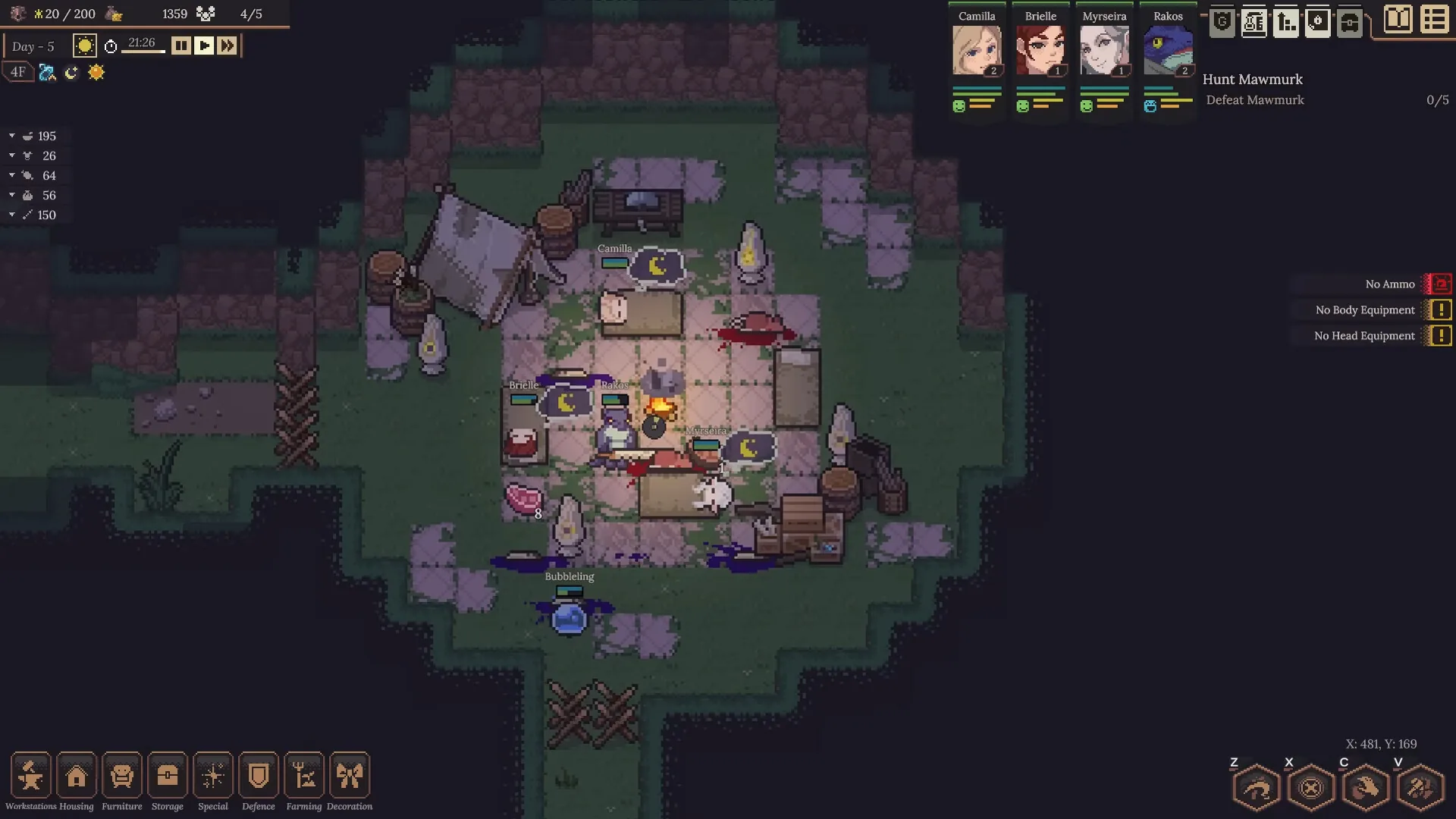
Four members, no more, and a fight that runs in real time but can be frozen at any moment. No turns, no round limits, just a pause to think.
The palette of effects is that of a genuine tactical game: stun, bleed, burn, provoke, vulnerable, charge attacks, summons. You read the enemy's patterns, position properly, exploit weaknesses, and fire at the right moment.
A concrete example beats a description. One active skill in the fire branch deals forty per cent of magic attack power as damage, applies a five-second burn, then bounces up to eight times to enemies within three tiles, prioritising the ones hit least often.
That level of detail is everywhere, and it is the mark of a game written by people who love systems. One honest reservation: in the captures the studio has published, some sub-branches still carry a "not yet implemented" label. The trees will therefore fill out during early access, and the roadmap published on launch day will say at what pace.
Every expedition is randomly composed: floors and rooms change each time.
Better still, regions apply random environmental effects, which means the same depth does not play the same way twice running. The deeper you go, the rarer and more valuable the resources, and the more unpleasant what lives there: massive golems, acid-spitting creatures, the remnants of magical experiments.
You harvest wood, herbs, gemstone veins and mandrake. You meet merchants down there, which is a good design idea: a trader at the bottom of a dungeon turns a backpack decision into an economic bet.
And there is an ancient tree that demands blood before it will bear its forbidden fruit, a detail I note because it says everything about the tone: serious dark fantasy, no winking.
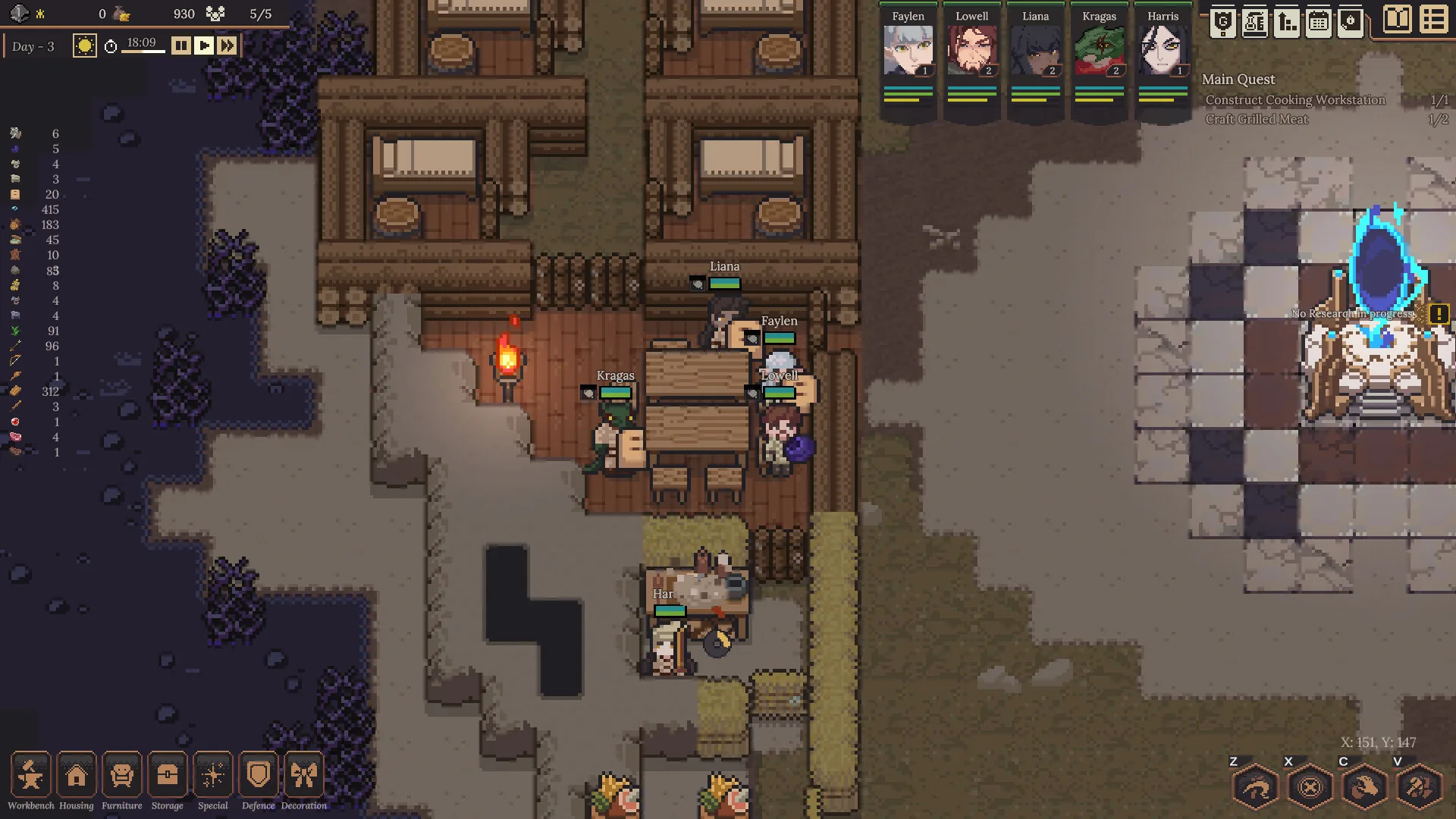
It has to be discussed, because it is the first thing that hits you, and because pixel art has become a reflex for plenty of studios with nothing to say through it.
Here it is not a reflex. The difference is in the faces. Every member has a hand-drawn portrait, expressive, with an actual head and a gaze, and those portraits sit beside tiny sprites you should not be able to read anything into. The contrast works: the small silhouette taking a hit at the bottom of the screen has a face in your head, and that is exactly why its permanent death annoys you.
Add floor tiling that changes from room to room, warm light in the colony against a dirty blue in the depths, and a dense but legible interface, and you get a game that uses the pixel as a language rather than as an economy.
The game opened this morning at eight UTC in early access, with a roadmap published the same day.
Two details suggest the studio is not bluffing much. First, the demo was removed on 27 August, precisely because it no longer represented the game: quality-of-life work and the overall experience had diverged too far. A studio that would rather take down its shop window than be judged on an outdated build is a decent sign.
Second, Steam Deck compatibility was reviewed by Valve as Playable, but the studio says itself it does not officially support the device yet, with the appropriate caveats: keyboard icons shown, on-screen keyboard to be invoked manually, small text. That is a kind of honesty you do not see every day.
The game is single-player only, and it runs on almost anything: a Core 2 Duo, 4 GB of memory, integrated graphics and 2 GB of disk.
On the anticipation side, the studio announced two hundred thousand wishlists on 8 August, then three hundred thousand on 2 September. Those are its own figures, and a wishlist is neither a purchase nor a player, but the slope over one month says something about the curiosity around the project.
Games like this have a natural enemy, gratuitous complexity, and Dungeon Settlers avoids it by keeping a very legible loop: prepare, descend, bring back what you can, upgrade, go deeper.
What makes it particular is that its two halves do not speak the same emotional language. Upstairs it is calm, you draw walls, plant fields, read reports. Downstairs you can lose in ten seconds a character whose name, past and face you know.
It is a small-party game written by a small team, one that rebuilt its prototype almost entirely after six months of work. That shows in the right way: it is stubborn, it is precise, and it is not trying to please anybody except people who enjoy losing hours in a skill tree before losing a friend.
What does your ideal expedition quartet look like? Come and defend it on the InsertCoins Discord, we bury ours in silence.
Community
Your rating
Advertisement
Loading comments...
You might also like
You struck a deal with a dragon. All that is left is serving both sides without either finding out. The 1.0 lands on 23 October.
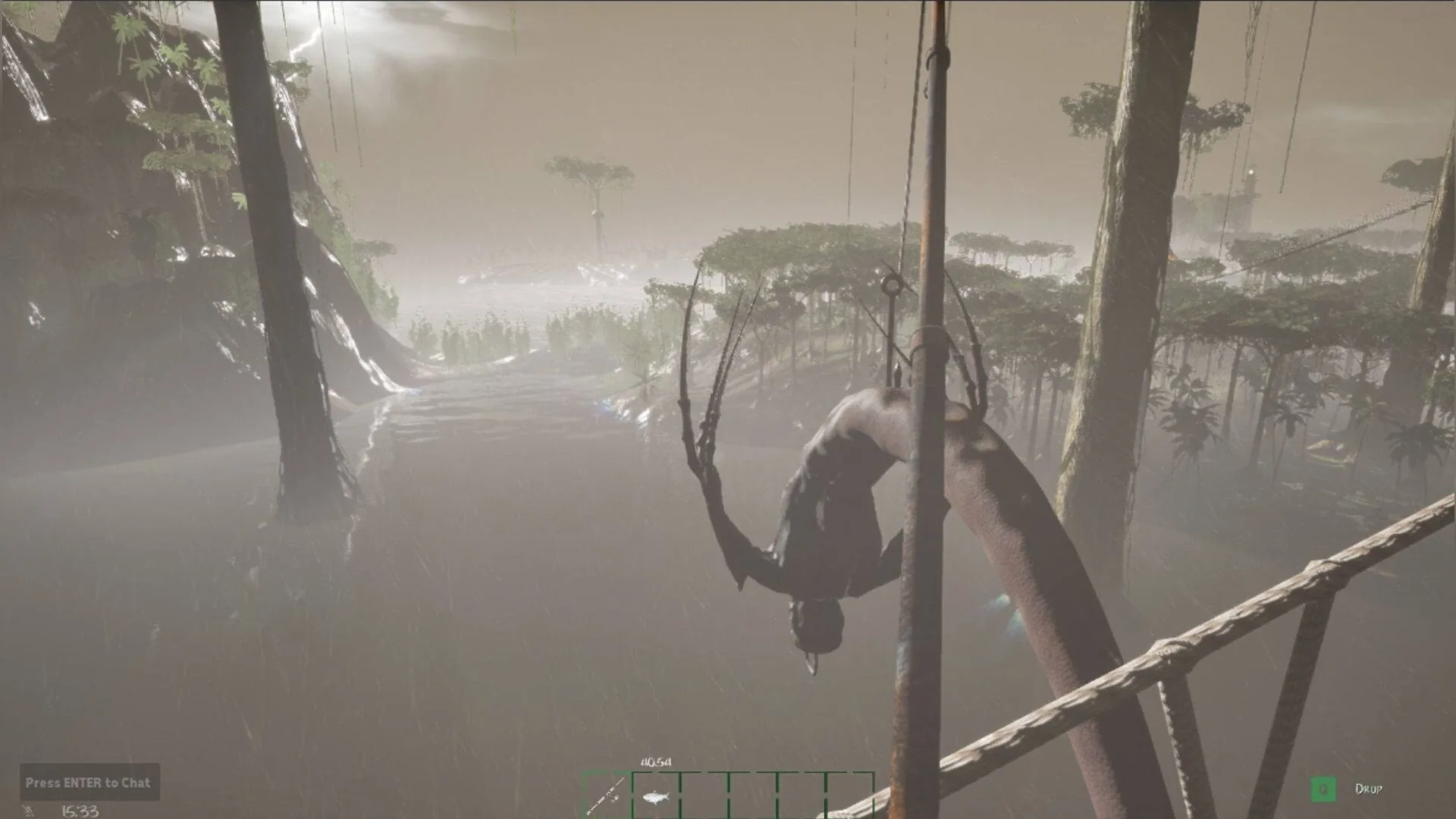
A co-op horror fishing game at nine euros. You must sacrifice fish every day, and the beast is not the worst thing out there.
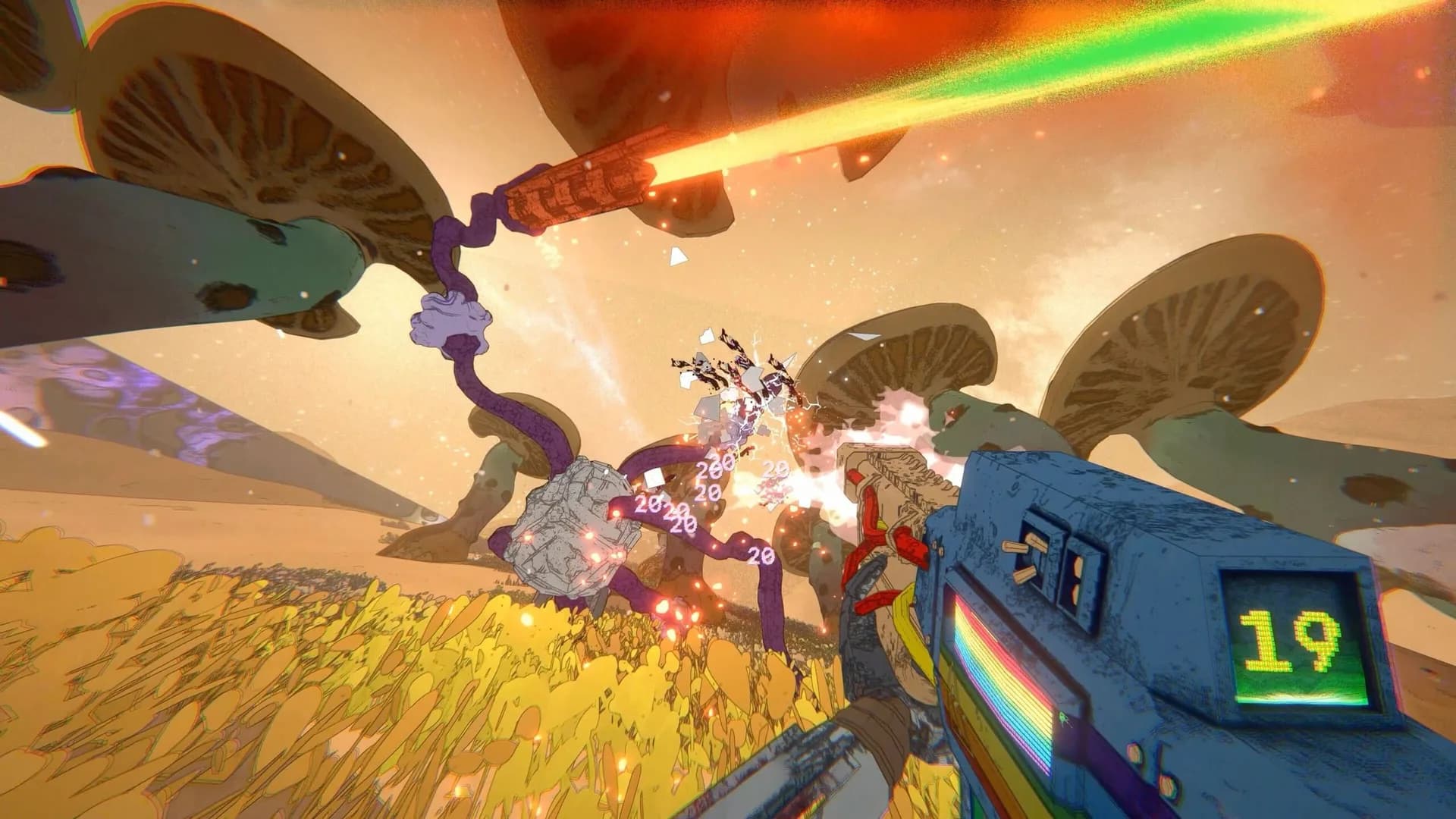
Scrapheap robots sent to exterminate a planetary fungus. The 1.0 lands tomorrow, and the upgrade grid is the genre's best idea.