7
Test
Barfender: my idiotic friend drank all the beers
A co-op bar that collapses while you serve. 98 per cent positive, and one of the rare times chaos is the actual subject.
Alexandrosse
7 min
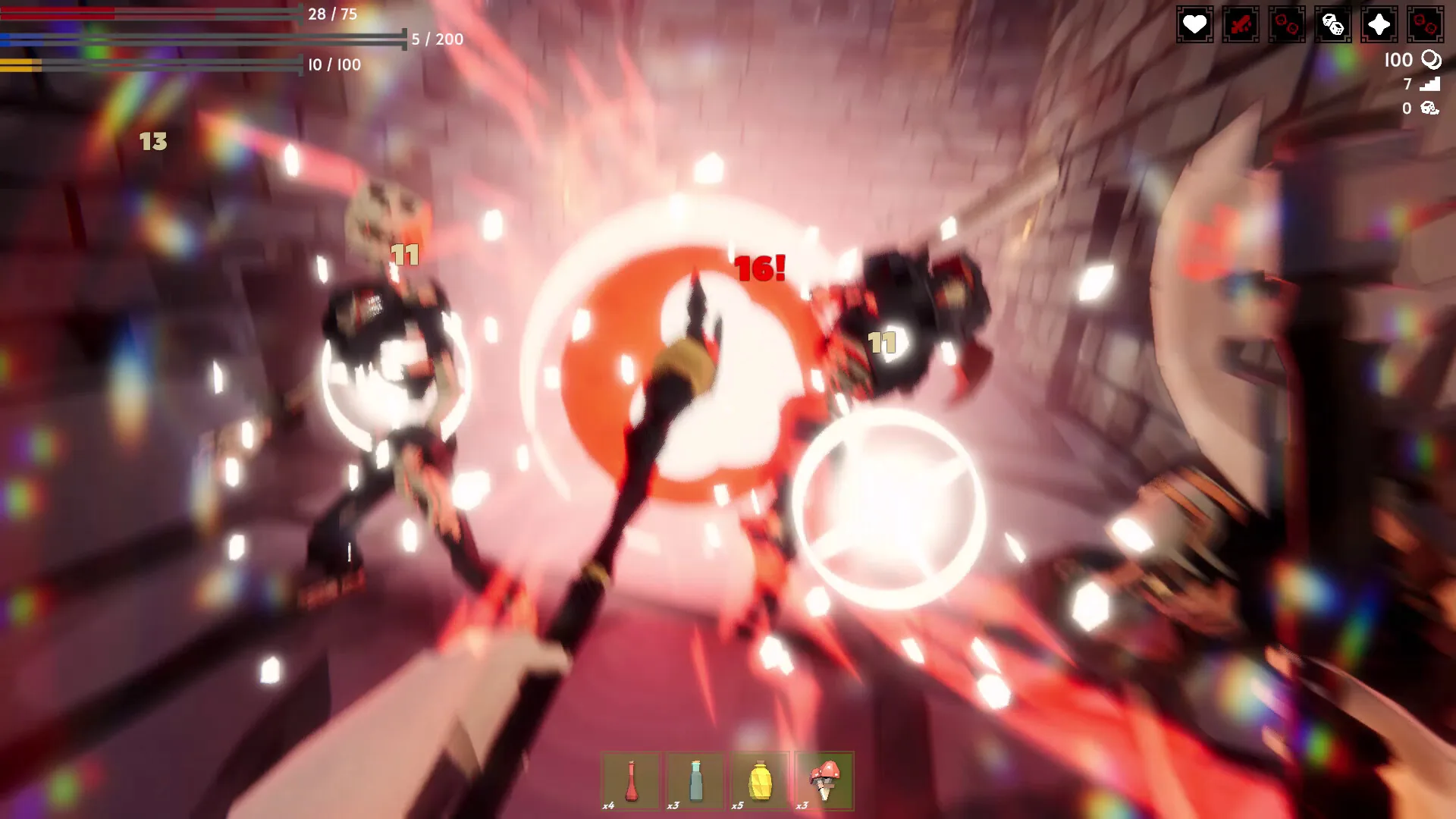
You go down into the dungeon to fetch your stock, then you set the prices. The shop half is considerably better thought out than the sword half.
Alexandrosse
InsertCoins.press Score
7/10
Verdict
Recommended
The question the game asks is a good one: why buy from adventurers when you can go and fetch the goods yourself?
You run a shop. Except the stock does not come from a wholesaler: you have to go through the back door, descend into the dungeon, and come back alive with whatever you picked up.
Two supply grounds. The dungeon, a descending roguelike nightmare, and the local forest, for foraging.
The dungeon runs on a simple, well-chosen rule: the deeper you go the rarer the loot, and if you die you lose everything you have not banked. All the tension lives there, in the question you ask yourself at every landing. Do you secure the bag now, or try one more floor for the legendary drop?
It is a proven mechanism, and it works here for a specific reason: what you bring back is not a score, it is inventory. Losing a haul is not losing a run, it is opening the shop tomorrow morning with empty shelves.
The forest plays a different, less predictable tune: goblin raiding parties, sudden thunderstorms, and a psychedelic mushroom season the game promises will scramble your head. It is the fallback ground when you do not fancy the dungeon, and it has surprises of its own.
It is first-person hack and slash, and it is the least developed part of the game.
You swing, you dodge, you repeat. There is no enemy read to develop, no stamina management forcing you to think, no positioning that rewards patience. Skeletons fall because you clicked fast enough, not because you understood something.
The game is plainly aware of this, because it compensates with a system of dungeon altars meant to supply the variety the sword swings do not. And they are, it must be said, inventive.
You can shrink to a tiny size to slip under big attacks. You can pick up a Midas Touch that melts heavy items into gold, which is far cleverer than a damage bonus since it converts an encumbrance problem directly into profit. And you can cycle between manic and depressed combat states to keep enemies guessing, which is a frankly strange idea and rather delightful.
These altars save the day. They do not turn a basic combat system into a deep one, but they do make two descents feel different, and that is what you ask of a roguelike.
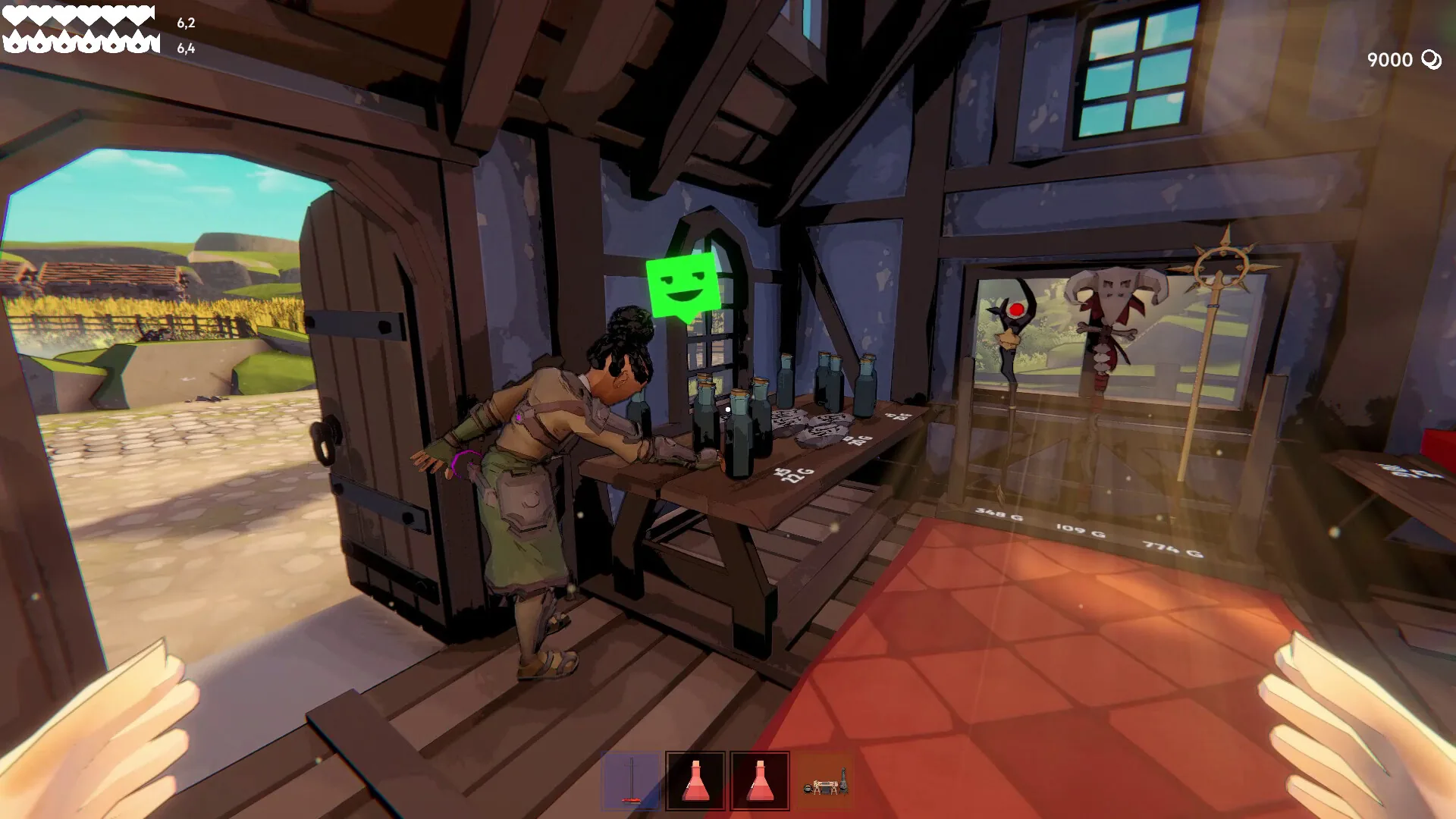
Here is where the studio put its intelligence, and it shows immediately.
You set the prices yourself. No automatic value: you read the market and you tag, factoring in current supply, demand, your shop's prestige and your decoration bonuses. Too expensive and the goods gather dust. Too cheap and you go under. You have to find the sweet spot, and it moves.
That is a genuine management mechanic, with several interacting variables, where many shop games settle for a multiplier.
Crafting follows the same logic. You forge better weapons and build tougher armour to push deeper, therefore to bring back better, therefore to sell more. Materials and recipes hauled out of the expedition feed the workshop directly.
The Quest Board adds a layer I thought was well judged: feats achieved during an expedition convert into gold, gear and items. In other words how you survived counts, not only what you carried out.
And then there is decoration, which is the game's best idea.
The furniture is not cosmetic. A well-considered layout grants permanent combat buffs for your next dive and improves the shop's sales appeal.
Take the measure of what that does structurally. The game's most accomplished system, the shop, feeds its weakest system, combat. You do not repair mediocre fighting by training, you repair it by rearranging your showroom. It is absurd on paper and perfectly coherent in play, because it forces you to think about both halves together instead of experiencing them as two games glued end to end.
The Midas Touch does the same thing in reverse: a dungeon ability whose only purpose is to produce currency. The two systems reach for each other.
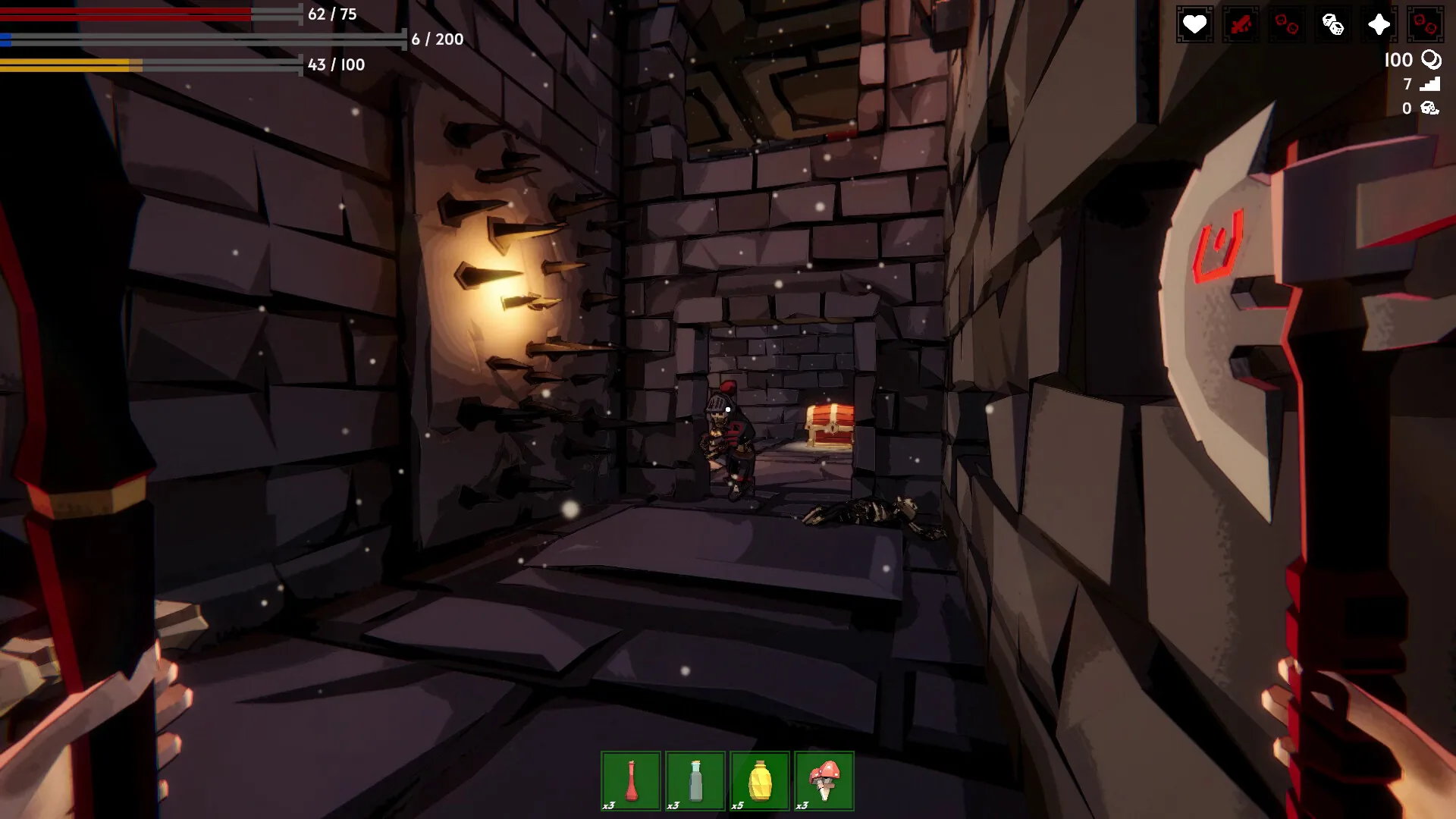
The look is stylised, colourful, and honestly rather generic. It is not ugly, it is familiar: the round-edged cartoon fantasy you meet across a great many modest productions.
A word on the origin, because the impression of a tiny studio is misleading. The game is developed by Art Games Studio and co-published with PlayWay, the Polish publisher known for its volume of simulators. So this is not a lone developer in a bedroom but a modest team backed by a production machine.
That takes nothing away from the game and it may explain its profile: one solid central idea, competent execution, art direction that is cheap to produce, and the budget concentrated where it counts, which here is the economy.
There is a demo on Steam, and it is the right way to find out whether the combat will be enough for you.
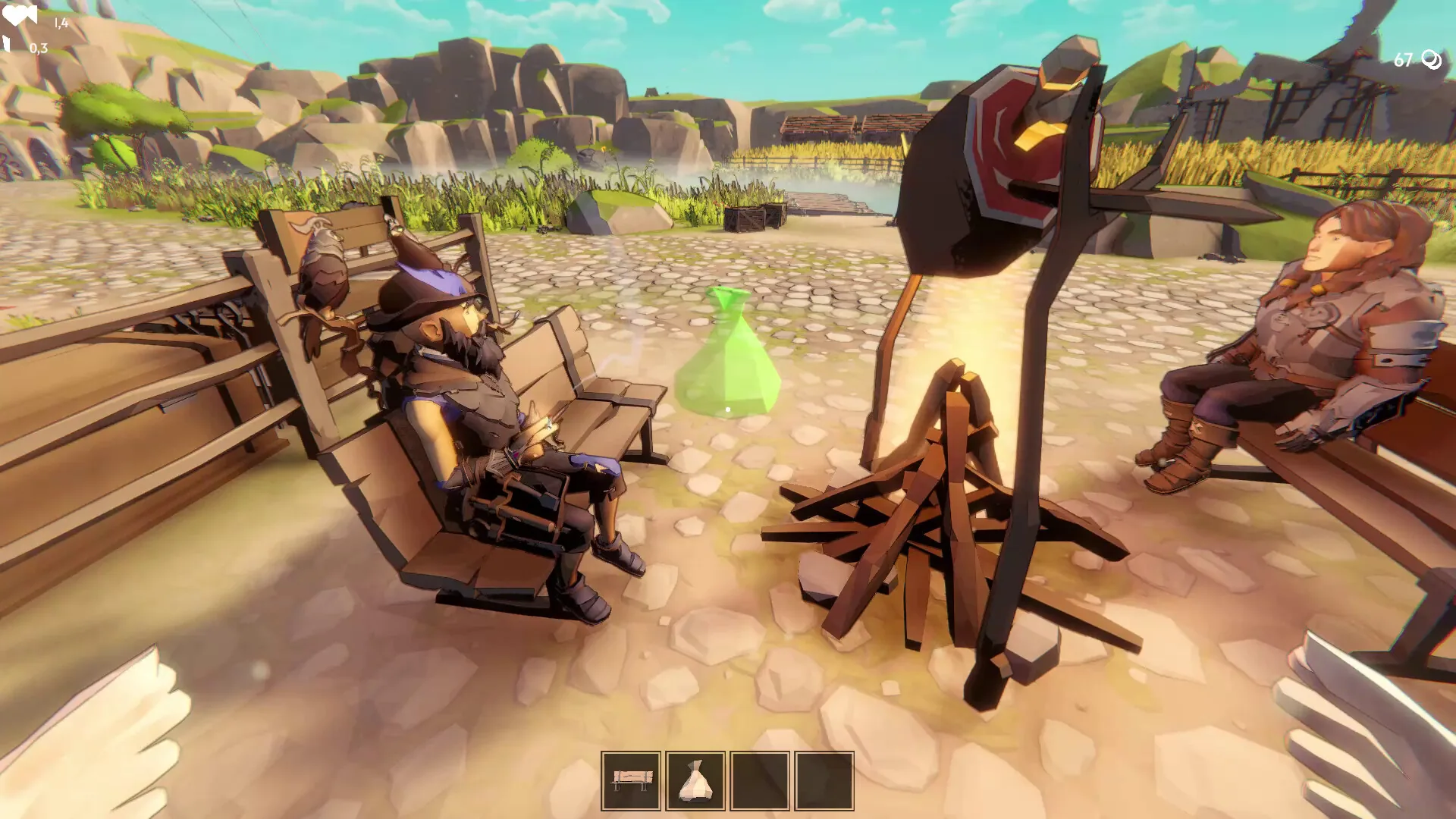
You need to know what you are buying. If you come for the hack and slash, you will find it thin after a few hours: hitting skeletons never becomes an art.
If you come for the trade, on the other hand, there is plenty here. Setting a price on stock you went and fetched yourself at risk of your life gives an economic decision a weight shop games never manage. Overpricing an item is no longer a missed sale, it is leaving something that nearly cost you your skin to sit in the window.
This game does not really know how to fight. But it knows exactly why you are fighting, and that is rarer.
Do you undercut or wait for the right customer? Come and confess your pricing policy on the InsertCoins Discord.
Community
Your rating
Advertisement
Loading comments...
You might also like
A co-op bar that collapses while you serve. 98 per cent positive, and one of the rare times chaos is the actual subject.
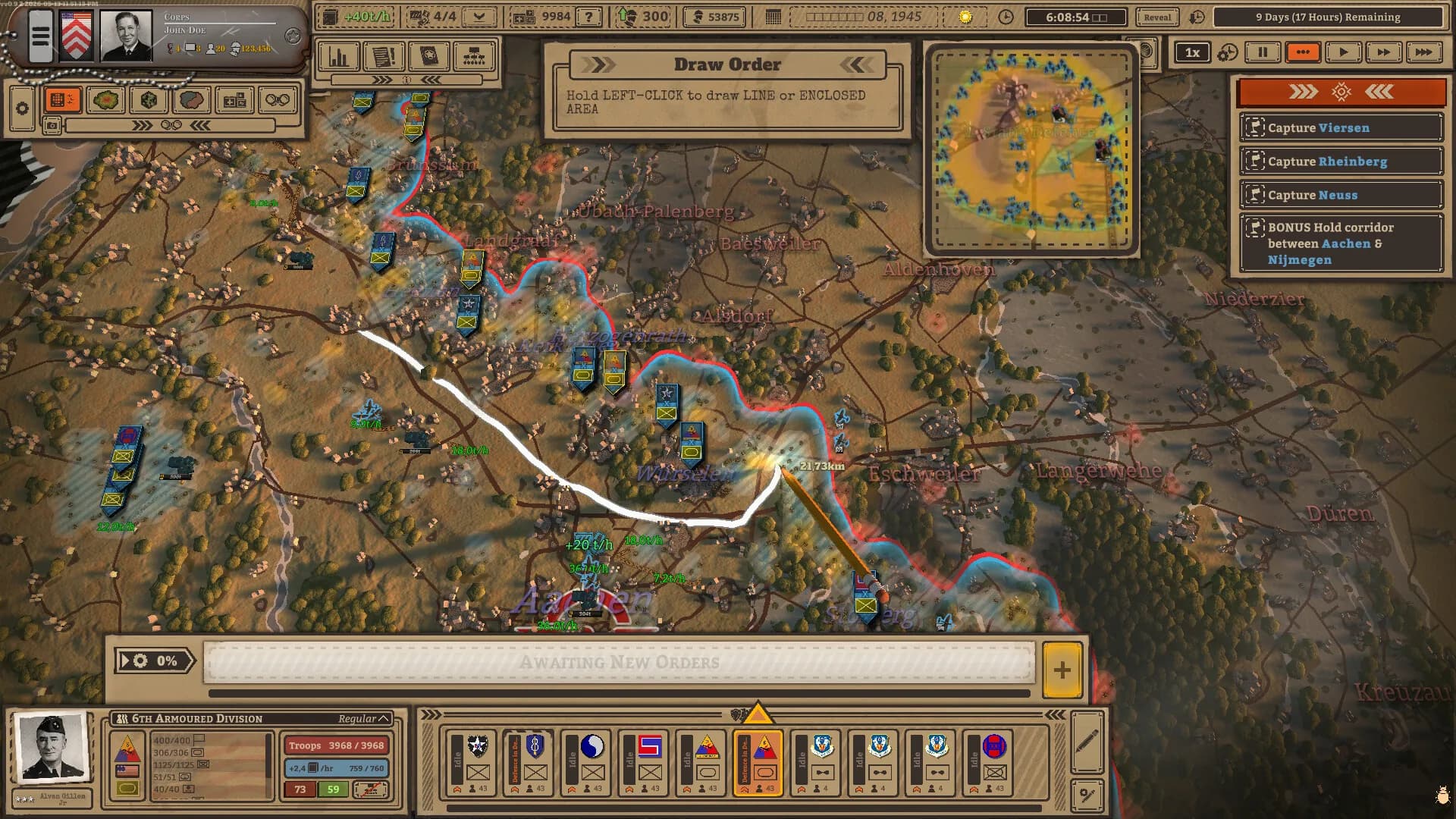
You draw a plan on the map and officers execute it alone. Except the game crashes every other planning phase.
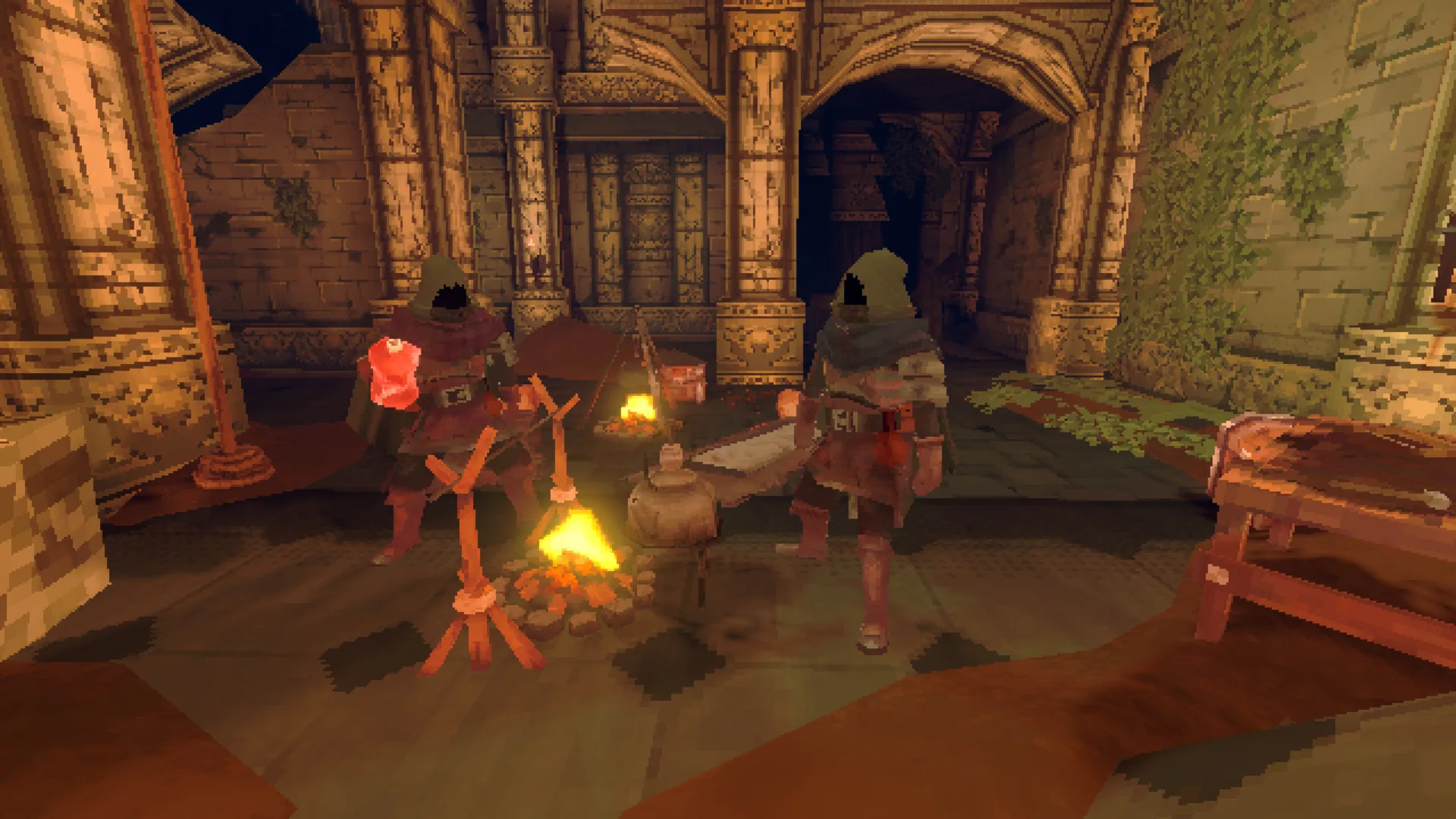
The Knights of Pen & Paper team return with a dungeon where you come back to camp, cook, and unlock recipes that change your stats.