7
Test
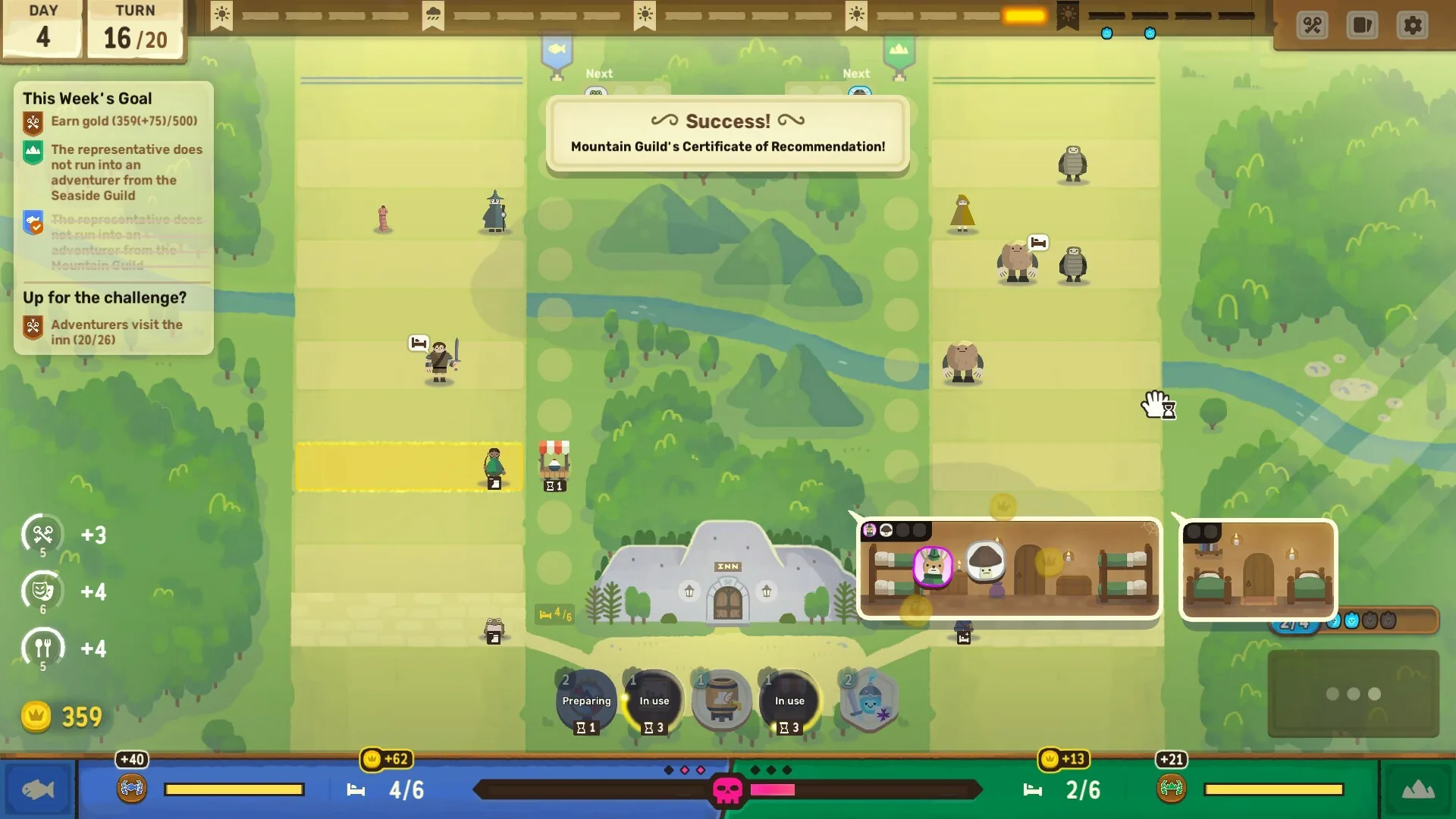
Dungeon Inn: running an inn while keeping two rival guilds from meeting
You struck a deal with a dragon. All that is left is serving both sides without either finding out. The 1.0 lands on 23 October.
Alexandrosse
7 min
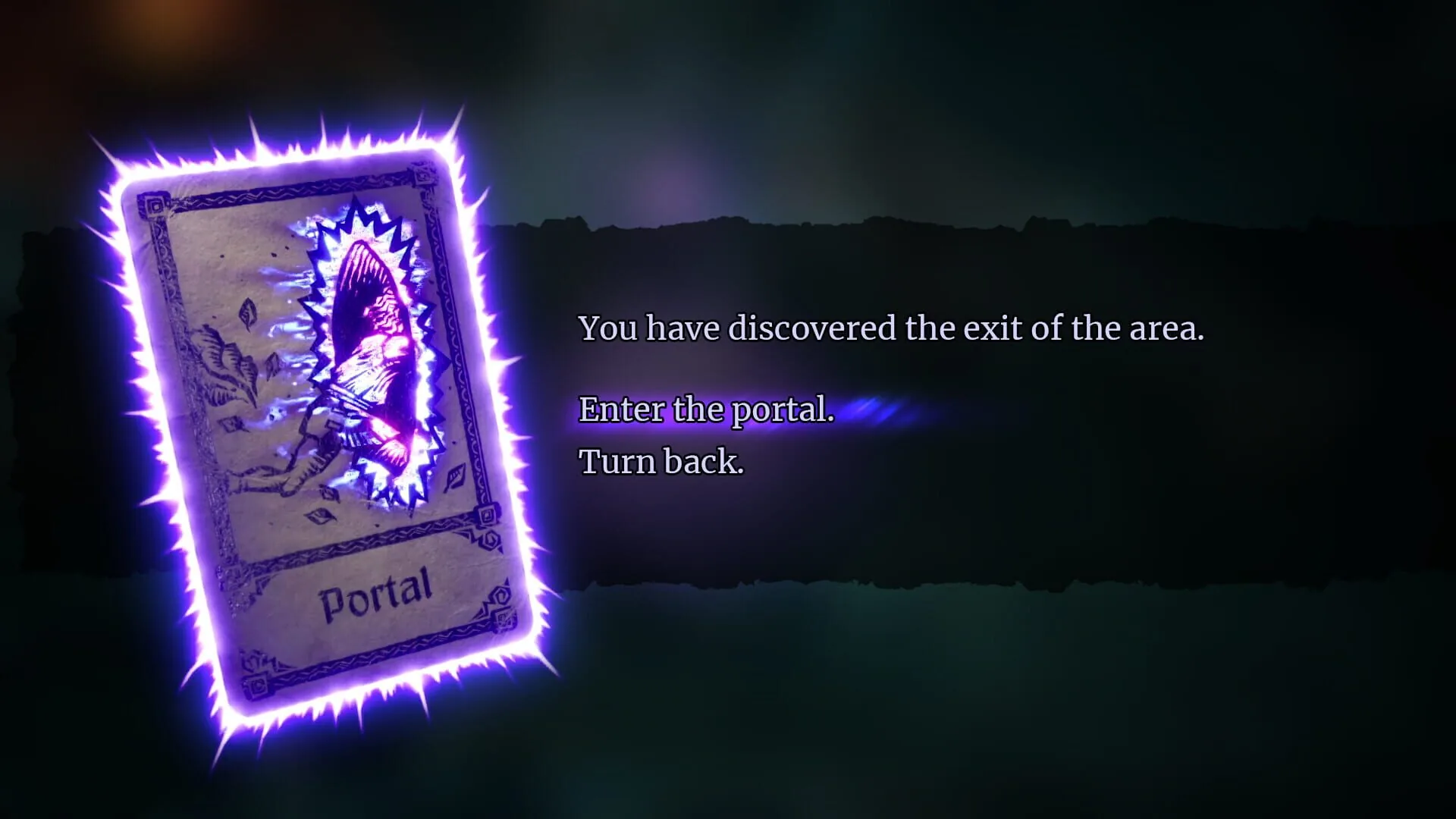
Another Vampire Survivors-style bullet-heaven? Yes, but this one forges your build with cards. Hand of Fate: Hordes brings deckbuilding strategy to a genre going in circles.
Alexandrosse
InsertCoins.press Score
7/10
Verdict
Recommended
Ever since Vampire Survivors blew the genre open, we've been drowning in auto-shooters. Every week brings its swarm of enemies to mow down automatically, its random level-ups and its builds that spiral, to the point that you enter each one already knowing the tune. Hand of Fate: Hordes arrives in that saturated tide, and we wondered what it could possibly bring that's new. The answer lies in its heritage: what if, instead of enduring random choices, you forged your build with a deck of cards?
Hand of Fate: Hordes is a dark-fantasy bullet-heaven auto-shooter developed by Defiant Development and Spitfire Interactive, available since 22 July 2026 on PC. It's an offshoot of the Hand of Fate series, known for its unique marriage of action and deckbuilding, and it takes up that DNA to apply it to the fashionable genre. You survive hordes, you forge your build and you unleash devastating attacks to escape a netherworld lurking beyond the thirteenth gate. All of it is powered by strategic deckbuilding mastery, and it's precisely that heritage that sets the game apart from the mass of its competitors.
Hand of Fate: Hordes's real contribution, the one that answers the genre's question, is replacing much of the randomness with strategy. In a classic Vampire Survivors, you endure level-ups where you pick from random options, and the build largely shapes itself by luck. Here, deckbuilding mastery becomes the engine of power: you build and optimize your deck beforehand, you prepare your synergies, you plan your ramp-up rather than discovering it passively. That layer of strategic preparation, inherited directly from the Hand of Fate series, brings the bullet-heaven a dimension of thought and control it sorely lacks elsewhere.
That graft changes the very nature of the experience. Where most auto-shooters play out in the moment, reacting to the growing chaos, Hand of Fate: Hordes rewards planning and construction, exactly like a deckbuilder. You don't just survive the horde, you methodically assemble the machine that will crush it, and that upstream mastery gives a more cerebral satisfaction, closer to the pleasure of theorycrafting. For the genre fan tired of leaving everything to chance, it's a welcome breath of fresh air, and for Hand of Fate nostalgics, it's a joy to find that particular DNA in an unexpected dressing.
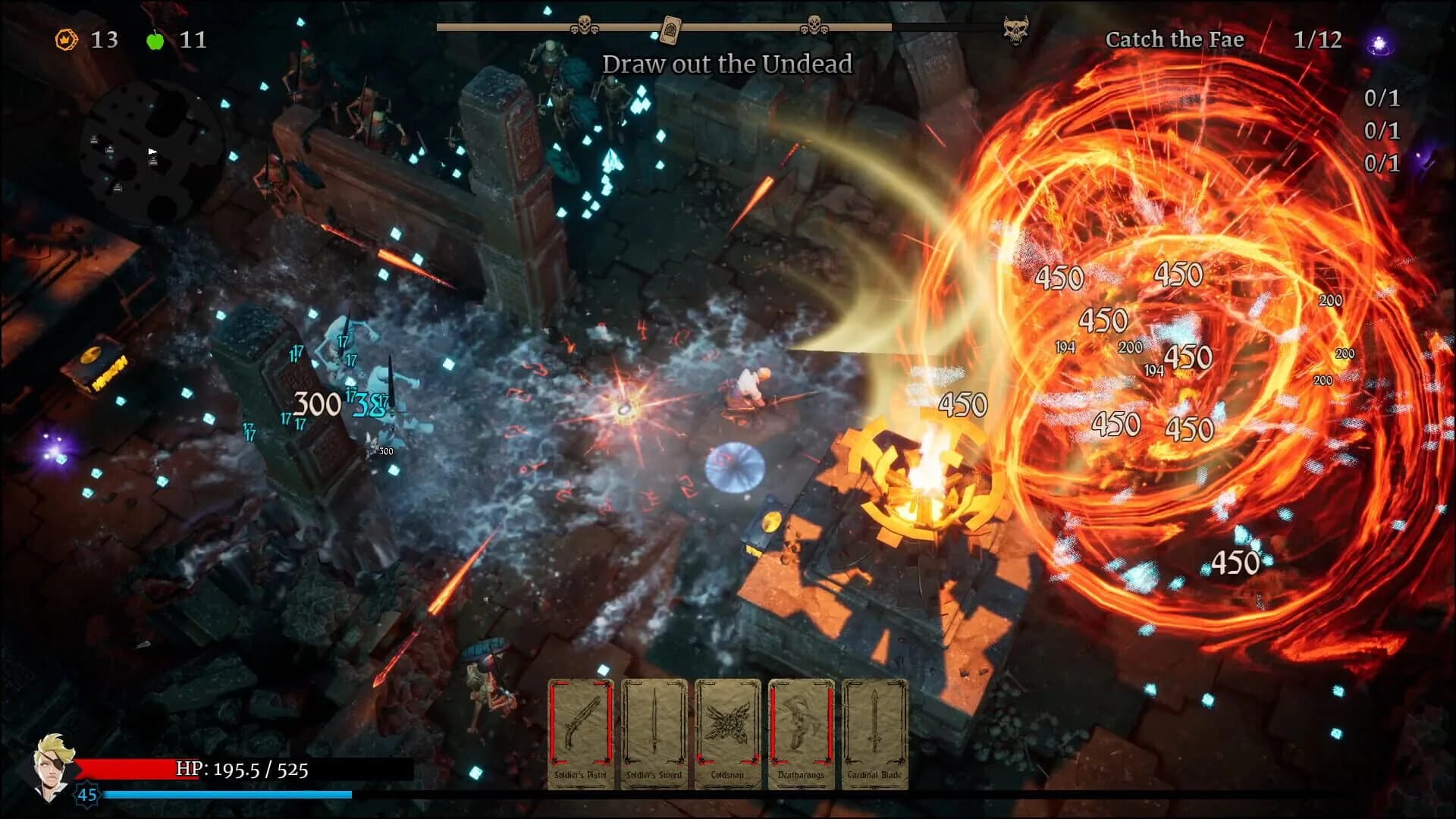
You should nonetheless stay critical, because however clever it is, this idea doesn't erase all the genre's flaws. The bullet-heaven remains the bullet-heaven, with its survival-and-ramp-up loop that, despite the deckbuilding layer, keeps a share of inherent repetitiveness. Once the best card combinations are identified, the risk is falling back into the pattern of the optimal build replayed on loop, exactly as in the other games of the genre. The deck strategy renews the interest, but it doesn't fully immunize it against the wear proper to the auto-shooter.
There's also the decisive question of the real depth of that card system. All the game's interest rests on the richness of its deckbuilding, on the variety of cards, synergies and possible builds, and it's that density that will determine whether it lasts dozens of hours or runs dry fast. Too thin a deckbuilding would reduce the contribution to a mere gimmick, while a rich deckbuilding would make it a real renewal of the genre. It's on that thread that the game plays out, and its success over time will depend entirely on the generosity and balance of its card arsenal.
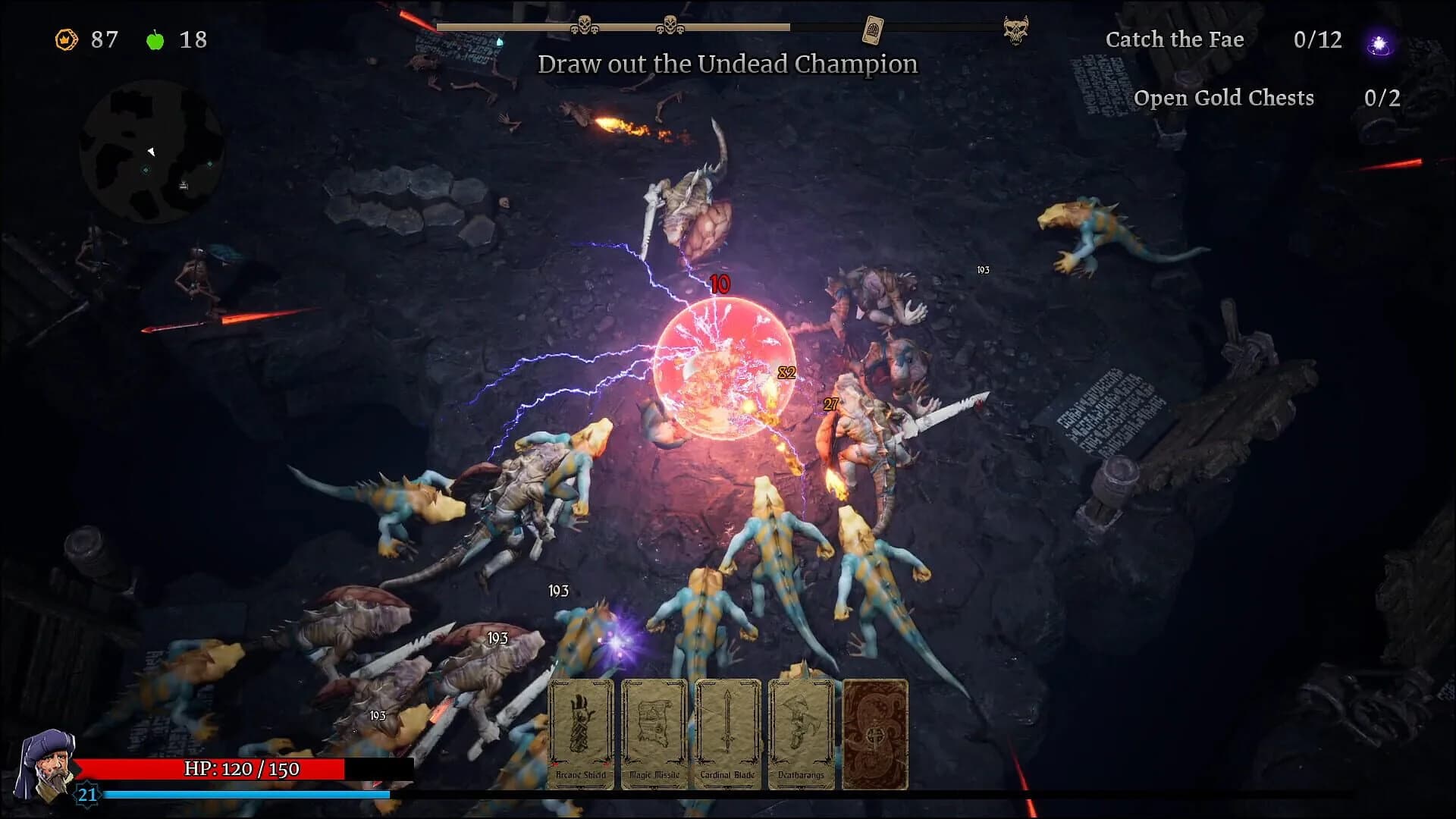
Hand of Fate: Hordes does what it takes not to drown in the tide of auto-shooters: it brings a real idea. By grafting the Hand of Fate series' strategic deckbuilding onto the bullet-heaven formula, it replaces much of the randomness with preparation and control, giving the genre a cerebral dimension it lacks almost everywhere else. For the fan tired of leaving everything to chance, and for the Hand of Fate fan delighted to find that DNA, it's a clever and refreshing proposition that clearly stands out from its competitors. The concept alone justifies your attention.
You just have to keep a cool head about its limits. The deckbuilding renews the interest without fully immunizing the game against the genre's inherent repetitiveness, and all its value over time will depend on the real richness of its card system. If the arsenal is generous and well-balanced, you're holding one of the smartest auto-shooters on the market; if it's too thin, the idea will fall back to gimmick status. As it stands, it's an excellent starting point and one of the most relevant variations we've seen on the Vampire Survivors formula. One to watch, but already recommendable.
An auto-shooter that grafts Hand of Fate's strategic deckbuilding onto the bullet-heaven formula, and replaces randomness with preparation: the idea that truly sets it apart in a saturated genre.
Strengths:
Weaknesses:
Tested on PC.
The discussion carries on over on our Discord, where we relitigate scores for far longer than is reasonable.
Community
Your rating
Advertisement
Loading comments...
You might also like
You struck a deal with a dragon. All that is left is serving both sides without either finding out. The 1.0 lands on 23 October.
A co-op horror fishing game at nine euros. You must sacrifice fish every day, and the beast is not the worst thing out there.
Scrapheap robots sent to exterminate a planetary fungus. The 1.0 lands tomorrow, and the upgrade grid is the genre's best idea.