Guide
Hell Let Loose Vietnam guide: the radio, the jungle, and the mistakes that cost a match
When to speak and when to shut up depending on your role, how to move through vegetation, and why encirclement kills more than bullets.
Alexandrosse
9 min
Six maps, helicopters, tunnels and 50 versus 50 in the jungle. After a catastrophic beta, the studio delayed and reworked. Should you jump in?
Alexandrosse
InsertCoins.press Score
6.5/10
Verdict
Mixed
Let us put our cards down: we have played Hell Let Loose for a long time here, mostly as recon, and the idea of taking that formula to Vietnam appeals enormously. Fifty versus fifty in the jungle, tunnels to dig, helicopters, patrol boats on the rivers: on paper, this is exactly the terrain this series needed.
Except the open beta was a public disaster, and that has to be addressed first. Then we need to tell you what happened afterwards, because that is where the story gets interesting.
The verdict was harsh and remarkably consistent. On performance first: players with recent, expensive graphics cards reported frame rates unworthy of them, often between forty and seventy, sometimes below, with sharp drops and abnormally low hardware utilisation. Several noted far better results in heavier games, which pointed clearly at optimisation rather than at their machines.
On feel next, and this is the complaint that hurts this series most: the shooting felt limp, hit detection dubious, with a perceived latency between the click and the shot leaving the barrel. The phrase that recurred most was that the game had lost the original's heft, that particular weight which is Hell Let Loose's signature.
Add strange lighting, textures appearing late, and above all a legibility problem in the vegetation, with enemies hard to pick out. For a recon player, that last point is not a detail: it is the whole job.
The dominant sentiment fitted in one sentence, repeated a thousand ways: delay this game.
Here is the information missing from the thread you read, because it dates from several months ago and stops at the worst moment.
Expression Games and Team17 delayed the release. In their June communication they thanked the community for its feedback and explained that moving the launch to August was the right decision in order to deliver a stronger experience. That is not nothing: in an industry where the date usually outranks the state of the product, pulling back after a failed beta is the behaviour we ask for and rarely get.
The studio then published a blog entirely devoted to performance, explaining that it was analysing gameplay data gathered during the open beta to understand the problems encountered across a wide range of hardware and to guide the optimisation work. Two question-and-answer sessions followed, one on performance, gameplay and maps, the other on the development process.
Finally, a cross-platform playtest was held at the end of July, bringing together, according to the studio, hundreds of thousands of players across Steam, PlayStation and Xbox simultaneously. That is the kind of load test that had been missing, and it took place after the period described in the comments you read.
The game is developed by Expression Games, published by Team17, at a little under thirty-six euros, and it is available in French.
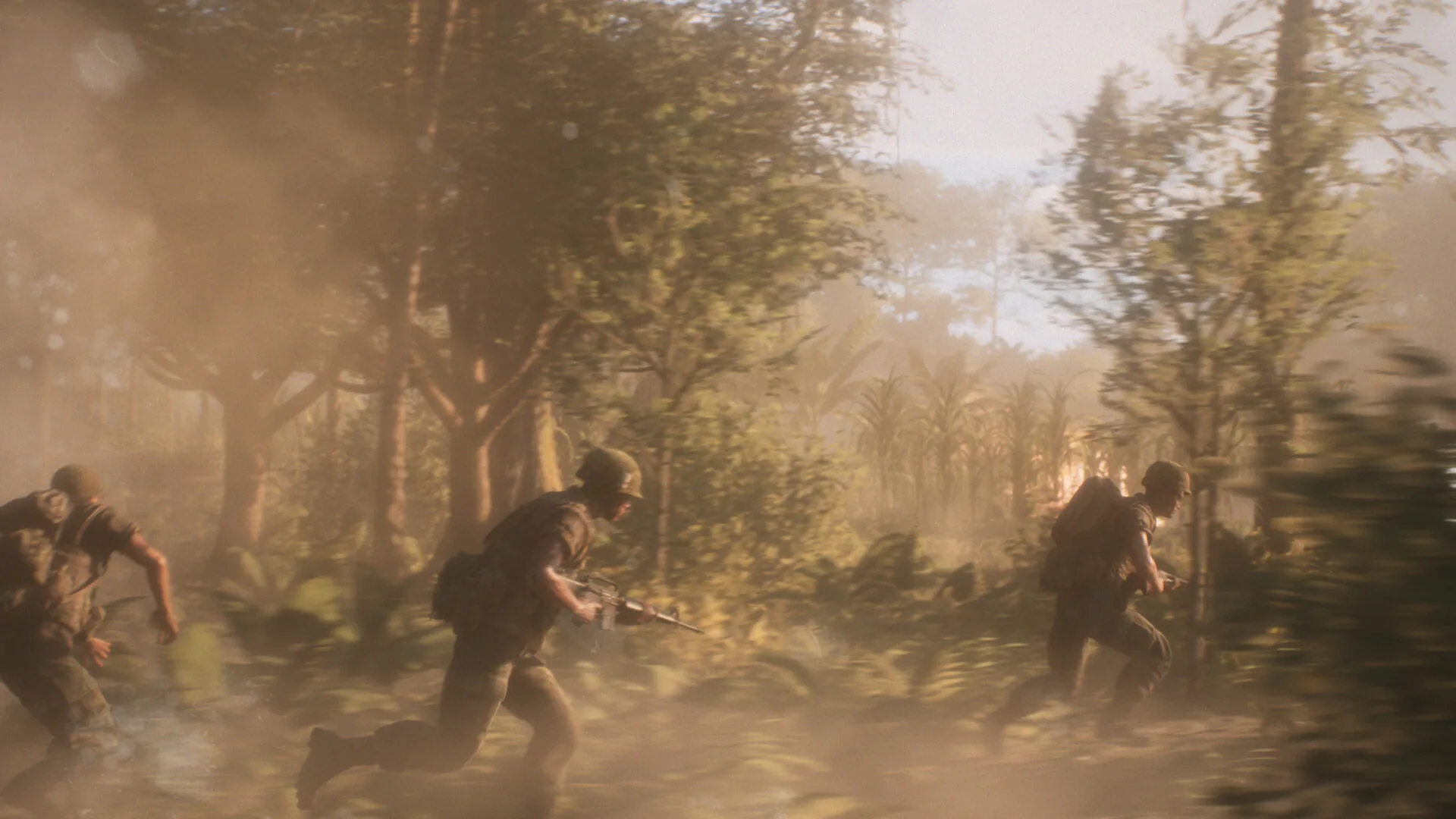
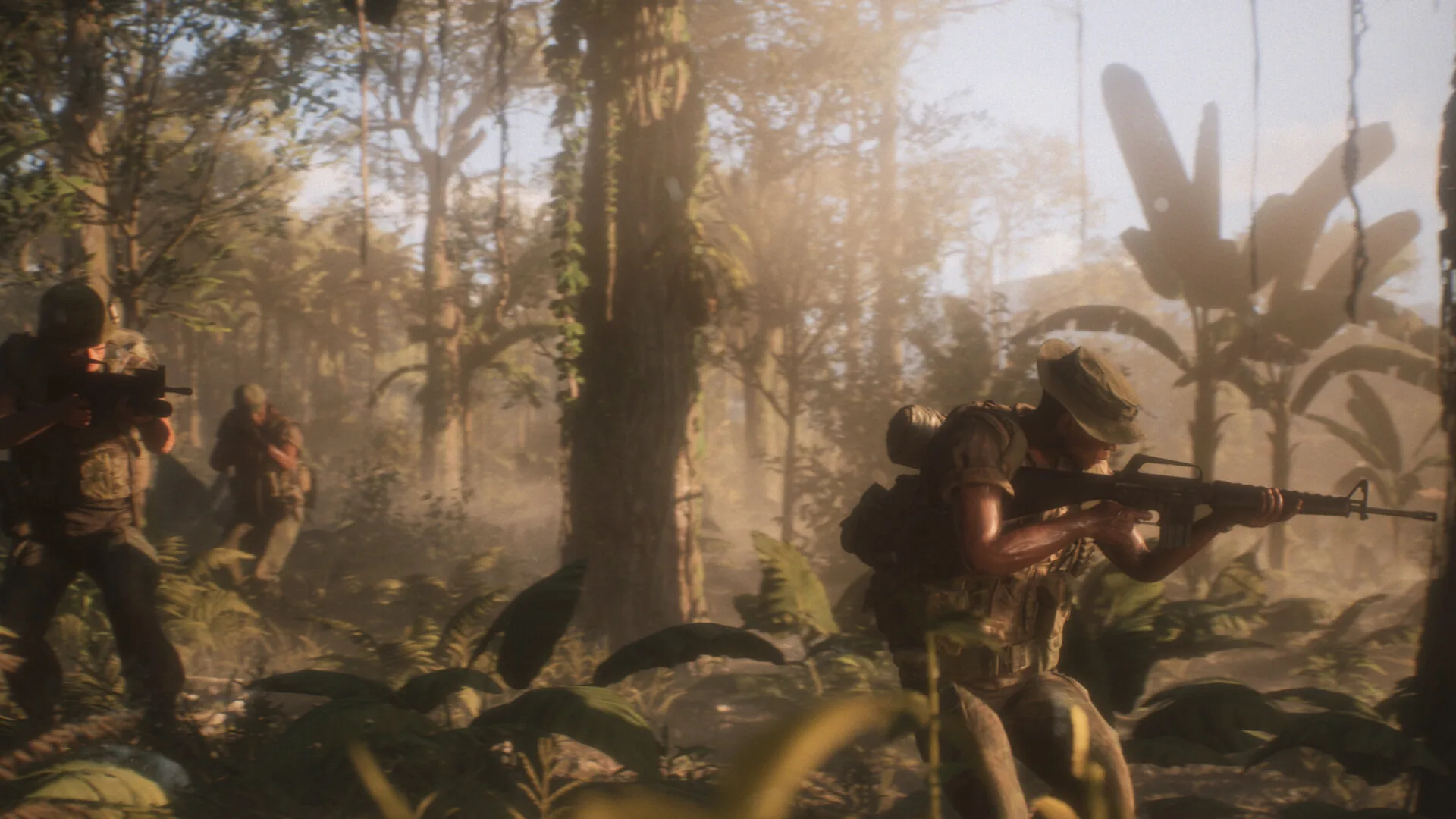
At launch there are six large-scale maps inspired by real locations, from dense jungle to remote villages by way of waterways and open terrain. You pick your side between the North Vietnamese Army and the US Armed Forces, with seventeen specialised roles spread across a fifty-strong team organised into squads: infantry, recon, armour, mortars and helicopter units.
The two structural additions are present. On the American side, fully operational helicopters for fire support and supply drops. On the North Vietnamese side, extensive tunnel networks to surface where you are not expected. That asymmetry is the game's best idea, because it finally gives both sides different grammars instead of two symmetrical armies in new paint.
We are not scoring this article, and it is worth explaining why rather than manufacturing a number. The game launches the same day, it has no user reviews yet, and the only abundant material available concerns a beta the studio has explicitly reworked since. Scoring a game on the basis of a build its developers spent two months fixing would make no sense, and would be exactly the error we criticise in others.
What we can say comes down to three points.
The studio did the right things procedurally: delay, communicate, test at scale. That deserves recognition and it improves the odds of a decent launch.
But the beta complaints concerned foundations, not finishing touches. Unreal Engine 5 optimisation, gunplay feel, hit detection and legibility in foliage are heavy work, and two months does not guarantee they are solved. The studio itself publishes a known issues list ahead of launch, which is honest but confirms some remain.
Finally, the most sensible recommendation is the one the community was already making: wait a few days. Steam reviews will land within hours, and this time they will concern the game you would actually be buying. For a thirty-six euro title that lives on its population, forty-eight hours of patience costs far less than a refund.
We will update this article, with a score, as soon as the reception of the shipped game is measurable. Until then, keep your enthusiasm warm: if the foundations have been repaired, Vietnam is the dream terrain for a scout.
It will be revised if support fixes what needs fixing.
Have you played since launch? Tell us above all how performance holds up on your machine, that is the point that will decide everything.
We debrief every release on our Discord. The door is open, and so is the argument.
Affiliate link: a purchase earns us a commission, at no extra cost to you.
Community
Your rating
Advertisement
Loading comments...
You might also like
When to speak and when to shut up depending on your role, how to move through vegetation, and why encirclement kills more than bullets.
A procedural Anno where haulage is the real game. Every badly assigned freighter takes its revenge forty minutes later.
Towers, troops, a single pool for both. Every coin spent on defence is a coin you will not be sending the other way.

Crossing finally matters and defending responds. Then the screen goes black. 57 per cent positive on Steam, at 69.99 euros.