One point of honesty first: the game has only just launched, and maps, hot spots and optimal compositions will settle with the community over the coming weeks. So this guide will not hand you ready-made routes that would be obsolete by the next patch. It gives you what will not change, because it belongs to the nature of this series: radio discipline and how you move.
Those are also, overwhelmingly, the two reasons teams lose.
In a game with fifty players a side, information is a resource, and the voice channel is a scarce one. Every second you spend talking is a second in which someone else cannot report an enemy position.
Hold on to the principle: you speak to transmit, not to comment.
Your channel is the squad's, and you have only two legitimate reasons to occupy it.
The first is reporting contact. In that case be brief and useful: direction, rough distance, nature of the threat, and a landmark. Enemies east, about thirty metres, four men behind the hedge beats three sentences about what just happened to you.
The second is answering your squad leader. That is all.
What has no place on the channel: commentary on your own death, general tactical debate, jokes during a push, and above all the detailed narration of what you are doing when nobody asked. The squad leader must be able to give an order the second he needs to, and he cannot wait for you to finish.
The corollary matters just as much: listen. A squad leader's instructions are not suggestions, and a player who wanders off does not merely die alone, he removes a rifle from the group and opens a flank. In this series more than any other, five average players who stay together beat five excellent players scattered.
You have a second channel linking you to the other leaders and the commander, and that is where the whole team's coordination happens.
The rule is the same but the stakes are higher: do not saturate that channel. The commander needs to be able to issue directives, request support or announce a strike, and a channel clogged with exchanges that should have stayed inside a squad paralyses the entire structure.
Concretely, what goes up to the leader channel: significant enemy positions, the state of your sector, your intentions when they involve other squads, and your requests for support. What does not go up: the internal management of your group, which belongs on your squad channel.
Your other job is translation. The commander gives a general intent; it falls to you to turn it into simple, executable instructions for five players who can see nothing but a wall of vegetation.
This is where Vietnam changes everything compared with the series' original Europe. Cover density completely alters the relationship between the one advancing and the one waiting, and it does so in the second's favour.
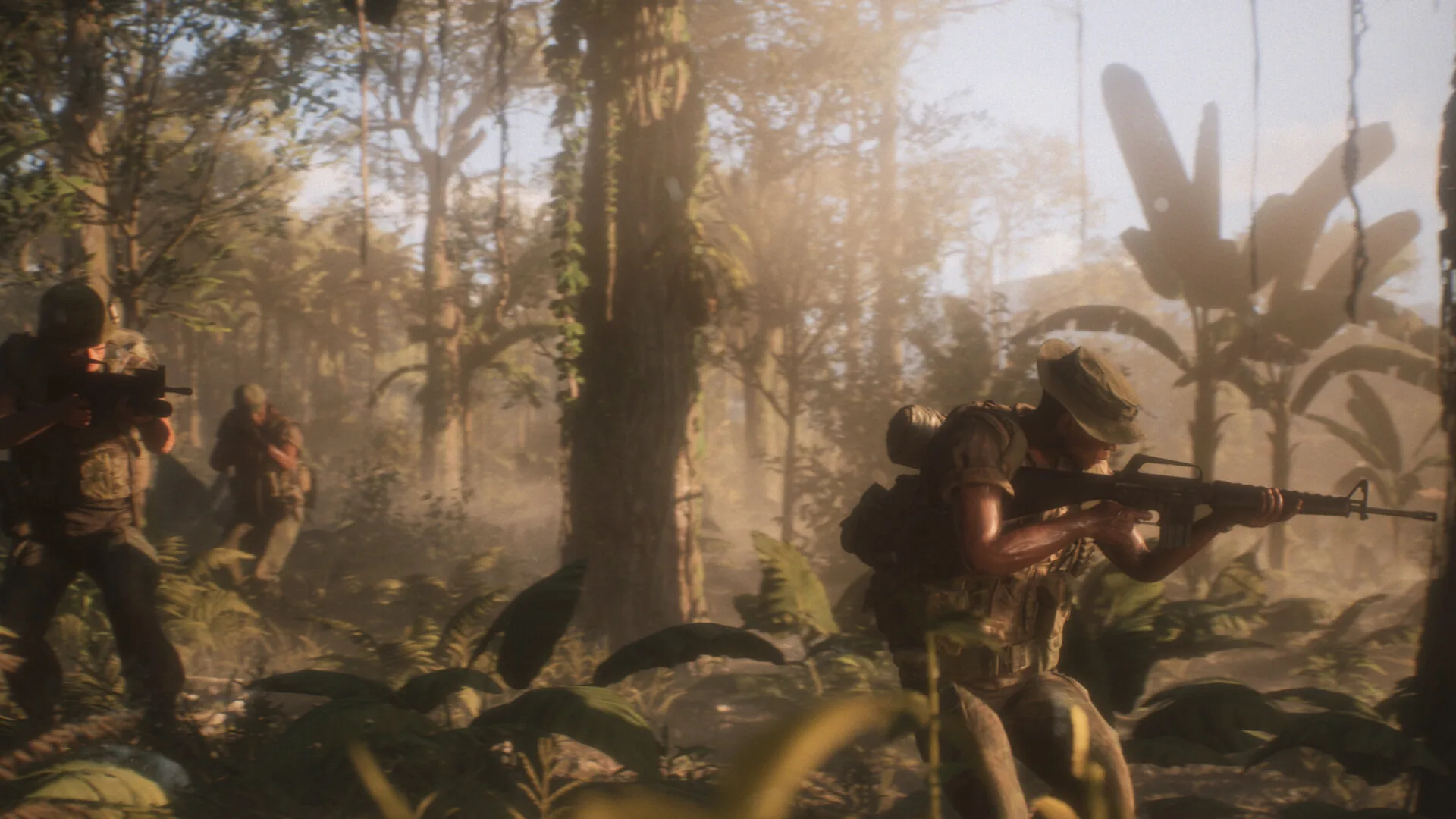
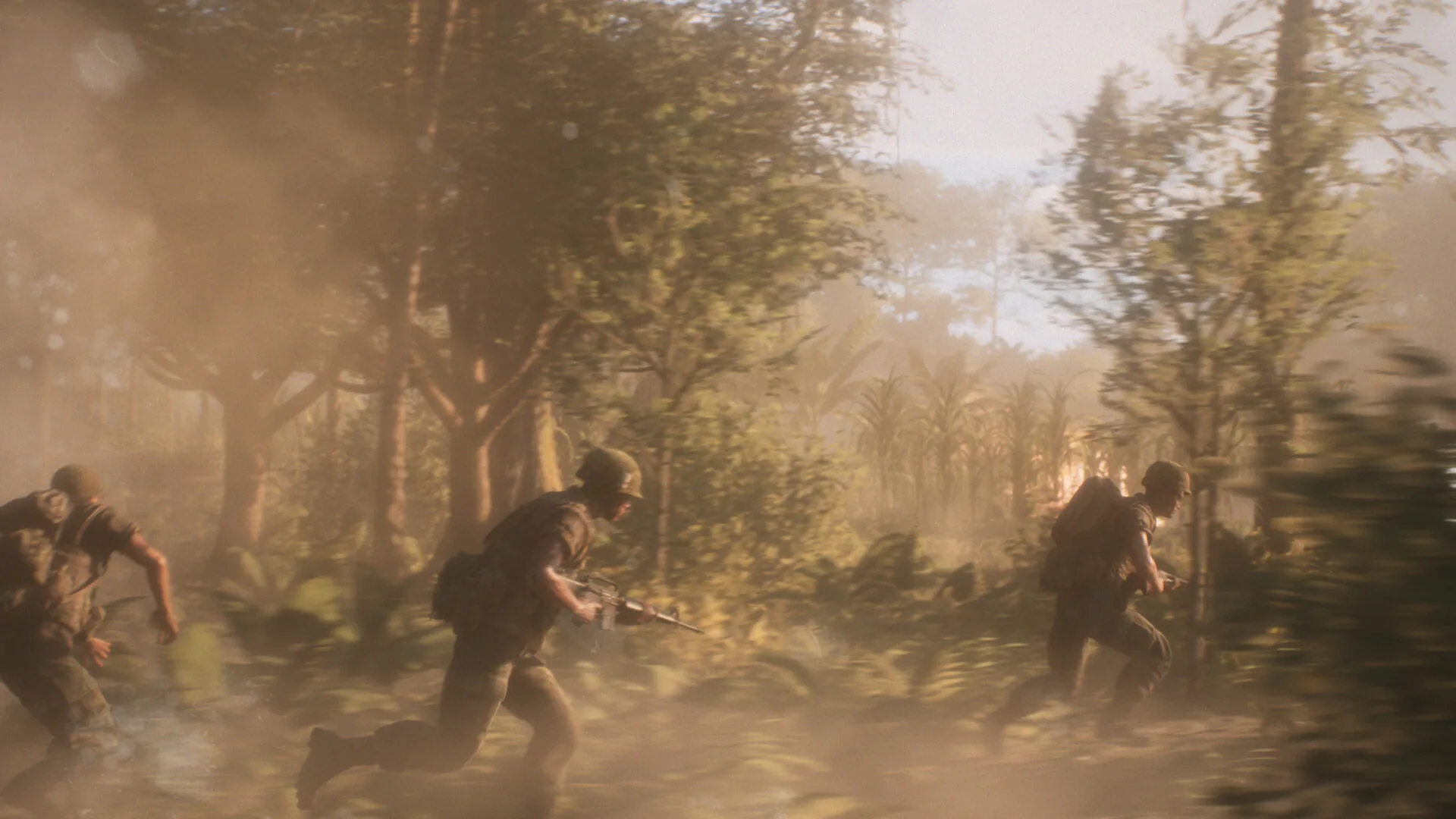
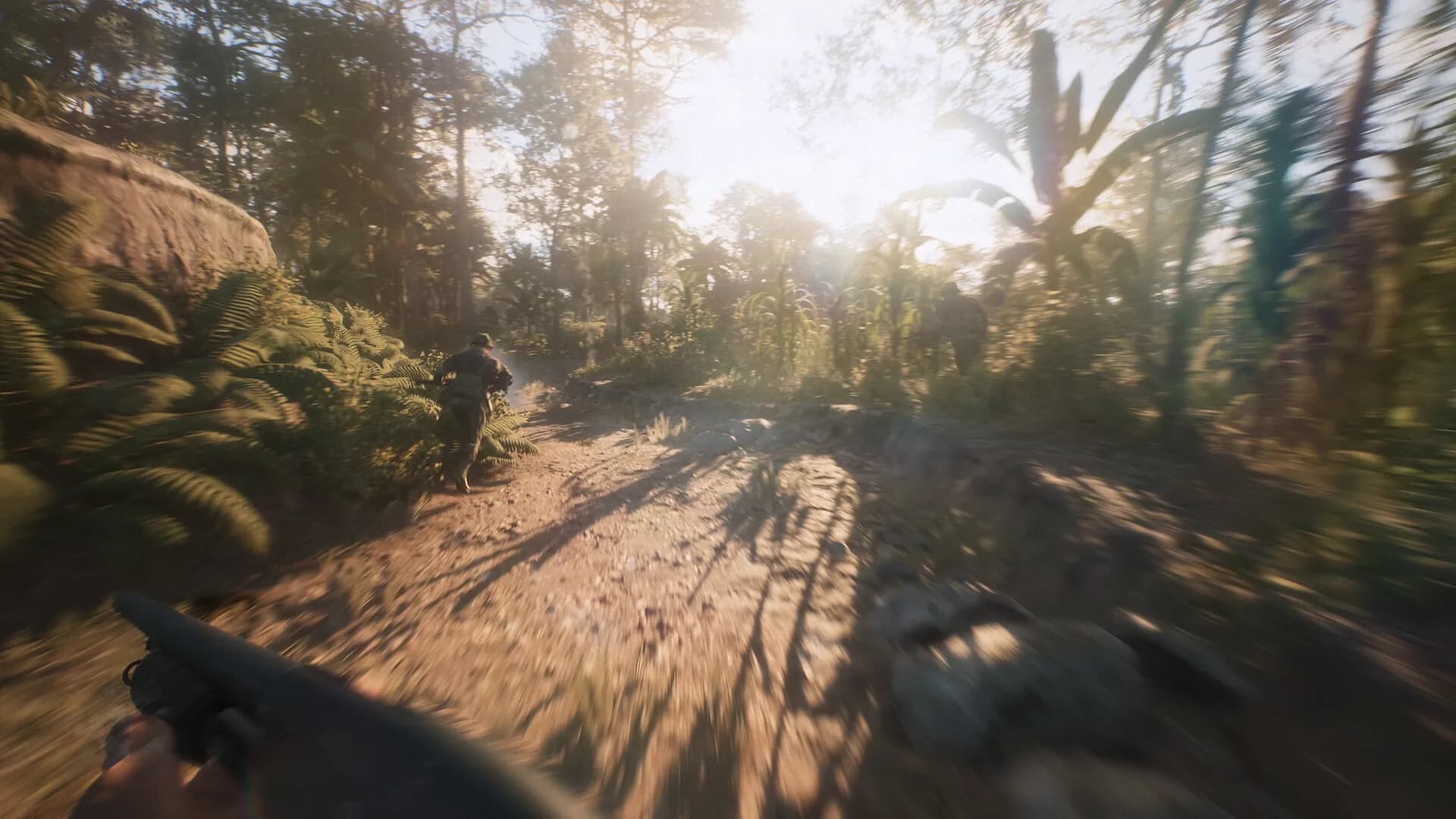
The first reflex to acquire is slowing down. In a setting where you cannot see thirty metres, speed does not protect you, it only stops you hearing and spotting. A group moving slowly, stopping regularly to observe, survives far longer than one that runs.
The second is never advancing all at once. Part of the group posts up and covers while the other moves, then you swap. It is tedious to write and decisive in practice, and it separates a squad that takes an objective from a squad that feeds the enemy's statistics.
The third is distrusting obvious paths. In a closed environment, the rare clear lanes are exactly what the enemy watches. The detour costs thirty seconds, the clear lane costs a squad.
Finally, distrust your own invisibility. The cover concealing you also conceals whoever is watching you, and being shot at close range by someone you never saw is common. The right response is not to spray the foliage, it is to take cover and have the direction called out.
The most frequent mistake among players coming from other shooters is treating the capture of a point as the end of the matter. Here it is the start of the problem.
Once a sector is taken, the priority is making it defensible: establishing positions with clear fields of fire toward the approach routes, spreading out rather than clustering, and checking who is covering each direction. An entire squad facing the same way is a dead squad.
Lean on the other squads, and tell them what you are doing. Two groups supporting each other hold a sector that four isolated groups will lose. That is also why the leader channel must stay available.
Remember this principle if you remember nothing else: in this series you rarely lose because you shoot worse, you lose because you let yourself be outflanked.
Watch your flanks constantly, and especially your rear. A squad advancing without looking back ends up caught between two fires, and in a jungle setting the enemy can move far closer than you think before being seen.
Always have an identified withdrawal route before you need it. Falling back twenty metres to retake a tenable position is not a defeat, it is force preservation. Digging in on an untenable position costs the whole squad, and the time needed to get them back on site hands the advantage to the enemy.
Finally, when a position falls, say so immediately and clearly. A neighbouring squad unaware that its flank has just opened will suffer the same within thirty seconds.
This guide will be expanded as the maps become known and the community establishes its routes.
A question, a tip to share? The InsertCoins Discord is the place for it.