Guide
I Know a Guy: the beginner's guide, from your first pizza to your first body
Two reputations, a police gauge, one very versatile oven. How to start without ending up in a cell in week one.
Alexandrosse
12 min
A pizza shop out front, the mafia out back, and two reputations to raise at once without the police taking an interest.
Alexandrosse
InsertCoins.press Score
8/10
Verdict
Recommended
The studio wrote, in its own release announcement, the funniest sentence of the year: apparently, being good at cleaning a kitchen opens some unfortunate career doors.
There. You have the game.
You owe a serious amount of money to a dangerous, mysterious mafia. They do not call. They do not warn you. They kidnap you and make it clear: work it off, or else.
You end up running a pizza shop in Hobarey Town. Out front, a business. Out back, services you would not put on your tax return.
I Know a Guy launched into early access in the spring and hits 1.0 today, at 13.49 euros, with 413 positive reviews out of 457, or 90 per cent. A very positive reception, and for once I can tell you exactly where it comes from.
This is the point that makes everything work, and I want to be precise, because plenty of games advertise this and deliver two separate menus.
Here, the two sides progress independently. On one side you build a cover by becoming the best pizza shop in town. On the other you earn trust in the underworld. Each side has its own level, and each level unlocks different jobs, different tools, and different risks.
The consequence: you cannot do everything at once. An evening spent optimising service is an evening you did not spend raising your shady standing. And you need both, because the cover is not cosmetic: a pizza shop that does not run is a pizza shop people look at.
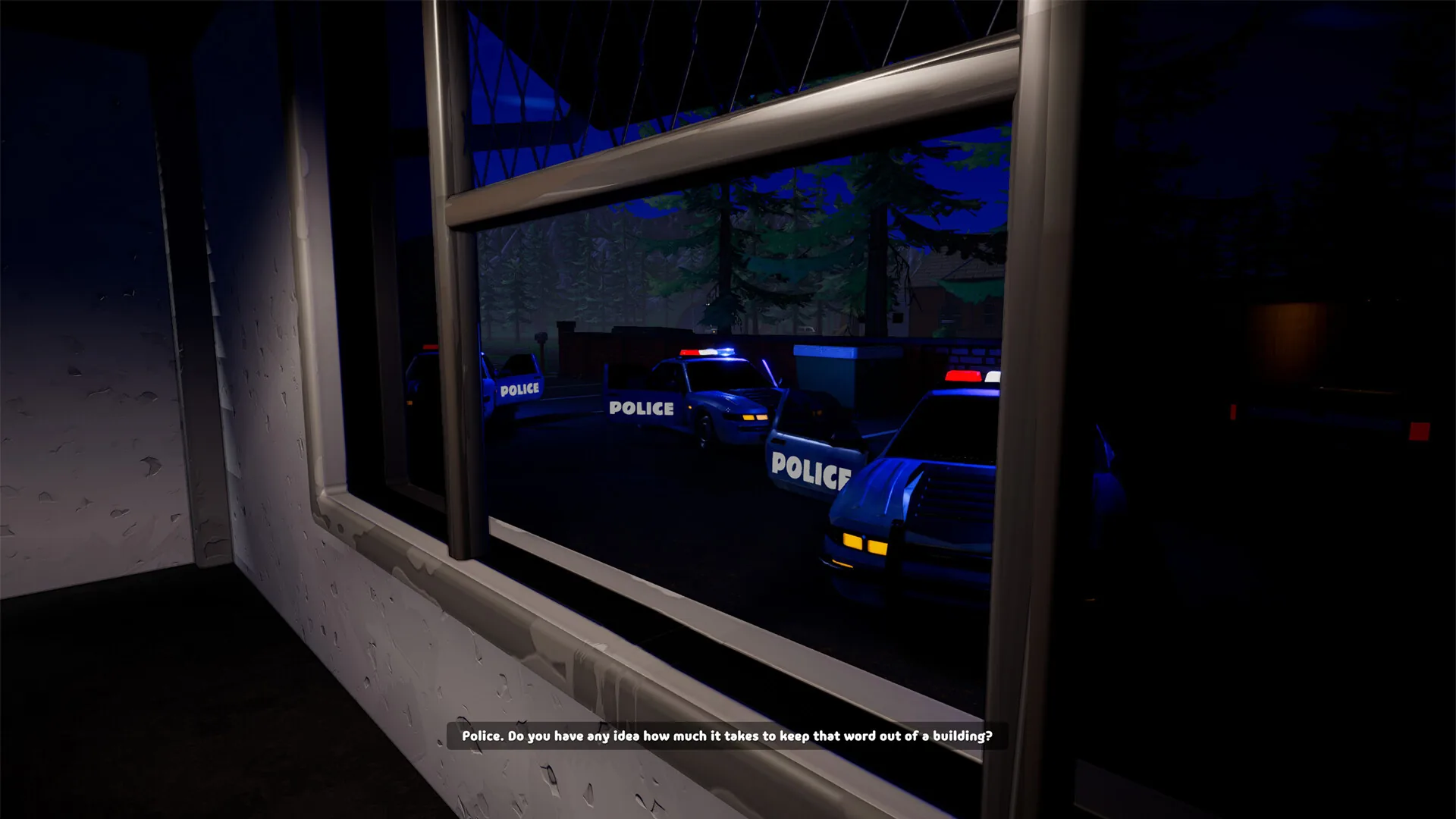
On top of that sits police attention. Every job increases payout, risk and attention. Those three sliders are tied together, and the game never lets you raise one without the others.
That is why it works. The game puts you under the same pressure as its own characters: you need money fast, and moving fast is exactly what destroys you.
This is the part I cannot write about without grinning.
Cleaning bloody clothes. Ordering restricted items from the dark web. Disposing of evidence. And burning bodies in your own oven.
Your oven. The pizza one.
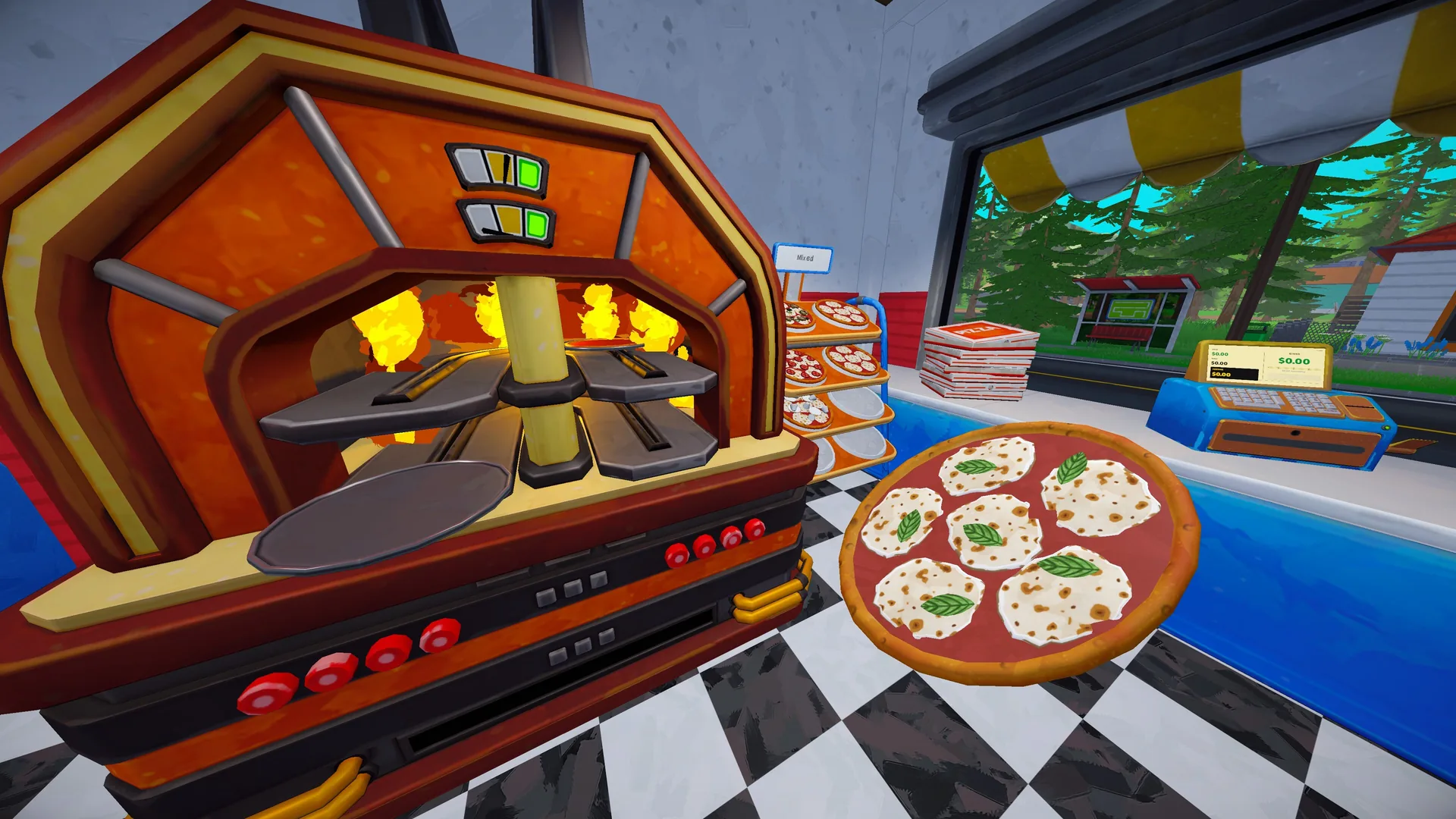
That is not only a joke. It is the game's best piece of design, because it is economical: every tool in your legal business is reusable in the other, and every kitchen upgrade serves both trades. Upgrading your oven makes you produce pizzas faster and process other things faster. The game never asks you to choose between investing in the front or the back, because it is the same equipment.
1.0 extends the list: taking out security cameras, planting a listening device, scrubbing down a crime scene. The Forgery Station has been rebuilt, there is now an underground kitchen with some very questionable ingredients, and new items to order from the dark web with new ways to use them.

Dozens of hand-crafted NPCs, each with their own story, personality, and problems that unfold over time.
This is where the game earns its adjective. Hobarey Town is not simulator scenery, it is a small town with people who need things, and those people become your clients in both senses of the word. 1.0 adds five new open-world quest givers, with missions unlocking between shady levels 8 and 12: smuggling runs, a risky prison photo job, a lost evidence bag, a very large pizza delivery.
And yes, you can pet the dog. The studio felt the need to say so in its announcement. It was right to.
Up to four players online. You split the tasks, you run both sides of the business together, you handle the chaos as a group.
This is the mode where the game becomes memorable, for a very simple reason: somebody will eventually put the wrong thing in the wrong oven. The early access patch notes tell the story of development, and they are delightful: two players grabbing the same pizza at the same instant created an invisible duplicate that permanently blocked an oven slot. You had to see it to believe it.
The studio also notes that 1.0 improves the offline solo experience, which is welcome, because early access leaned clearly towards groups.
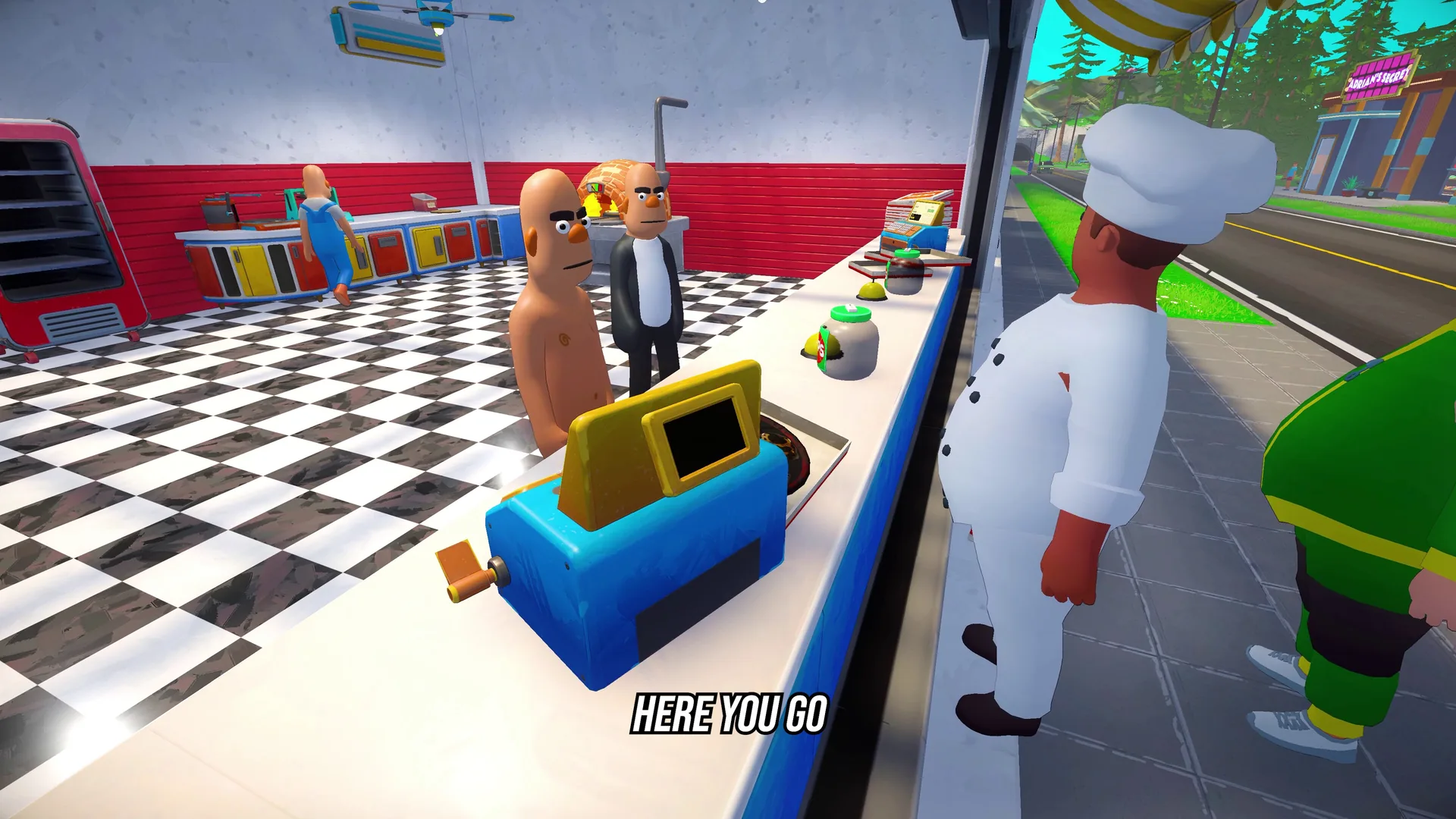
Running the pizza shop is finer-grained than most business simulators, but it stays repetitive once you have optimised service. By mid-game, the legal side becomes a chore you endure in order to do the other one.
Climbing the shady levels is a touch too linear. You can see the structure coming: new tier, new tool, new job type, and the surprise wears thin.
And the population is modest. A few dozen players online at once as I write, which is not a problem for a game played solo or with invited friends, but which matters if you were hoping to find a crew at random.
None of that dents the main point: this is a business simulator with an idea, which holds that idea across its whole runtime, which is funny without being stupid, and which costs the price of two pizzas.
Have you already blown up a co-op session by putting the wrong thing in the oven? We want the details on the InsertCoins Discord.
More on I Know a Guy: Shady Life Simulator
All about I Know a Guy: Shady Life SimulatorCommunity
Your rating
Advertisement
Loading comments...
You might also like
Two reputations, a police gauge, one very versatile oven. How to start without ending up in a cell in week one.
A procedural Anno where haulage is the real game. Every badly assigned freighter takes its revenge forty minutes later.
Towers, troops, a single pool for both. Every coin spent on defence is a coin you will not be sending the other way.

Crossing finally matters and defending responds. Then the screen goes black. 57 per cent positive on Steam, at 69.99 euros.