On paper, Lootbound ticks just about every one of our boxes. Dark fantasy art direction, turn-based roguelite, and above all that obsession with inventory tidying that has been costing us hours for years. Only one question remained, and it is the right one: is there the depth of a good RPG underneath?
The honest answer is no. But it deserves explaining, because the depth lies elsewhere, and it is real.
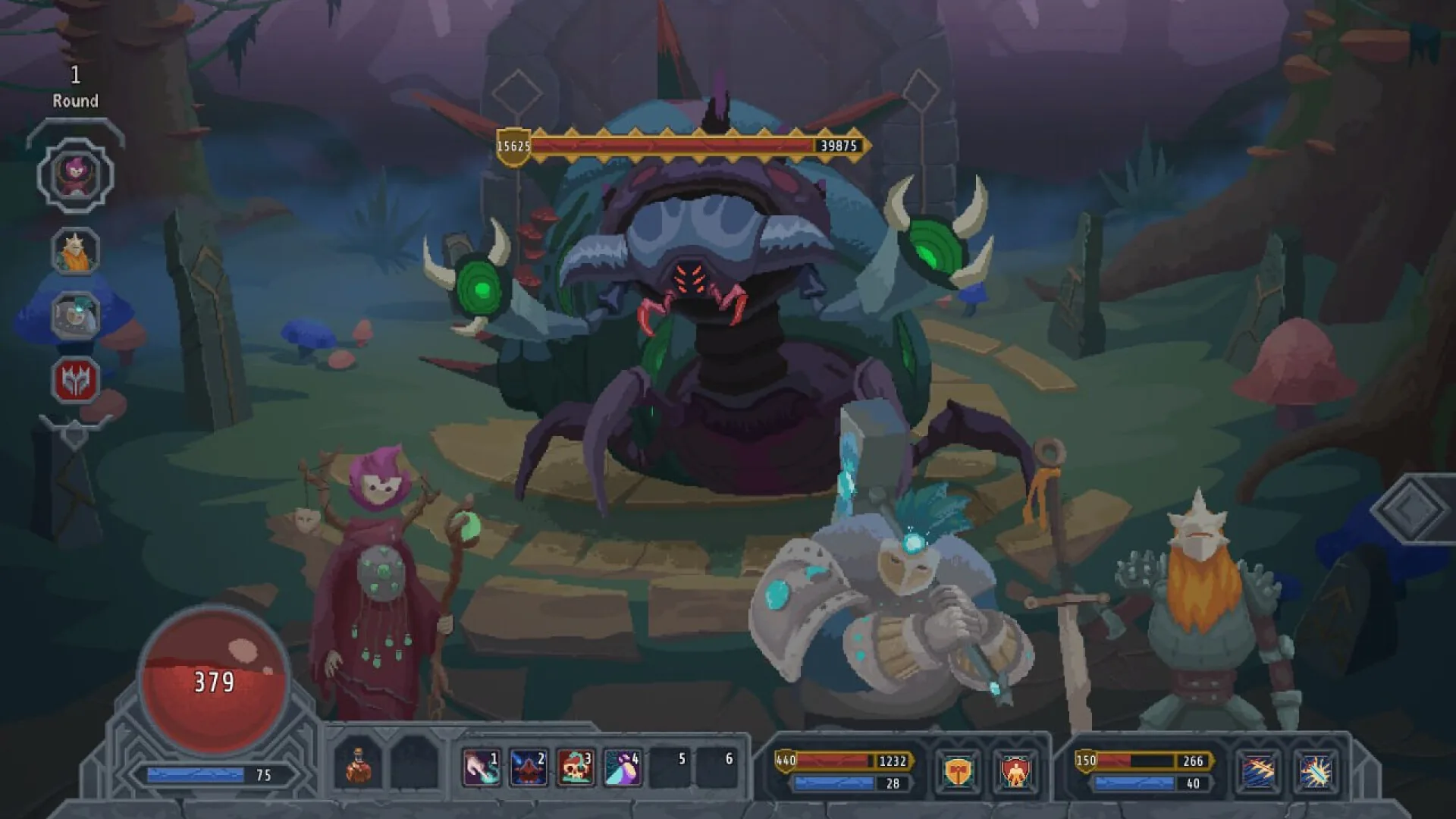
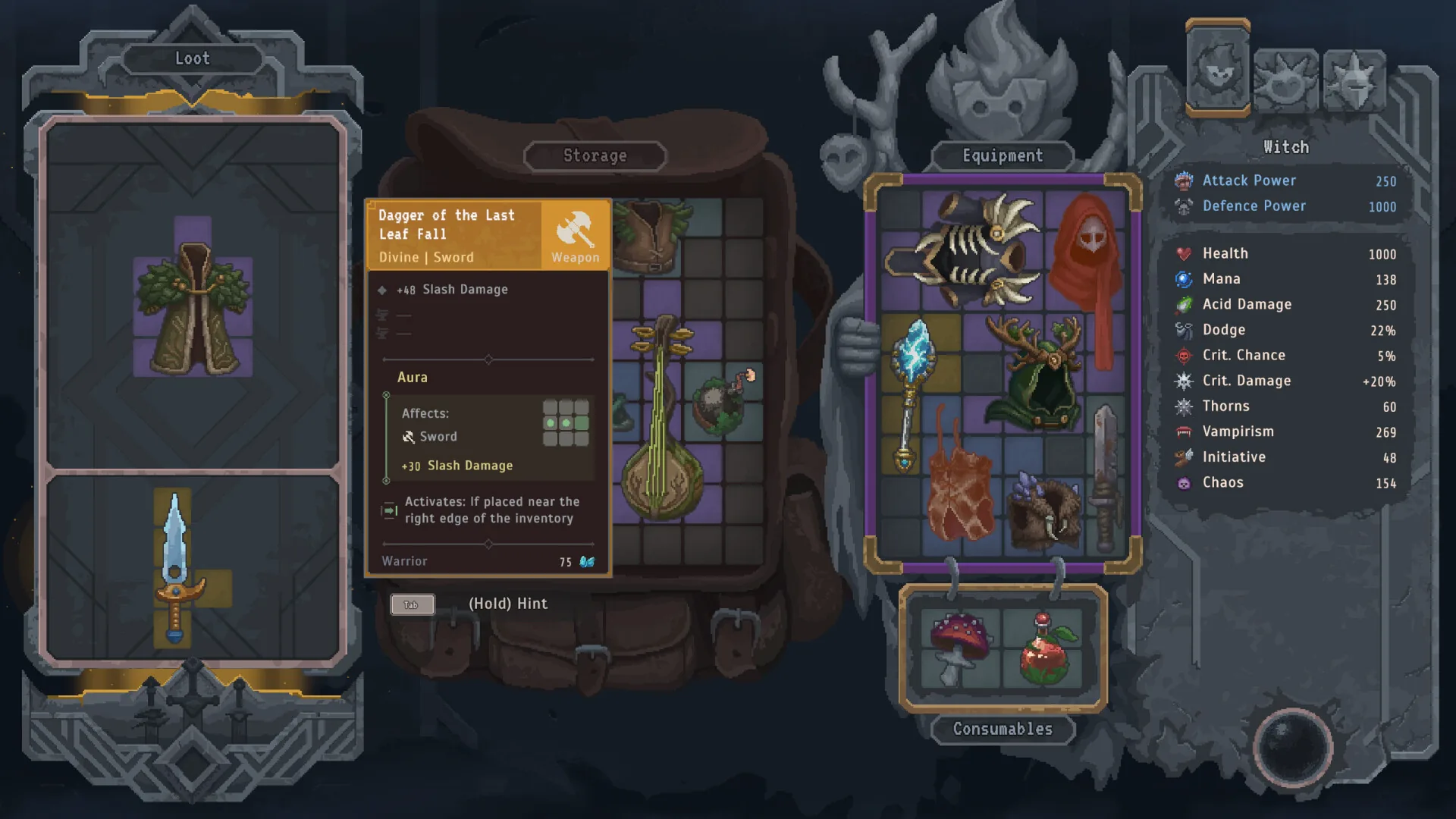
It fits in one line from studio ArtDock, and it is excellent: items have no fixed slots. You rotate them and place them wherever you like as long as there is space, exactly as in the grid inventories we love to fiddle with.
Except that here, the layout is not cosmetic. Some items carry auras that strengthen the weapons or armour in adjacent cells. In other words, moving one piece a single square is enough to transform your entire build.
That is where the game gets clever, because it fuses two pleasures that usually live apart: the spatial puzzle on one side, character building on the other. Tidying becomes optimising. Every item you pick up asks a three-part question: is it good in itself, does it improve its neighbours, and do I have room for it without breaking what already works.
And since you have to equip the hero and each companion you meet along the route separately, the puzzle multiplies as the run goes on.
No, and it is an owned choice rather than an oversight.
The most revealing point is this: in combat you control only the main hero. Companions act on their own, with the studio noting that they already know what to do. It is comfortable, it spares you the tedium of managing six characters a turn, but it also removes at a stroke what gives a real party RPG its tactical depth: positioning, action synergy, decisions to sacrifice.
Add that there is no mention of dialogue, skill trees or narrative choices. You are not playing a role, you are building a machine.
So the depth exists, but it is combinatorial, not role-playing. It is measured by the number of possible interactions between your items, not by the thickness of your character. If you came looking for a miniature Baldur's Gate, you will go hungry. If you came for optimisation, there is plenty here.
Two ideas deserve flagging.
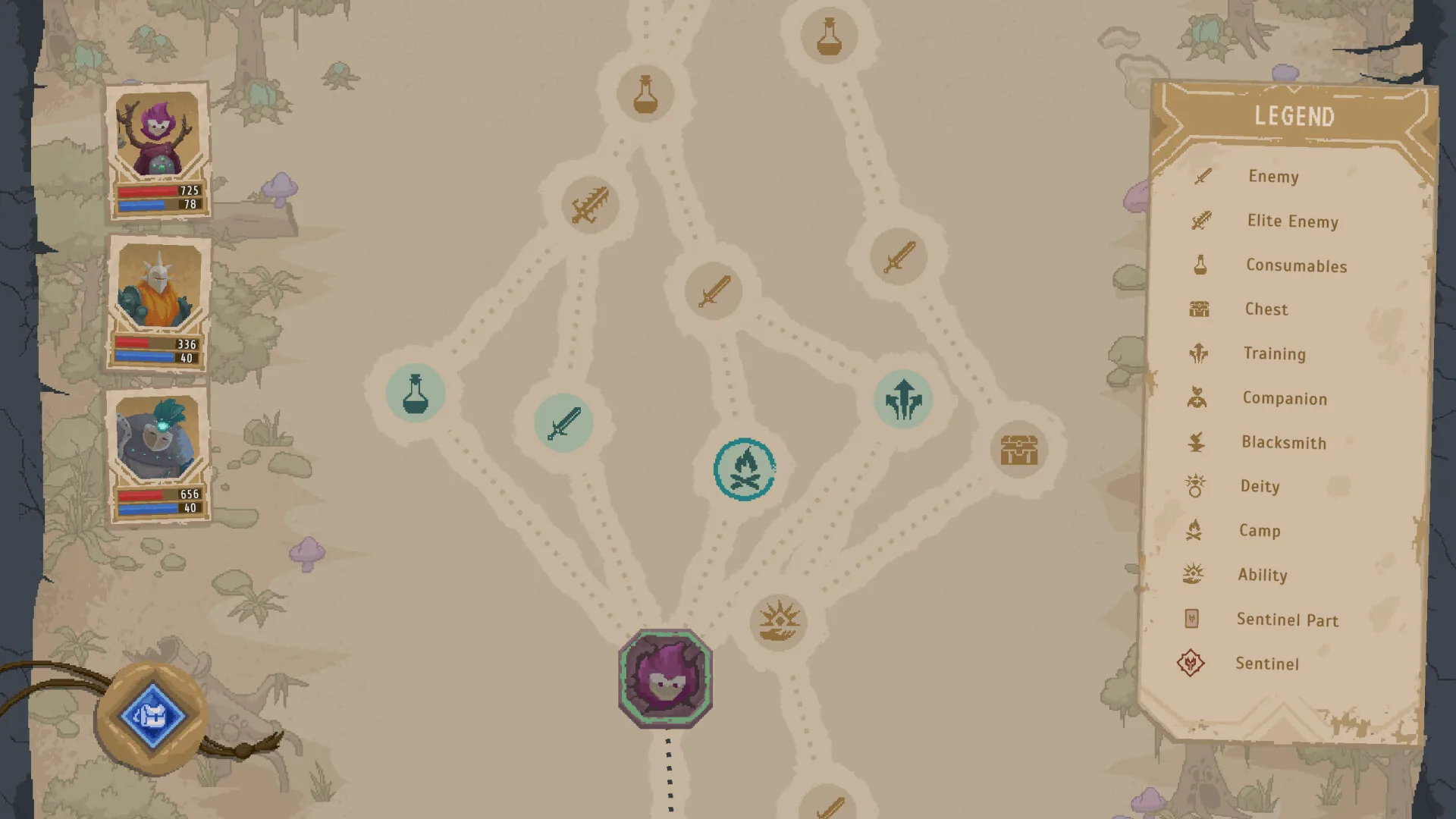
The first is the final Guardian. At the end of each biome you choose between two boss parts, and each part changes the appearance and power of the creature you will eventually face. That is a good find: the final boss is not an imposed surprise, it is the result of your successive choices, and it looks like you.
The second is risk management. In special rooms you are offered several rewards attached to different difficulty levels, to be won on a dice roll. The more interesting the reward, the more demanding the roll. It is simple and it works, because it turns greed into a decision.
It rewards a genuinely distinctive core mechanic, the adjacency auras, which gives meaning to every item you pick up and is finer than what most inventory roguelites offer.
It also accounts for how narrow the rest is. A game built on one brilliant system lives or dies on the variety of its loot: if the item catalogue is too thin, you will have exhausted the combinations within a dozen runs, and the puzzle will become routine. That is the real point of caution, and it will only be judged over time.
A practical plus, the game is available in French.
So tell us, because we suspect you are cut from the same cloth: how long do you spend reorganising an inventory before agreeing to get back to the fight?
Disagree with the score? Come and tell us on the InsertCoins Discord, where we defend our verdicts live.