Preview
Ace Combat 8: seven years of waiting and, for the first time, an online lobby
Thirty years of the series, seven without a numbered entry, and an air base where you meet other pilots as an avatar before taking off.
Alexandrosse
7 min
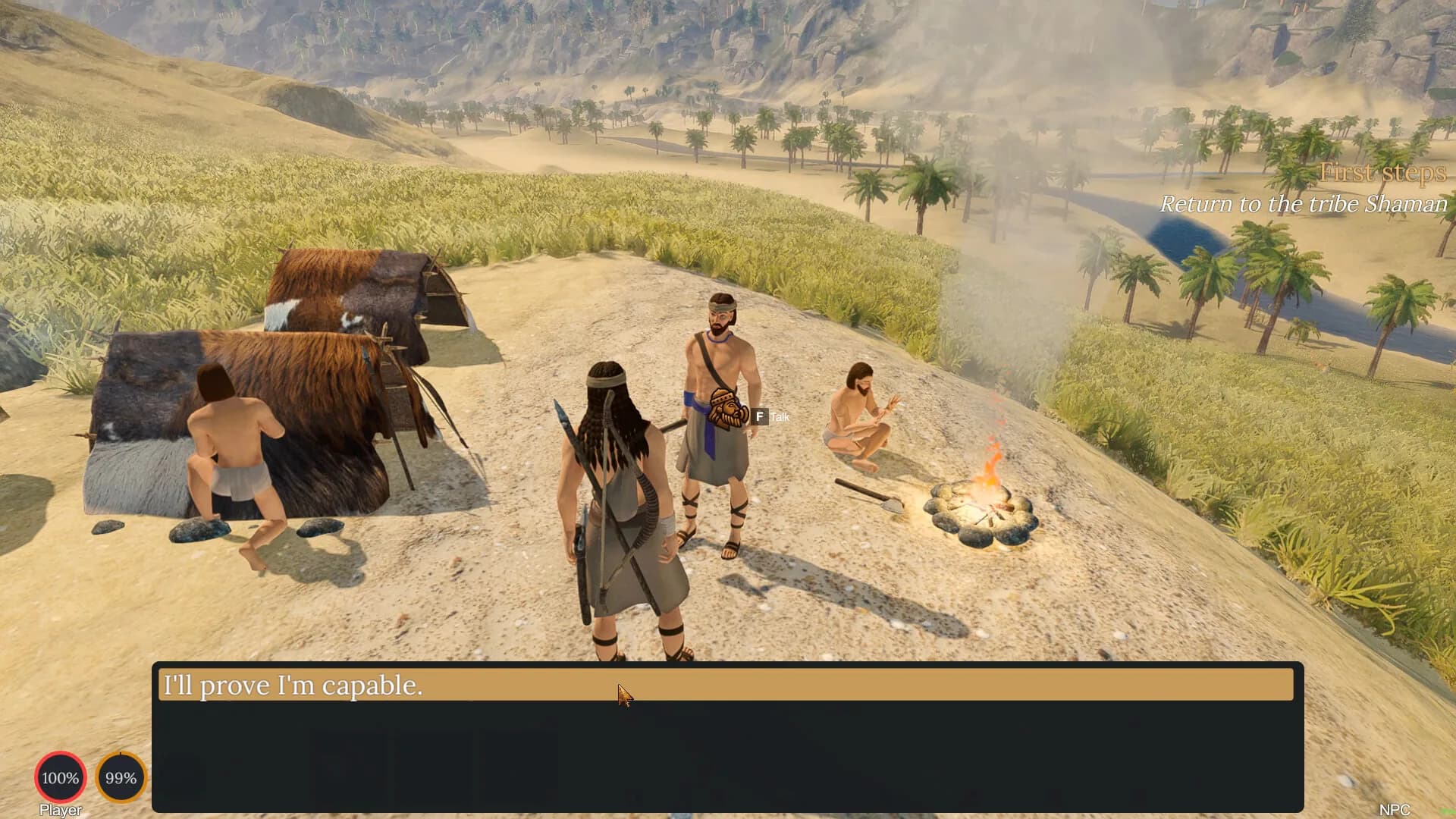
Tribe, village, city, state. A survival game crossing ten thousand years to ask a rare question: where does a king's legitimacy come from?
Alexandrosse
I have to open with a correction, and a friendly one. The Bronze Age is my period too: Mycenae, Troy, the Cretan palaces, the collapse of 1177 that swept it all away in two generations. Except Lugal does not take place there.
The word itself says so. Lugal is Sumerian, literally the big man, the title borne by the kings of Uruk and Lagash. We are in Mesopotamia, in the valley between the Tigris and the Euphrates, fifteen hundred kilometres and several centuries from the Achaeans. Same Bronze Age, different world.
That takes nothing away from the appeal, quite the opposite. It is the corner of the era we see least often in games, and it is the one where everything started.
The pitch fits in four words that follow one another: tribe, village, city, state.
You start ten thousand years ago at the head of a band of hunter-gatherers. You discover farming, you settle, the region's population rises and conflict rises with it. Around five thousand years ago you master copper and then bronze, you forge weapons, villages become cities. And cities go to war with each other.
That is where the game turns, and it is what hooked me. The question it asks is not whether you can conquer your neighbours. It is how you keep them.
A forum player put the right question to the developer: what fundamentally separates yours from the dozens of survival games flooding the market? The studio's answer fits in one line: the bosses are not giant monsters, the bosses are cities.
And when you take one, it rebels the moment your army leaves. Appoint a governor? He will have to hold. To reign you need something other than force: you need legitimacy. So the game has you invent the technology of the state, then build a Great Ziggurat to prove your superiority is not merely material but moral.
The studio line I keep coming back to: have you ever wondered why ancient people built those masses of brick, as though they had nothing better to do with their time and energy? As a king, the answer will come to you naturally.
That is a real design idea. The monument is not end-game decoration, it is the political instrument that turns a warlord into a sovereign.
Around that spine sits the genre's usual vocabulary, and the studio does not pretend otherwise: resource gathering, technologies to discover, weapon and armour crafting, base building.
Three elements stand out.
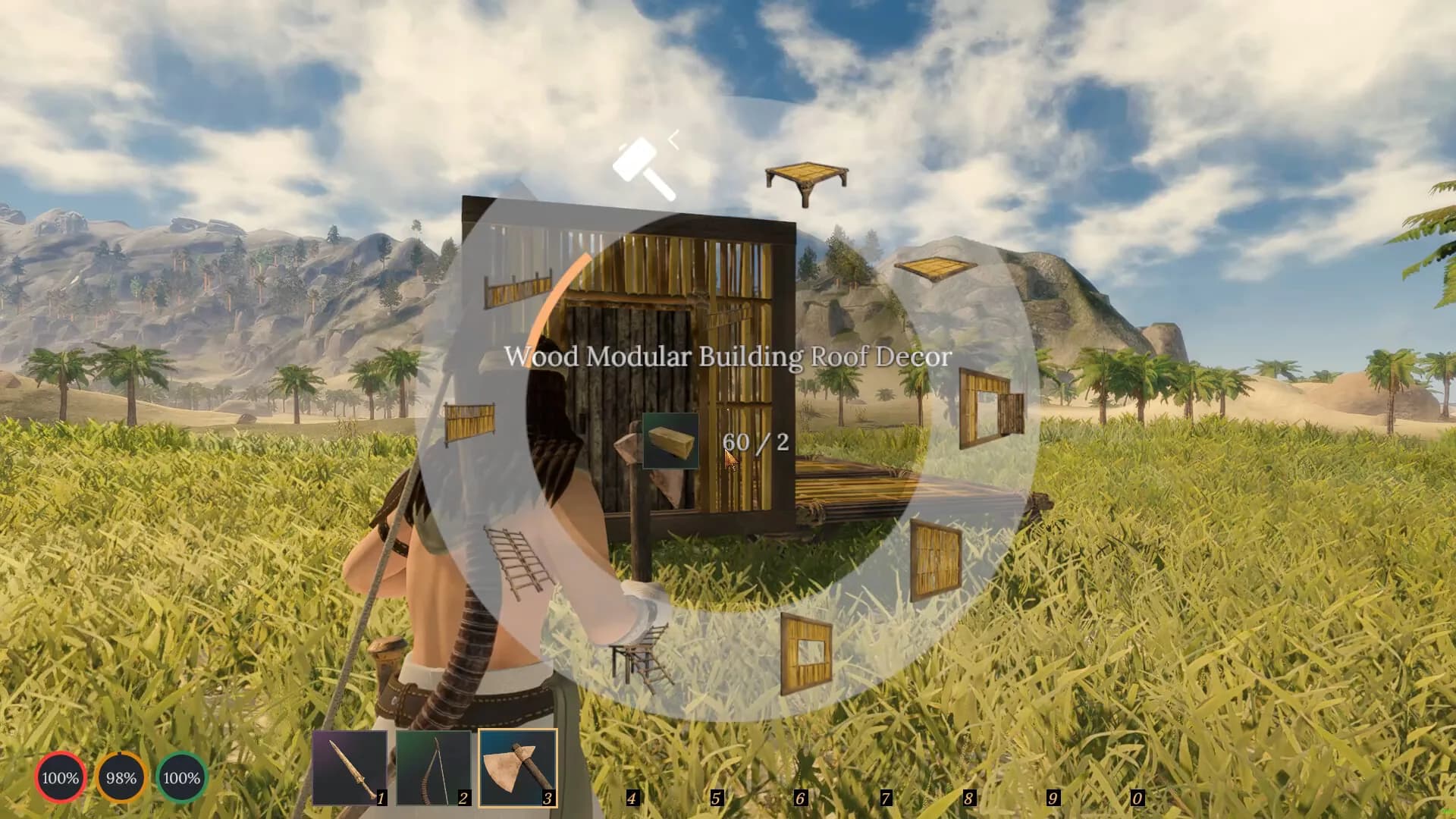
Simple automation. NPC villagers work your fields, bake bread and keep your settlement's economy running. That is what stops the game becoming a clicking chore once the city grows.
Raids in both directions. Hostile settlements send attacks at you, forcing walls and towers. And you can craft a siege hammer to go and breach enemy walls and plunder their stores.
The heroic questline, built entirely around that question of legitimacy, which threads the narrative through your rise.
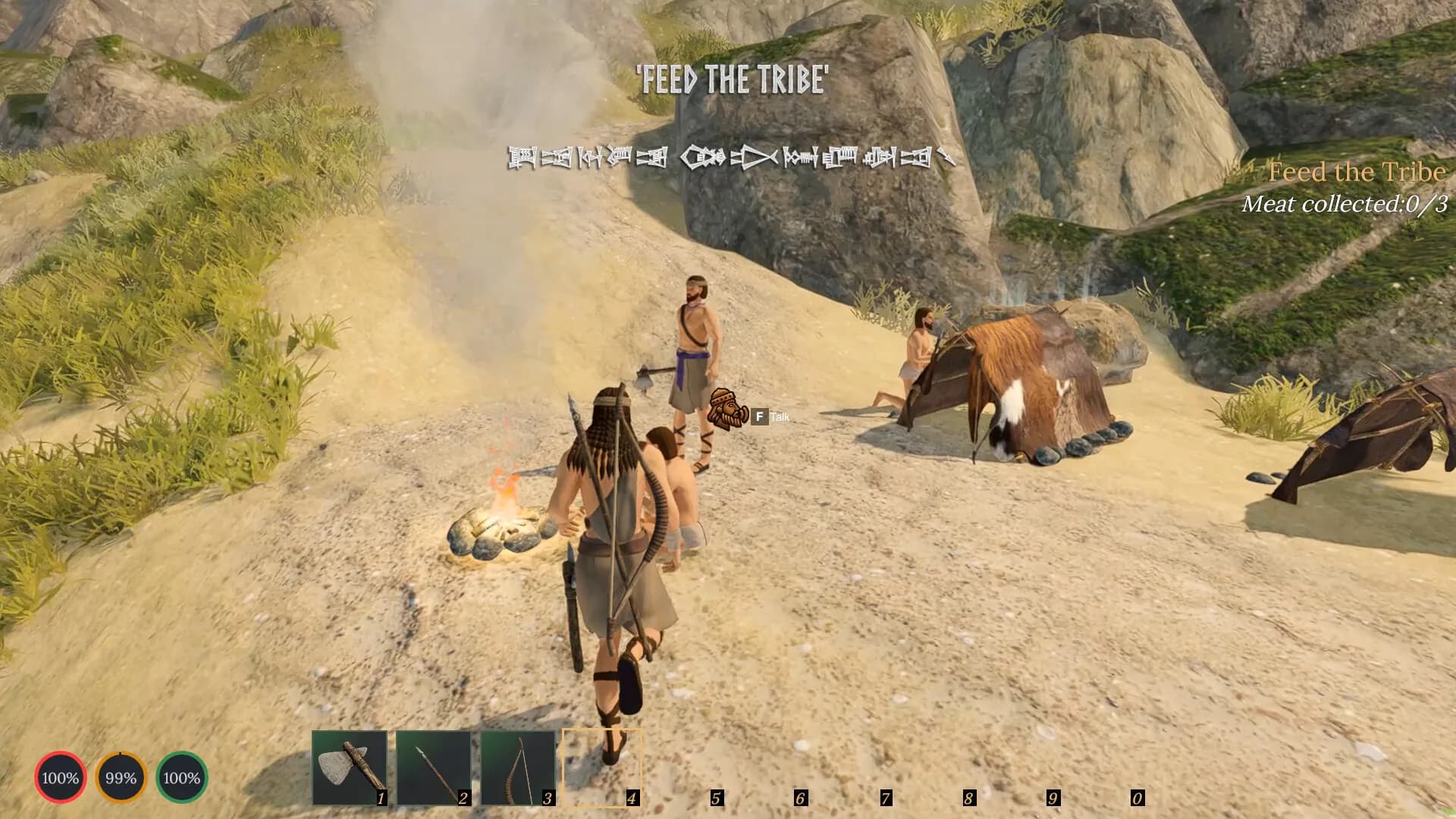
The studio makes no secret of it, and it is rare enough to flag: the game's producer worked with historians and published a history book before starting, and the game draws directly on it.
The stated argument is ambitious. Primitive people were completely free, but their lives were harsh, short and dangerous. They traded part of that freedom for civilisation, which made them safer and richer. They ate better, lived longer, gained time to think. And they discovered they had become the property of civilisation and its political hierarchy. Abundance produced inequality, density produced war, and the bronze economy produced slavery.
It is a thesis, it is arguable, and it has the merit of existing. How many survival games offer to let you understand through play how property, trade, power and the state are born?
The risk is obvious and worth stating: between writing that thesis on a Steam page and making it felt with a controller in hand lies a chasm. A game can display all of this and still be a gathering loop with a big building at the end. That is the point to verify.
Let us be precise, because that is usually what these articles lack.
The game arrives in early access, made by a very small studio, Tea and Cake Games, and it is available in English only. For a game built on narrative quests and a philosophical argument, that is not a detail: the language barrier will weigh far more than on an ordinary survival game.
On the visual side, your reservations are fair, and the community said it before us. One player summed the problem up better than I would: the textures, the shaders and the light are lovely, but the landscape is empty, your eye travels far without ever catching on something that makes you think you want to go and see what that is.
The developer replied frankly that this was true, that settlement NPCs would appear over time, that the player would build their own, and that the video in question was purely a test of nature, light and volumetric fog.
I like that answer, because it does not drown the criticism. But it also describes exactly the risk of an open world made by a tiny team: a magnificent, deserted set.
One delicious detail in passing. Asked whether Enkidu would appear, the developer said he did not plan to recreate legends as such, but that there would probably be a merchant's stall selling Ea-Nasir's copper ingots. For the uninitiated: Ea-Nasir is a copper merchant of Ur whose furious customer's complaint tablet survives, dated to around 1750 BCE and regarded as the oldest known commercial complaint. Slipping that into the scenery rather than summoning Gilgamesh in person is the right way to do history in a game.
Three things, and they are simple.
That the political loop genuinely exists. If a conquered city's rebellion is solved by placing a building, the idea deflates. If it demands real trade-offs, the game has its distinctiveness.
That the world fills up. The studio knows, the community told it, and it remains to be done.
And that a translation arrives. Without one, the whole narrative and philosophical side stays out of reach for a large part of the non-English audience, which would be a shame for a game where that is the main selling point.
In the meantime, the era is the right one, the question it asks is a fine one, and there is a ziggurat to build.
Obsessed with the Bronze Age too? Come and talk about it on the InsertCoins Discord, we have things to say about the collapse of 1177.
Community
Your rating
Loading comments...
You might also like
Thirty years of the series, seven without a numbered entry, and an air base where you meet other pilots as an avatar before taking off.

A global maritime logistics simulator, with real ports, automated routing rules, and 162 shipping licences to collect.

Weigh-ins, meal planning, a day job between fights, accumulating injuries and a bareknuckle circuit. Halfbrick is not joking at all.