7
Test
Dungeon Inn: running an inn while keeping two rival guilds from meeting
You struck a deal with a dragon. All that is left is serving both sides without either finding out. The 1.0 lands on 23 October.
Alexandrosse
7 min
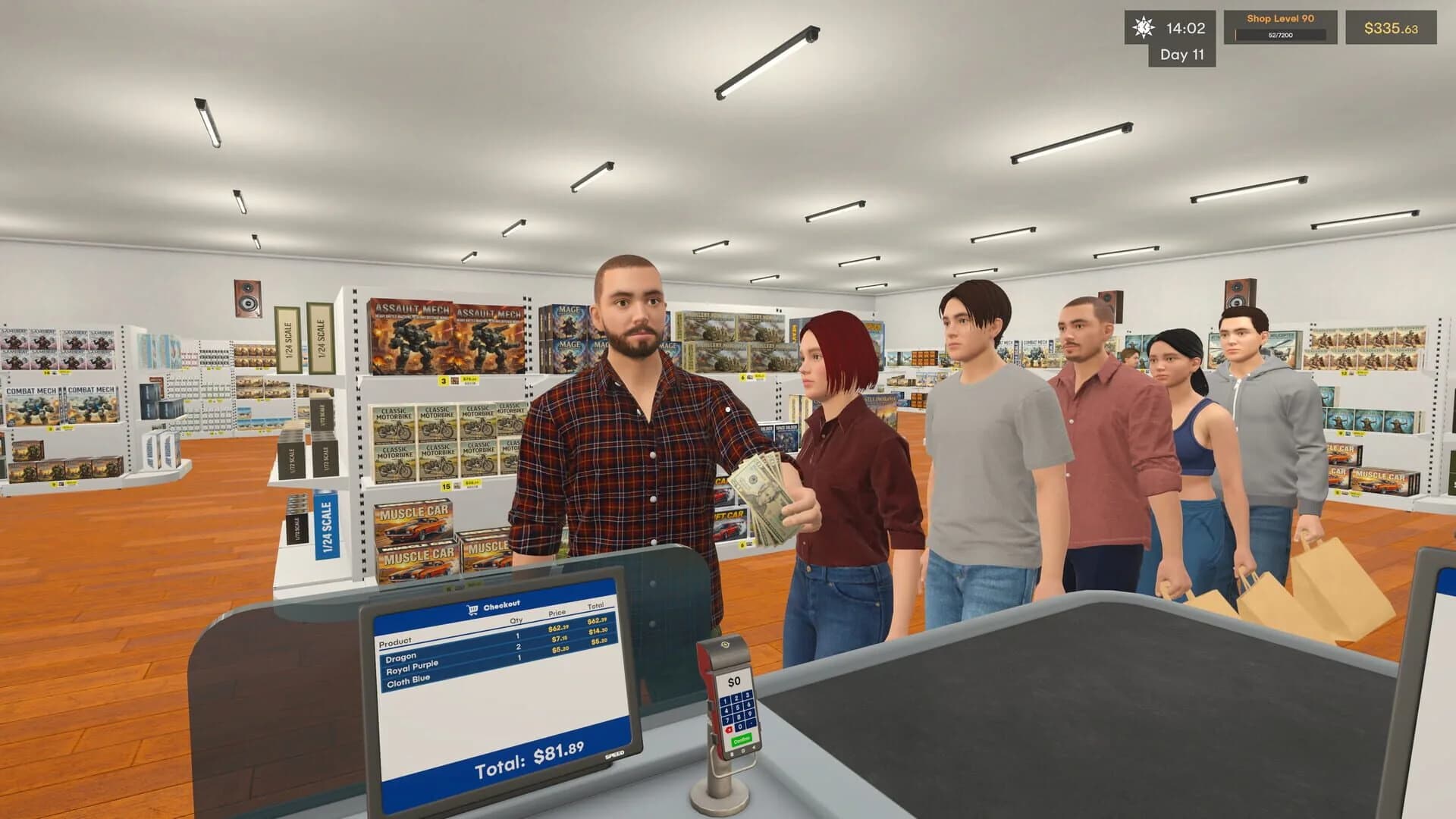
Yet another shop simulator in the TCG lineage, this time around model kits. But between hobby basket and build table, this one brings enough not to be just a clone.
Alexandrosse
InsertCoins.press Score
5/10
Verdict
Mixed
Let's be frank: watching the success of TCG Shop Simulator decline endlessly, we're starting to burn out. Card shop, comic shop, shop for anything that fits on a shelf, the formula loops. So when Model Kit Shop Simulator shows up, our first reflex is a sigh. But we forced ourselves to look closer, because the real question isn't whether it's one more clone, it's what it brings. And surprise: between its hobby basket and its build table, this one has what it takes to justify its existence.
Model Kit Shop Simulator is a first-person shop-management game, available on PC since 24 July 2026, preceded by a prologue released in mid-June. The principle is the now-familiar one of the shop simulator: every sale starts with a model kit, and you build and grow your hobby shop by ordering master boxes, unpacking deliveries, stocking shelves, setting prices and serving collectors and enthusiasts. You find all the genre's apparatus, expansion system, dynamic wholesale pricing, economy to optimize, product themes and paint types to sell. At its core, it's TCG Shop Simulator repainted in model-kit colors, with two of its own systems that make the difference.
What sets Model Kit Shop Simulator apart from mere repeat are two systems designed around the specificity of the model kit. The first, the hobby basket system, rests on a logic of complementarity: when a customer picks a kit, they may also look for the matching paints needed to complete it. To maximize profits, you thus have to keep the right corresponding paints in stock and increase basket value by anticipating the hobbyist's real needs. That mechanic goes beyond the generic restocking of the classic shop simulator, introducing a reflection on the product's ecosystem, on what goes with what, that gives a bit of gray matter to the usual loop.
The second system, and the most interesting, is the build table. After their purchase, customers can use dedicated tables to assemble their kits on-site, turning the shop into a place that supports both shopping and building. That's what answers the real question we were asking: yes, model building is integrated, and it gives the game an extra soul that purely transactional shop simulators lack. Still, that building is above all the customers' doing, a service you offer them more than a mechanic you practice yourself in depth, and that's where the promise finds its limit. The idea is good, the execution stays centered on management.
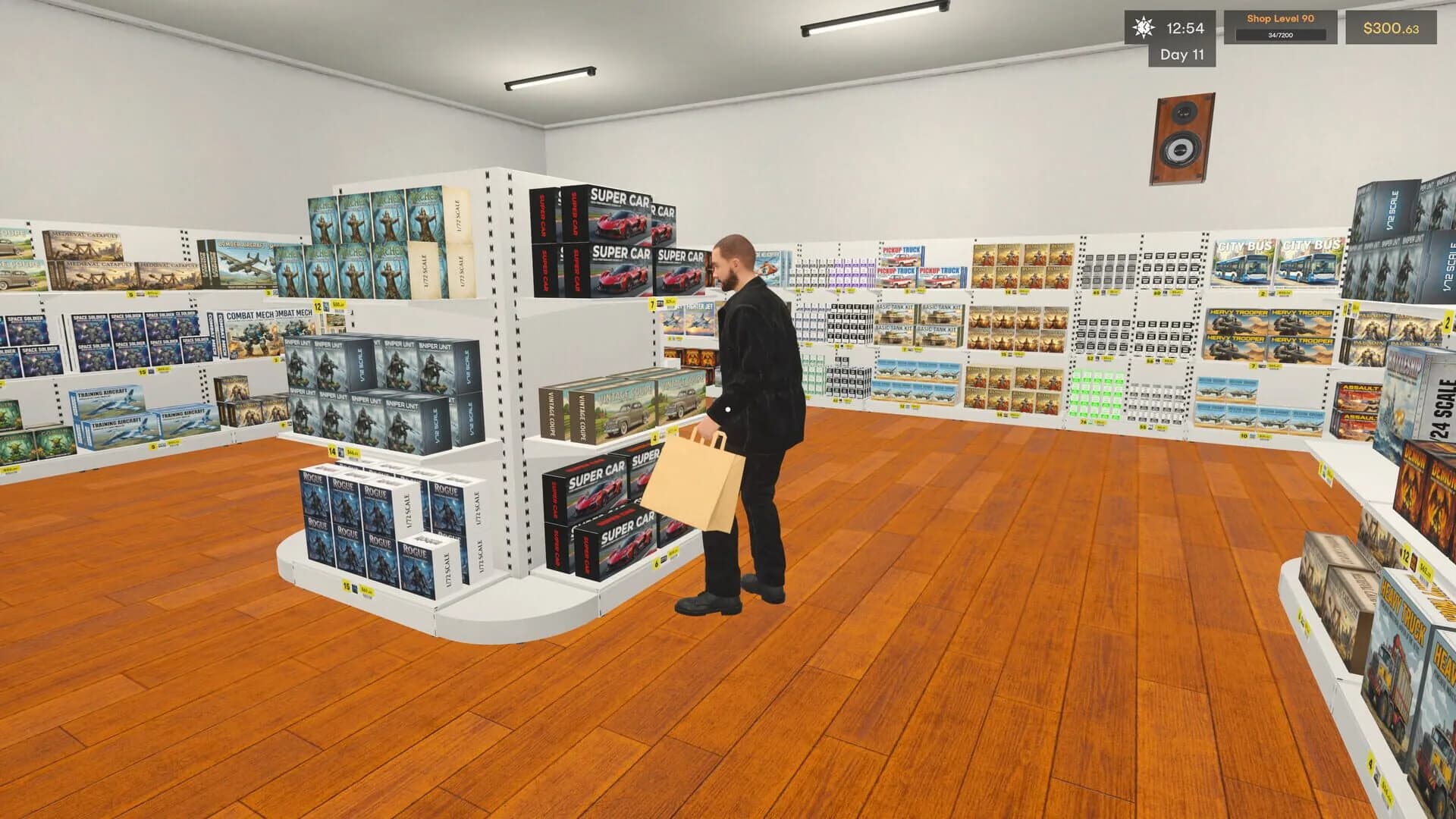
Let's say it plainly: under its two good ideas, Model Kit Shop Simulator stays a shop simulator, with everything the genre carries of repetition and deja-vu. The core loop, order, unpack, stock, set prices, ring up, is exactly the one of TCG Shop Simulator and its countless cousins, and whoever has exhausted it won't feel out of place. The hobby basket and build table add spice, but don't transform the game's deep nature, which remains a business-management simulator among a horde of others. The formula's fatigue lurks, and you really have to love the genre to dive back into it one more time.
The other reservation is model building itself, precisely where we awaited it. It's present, it enriches the concept, but it stays largely the customers' doing at the build tables rather than a deep assembly mechanic you'd practice yourself. Whoever hoped for a real model-building simulator, meticulous and satisfying like games dedicated to that craft, will be left wanting: here, building is a service and a backdrop more than a gameplay core. It's a shop simulator above all, sprinkling model kits onto its management, not a model-kit game that happens to have a shop. The nuance matters, and it defines who it's really for.
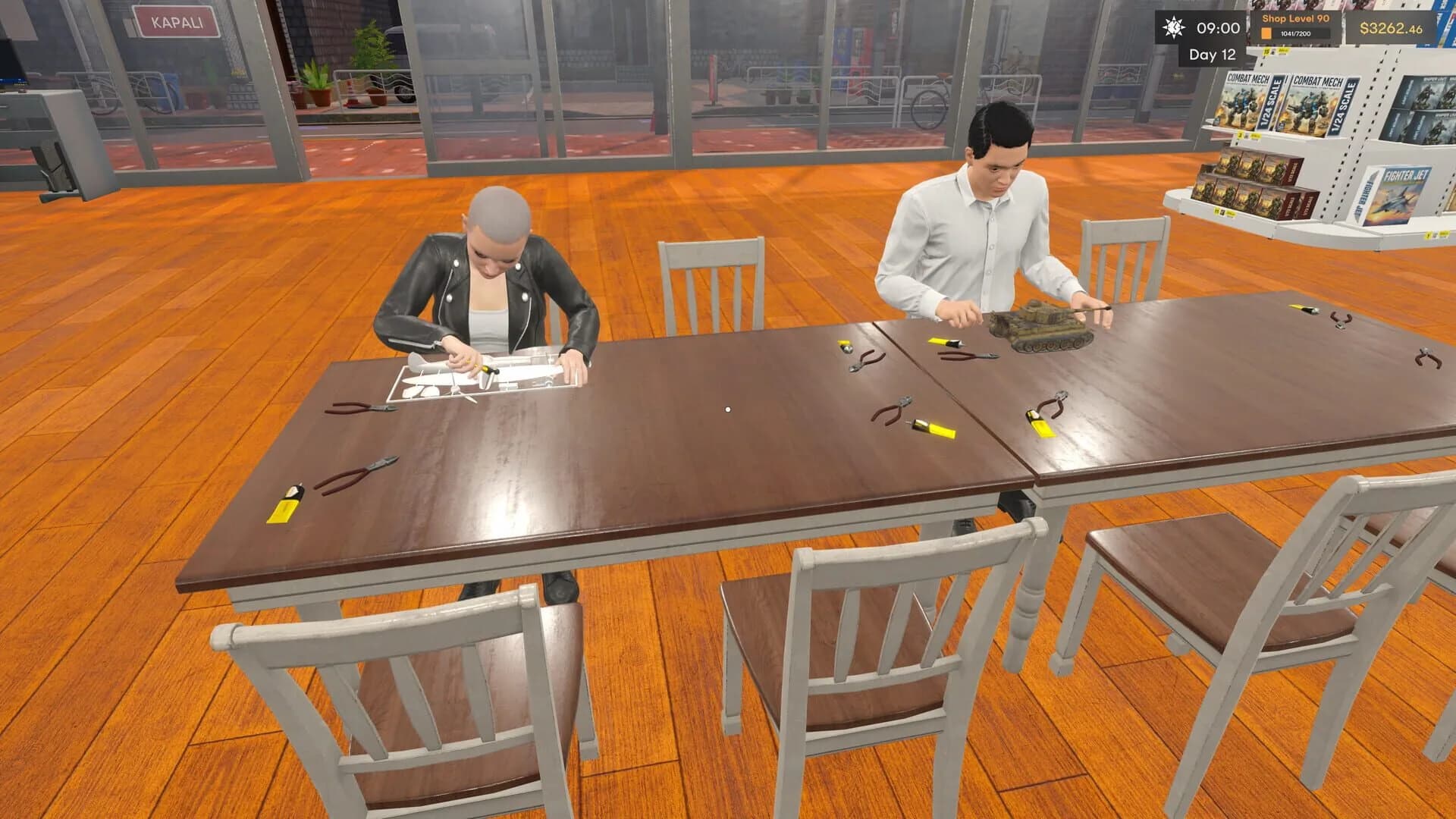
Model Kit Shop Simulator is one more variation on the shop-simulator formula, but a variation that has the merit of bringing a bit of new. Its hobby basket system, introducing a logic of complementarity between kits and paints, and above all its build table, letting customers assemble their purchases on-site, give it an extra soul that purely transactional clones lack. For the genre fan who doesn't tire of it, it's a decent variant a bit cleverer than average, carried by two ideas that fit the model-kit universe well.
You just have to accept what it is, and what it isn't. Under its good ideas, it stays a classic shop simulator, with its thousand-times-seen loop of restocking and ringing up, and the formula's fatigue lurks over it like all its cousins. And its model building, while it partly answers our expectations, stays a service rendered to customers more than a deep assembly mechanic to practice yourself. It's a management simulator that sprinkles model kits, not a full-fledged model-kit game. Decent and a notch above the genre's average, but skippable for whoever has already put in the hours on shop simulators.
Yet another take on the shop simulator, saved from mere repeat by its hobby basket and build table: decent and a bit cleverer than average, but still a prisoner of the formula.
Strengths:
Weaknesses:
Tested on PC.
Your verdict differs from ours? The Discord is the place to make your case.
Community
Your rating
Advertisement
Loading comments...
You might also like
You struck a deal with a dragon. All that is left is serving both sides without either finding out. The 1.0 lands on 23 October.

A co-op horror fishing game at nine euros. You must sacrifice fish every day, and the beast is not the worst thing out there.

Scrapheap robots sent to exterminate a planetary fungus. The 1.0 lands tomorrow, and the upgrade grid is the genre's best idea.