Preview
Big Dig: digging up artifacts so Mayor Dog can build his highway
A short incremental narrative game where your job is removing the heritage getting in the way of a road project.
Alexandrosse
6 min
A spreading nebula, a majority of players to convince, and a modular political system that can generate regimes nobody planned. Nebulae wants to simulate a society, not just a galaxy.
Alexandrosse
Some games are played. Others are lived collectively, their outcome depending not on individual skill but on your ability to convince, negotiate, betray, or rally thousands of strangers around a common goal.
Nebulae is firmly in the second category.
The central concept of Nebulae is as simple as it is brutal: a nebula spreads through the galaxy, draining the energy from every planet it reaches, and can only be stopped by the coordinated action of a majority of players. Not the best players. Not the most powerful. A majority. That detail changes everything.
Because the nebula doesn't just advance. It constantly reshuffles the deck by shrinking the buffer zones between nations, destabilising alliances that seemed solid, and forcing unlikely rapprochements between enemy factions. The environmental threat becomes a permanent political engine. Everyone knows the nebula is advancing. Nobody agrees on how to stop it. And that's exactly where Nebulae becomes interesting.
Nebulae isn't a military conquest game dressed up as a strategy MMO. It's a governance game, and the distinction matters.
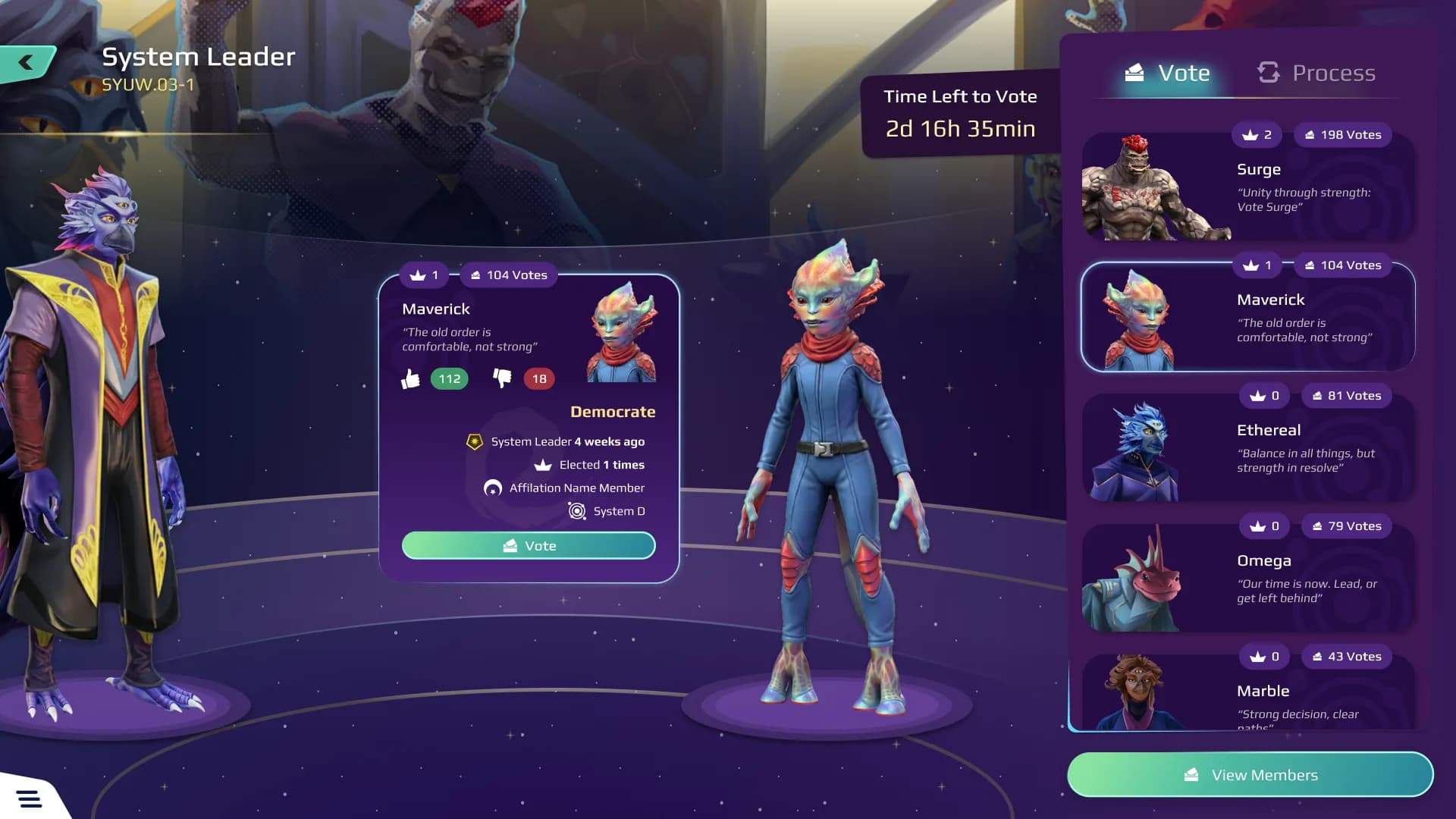
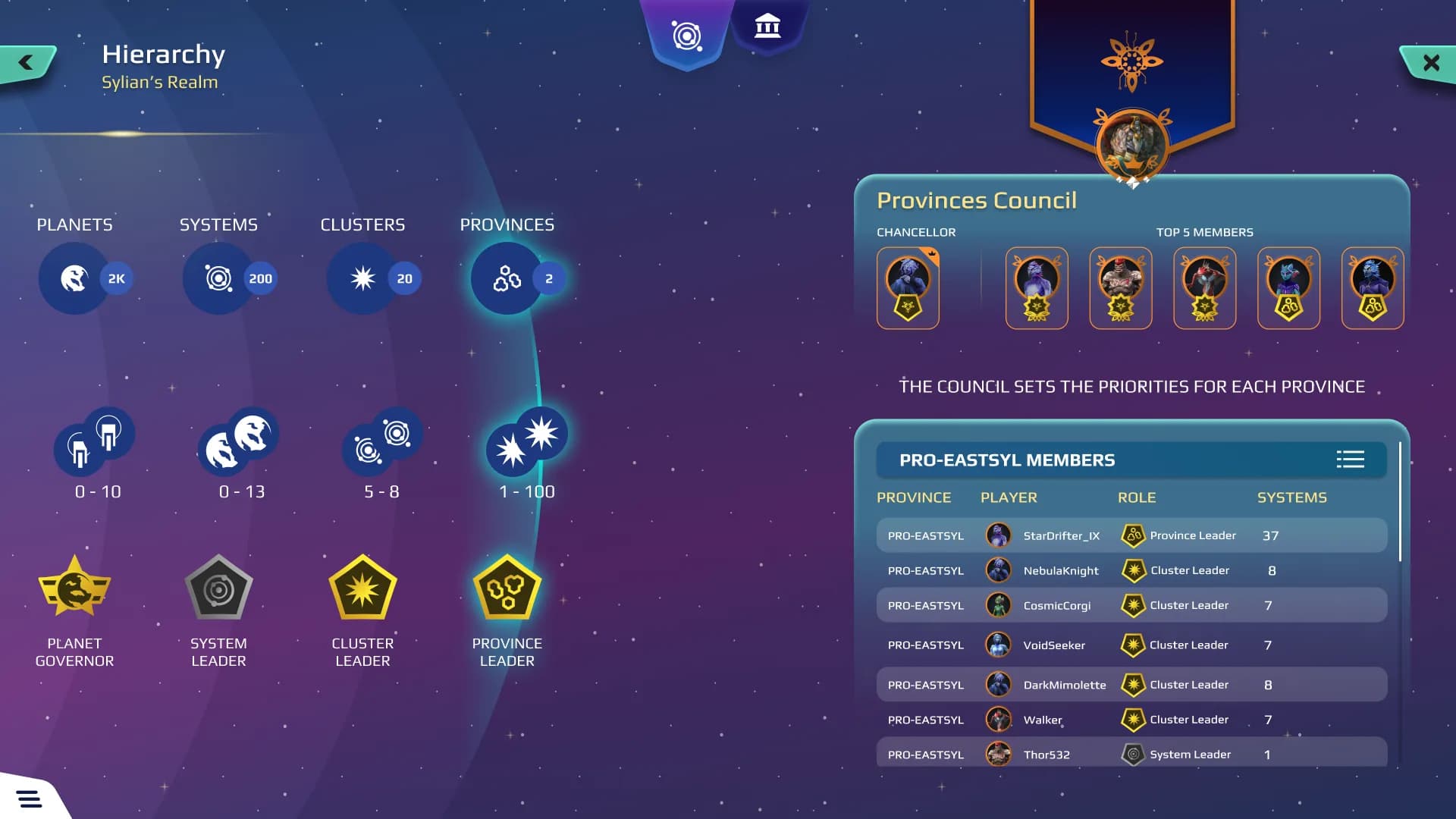
Players start as planetary governors, no lower levels to unlock, no condescending tutorial. Decisions made around quality of life, environmental health, and planetary productivity gradually shape the player's political profile. From there, you can run for election as a representative of your star system, climb the rungs of a political hierarchy that can lead to the highest offices in your nation.
The political system is one of the most ambitious elements of the project. Three regimes are planned at launch: democracy, monarchy, militarist totalitarianism. Nine more are on the roadmap: theocracy, corporate republics, federalism, tribalism, autocracy, communism. But what sets Nebulae apart from a simple faction selection screen is that each regime is built from modular components that players can rearrange. Emergent regimes that didn't exist in the original design can therefore appear. An organic outcome that grows from player choices rather than developer intent.
The military system in Nebulae deserves attention, because it deliberately refuses the logic of a classic war game.
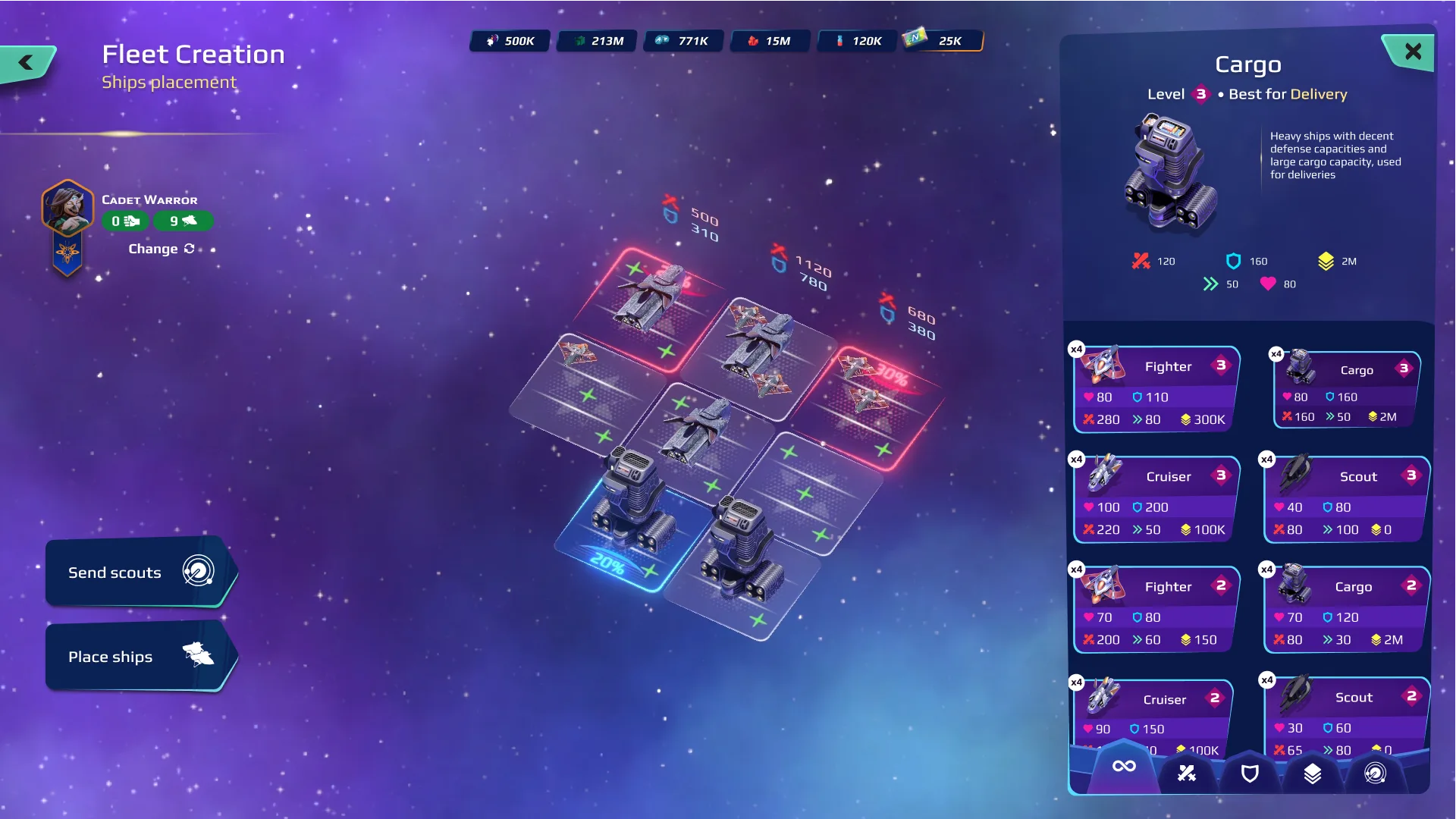
Fleets can be sent to deliver resources, patrol, escort politicians, or intercept opponents, but players can refuse combat. Raids allow you to steal a portion of available production, not take everything. Players can pose as merchant fleets using multiple cargo ships. Planets can only be conquered by players from an enemy nation, not an allied one. And conquered players don't disappear: they enter a citizenship state where they're treated as potential spies, with the political consequences that follow if their cover is blown.
This isn't a combat system. It's a geopolitical pressure system. And that fundamentally changes the nature of military decisions.
One design detail worth singling out: an AI-powered NPC journalist will cover galaxy events in real time. By default, she reports facts neutrally. But players can ask her to suppress certain stories, amplify others, or use her for smear campaigns against political enemies.
The AI was trained over several months and tightly constrained to avoid drift and any grounding in the real world. Additional journalist agents with distinct political biases are being considered for the long term.
It's a mechanic that says a lot about the project's ambition: Nebulae doesn't want to simulate a galaxy. It wants to simulate a society.
The alpha is currently running on Android with over 5,000 active players and nearly 20,000 registered. Community feedback is described as encouraging. An iOS version is planned for after summer, and the PC version, fully optimised for large screens with 4K textures, will follow. The game runs on Unity with mobile/PC crossplay planned.
On the business model: free-to-play on mobile with skins and cosmetic rewards, PC version sold on Steam with an exclusive skin bundle. Purchases are syncable between both platforms on a single account.
A Kickstarter campaign is currently live. If targets aren't met by end of week, it will be pushed to October. Android players can access the alpha right now without waiting.
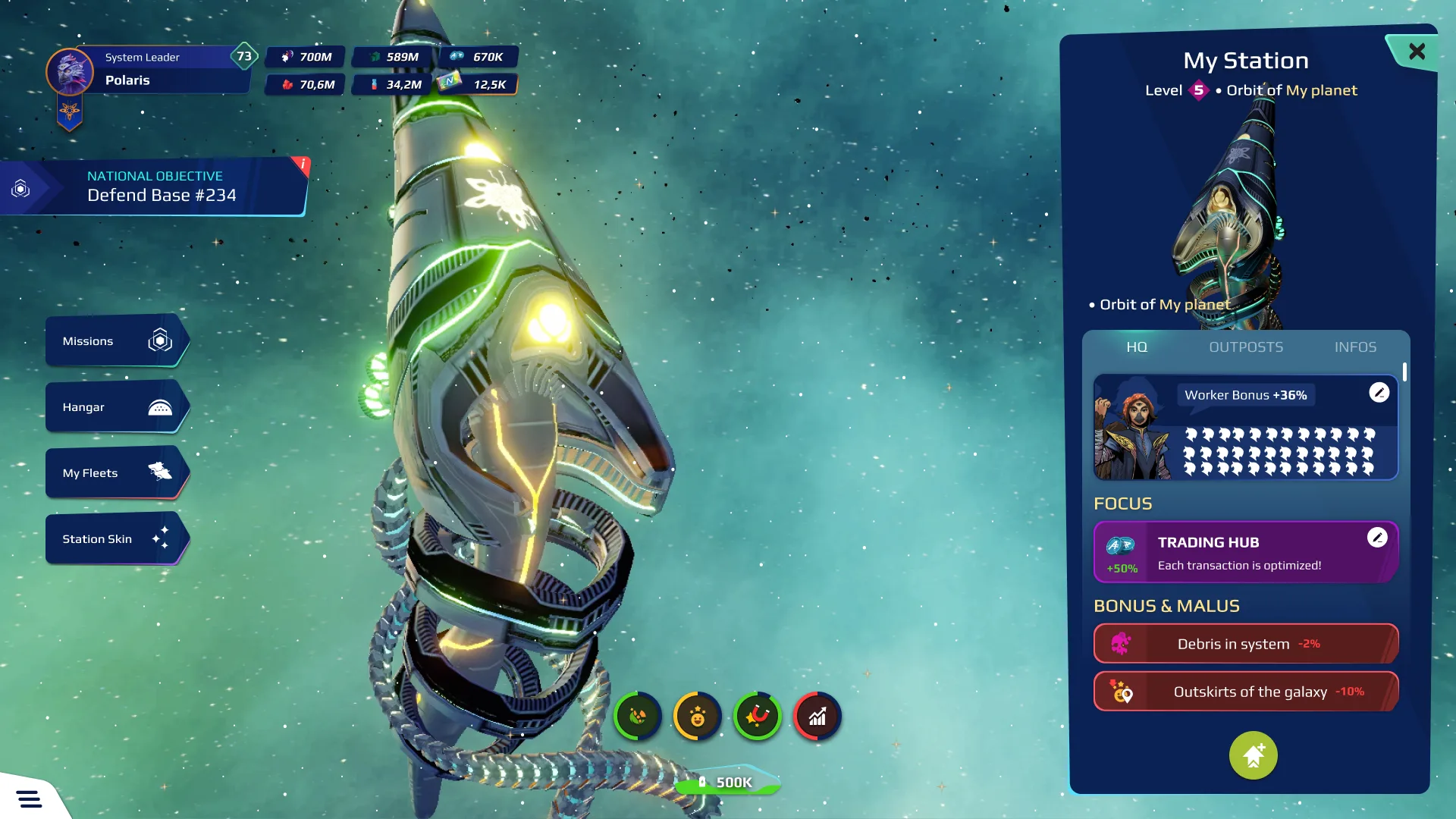
Nebulae is playing in a difficult category: strategy MMOs where the player mass is simultaneously the primary resource and the primary point of failure. This kind of game can be exceptional when the community genuinely invests. It can also collapse if critical mass is never reached.
The described mechanics are ambitious and coherent. The modular political system, the shared environmental threat, combat as a diplomatic tool rather than an end in itself: it all forms an ensemble that feels integrated rather than stacked. The real question, as always with this kind of project, is execution. And that, we'll only know by playing.
We'll be watching closely.
Preview based on a project presentation. No score assigned at this stage.
The conversation continues on our Discord, between the believers and everyone else.
Community
Your rating
Loading comments...
You might also like
A short incremental narrative game where your job is removing the heritage getting in the way of a road project.
An invasion of South Korea, a Price on the run, and a pre-order that unlocks the campaign a week before release.
The first Final Fantasy in HD-2D, with Gilgamesh, a Colosseum, Ultima Weapon, and Visions drawn from the older entries.