7
Test
Dungeon Inn: running an inn while keeping two rival guilds from meeting
You struck a deal with a dragon. All that is left is serving both sides without either finding out. The 1.0 lands on 23 October.
Alexandrosse
7 min
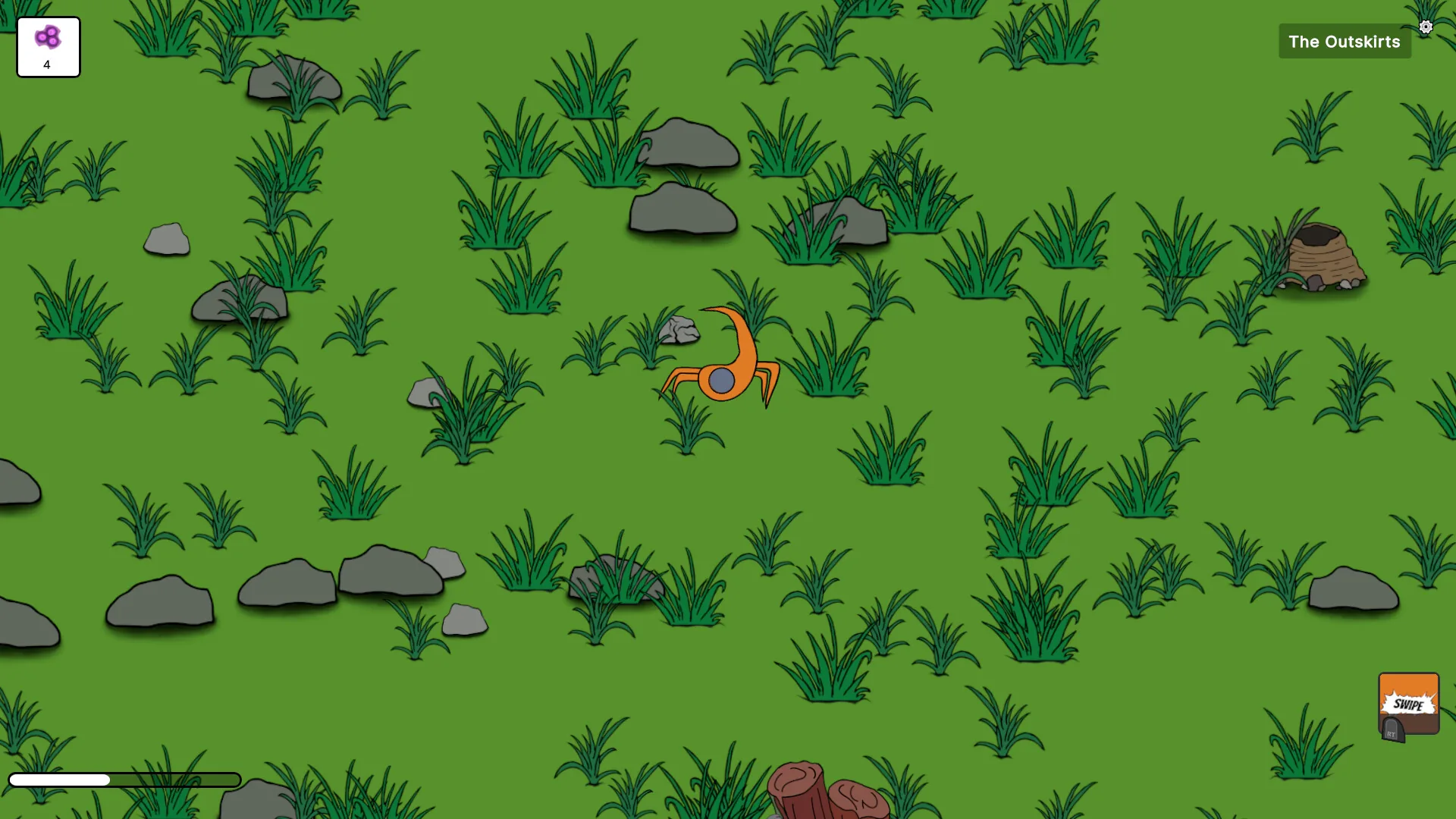
Smash everything to grow, grow to smash everything, and pour your gains into endless skill trees. Pebble for a Queen is ugly but clever, and that's what counts here.
Alexandrosse
InsertCoins.press Score
7/10
Verdict
Recommended
Some games you clearly don't buy for their beauty. Pebble for a Queen is one: its cartoon drawing style may aim for cute, but it won't be remembered for its visual qualities, and we won't pretend otherwise. Except in the world of incremental games, beauty was never the point. What counts is the mechanic, that progression loop that grabs you and won't let go. And on that ground, Pebble for a Queen has real arguments.
Pebble for a Queen is an exploration adventure with a strong incremental component developed by Mangus, available since 22 July 2026 on PC. The pitch is charming in its simplicity: you play Goguz, a character set out to find the perfect precious stone for a queen, who will grow and strengthen progressively by exploring a colorful world and pulverizing everything in his path. The game is set in the Sunrohc universe, a collection of the studio's games, and it fully owns its nature as a relaxing incremental game, where the pleasure comes from continuous progression and the optimization of vast skill trees.
The heart of Pebble for a Queen is its incremental loop, and it works exactly as it should: insidiously and fearsomely addictive. You explore, you smash everything you cross, you gather resources, and you pour those gains into a sprawling network of skill trees. Each upgrade makes you a bit stronger, which lets you smash bigger things, which yields more resources, which unlocks new upgrades. That ascending spiral, that sense of ever-growing power, is the genre's hypnotic engine, and Pebble for a Queen masters it with real know-how. You catch yourself chaining tiers telling yourself just one more, and looking up much later.
The game's clever idea is to tie that progression to the character's very body. Goguz grows and strengthens physically as you progress, so the ramp-up isn't just a matter of numbers, it's seen and felt in the world. You go from small fragile being to a colossus capable of pulverizing obstacles once impassable, and that materialization of progression gives a concrete satisfaction many incrementals, more abstract, don't offer. Exploration is renewed by it, since growing literally opens new horizons, and that loop of growth, destruction and discovery is what makes the game so gripping despite its unremarkable appearance.
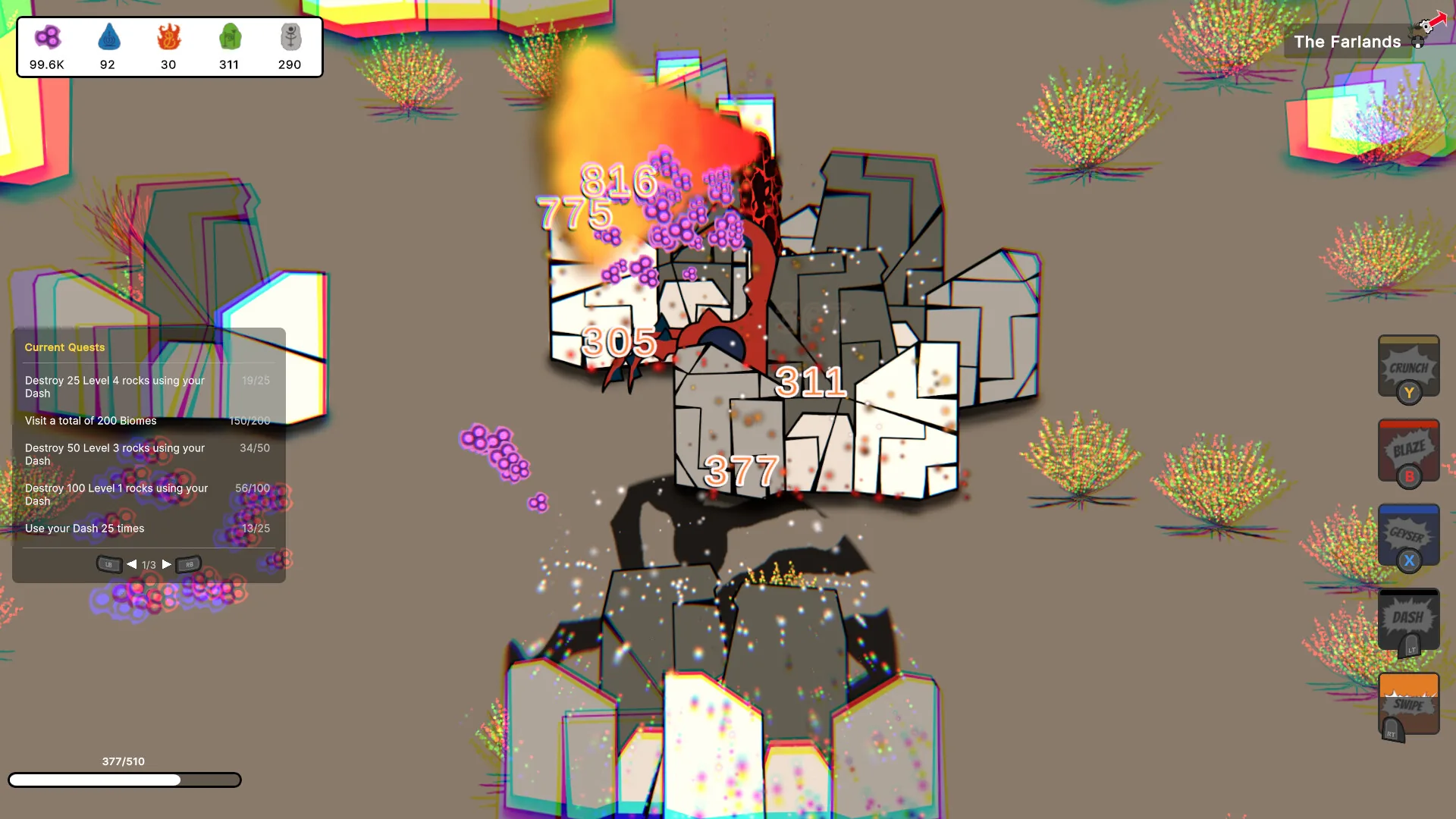
Since we've been honest about the graphics, let's keep being so about the rest. The incremental genre isn't for everyone, and Pebble for a Queen doesn't escape its pitfalls. Its loop, however addictive, rests on repetition and the optimization of climbing numbers, and whoever isn't sensitive to that very particular pleasure will find the whole quickly tiring, even pointless. It's not an action, story or challenge game in the classic sense: it's a progression machine, and you have to love the simple fact of watching gauges fill and trees unfold to get your fill. It's a niche pleasure, owned as such.
You also have to temper on depth and length. Incremental games live on the richness of their systems and the generosity of their trees, and everything will depend on Pebble for a Queen's ability to sustain the spiral without you hitting a ceiling or weariness too fast. The relaxing facade can also hide a lack of content beyond the central loop, and you should approach it as a hypnotic parenthesis rather than a long-haul adventure. Its value lies in its mechanic, not its scale, and it's by that measure that it should be judged.
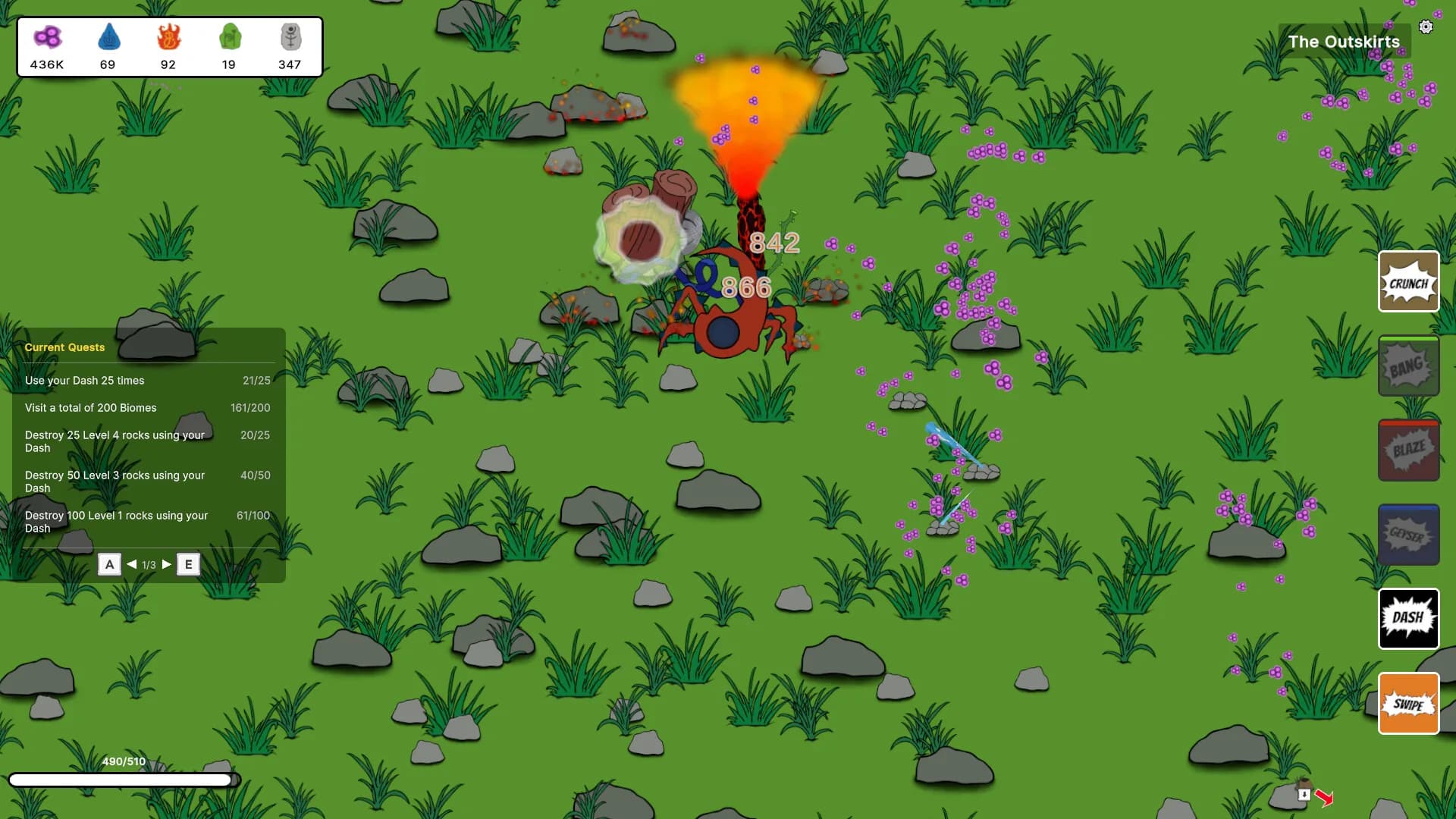
Pebble for a Queen is the perfect demonstration that a game can be ugly and clever at once, and that in certain genres, it's the second quality that truly counts. Its graphics won't turn any heads, but its incremental mechanic, that loop of destruction, growth and skill-tree optimization, is a delicious trap that grabs and won't let go. The idea of tying progression to the character's very size gives a concrete satisfaction and renews exploration, and for the genre fan, it's a hypnotic little gem with a deceptive facade. You don't play an incremental for the shop window, you play it for the spiral, and this one runs smoothly.
You just have to know what you're getting into. It's not a game for everyone, and whoever isn't sensitive to the very particular pleasure of incremental progression will walk away without regret, rightly put off by the appearance as much as the repetition. But for anyone who loves watching gauges fill and power grow endlessly, Pebble for a Queen offers exactly what's needed, with a good idea as a bonus. Ugly outside, clever inside, it owns that deal and fulfills it effectively. Sometimes a game's intelligence isn't visible in a screenshot, it's felt controller in hand.
An incremental game with an unappealing look but a fearsomely addictive mechanic, where you grow by smashing everything to smash everything by growing: ugly outside, clever inside.
Strengths:
Weaknesses:
Tested on PC.
The discussion carries on over on our Discord, where we relitigate scores for far longer than is reasonable.
Community
Your rating
Advertisement
Loading comments...
You might also like
You struck a deal with a dragon. All that is left is serving both sides without either finding out. The 1.0 lands on 23 October.

A co-op horror fishing game at nine euros. You must sacrifice fish every day, and the beast is not the worst thing out there.

Scrapheap robots sent to exterminate a planetary fungus. The 1.0 lands tomorrow, and the upgrade grid is the genre's best idea.