7
Test
Barfender: my idiotic friend drank all the beers
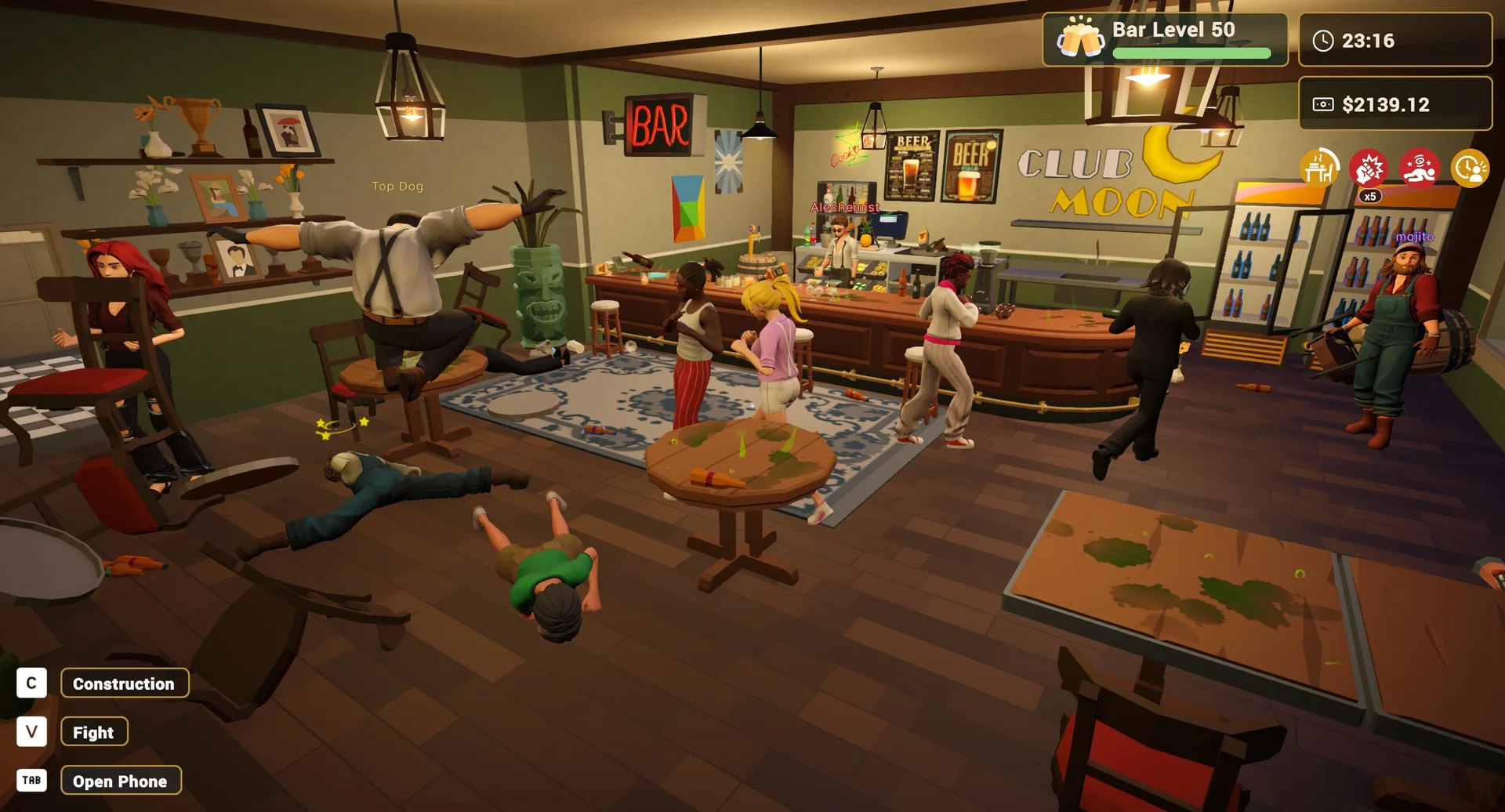
A co-op bar that collapses while you serve. 98 per cent positive, and one of the rare times chaos is the actual subject.
Alexandrosse
7 min
You inherit the last video shop in town and a streaming giant opens across the street. The update fixing its two big flaws lands today.
Alexandrosse
InsertCoins.press Score
7/10
Verdict
Recommended
The video rental shop had a flaw that was really its function: it did not give you what you wanted.
You went in for a specific film, it was out, and you left with something else because the cover looked good. That is how I found Jumanji, the Ninja Turtles and Bruce Almighty. Not through a recommendation, not through an algorithm. Because they were on the shelf and the thing I came for was not.
No streaming service does that. They give you exactly what you already like, which is the opposite of a discovery.
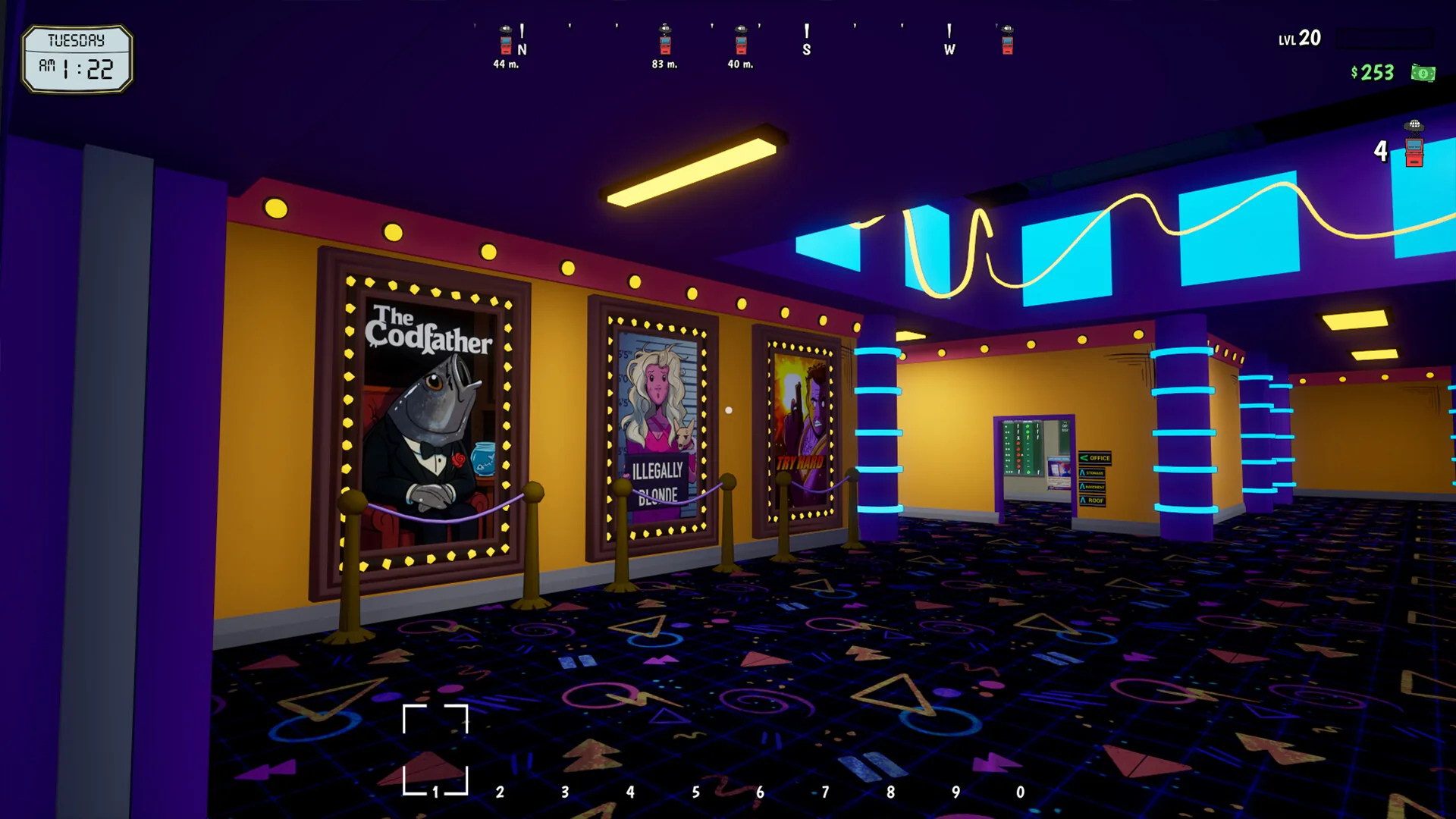
You inherit the last video shop in town. You are broke, drowning in late returns, and a streaming giant called RentNet has just opened across the street.
The choice of antagonist is the game's best piece of writing. You are not fighting a competitor doing your job better, you are fighting a thing that made your job unnecessary. It gives the whole management layer a particular tint: every week you survive is a stay of execution, not a win.
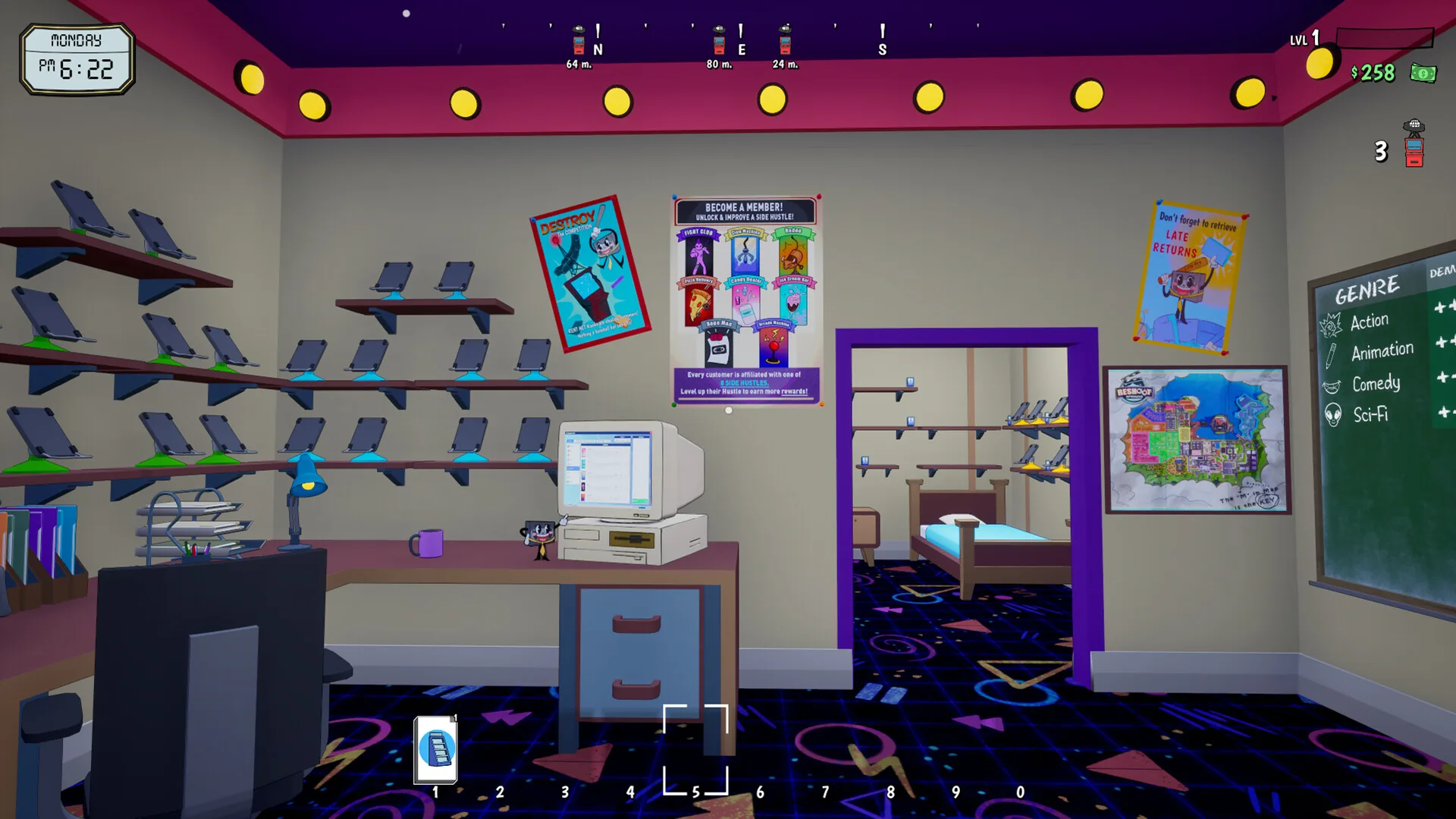
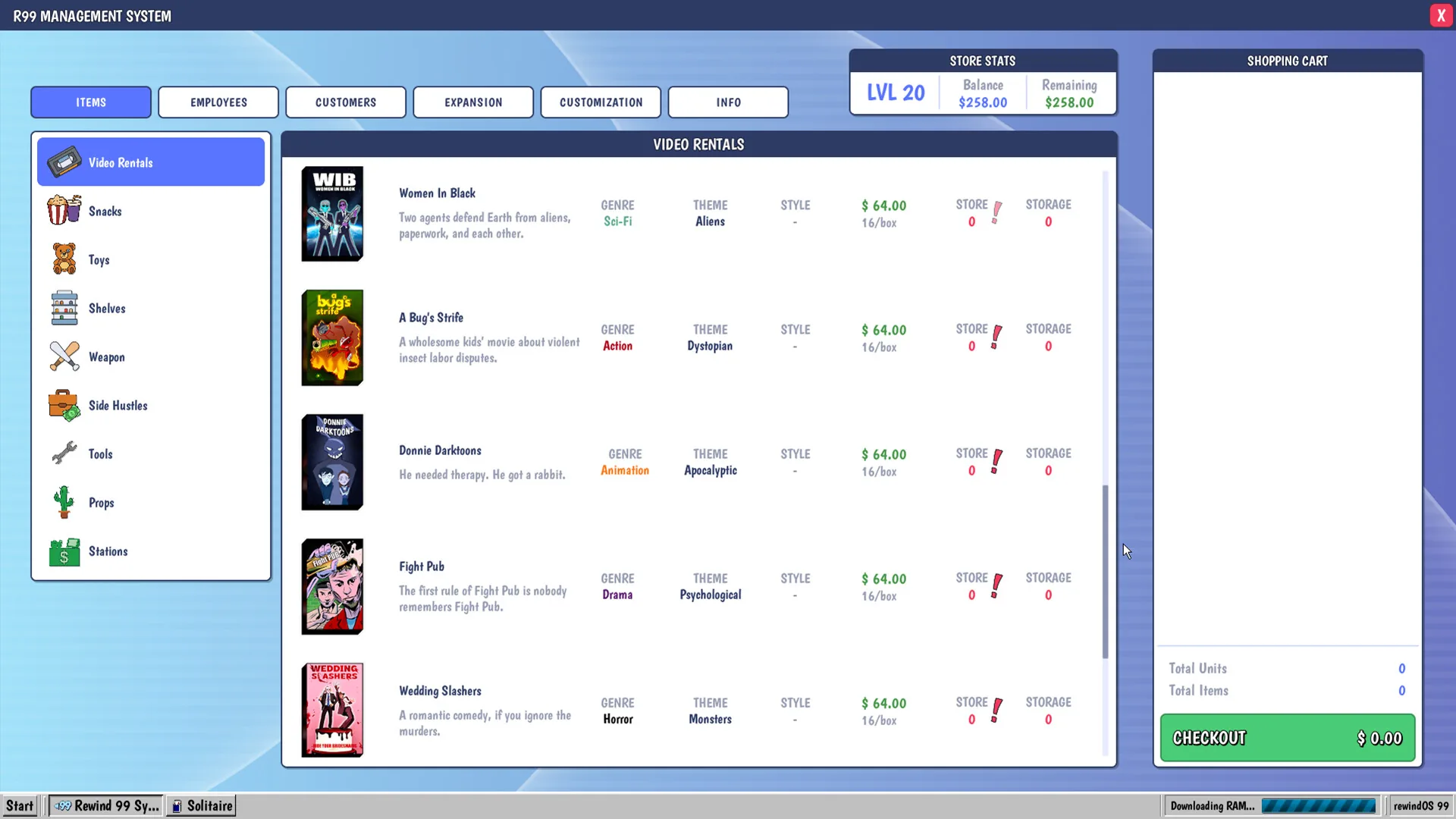
The loop is that of a well-run shop game. You order films, snacks, toys and rare collectibles. You stock the shelves, handle customers, hire, automate, optimise every square metre. And you customise a great deal, which matters in a game where half the pleasure is making somewhere you would want to walk into.
This is where the game stops being a well-behaved retail simulator.
The shop alone is not enough to survive, so you have to find money elsewhere. The game offers underground fight clubs, scratch cards, a claw machine, and side hustles across the city that get progressively shadier.
Some make you rich. Some ruin you. The studio says as much, and that is the deal.
There is a whole city to cross, on foot or by scooter, with characters whose schedules you can learn and opportunities that grow more lucrative the more dangerous they get.
And there is the megalomaniac route: producing your own films to compete with RentNet. Running a production, releasing a feature, and turning a dying shop into something else entirely.
The mixture works because it refuses comfort. Plenty of shop simulators let you optimise peacefully into boredom. This one forces you outside to do questionable things to cover the rent, which is probably closer to the reality of small retail than anyone wants to admit.
The calendar needs stating precisely, because it changes how you should read the reviews you will encounter.
The game has been in early access since March, and two complaints have recurred from day one: performance collapsing as the shop fills up, and employees incapable of doing their jobs. Players describe a well-stocked shop becoming unplayable, with the slowdown easing as soon as you walk away from it.
The studio did not deny it and did not bury it. It named those two as its absolute priorities back in June, explained that its engineers were on them full time, missed a first end-of-June target, and mentioned in passing a detail that explains a lot of the delay: the live build was running on Unreal Engine 5.5 while the update was being developed on 5.7.
That update ships today. It contains an optimisation pass across the whole game, completely rebuilt employee AI with the promise that staff will finally do their work, and a batch of quality-of-life improvements requested by the community. The studio also warns that a fresh save will be required.
Which means the negative reviews you read today describe a version being replaced while you read them. I am not asking you to ignore them, I am asking you to check their date.
The studio displays a line on its page I have not seen often: one hundred per cent human-made. Every asset, every illustration, every piece of marketing produced by real artists.
After the month we have just spent taking apart games sold with generated images, that is worth flagging. It is not a quality argument in itself, a game can be bad and entirely handmade. But it is a verifiable, binding statement, and the game's strongly stylised look happens to make it credible.
This is still early access, with everything that implies about shifting content and saves that break on major updates.
Co-op exists, and it is probably the best way to play. Splitting responsibilities between the till, the shelves and the night-time schemes is the sort of game you retell the next day.
And the price is gentle, under twelve euros, which makes the wager low-risk even if support were to slow.
Across the 475 reviews published, a little over three quarters are positive. The dividing line is clean: those talking about atmosphere and the loop are enthusiastic, those talking about technology are harsh. That is exactly the profile of a game with a good idea and a struggling engine, which is the best possible problem because it can be fixed.
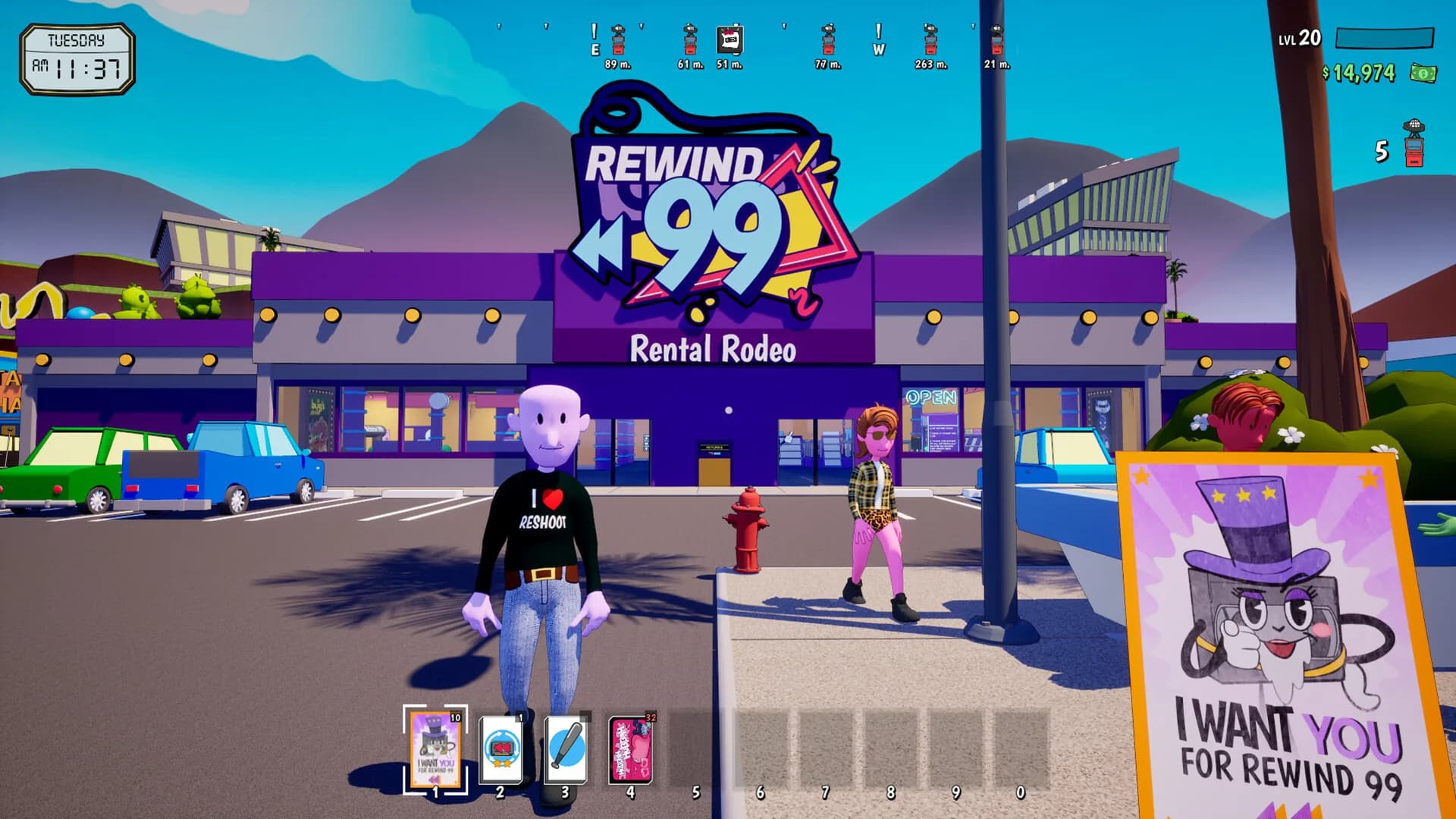
The game is not a museum of the cassette, and thank goodness, because pure nostalgia exhausts itself in twenty minutes. There is nostalgia in there, but it serves as the set for a frankly vicious story about economic survival.
What it does capture is the social function of the place. A video shop was somewhere a person put a box in your hands and said you would like it, with no data whatsoever to back that up. It was fallible, subjective and often excellent.
The game makes that your job: stocking shelves so other people stumble onto things they were not looking for. And it asks you to do it knowing the whole thing is going to disappear.
There was material here for a sad game. They turned it into one where you run street fights in the back room to cover the rent. That is probably the right call.
Which film was put into your hands by accident? Come and tell us on the InsertCoins Discord.
Community
Your rating
Advertisement
Loading comments...
You might also like
A co-op bar that collapses while you serve. 98 per cent positive, and one of the rare times chaos is the actual subject.
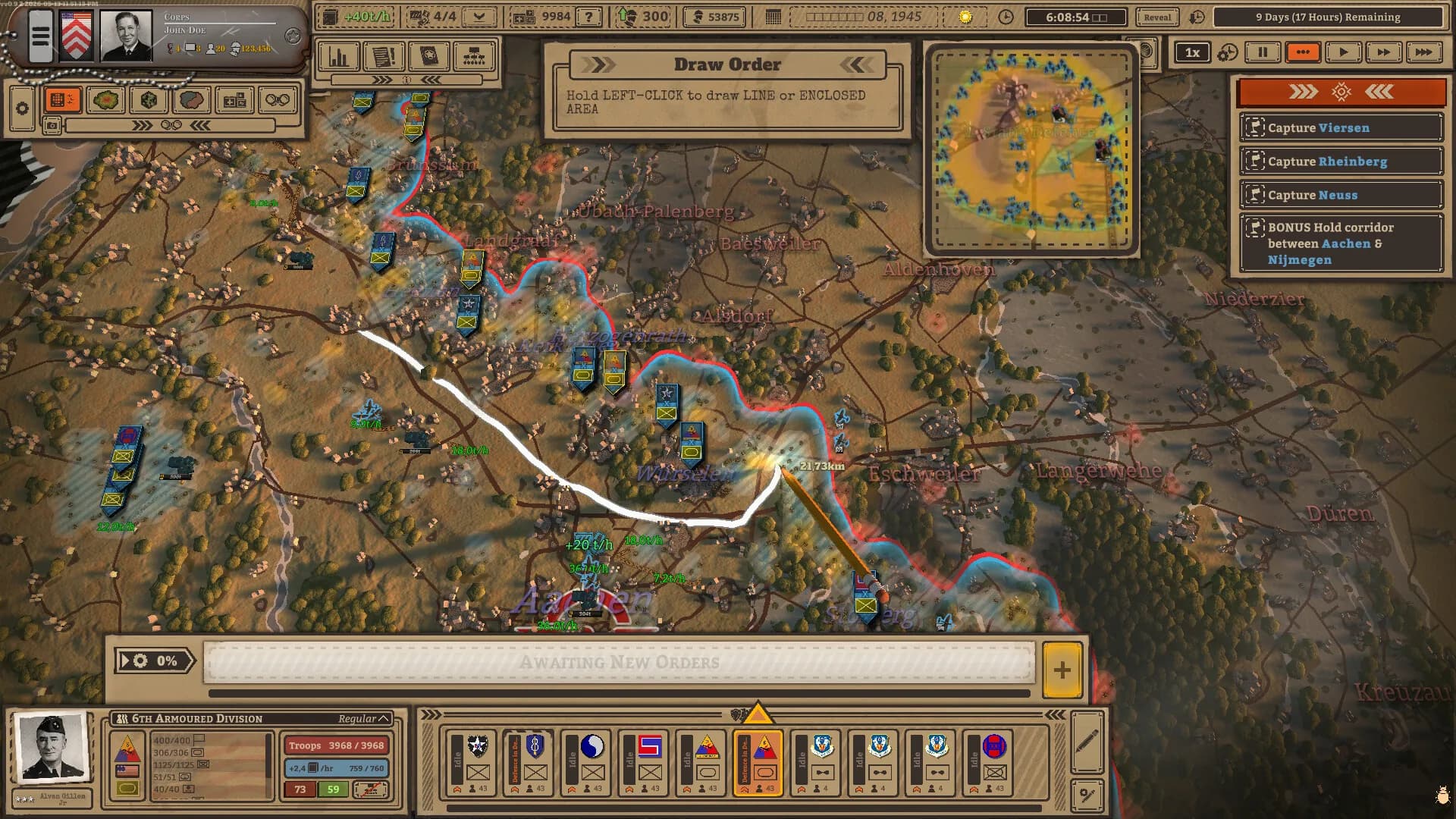
You draw a plan on the map and officers execute it alone. Except the game crashes every other planning phase.
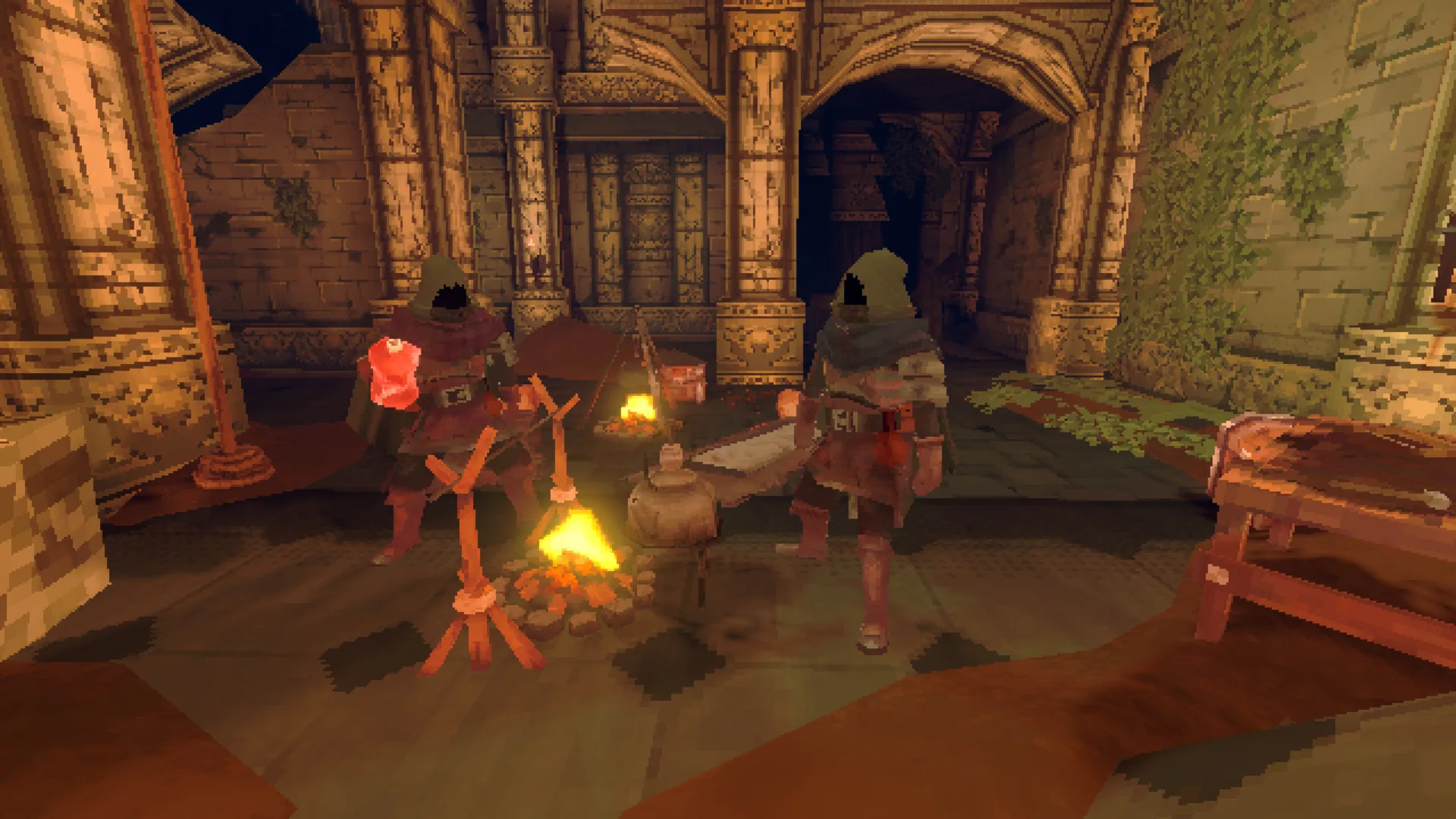
The Knights of Pen & Paper team return with a dungeon where you come back to camp, cook, and unlock recipes that change your stats.