There is a contradiction at the heart of this game, and it is what makes it interesting. Sensory Overload is explicitly built to assault your sense of balance, with levels named Vertigo, Nausea, Peristalsis and Apocalypse. It is a game that means you harm, it says so, that is its selling point.
It is also one of the best equipped games for comfort options I have come across this year.
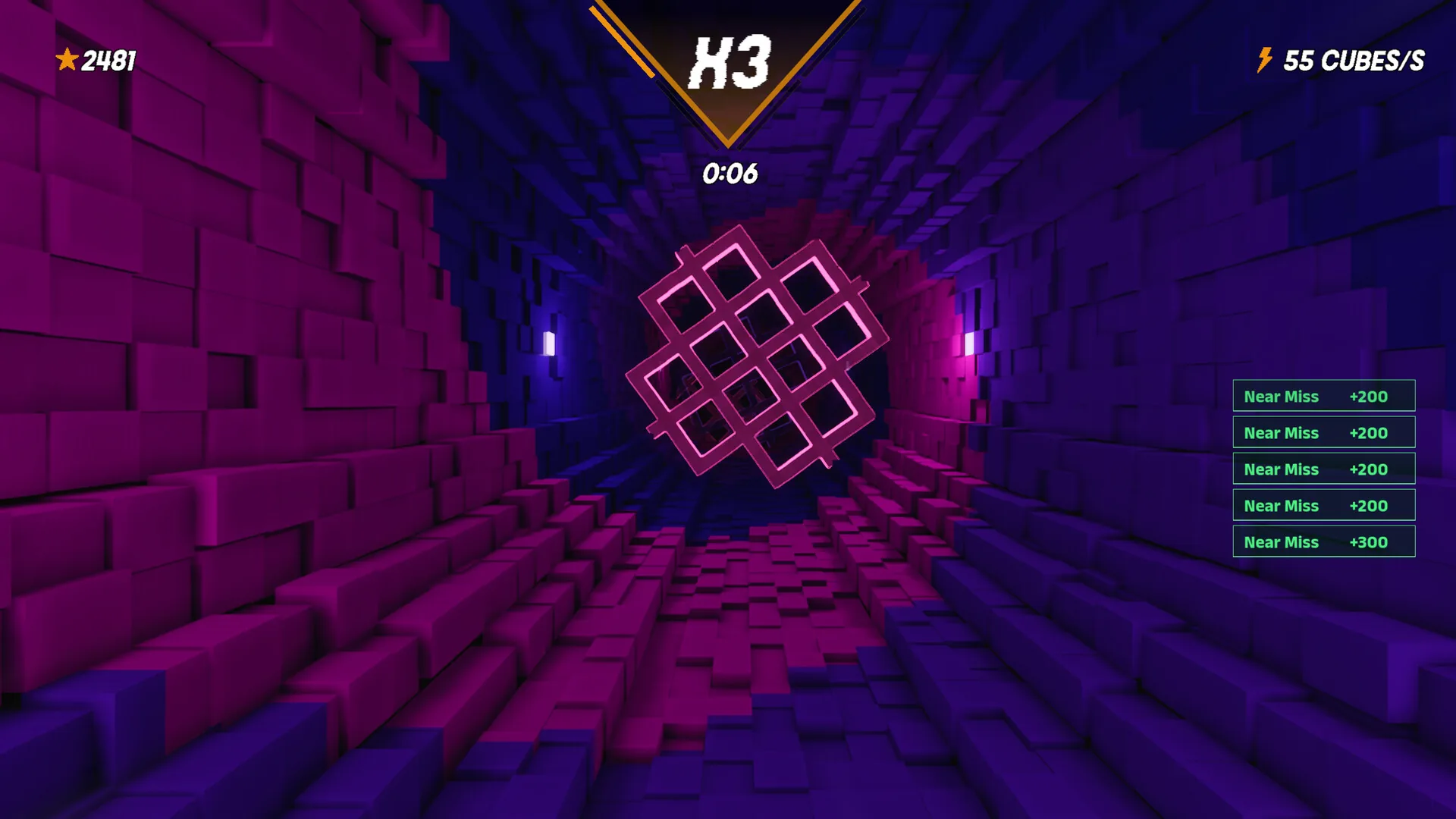
It is a dropper game: you fall down a tunnel, you dodge obstacles, you go faster and faster.
The formula is as old as the arcade, and the game does not claim to reinvent it. What it adds is that the scenery itself is the opponent. The walls breathe, the colours shift, the world twists to drag your vision into a spiral. The obstacles are not the real problem: the real problem is continuing to see them.
That is a simple, honest idea. Difficulty does not come from the precision demanded but from your ability to hold your bearings while the game sabotages your perception. The studio advertises over 4,000 possible combinations of effects, each level targeting a different sense.
The music sync also deserves flagging, and it is the best find of the lot: play well and the tunnel rewards you by locking its colours to the music. The reward for a good run is not a number, it is a moment where the chaos suddenly becomes coherent. That is elegant.
The game offers three ways in, and it is the smartest piece of structure in the product.
Normal: survive and score.
Ranked: endless escalation, until your brain quits. This is the showcase mode, the one with the online leaderboards and the clips doing the rounds.
Zen: no pressure, no score, no death.
That third mode is worth pausing on, because it would have been easy to leave out. A game whose commercial pitch is bringing people to their knees was under no obligation to ship a version where you cannot lose. Its presence says the developer understood that his audience includes people who want the spectacle without the ordeal.
Add a practice mode where you place your own checkpoints, and a level editor for creating and playing community maps. For a game this size, that is generous.
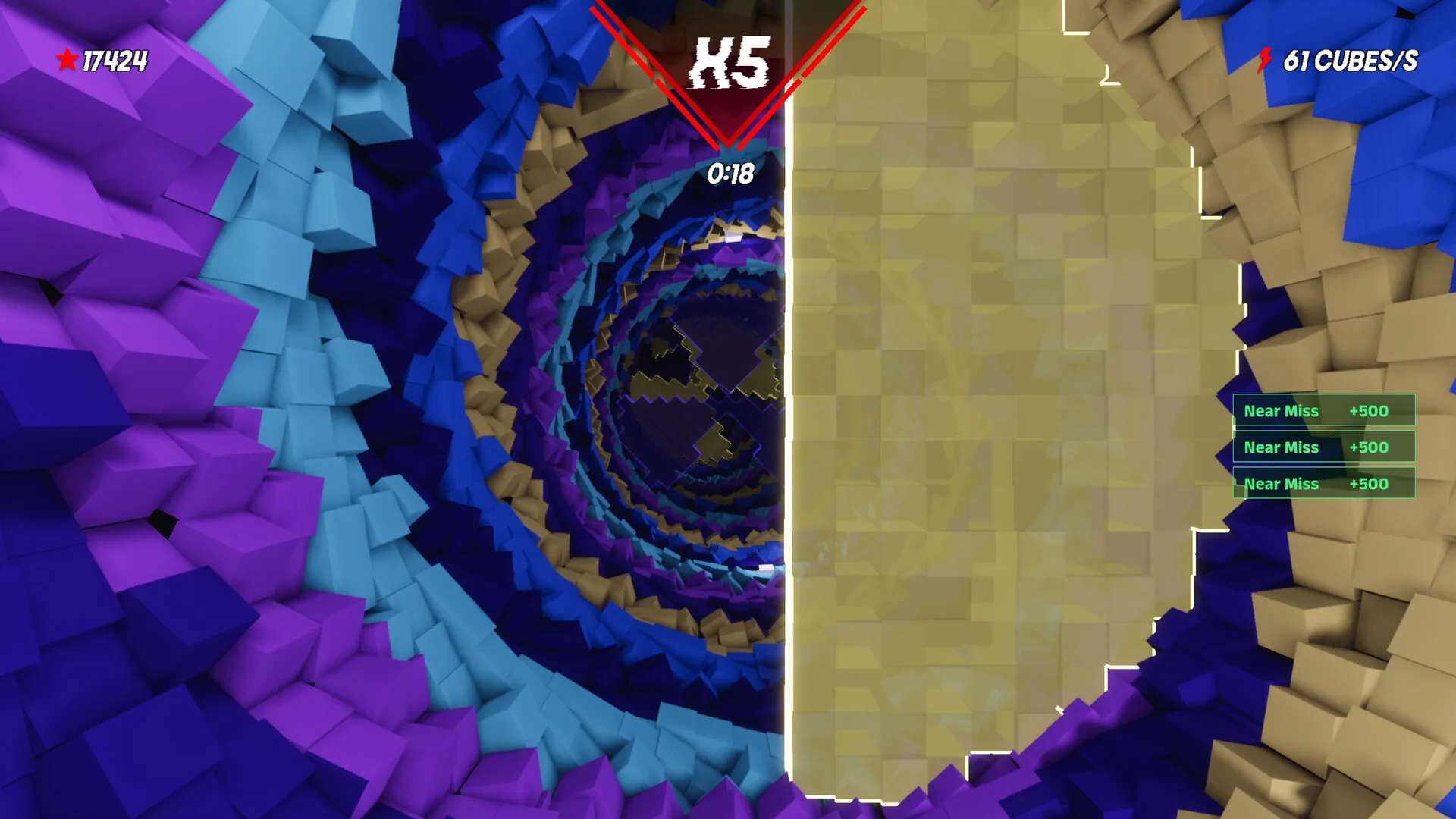
This is the part that surprised me most, and it deserves detail because it is rare.
A game built on disorientation could have stopped at its effect. Instead this one ships a serious list of comfort options, added across patches during the demo period:
A toggle to remove speed lines, which are one of the main sources of discomfort. A fully customisable crosshair, with free colour choice, size and thickness sliders, and two extra shapes, ring and outlined plus. And above all adjustable obstacle outlines, with a brightness slider to dim or strengthen the edges and a thickness slider.
That last one matters most, because it attacks the problem at the root: when the scenery is designed to drown the information, being able to strengthen the obstacle edges makes the game legible without making it easy. You keep the visual assault, you get back clarity on what can kill you.
Add adjustable difficulty, keyboard-only and mouse-only options, and tested Steam Deck support.
In other words, the developer spent time letting people play a game whose promise is to make them ill. That is more coherent than it sounds: making the experience bearable widens the audience that can taste it.
It has to be said plainly, because it is the most useful information in this article: this game can genuinely make you ill.
That is not marketing flourish, it is the design brief. The developer tells the story himself: it all started with a short video about a game he was building to give people motion sickness, and that video ran to several million views.
If you are sensitive to motion sickness or vertigo, or have any history of photosensitive episodes, caution is not optional. Start in Zen mode, in short sessions, with speed lines switched off, and stop at the first sign of discomfort rather than the second. No game is worth a three-hour headache.
Sensory Overload launches today, 20 August 2026. It is the work of a single developer, under the name Pancake Studios, with a handful of collaborators on music, sound and interface.
Its trajectory is a case study in modern visibility: a short video gone viral, then 80,000 wishlists by late April, then a free demo launched on 1 June that drew 15,000 players and over 200,000 runs in two days.
One point of honesty worth noting: release was announced for 20 July, with the statement that the date was locked. It slipped by a month. That is no tragedy, and a month's delay on a solo project beats a shaky launch, but when you announce a date as final, holding it is part of the deal.
Credit where due, the game is available in French, alongside eight other languages added during the demo period.
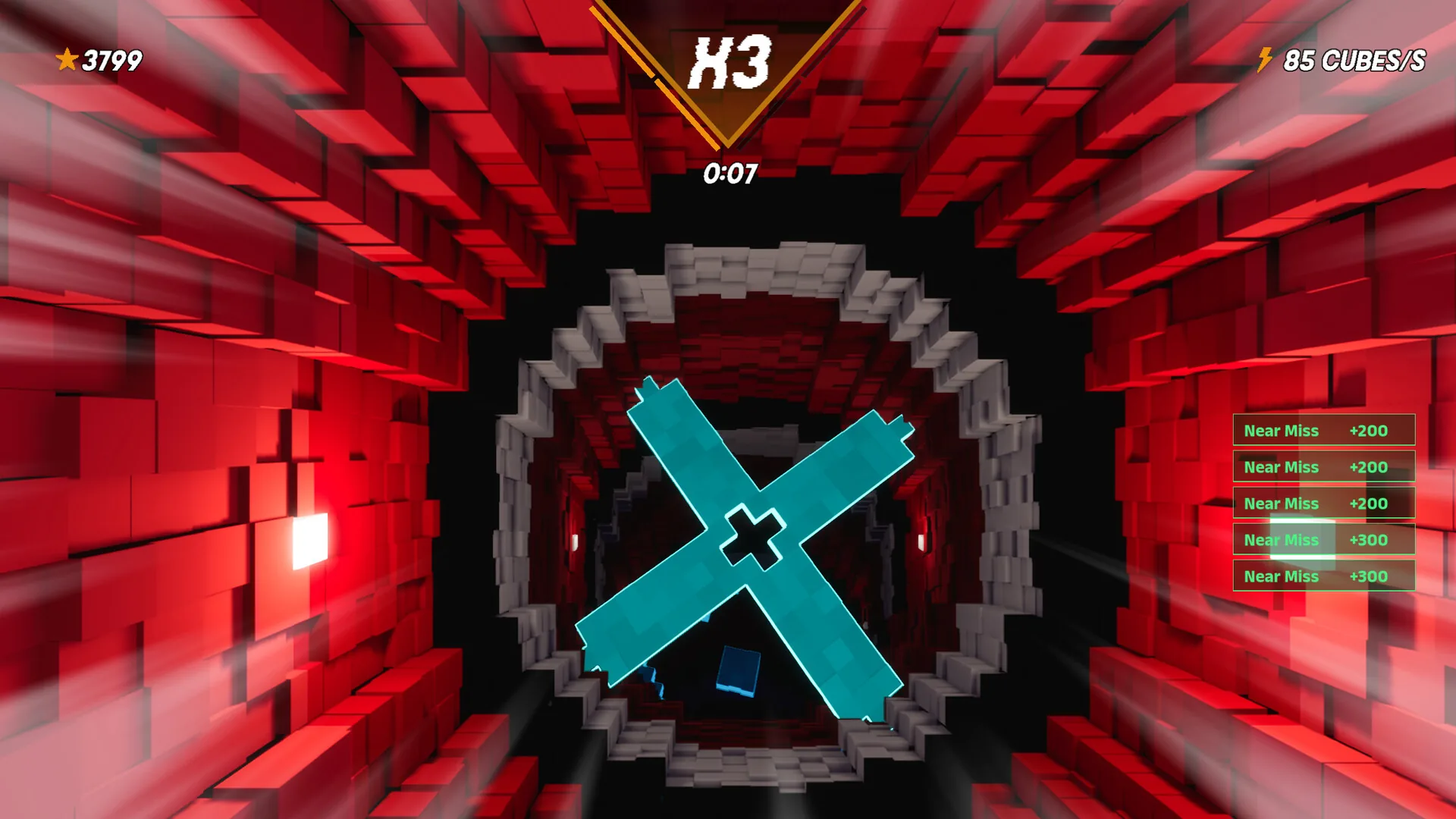
It rewards an idea executed with discipline: the scenery as opponent, music sync turning mastery into visual reward, and a three-mode structure that lets in the competitor and the curious alike. The level editor and the checkpoint practice mode are two additions plenty of larger productions do not offer.
It also rewards, sincerely, accessibility work the subject did not oblige.
It accounts for a deliberately narrow scope. This is a sensation game, brilliant across half an hour, whose longevity rests entirely on leaderboards, the editor and your own physical tolerance. That is not an execution flaw, it is a limit of format, and it stops the score climbing higher.
It also factors in that part of the audience simply will not be able to play it, whatever the settings.
So tell us, and try the demo first: how long do you last before you have to look away?
We compare our records and our headaches on the InsertCoins Discord.