7
Test
Barfender: my idiotic friend drank all the beers
A co-op bar that collapses while you serve. 98 per cent positive, and one of the rare times chaos is the actual subject.
Alexandrosse
7 min
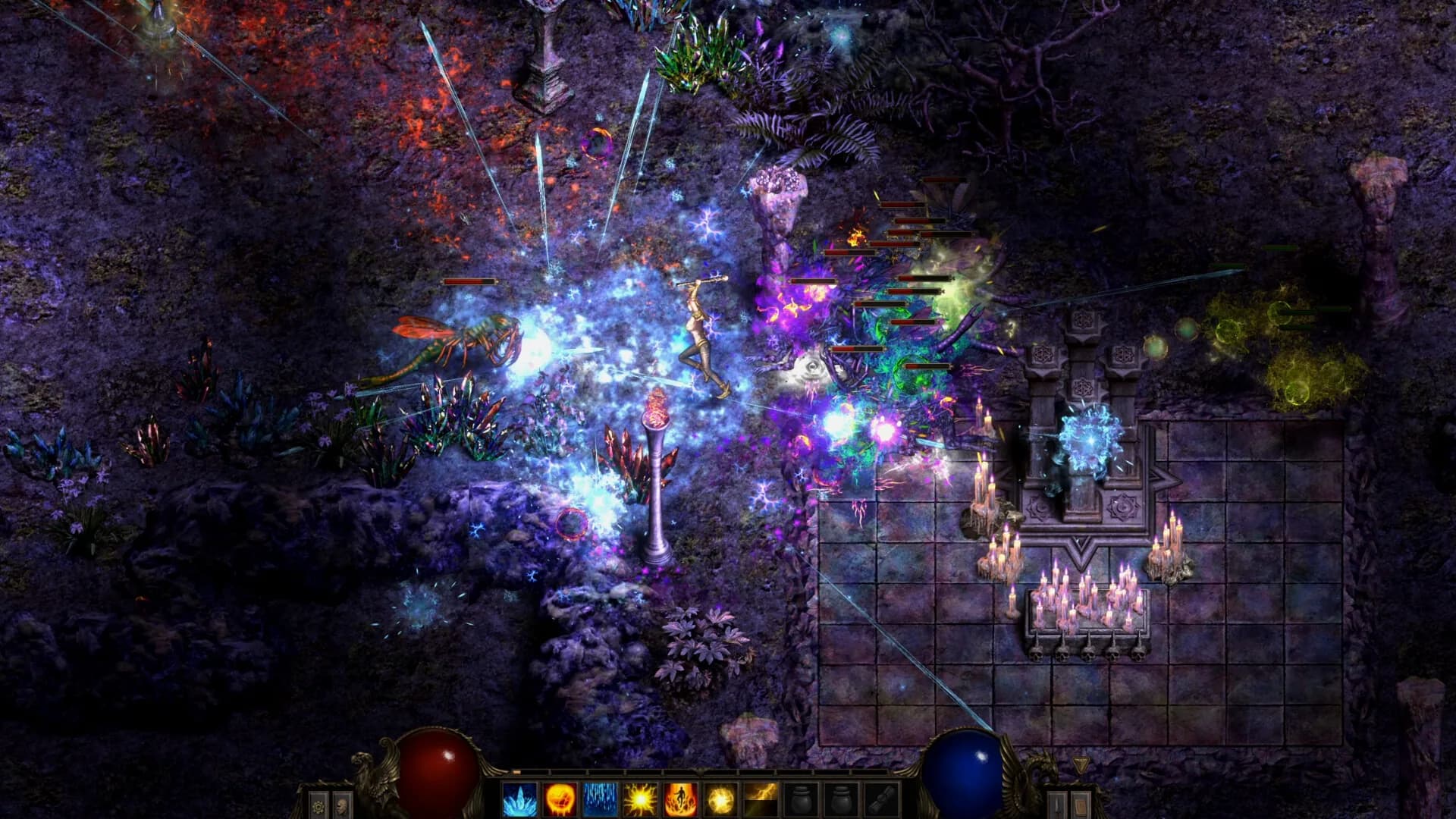
An old-school hack and slash where half the loot carries skills. No seasons, no retroactive nerfs, no store.
Alexandrosse
InsertCoins.press Score
7.5/10
Verdict
Recommended
I went in for fifteen minutes. Long enough to see what it looked like, grab two screenshots, form a quick opinion.
An hour later I was still comparing two pairs of gloves.
That is the only valid test for this kind of game, and it cannot be faked.
There is a line on the store page that looks like a detail and is not: skill points are unlimited.
Take a second to measure what that implies. In almost every game of this type, the scarcity of points is the engine of character building. You save up, you regret, you hunt for a respec potion, and a mistake at hour twenty follows you to the end. All the tension comes from deprivation.
Not here. By late progression you can eventually take everything, which moves the game elsewhere: the question is no longer what to choose, it becomes what to combine. The studio owns it, describing advanced hybrid builds as a late-game objective rather than an accident.
It is a wager. You lose the weight of the irreversible, which is a genuine loss. You gain the freedom to experiment without consulting a guide before clicking, which is a genuine liberation for anyone who has ruined a character over a badly placed point at hour three.
The content follows: four classes, twelve talent trees, over 370 skills. A sorcerer built around elemental magic, a holy warrior with dual blades, a precision archer, and a necromancer summoning demons and skeletons. Four more classes are announced for later, including an assassin and a barbarian.
The game advertises over one hundred million items. Let us be precise about what that means, because the figure is spectacular and easy to misread: it is a combinatorial count, generated semi-randomly from 3,200 base templates. Nobody drew a hundred million swords, and that is entirely fine.
What actually counts is the next line, and it matters far more: more than half of all equipment carries additional skills that synergise with talents.
There is the game's real mechanic. An item is not a pile of stats to compare, it is a building block. Picking up a piece can open a path your talent tree did not offer, and therefore change your mind about what you were becoming. Loot does not reinforce the character, it redirects them.
Combine that with unlimited points and you get a coherent loop: you find, you try, you keep what works, without ever paying for a bad choice. The game rewards curiosity rather than prior optimisation.
Add fifteen armour sets per class, a reforging, enchanting and enhancement system, seventeen blessing shrines, gems, potions and rare permanent elixirs.
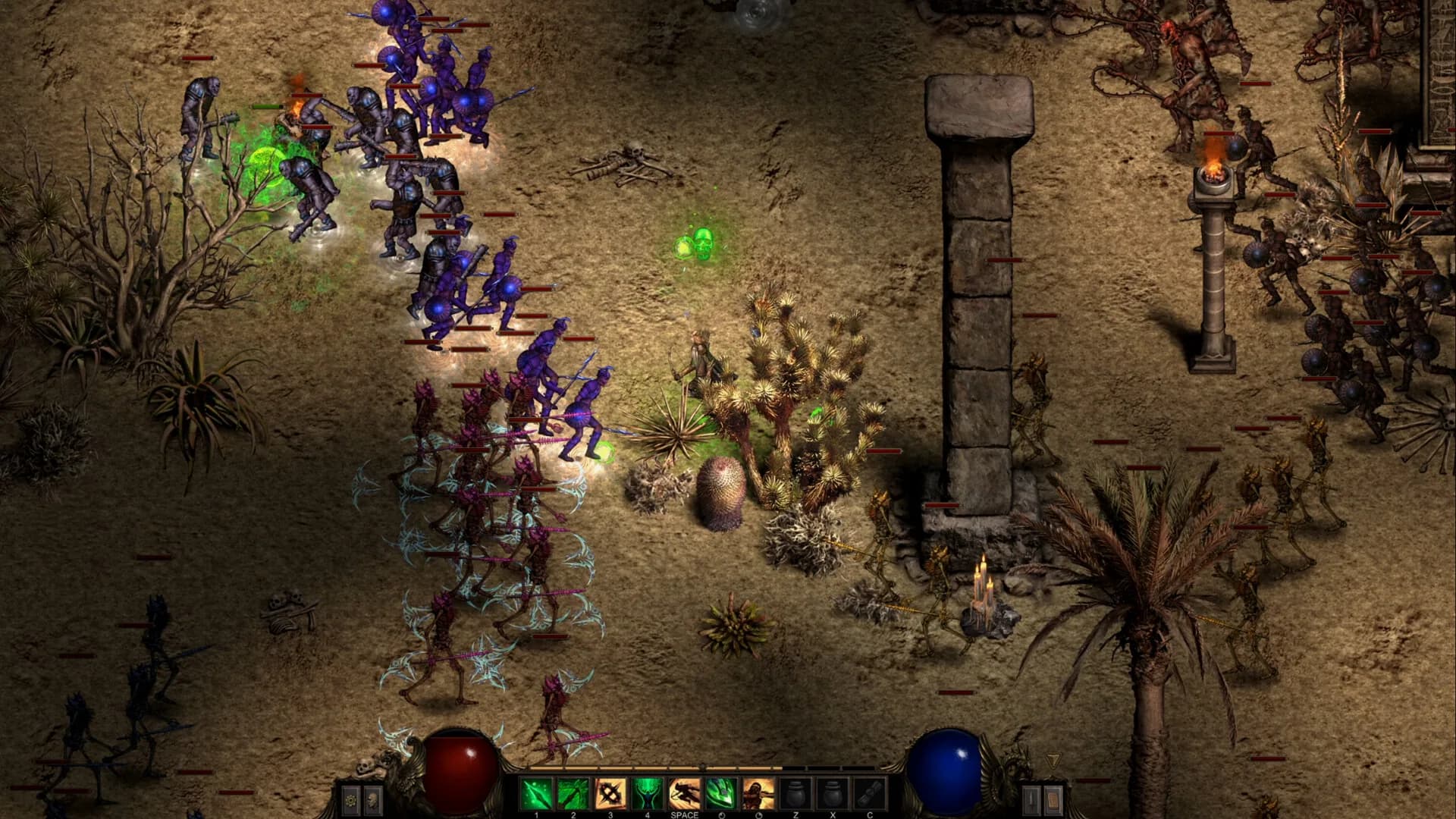
Seven chapters, over 160 maps and stages. More than 60 unique bosses and over 200 distinct monsters, each with their own mechanics and attack patterns, which is the most reassuring figure on the list: in this genre, boredom always arrives the moment every enemy plays the same.
The settings alternate between oppressive dungeons, ancient temples, scorching deserts, haunted ruins, and several distinctly less advisable destinations.
There is also an inventory system worth flagging because it is symptomatic: you unlock extra pages through quests, you carry thousands of items, and the storage warehouse has unlimited pages to hold hundreds of thousands. It is excess, and it is exactly what people who keep everything just in case are asking for.
Finally, mystic dungeons round out the endgame loop, with tower defence challenges and a rune system announced to follow.
There is a paragraph in the game's presentation worth more than all the figures above, and it explains why I stayed an hour.
No seasonal resets. No item you obtain will ever be weakened. No microtransactions. All loot is earned in combat.
You have to have lived through the past decade in this genre to understand what that represents. We have grown used to characters shelved every three months, to gear nerfed because a spreadsheet decided so, and to stores selling progression passes.
Here, what you find belongs to you and will keep belonging to you. That is a position, not a feature, and it deserves credit because it costs money to whoever takes it.
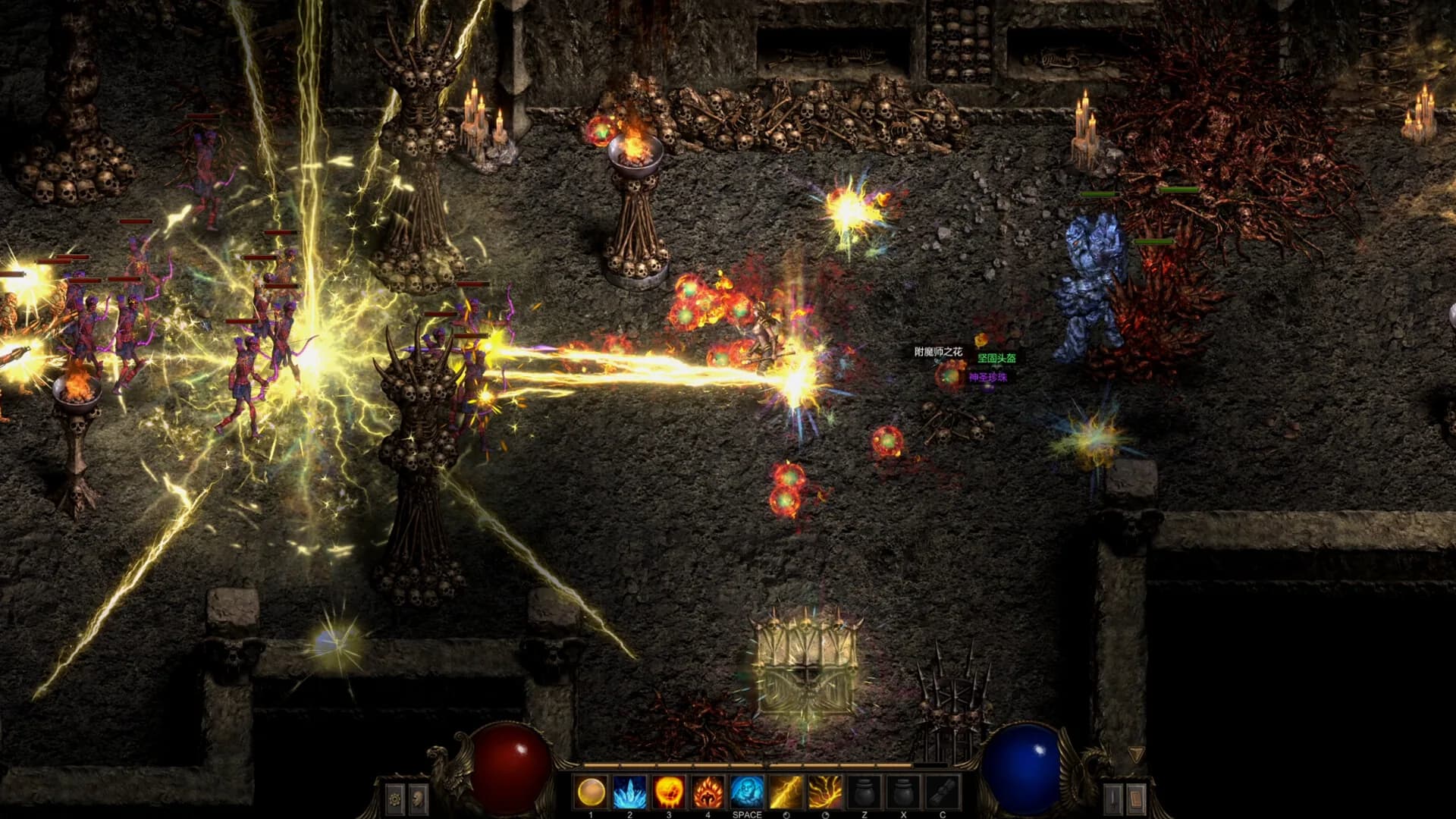
It is not beautiful, and the game does not claim to be. The rendering openly targets role-playing games from the very end of the nineties, with dark gothic aesthetics and deliberately restrained spell effects.
That restraint is a technical choice as much as an artistic one. The studio explains it specifically optimised for displaying large numbers of enemies, spells and sound effects at once. In other words a legible screen while thirty creatures arrive, which matters more than a pretty reflection when you are trying to spot the ground catching fire under your feet.
The audio work is highlighted unusually prominently, with sound-collision avoidance systems and intelligent loudness control so that spells, monsters, music and ambience do not crush each other. It is the kind of concern you rarely see advertised, and you can hear it when things get busy.
The game is made by OO Cat, it launches today, it is fully playable on a controller, and there is a demo.
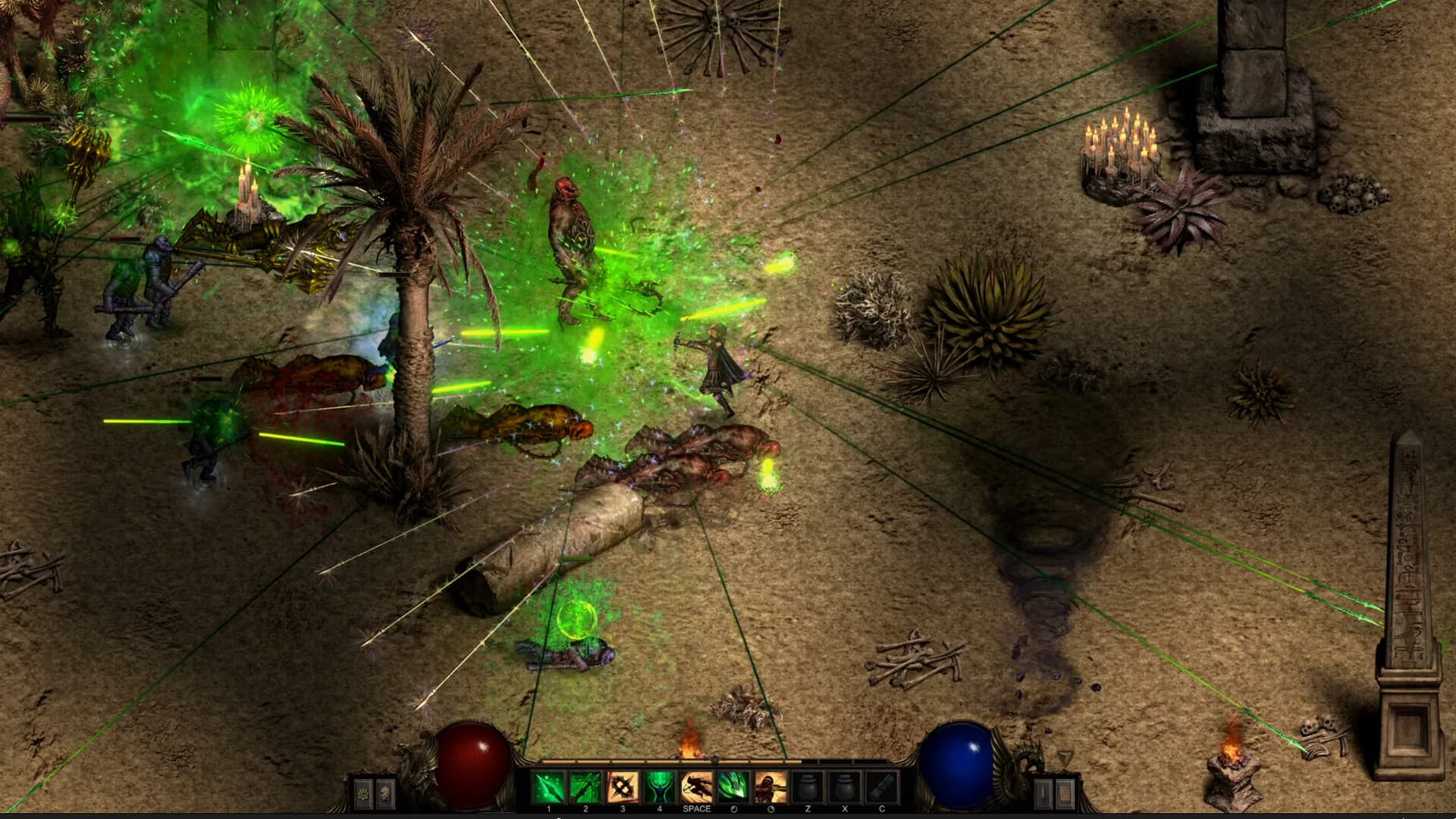
Some games catch you with their ambition and others with their coherence. This one is the second kind.
Unlimited points, equipment that carries skills, no seasons, no retroactive weakening: those four decisions all pull the same way, towards a game that wants you to tinker without fear and keep what you build.
It is not revolutionary and it is not pretty. But the machine turns, it turns cleanly, and it takes an hour off you when you promised it fifteen minutes.
Do you keep everything in the warehouse or sell it on? Come and confess your collector's syndrome on the InsertCoins Discord.
Community
Your rating
Advertisement
Loading comments...
You might also like
A co-op bar that collapses while you serve. 98 per cent positive, and one of the rare times chaos is the actual subject.
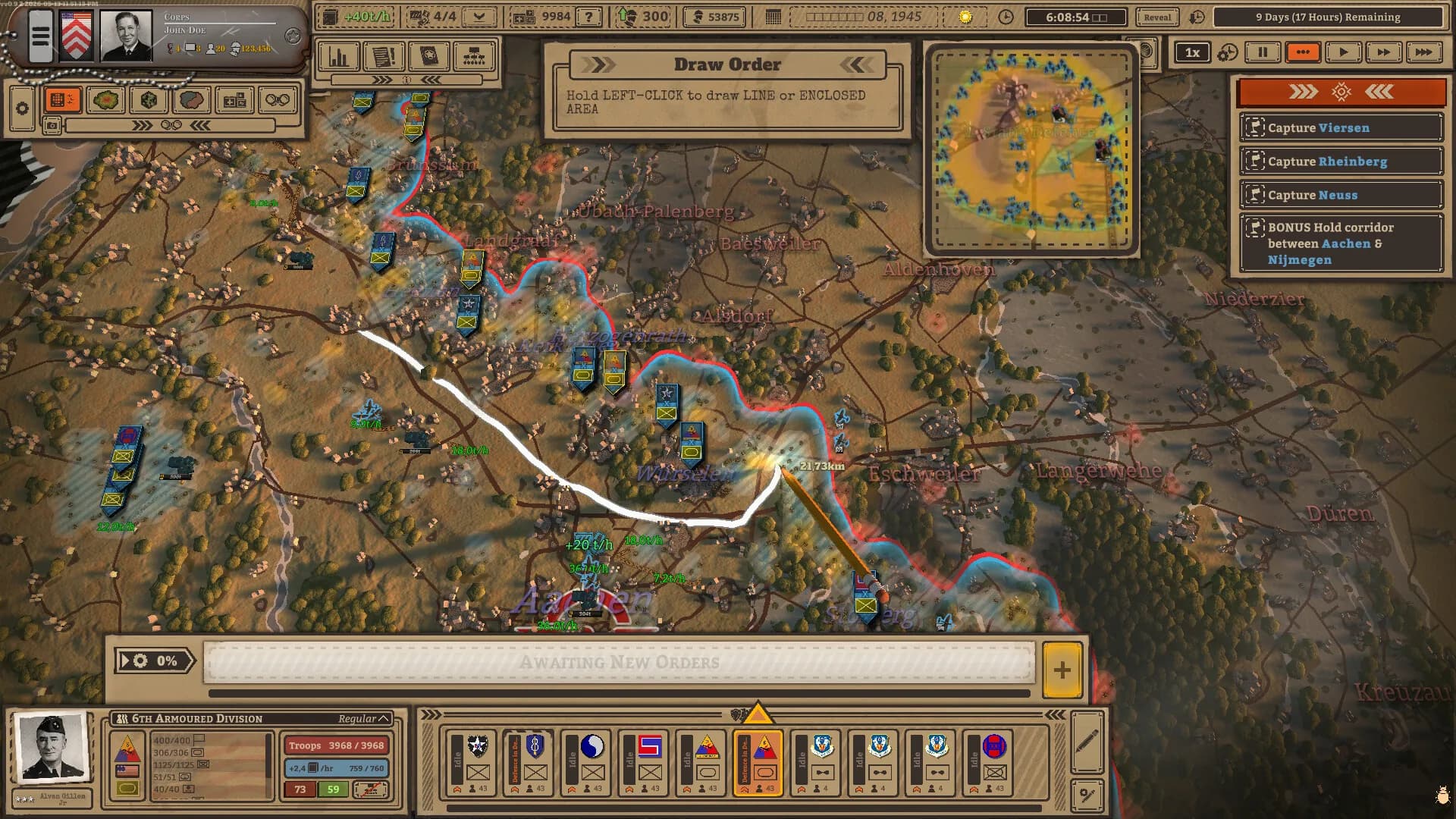
You draw a plan on the map and officers execute it alone. Except the game crashes every other planning phase.
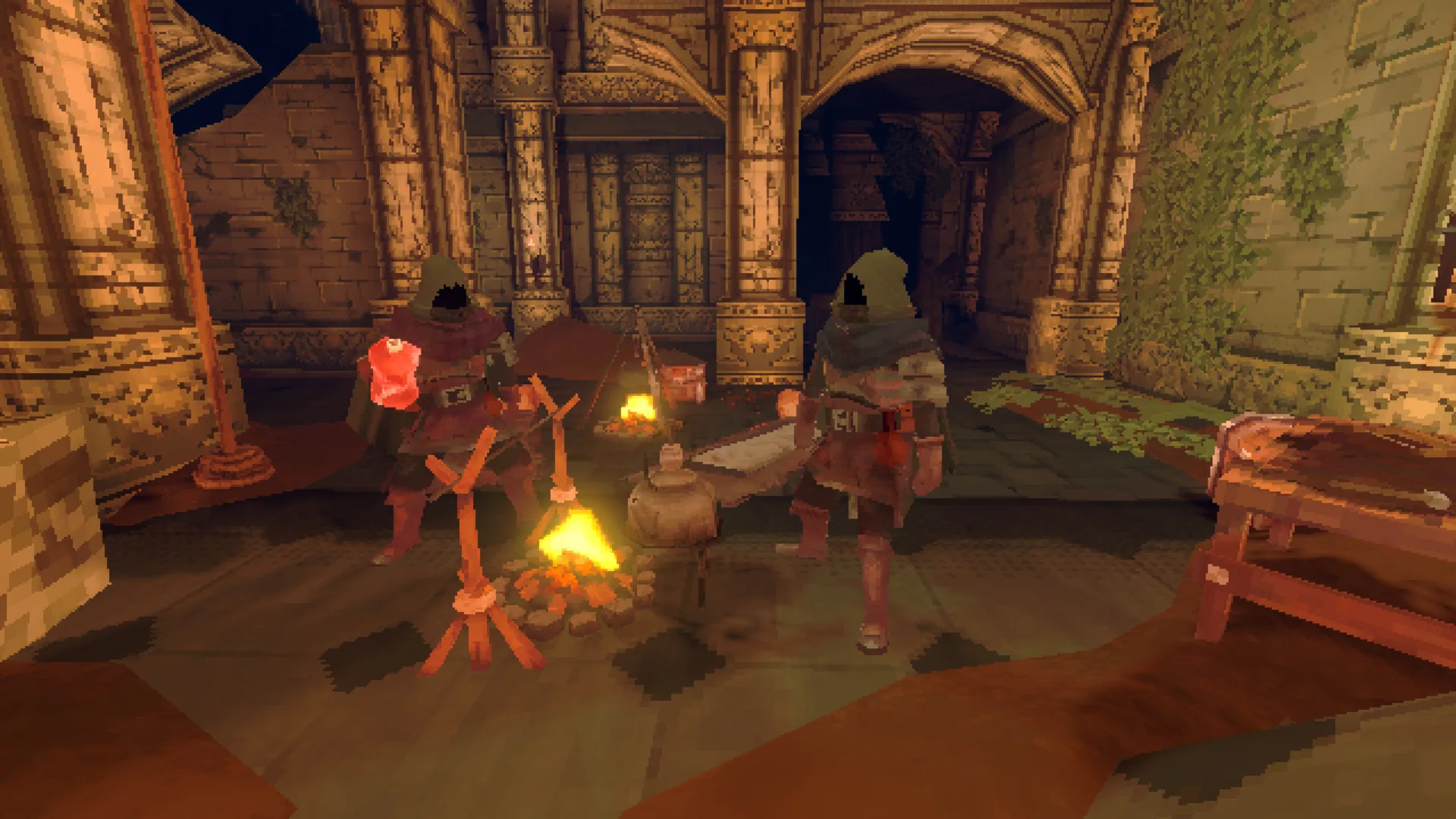
The Knights of Pen & Paper team return with a dungeon where you come back to camp, cook, and unlock recipes that change your stats.